Best time to visit Vietnam: month by month, region by region
Vietnam is long enough to have three weather patterns, so no single month is best everywhere. For a trip from Hanoi down to Ho Chi Minh City, late February to April is the most balanced window. The north is at its best in October and November, the south from December to April, and the central coast from February to August. Plan around Tet, the Lunar New Year, too: it falls on February 6, 2027, and trains, flights and rooms around it sell out early.
By Da Lat LoversPublished Updated
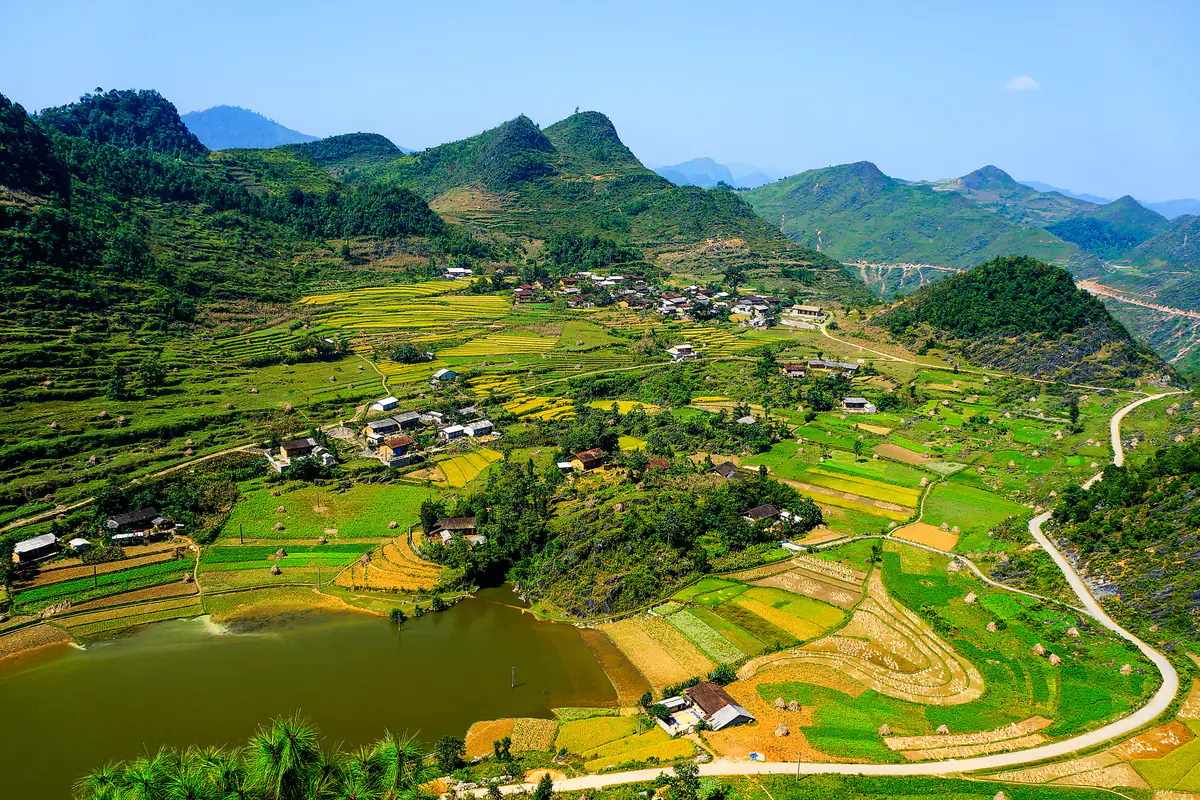
Rice terraces turning gold in Ha Giang, in Vietnam’s far north, in late September. Photo: minhphuc_99kdd / Public domain
The short answer: which months suit which part of Vietnam
Vietnam runs about 1,650 km (1,000 miles) from north to south, and the weather changes with it. When Hanoi is cool and dry, Hue can be flooding; when Hoi An is hot and sunny, Ho Chi Minh City gets a downpour on many afternoons. So the useful question is not “when is the best time to visit Vietnam” but “when is the best time for the places on my list”.
Vietnam weather month by month
The table uses one city for each region: Hanoi for the north, Da Nang for the central coast (Hue is usually wetter) and Ho Chi Minh City for the south. Temperatures show the average daily low and high; rainfall is the monthly average.
| Month | North (Hanoi) | Central coast (Da Nang, Hue) | South (Ho Chi Minh City) |
|---|---|---|---|
| Jan | Cool, mostly dry. 15-20°C (58-68°F), 23 mm | Drying out. Da Nang 82 mm, about 12 rainy days; Hue still damp | Dry. 23-32°C (74-90°F), 12 mm |
| Feb | Cool and gray, frequent drizzle. 16-21°C (60-69°F) | Dry and mild. 24 mm, 26°C (79°F) highs | Dry. 8 mm |
| Mar | Warming but still gray, the most drizzle of the year. 18-23°C (65-74°F) | Dry, warm. 25 mm, 28°C (83°F) | Dry and hot. 34°C (93°F) |
| Apr | Warm, brighter. 22-28°C (71-82°F), 92 mm | Dry, getting hot. 31°C (88°F) | Peak heat, highs around 34-35°C (93-95°F); the first showers arrive |
| May | Hot, rains start. 32°C (89°F), 185 mm | Hot, mostly dry. 33°C (92°F), 81 mm | Wet season begins. 202 mm, 13 rainy days |
| Jun-Aug | Hot, humid, the wettest months. 33°C (92°F), 250-310 mm | Hot and largely dry. 34°C (94°F), 83-141 mm. Beach season | Wet: short, heavy showers on 16-19 days a month |
| Sep | Still rainy (228 mm) but easing | Rains return. Da Nang 351 mm, Hue 411 mm; storm risk | Wet. 273 mm |
| Oct | Drying out, warm, often clear. 23-29°C (73-85°F), 141 mm | Wettest month. Da Nang 628 mm, Hue 773 mm; floods | Wet, easing late in the month. 240 mm |
| Nov | Dry, mild. 19-26°C (67-78°F), 67 mm | Very wet. Hue 642 mm, about 21 rainy days | Drying out. 128 mm |
| Dec | Cool, dry. 16-22°C (60-72°F), 20 mm | Still wet. Da Nang 218 mm, about 19 rainy days | Dry. 41 mm |
The dividing line is the Hai Van Pass just north of Da Nang. North of it, Vietnam has a real winter; south of it there is only a wet season and a dry season. The central coast is the odd one out: its rain peaks in October and November, just as the north and then the south dry out. Nha Trang runs a little later, with November its wettest month.
Best months for a full north-to-south trip
Late February to April: the most balanced window
This is when all three regions are at least decent at the same time. The central coast is dry and not yet scorching: Da Nang gets just 24-35 mm of rain a month from February to April, and Hue is pleasant for walking the citadel. The south is in the middle of its dry season, and the north is warming up.
Two catches. Hanoi and Ha Long Bay are dry on paper in February and March, but they are also at their grayest: only about 45-48 hours of sunshine a month, with drizzle on 7 to 10 days. You are more likely to get soft, misty light on the bay than blue sky; April is usually brighter. At the other end, Ho Chi Minh City climbs to 34-35°C (93-95°F) by April, and Phu Quoc’s rains start that month. If we had to choose one month for a first trip that covers the whole country, it would be March.
December and January: good if you don’t mind a cool north
The south is in its dry season and the beaches of Phu Quoc are at their best. Hanoi is dry too, but cool: around 15-20°C (58-68°F) in January, and the damp makes it feel colder than the number. The central coast is still wet in December and drying out in January, when Hoi An and Da Nang can work while Hue may still give you rainy days.
In January 2027, try to finish your long journeys before about the 29th, when the Tet travel rush begins. Christmas and New Year are busy in the beach resorts, so book those dates early.
June to August: build the trip around the central coast
Summer is the central coast’s season. Da Nang, Hoi An, Hue and Nha Trang are hot (around 34°C, 94°F in Da Nang) but mostly dry, and the sea is usually calmer than at the end of the year. The north is at its hottest and wettest, and storms can hit the northern coast. In the south, rain tends to come as heavy afternoon or evening showers rather than all day. Phu Quoc is at its wettest.
If summer is your only window, spend most of the trip between Hue and Nha Trang, keep Hanoi short, and give yourself flexible days for Ha Long Bay. This is also Vietnam’s school holiday, so beach towns fill up with domestic travelers, especially on weekends.
September to November: split the trip
October and November are the best months in the north: dry, clear and comfortable, with buckwheat flowers in Ha Giang. The south dries out from late November. In between, the central coast is in its rain and flood season. By November and December, the north and the south are both in good shape while the central coast is still in its rainy season. If you want Hue or Hoi An on the route, keep those nights flexible, or fly from Hanoi straight to the south and save the center for another trip.
Typhoon and flood season in central Vietnam
Storms reach Vietnam from about June to November, and the risk moves south as the year goes on. On average, they make landfall on the northern coast most often from June to September, on the central coast between Hue and Quy Nhon from August to November, and on the coast from Nha Trang down to the Mekong Delta from October to December. River floods from Quang Binh down to Phan Rang, south of Nha Trang, usually come between September and mid-December, with October and November the heaviest months.
A bad year can be very bad. In late October 2025, a station in the hills behind Hue recorded more than 1,700 mm (67 in) of rain in 24 hours, and Hoi An’s old town flooded several times between late October and late November. In November that year, several central airports closed while a typhoon passed, and floods later suspended parts of the north-south railway.
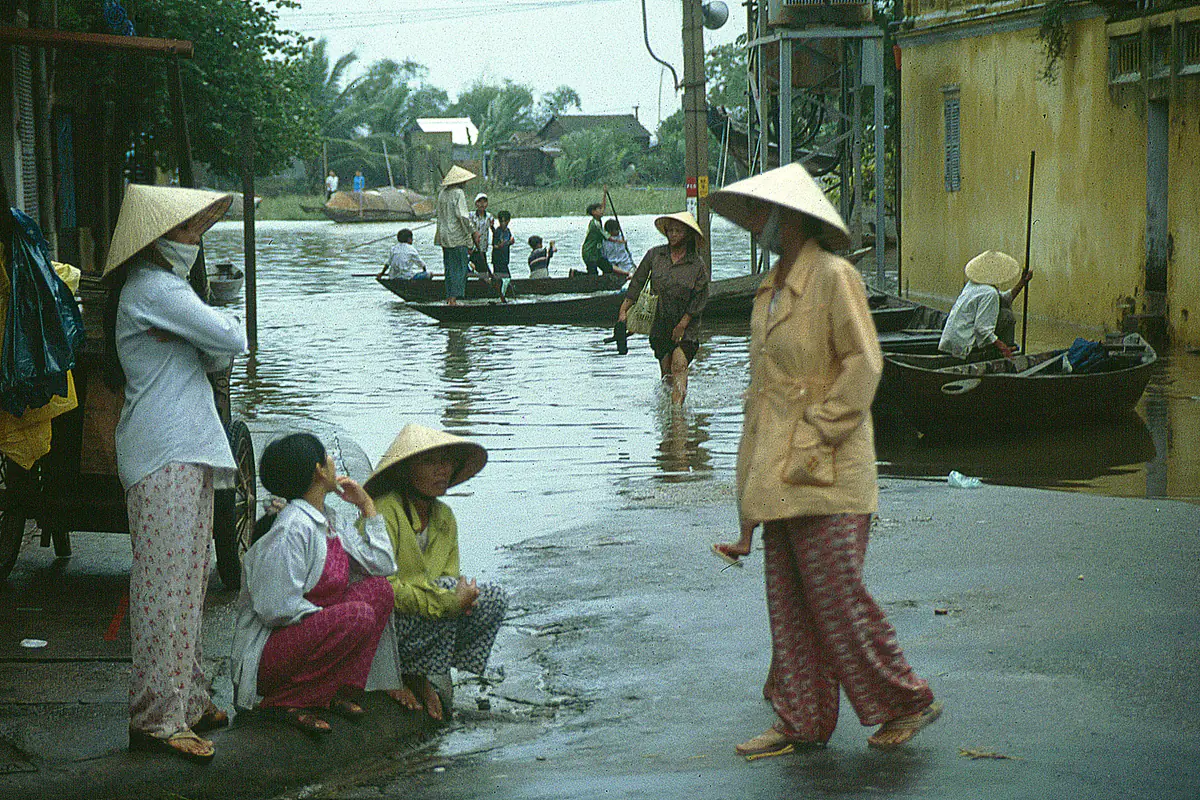
What that means in practice if your trip falls between September and December:
- Book hotels, flights and trains you can change, and leave a spare day around Hue, Hoi An and Da Nang.
- Watch the forecast from about a week out on the national weather service’s English site, which carries typhoon and heavy rain warnings.
- When a storm or heavy rain warning is out, don’t cross mountain passes (Hai Van, or the roads up to Da Lat), stay away from rivers and flooded streets, and follow the local authorities and your hotel.
- Check that your travel insurance covers weather delays and cancellations before you pay for the trip.
Plenty of days in the rainy season are simply gray and wet rather than stormy. In Hue, the monuments can close when the river floods, so a spare day there is worth more than anywhere else. In Nha Trang, November is the wettest month and boat trips to the islands depend on the sea on the day.
Tet (Lunar New Year): crowds, prices and closures
Tet is the biggest holiday of the year, and it affects a trip more than any weather. In 2027, the first day of Tet is Saturday, February 6. Government offices close from Thursday, February 4 to Wednesday, February 10, and the railway treats January 29 to February 17 as its Tet peak.
- The week before Tet: millions of people travel home. Flights, trains and buses out of Hanoi and Ho Chi Minh City sell out or cost much more, and roads out of the big cities are jammed.
- The first days of Tet: many family-run restaurants, market stalls and small shops close, often for three days or more. Hanoi and Ho Chi Minh City feel unusually quiet. Big hotels, malls and the major sights usually stay open, but check the places you care about before you build a day around them.
- Resorts: Da Lat, Nha Trang, Da Nang and Phu Quoc fill with Vietnamese families on holiday, and room rates are usually the highest of the year.
- The end of the holiday: another rush as everyone heads back to the cities, lasting a few days after people return to work.
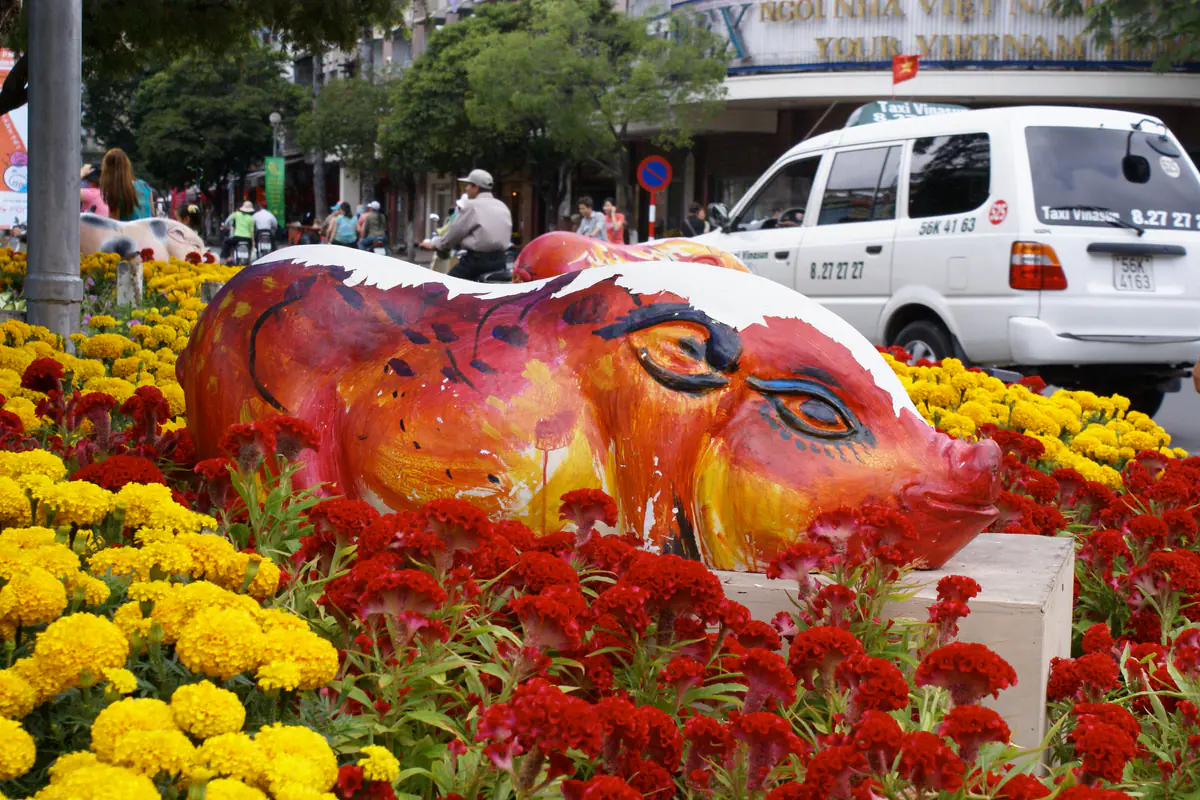
Tet is not a reason to stay away. The flower markets and decorated streets in the days before it are a highlight, and the quiet cities afterwards have their own charm. The easy way to do it is to stay put: pick one city or beach for the holiday week, book your room early with written confirmation, and save the long journeys for before late January or after mid-February. Banks close for the holiday, so take out cash beforehand. If you need a train during the peak, tickets for Tet 2027 have been on sale since September, and changing or refunding some peak-period trains costs 30% of the fare.
Other dates that make Vietnam busier and pricier:
- New Year’s Day, January 1.
- Hung Kings’ Commemoration Day (a lunar date, usually in April) and the April 30 to May 1 holidays.
- June to August, when schools are out and beaches fill up.
- National Day, September 2. In 2027 the break runs from Thursday, September 2 to Sunday, September 5.
The mountain exceptions: Sapa and Da Lat
Sapa and the far north: cold winters, golden rice in September
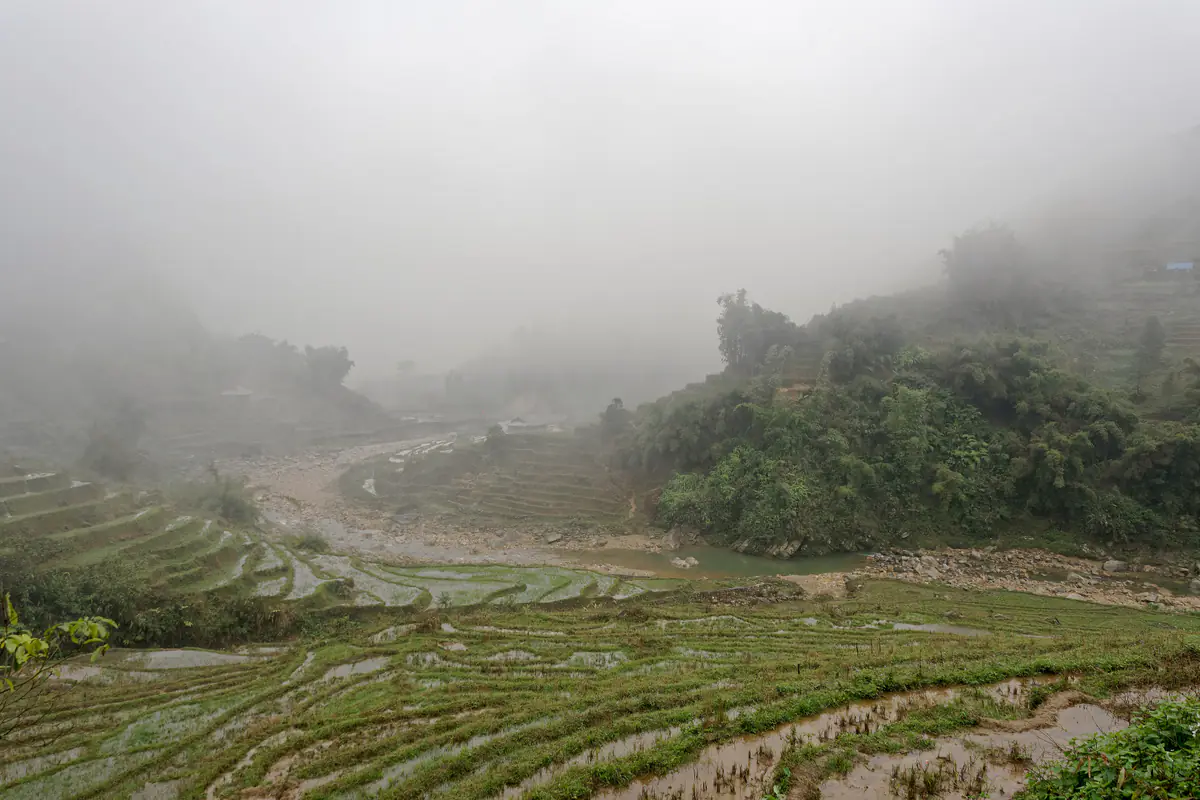
At 1,500 m (4,900 ft) and more, the northern mountains run on a cooler clock. In Sapa, December to February averages 6-14°C (43-57°F), with fog on 13 to 17 days a month, and frost in some years. June to August brings the most rain and a risk of landslides on mountain roads. The good stretches are March to May, with blossom and then terraces freshly flooded for planting, and September and October, when the rice ripens and the air is clearer. September’s golden rice also coincides with the National Day holiday, so weekdays are calmer.
Da Lat: spring weather all year, with the south’s seasons
Da Lat sits at about 1,500 m in the southern highlands, so it is mild all year: roughly 12-25°C (54-77°F). Its rainy and dry seasons follow the south, not the north. December to March is dry, with only about 9 mm of rain in January, while May to October brings rain on 20 or more days a month, usually in the afternoon. That makes Da Lat an easy addition to a southern trip in the dry season, as long as you skip its own busy weeks around Tet.
FAQ
What is the weather like in Vietnam in January?
Dry in the south, with highs around 32°C (90°F) in Ho Chi Minh City and very little rain. Cool in the north: about 15-20°C (58-68°F) in Hanoi, and nights around 6°C (43°F) in Sapa. The central coast is drying out, with Da Nang and Hoi An usually easier than Hue.
When should you avoid Vietnam?
There is no month to avoid for the whole country. Avoid planning beach days on the central coast from September to December, and avoid long trips between cities in the week before and after Tet.
Is it worth visiting Vietnam in the rainy season?
Often, yes. In the south the rain usually comes in short, heavy showers, and you get greener landscapes and fewer tourists. The exception is the central coast from September to December, when typhoons and floods can close roads, trains and sights for days.
When is the best time to visit Vietnam and Cambodia together?
Roughly December to March. Cambodia’s dry season lines up with southern Vietnam’s, and the central coast is drying out by late January.