Skip to content

Updated Sep 24, 2026

Da Lat travel guide 2026: where to go, what to eat, where to stay

This Da Lat travel guide is built from our own trips across every season and checked against official and news sources: weather month by month, places worth your time, dishes to try, how to get there and where to stay on any budget.

By Da Lat LoversPublished How we review

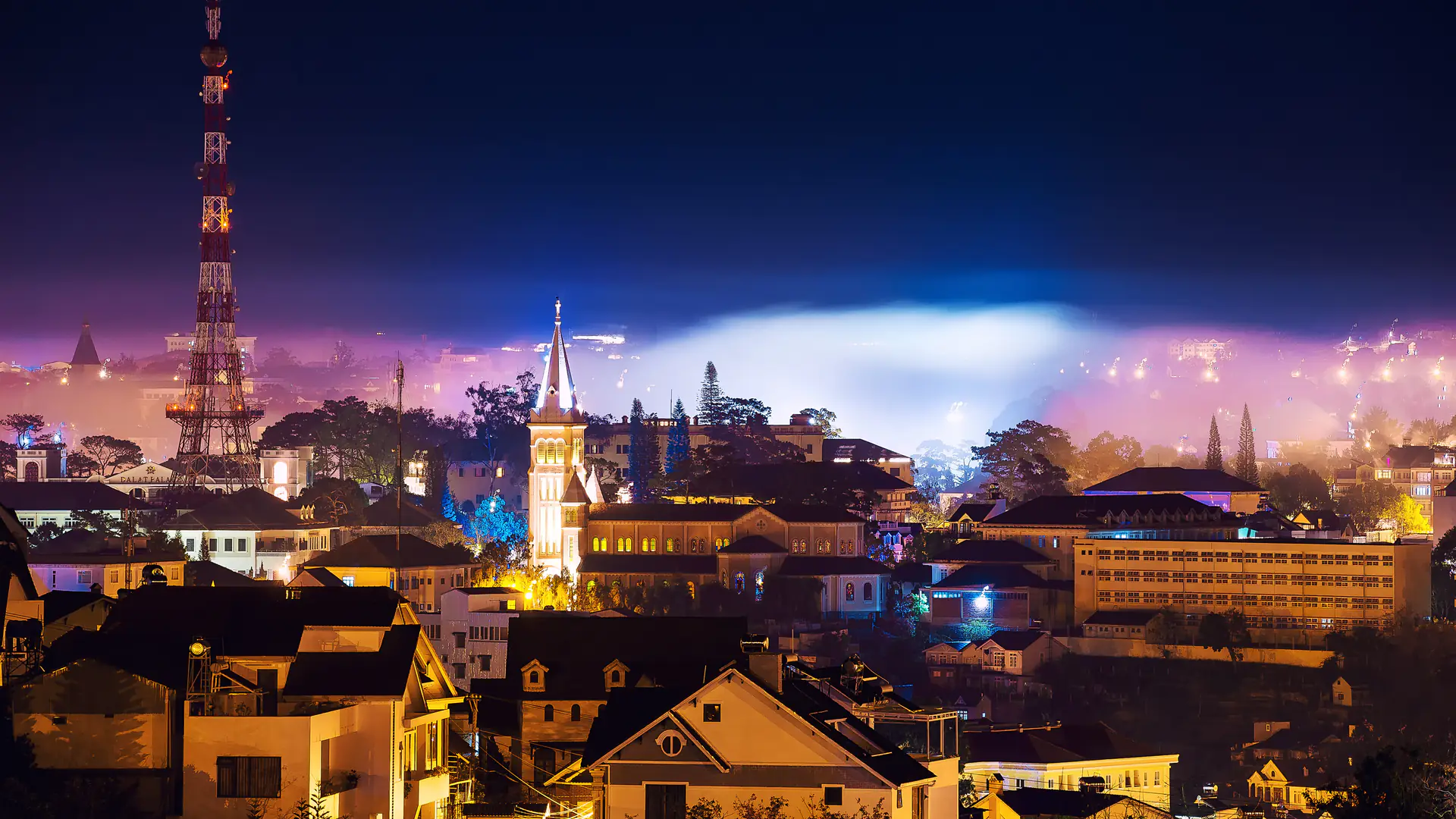
Da Lat at dawn, with the spire of the Chicken Church, the post office tower and mist over the rooftops
Photo: Lê Minh Phát / CC BY 2.0

Altitude

1,500 m

Yearly average

17.9°C

UNESCO

Creative City of Music

Road alert: landslides on Prenn Pass

According to Tuoi Tre News (September 23, 2026), Lam Dong Province declared a natural disaster emergency on Prenn Pass on the night of September 22, 2026 after repeated landslides. The 20–25 m slope beside the road has collapsed eight times since June, and the site is now monitored around the clock. If you are driving up National Highway 20, check the latest traffic advice before you set off. Read the Tuoi Tre News report

Good news: Lien Khuong Airport is open again

According to VietNamNet (August 19, 2026), Lien Khuong Airport welcomed its first flights again on August 19, 2026 after a shutdown of nearly six months for runway repairs. Flying to Da Lat is as easy as it was before, so it is worth comparing fares again. Read the VietNamNet report

Quick facts

Where is Da Lat? What to know before you go

Da Lat sits on the Lam Vien (Lang Biang) Plateau in Lam Dong Province, in Vietnam’s Central Highlands, at about 1,500 m above sea level. The altitude gives it a cool climate all year, with an average annual temperature of around 17.9°C. That is a world away from the heat of Ho Chi Minh City, only about 300 km to the south, and it is the first thing any Da Lat travel guide will tell you: pack a jacket.

The town’s story as a resort begins on 21 June 1893, when the doctor and explorer Alexandre Yersin reached the plateau. The French later planned it as a hill station, leaving behind villas, churches and a railway station that visitors still love to photograph. In 2023, Da Lat joined the UNESCO Creative Cities Network in the field of music.

One change that confuses many visitors: since July 1, 2025, Da Lat is no longer a city-level administrative unit. The area was reorganized into five wards that all carry the Da Lat name: Xuan Huong, Cam Ly, Lam Vien, Xuan Truong and Lang Biang. When you look up a hotel or restaurant, you will now see addresses such as “Xuan Huong - Da Lat Ward” (phường Xuân Hương - Đà Lạt in Vietnamese).

The numbers show how popular the highlands have become. According to CafeF, Lam Dong welcomed nearly 1 million visitors over the 2026 Lunar New Year (Tết) holiday alone, with tourism revenue of about VND2 trillion. For you, that means peak dates are crowded and room rates climb, so use this Da Lat travel guide to plan early.
1,500 m

Average altitude

17.9°C

Average yearly temperature

5 wards

Named after Da Lat since July 1, 2025

~30 km

From Lien Khuong Airport to the center

1893

Year Yersin reached the plateau

2023

UNESCO Creative City of Music

New feature · live data

Da Lat weather today: where to go and what to eat

This small tool turns our Da Lat travel guide into a plan for the weather you will actually get. We pull live data, including the current temperature, the chance of rain over the next three hours and a seven-day forecast, then suggest places and dishes to match. On a wet day it favors spots with a roof; under clear skies it points you to cloud hunting or a mountain hike. You can also pick the conditions yourself to plan tomorrow.

Da Lat right now

Loading Da Lat weather…

Data: Open-Meteo.com (CC BY 4.0), refreshed every 15 minutes. For guidance only, not a substitute for official warnings.

Chilly out: an easy stroll, then something steaming hot.

What to eat in this weather

When to go

Best time to visit Da Lat: the weather in all 12 months

Picking the right season is the first step of any Da Lat travel guide worth reading. The highlands have two fairly clear seasons. The dry season runs from about November to April, with clear skies and crisp mornings that suit cloud hunting and flower viewing. The rainy season, from May to October, brings most of the year’s rain (about 1,768 mm in total), and showers usually arrive in the afternoon.

If you are looking at Da Lat in October, expect the tail end of the rainy season: lots of fog and the first real chill. November is drier, and it is when wild sunflowers turn the hillsides yellow, which makes it one of our favorite months to go.

  1. January

    Dry season

    Coldest month

    Cherry blossoms in full bloom, Tết atmosphere

  2. February

    Dry season

    Cold and dry

    Last of the cherry blossoms, clear skies

  3. March

    Dry season

    Cool, gentle sun

    Jacaranda trees start to flower

  4. April

    Dry season

    Warmest month

    An escape from the heat; the April 30 holiday is packed

  5. May

    Rainy season

    Cool, rains begin

    Afternoon showers, pleasantly quiet streets

  6. June

    Rainy season

    Cool, afternoon rain

    School summer holidays, room rates rise

  7. July

    Rainy season

    Cool, frequent rain

    Café days watching the rain, hotel deals

  8. August

    Rainy season

    Cool, frequent rain

    Peak of the rains, take care on mountain passes

  9. September

    Rainy season

    Cool, very misty

    Thick fog, watch for landslide warnings

  10. October

    Rainy season

    Chilly, rains ending

    Rain eases off, plenty of fog

  11. November

    Dry season

    Chilly, drying out

    Wild sunflowers and pink grass on the hills

  12. December

    Dry season

    Cold, clear skies

    Cloud hunting, Flower Festival, Christmas

These monthly notes in our Da Lat travel guide are based on average climate data. Real weather can change from day to day, so check the live forecast above before each trip.

Where to go

12 places in our Da Lat travel guide, with honest downsides

This list, the core of our Da Lat travel guide for a first trip, favors places with real history, natural scenery or a distinctly local experience, rather than temporary photo spots. Every place comes with a “Heads-up” note so you can decide before you go.

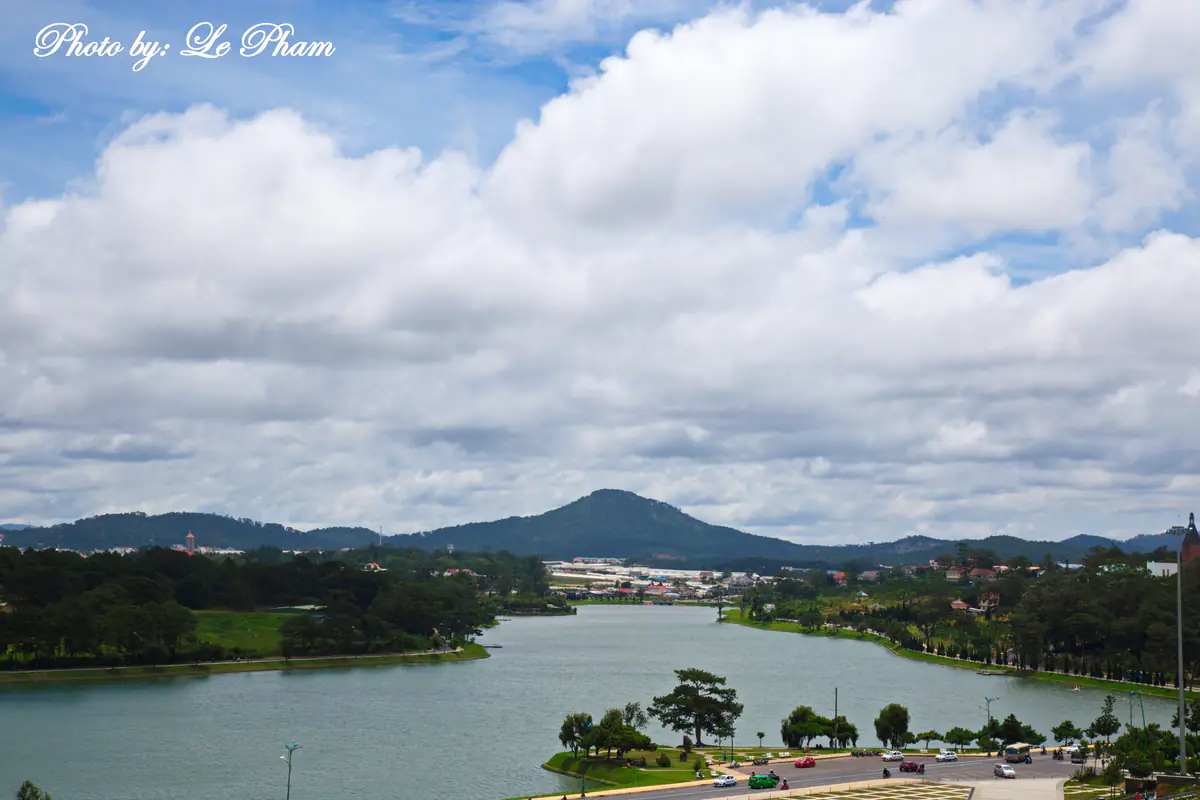
Xuan Huong Lake in the center of Da Lat under a cloudy sky, with Langbiang mountain in the distance
Photo: Le Anh Tuan / Public domain (PDM)
#01 · The heart of town

Xuan Huong Lake (Hồ Xuân Hương)

Almost every Da Lat travel guide starts here, and so does ours. This man-made lake was created in 1919, covers about 38 hectares and sits right in the center. The loop around it is roughly 5 km; walking or cycling it early in the morning is the nicest way to do it, while mist still hangs over the water and the roads are quiet.

Why go:
Free, open at any hour, with plenty of photo angles along the pine-lined shore.
Heads-up:
Weekend afternoons bring heavy traffic, so park and walk rather than driving the loop.

Best for: First-time visitors, families with small children

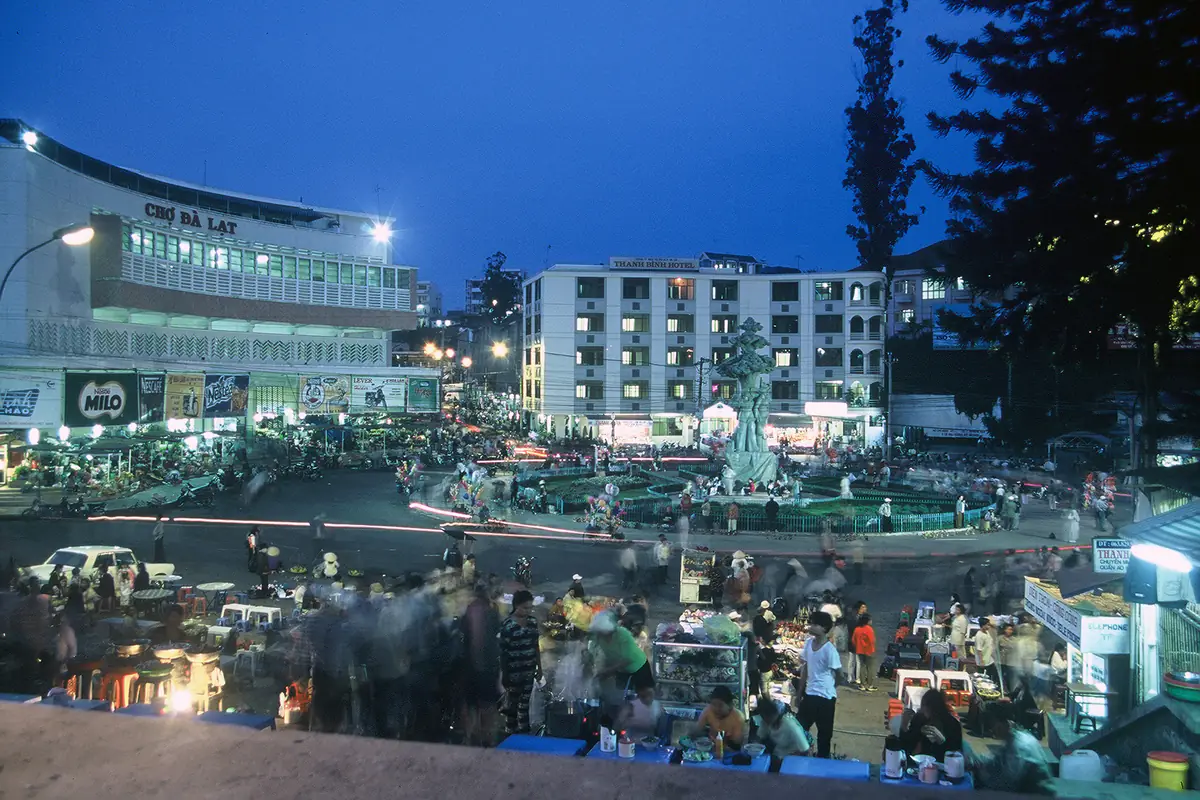
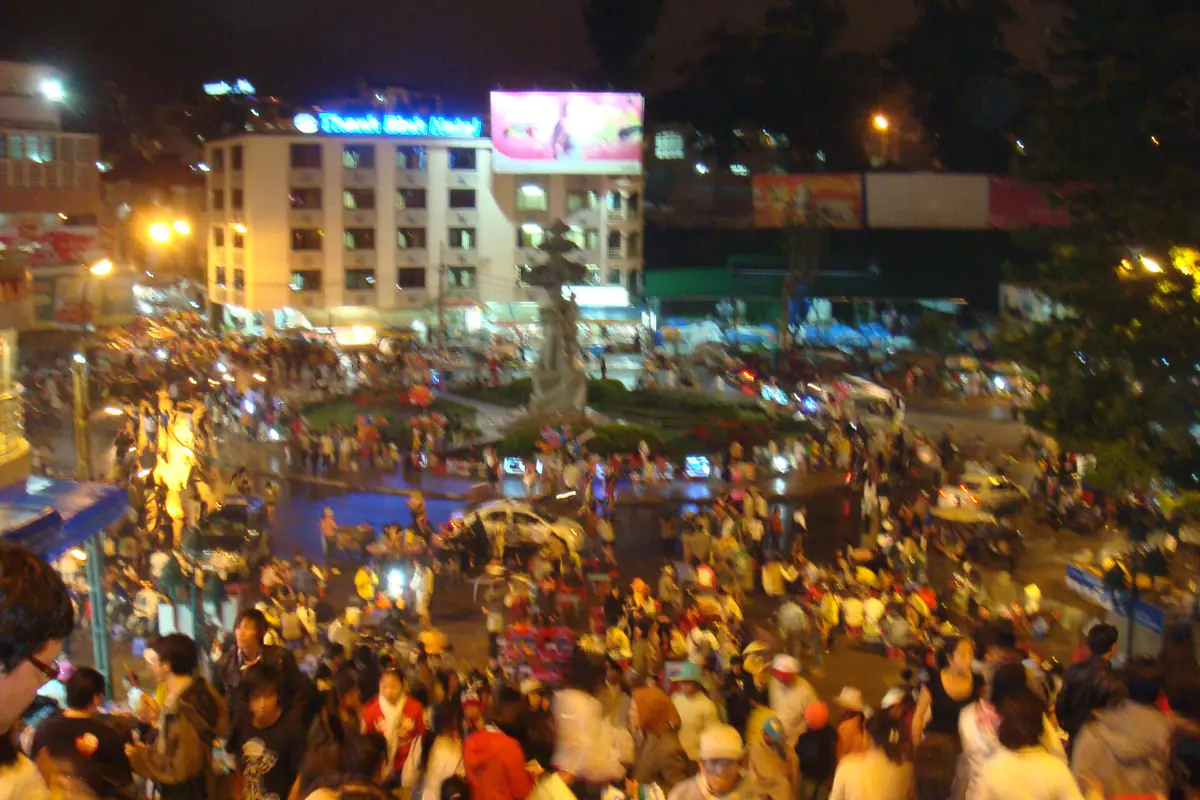
Da Lat Market and the central roundabout at dusk, with the night market lit up and crowds of people
Photo: Roy Kim / CC BY 2.0
#02 · Snacks until late

Da Lat Market and night market (Chợ Đà Lạt)

The current market building was started in 1958 to a design by architect Nguyen Duy Duc and finished in 1960. By day it sells candied fruit, fresh produce and vegetables; from late afternoon the steps and surrounding streets turn into a night market with grilled snacks, hot soy milk and knitwear.

Why go:
Nearly every Da Lat street snack in one place, with covered sections for rainy evenings.
Heads-up:
Ask the price before you buy, especially candied fruit and packaged specialties; prices can rise on holidays.

Best for: Snack lovers and anyone who enjoys a lively crowd

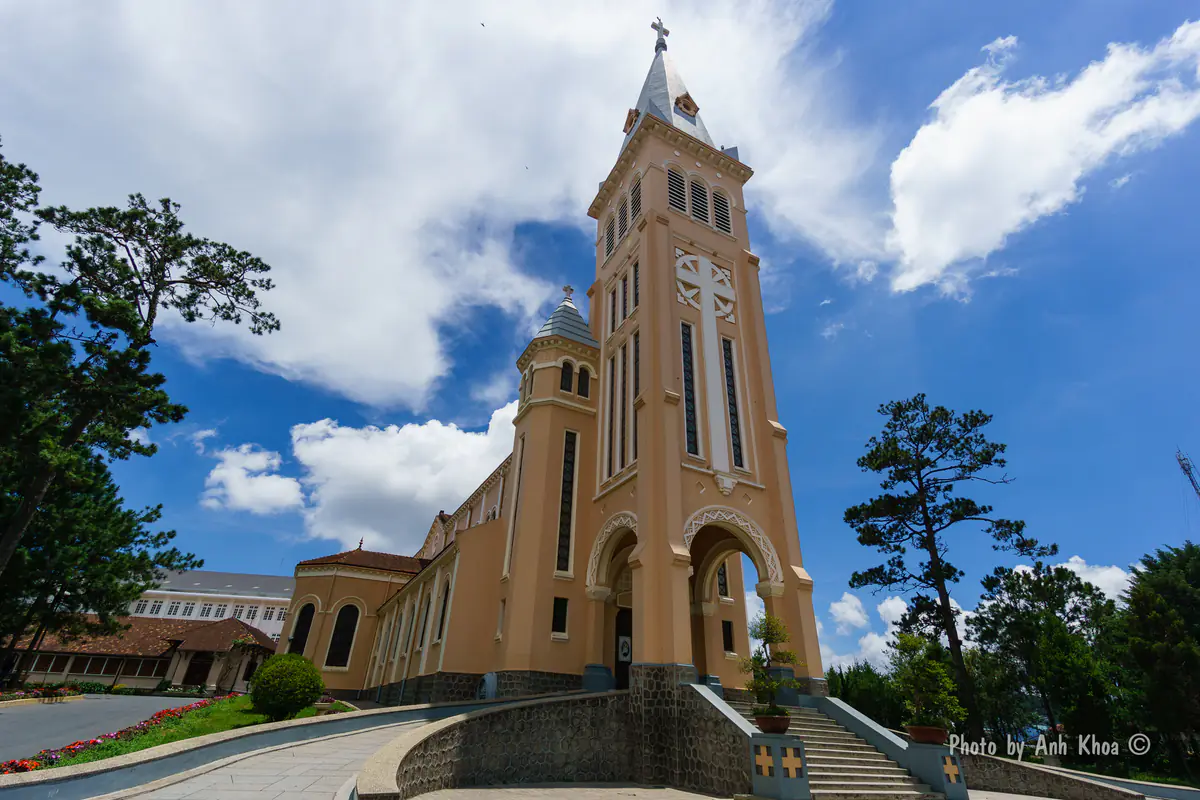
Da Lat Cathedral (the Chicken Church) with its tall bell tower against a blue sky and a row of pines
Photo: Anh Khoa / CC BY-SA 2.0
#03 · French-era architecture

Da Lat Cathedral, the “Rooster Church” (Nhà thờ Con Gà)

Inaugurated in 1942, the cathedral stands out for its pink walls and the rooster on top of the bell tower, which is why locals call it the Rooster Church. It is still a working place of worship, not just a photo stop.

Why go:
Close to the center and easy to combine with Xuan Huong Lake and the market in one outing.
Heads-up:
Dress modestly, keep your voice down and avoid Mass times if you are only sightseeing.

Best for: Architecture fans and vintage-style photographers

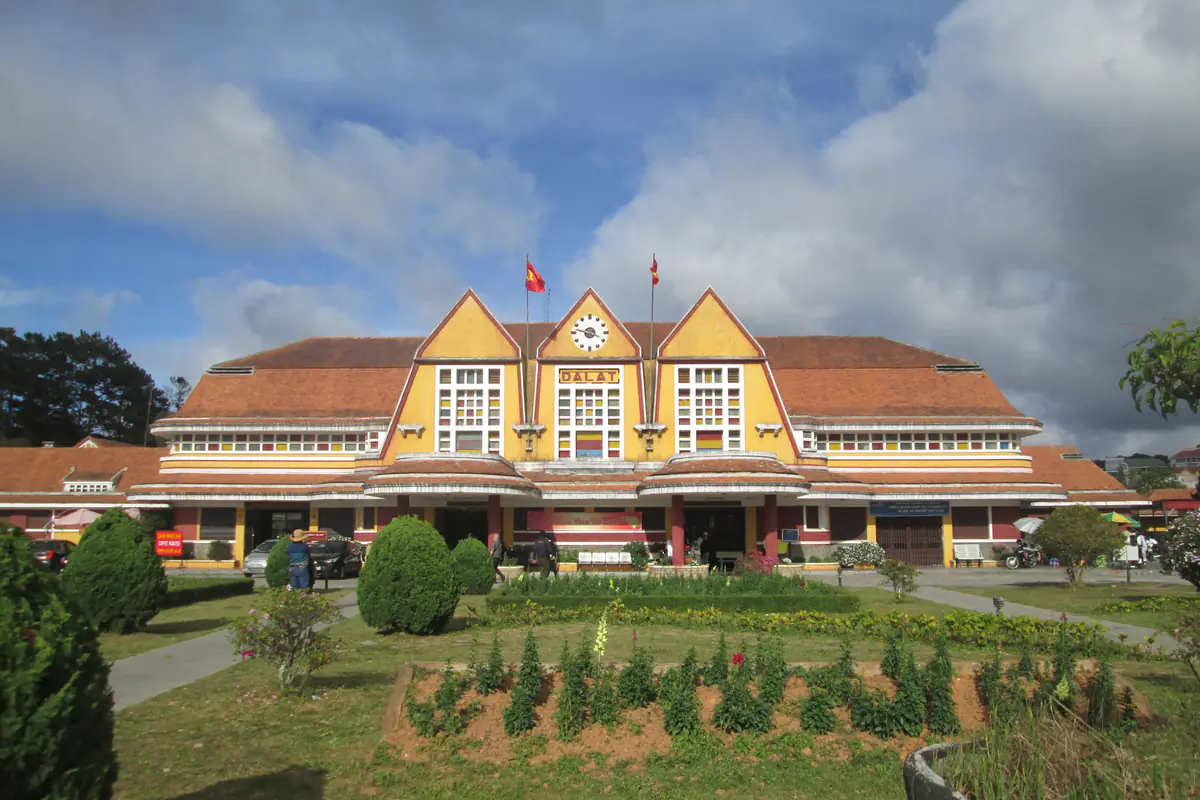
Da Lat Railway Station with its three distinctive yellow pointed roofs and the garden in front
Photo: Huynhdat1909 / CC BY-SA 4.0
#04 · Indochina’s oldest station

Da Lat Railway Station (Ga Đà Lạt)

Built between 1932 and 1938, the station has three pointed roofs inspired by the three peaks of the Lang Biang mountains. The waiting hall, old wooden carriages and a steam locomotive are a favorite backdrop in young travelers’ photos.

Why go:
Partly covered, so it works in light rain; the grounds are spacious and easy to photograph.
Heads-up:
Check the tourist train timetable in advance if you want to ride a short stretch of track.

Best for: Retro photo lovers, couples

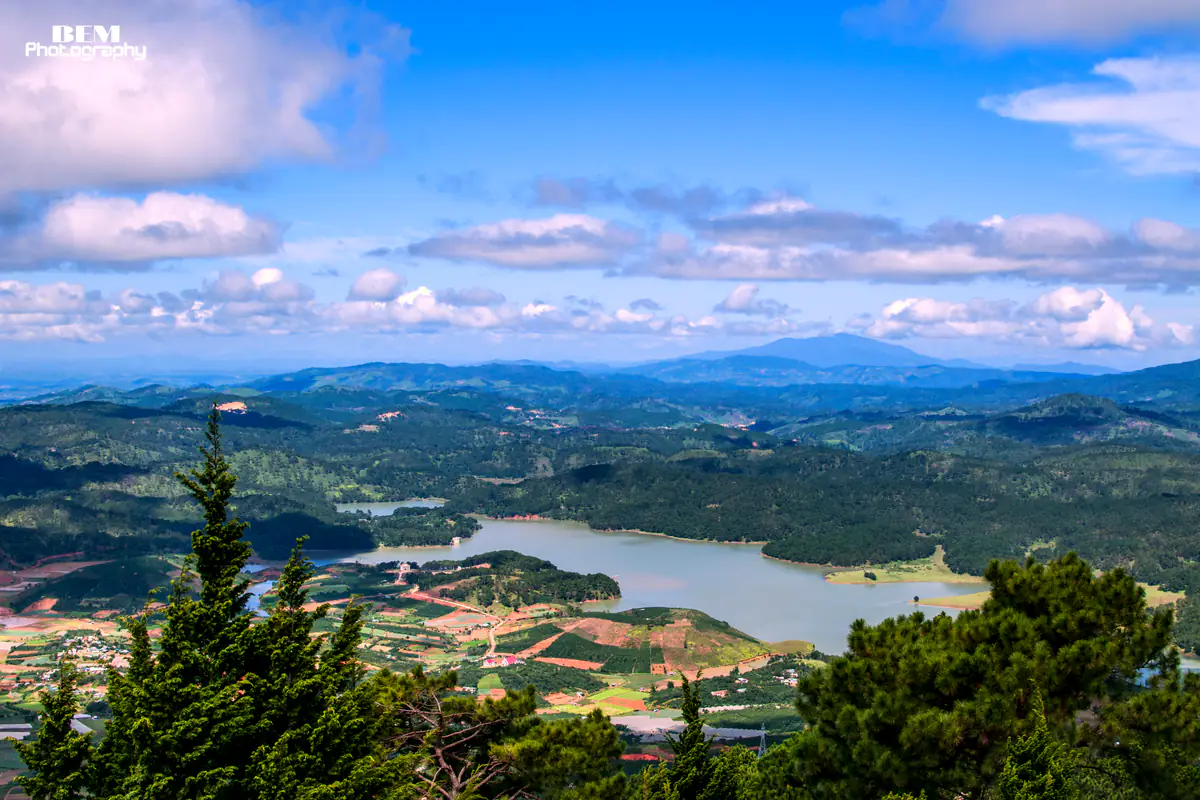
View from the top of Langbiang: Dankia Lake, pine hills and layers of mountains under a blue sky
Photo: Bem photography / CC BY 2.0
#05 · The roof of the plateau

Lang Biang Mountain (Núi Langbiang)

The highest peak of this massif reaches about 2,167 m, roughly 12 km north of the center. You can hike up or take a jeep to Radar Peak for a sweeping view of the valley and Dankia Lake.

Why go:
Big open views, ideal if you would rather move than spend another afternoon in a café.
Heads-up:
Only climb in dry weather; in the rainy season the trail is slippery and fog can hide the view.

Best for: Hikers and groups of friends

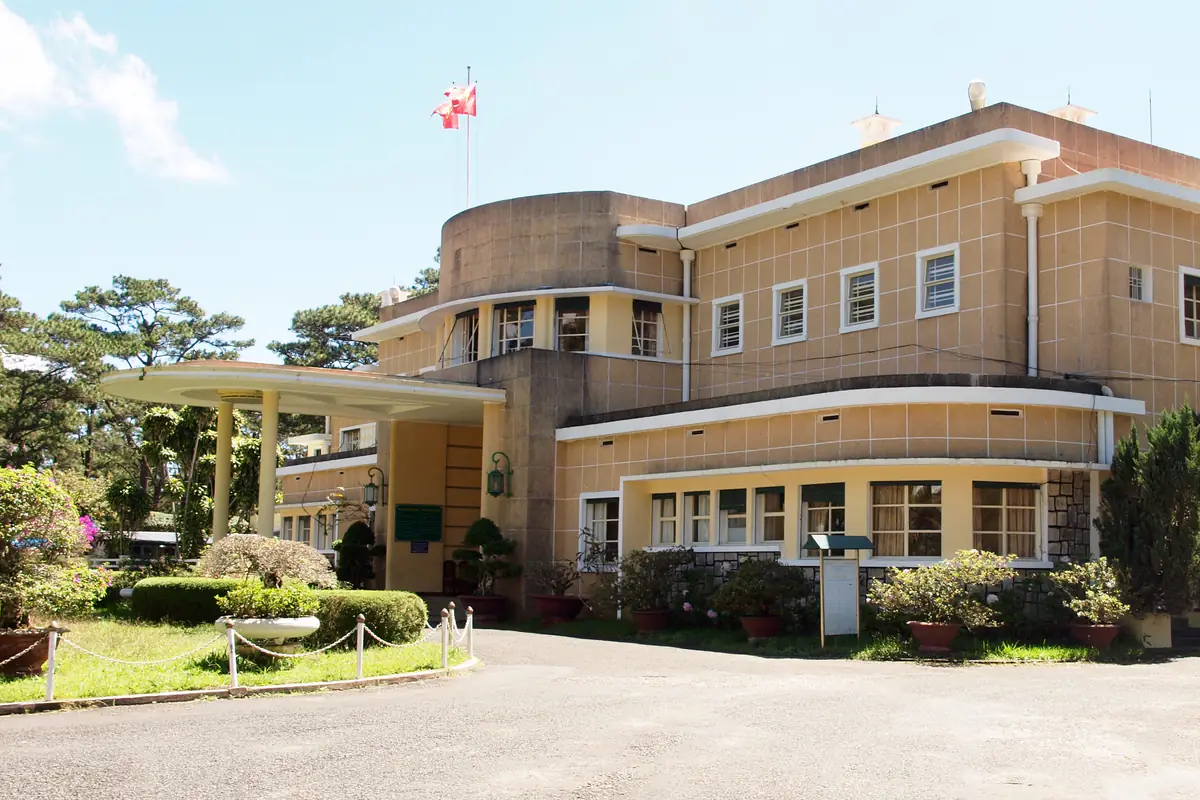
Bao Dai's Palace III in Da Lat, a pale yellow Art Deco villa among pine trees
Photo: Sandra Cohen-Rose and Colin Rose / CC BY-SA 2.0
#06 · History among the pines

Bao Dai’s Summer Palace, Palace III (Dinh Bảo Đại)

Emperor Bao Dai’s summer residence sits in a pine forest. Inside, the offices, living rooms and personal belongings still evoke the atmosphere of the 1930s to 1950s.

Why go:
Most of the visit is indoors, which makes it a safe choice on a rainy day.
Heads-up:
Bring socks, as some rooms ask you to take off your shoes or wear shoe covers.

Best for: History buffs and families

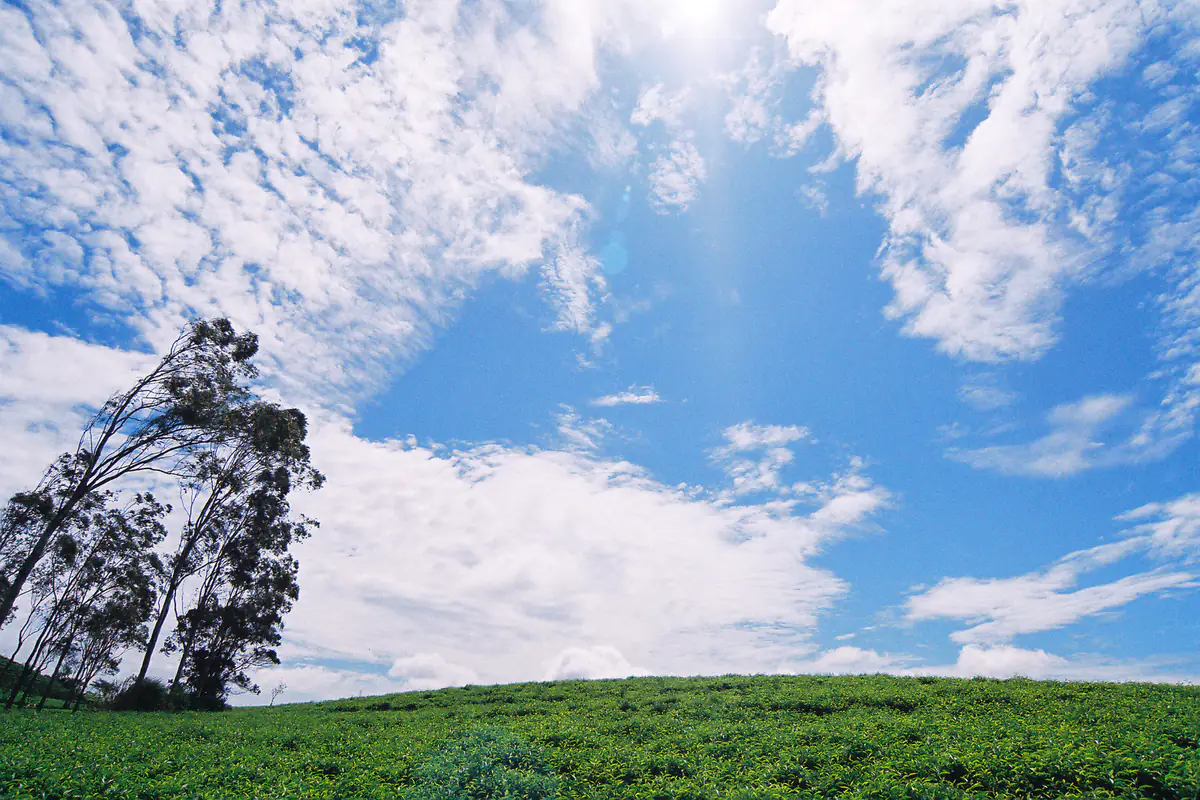
Green Cau Dat tea hills stretching under a blue sky with white clouds, near Da Lat
Photo: Hmoong / CC BY 2.0
#07 · Clouds at sunrise

Cau Dat Tea Hills (Đồi chè Cầu Đất)

About 20–25 km east of the center, rows of green tea bushes run down the slopes. On clear mornings, especially in the dry season, this is one of the best-known places to watch a sea of clouds.

Why go:
Clean air, natural scenery and the chance to visit a tea factory to see how the leaves are processed.
Heads-up:
You need to get up at 4–5am and dress very warmly; the clouds depend on the weather and do not appear every day.

Best for: Cloud hunters and nature lovers

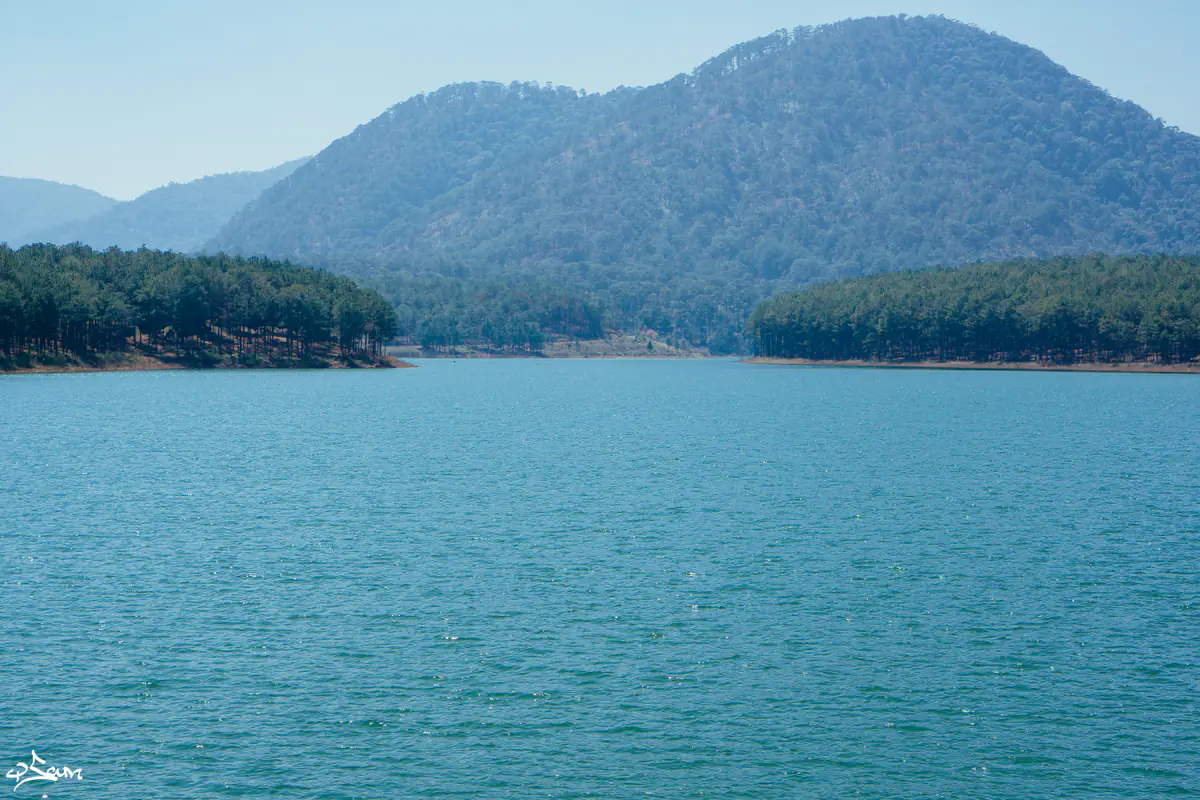
Deep blue Tuyen Lam Lake surrounded by pine-covered hills, Da Lat
Photo: Thai Ho / CC BY 2.0
#08 · Quiet among the pines

Tuyen Lam Lake and Truc Lam Monastery (Hồ Tuyền Lâm)

A wide lake ringed by pine forest south of town, near the Truc Lam Zen monastery. Take a walk, paddle a kayak or sit at a lakeside café to get away from the busy center.

Why go:
Open and airy, perfect if you want to slow down and genuinely rest.
Heads-up:
The monastery is a place of practice: cover your shoulders and knees and keep quiet.

Best for: Anyone who needs real downtime, couples

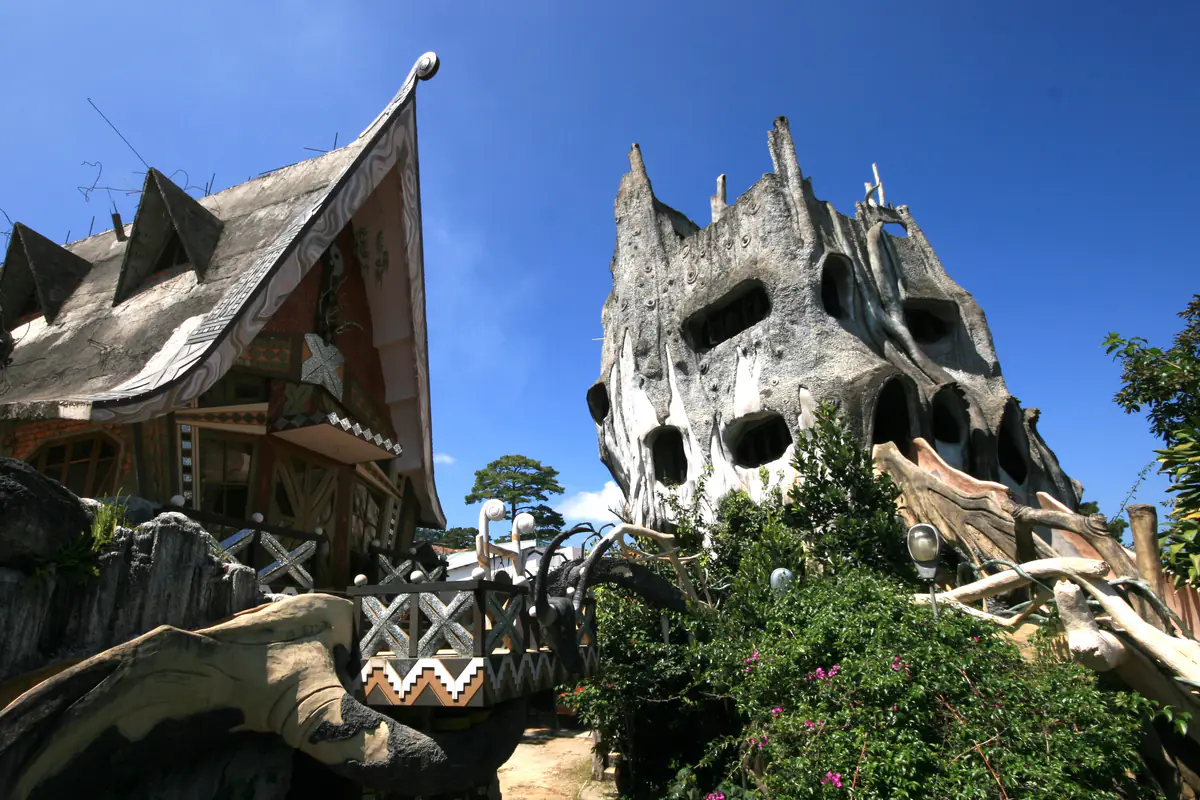
Hang Nga Guesthouse (Crazy House) in Da Lat, with its tree-trunk and cave-like architecture
Photo: ruben i / CC BY 2.0
#09 · A fairy-tale building

Hang Nga Villa, the “Crazy House” (Biệt thự Hằng Nga)

Designed by architect Dang Viet Nga, it is all winding walkways, spiral staircases and rooms shaped like tree trunks and caves. Many international visitors put it at the top of their Da Lat list.

Why go:
Truly unusual and largely covered, so it still works in a light shower.
Heads-up:
Paths are narrow and steep; not great if you are afraid of heights or pushing a stroller.

Best for: Curious explorers and creative photographers

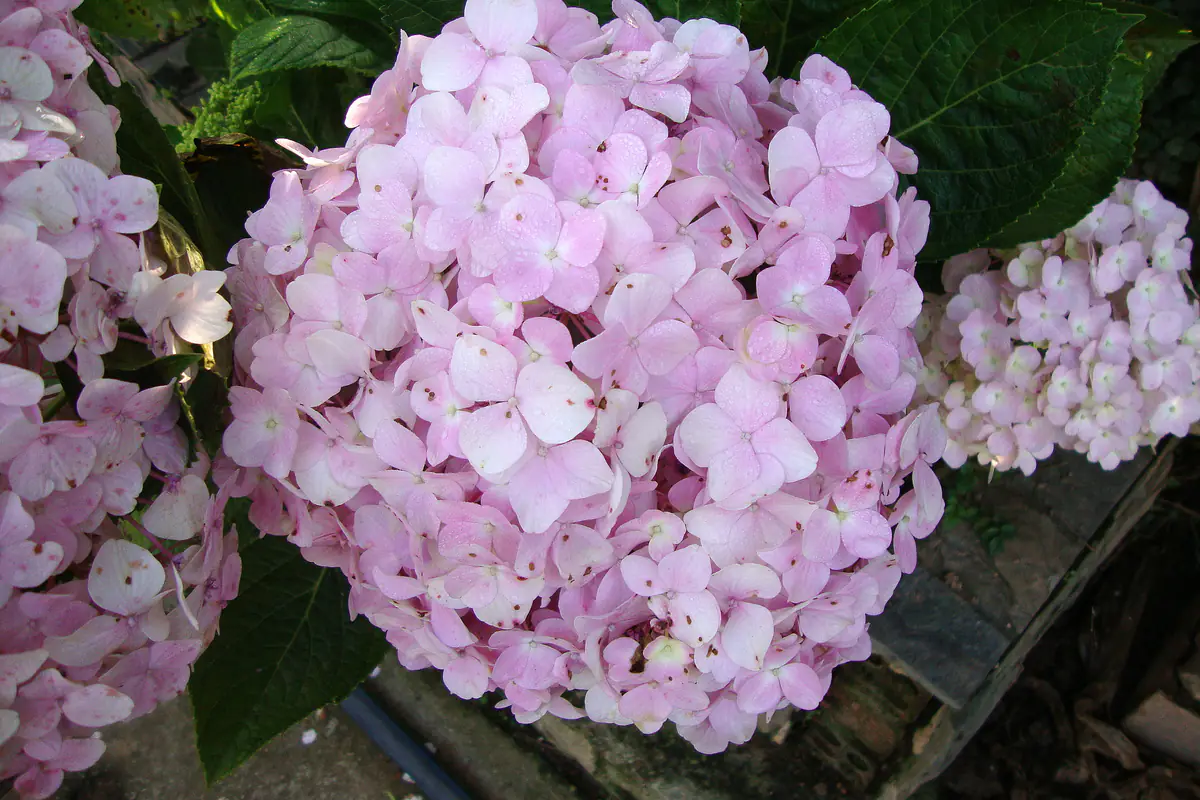
A cluster of pink hydrangeas in full bloom at the Da Lat Flower Garden
Photo: Prenn / CC BY-SA 3.0
#10 · The City of Flowers, in one park

Da Lat Flower Garden (Vườn hoa thành phố)

This flower park beside Xuan Huong Lake grows temperate species such as hydrangeas, roses and chrysanthemums. It is the easiest way to see why Da Lat is called the City of a Thousand Flowers without leaving town.

Why go:
Close to the center with flat paths, good for older travelers and small children alike.
Heads-up:
Do not pick flowers or step into the beds for photos.

Best for: Families and flower lovers

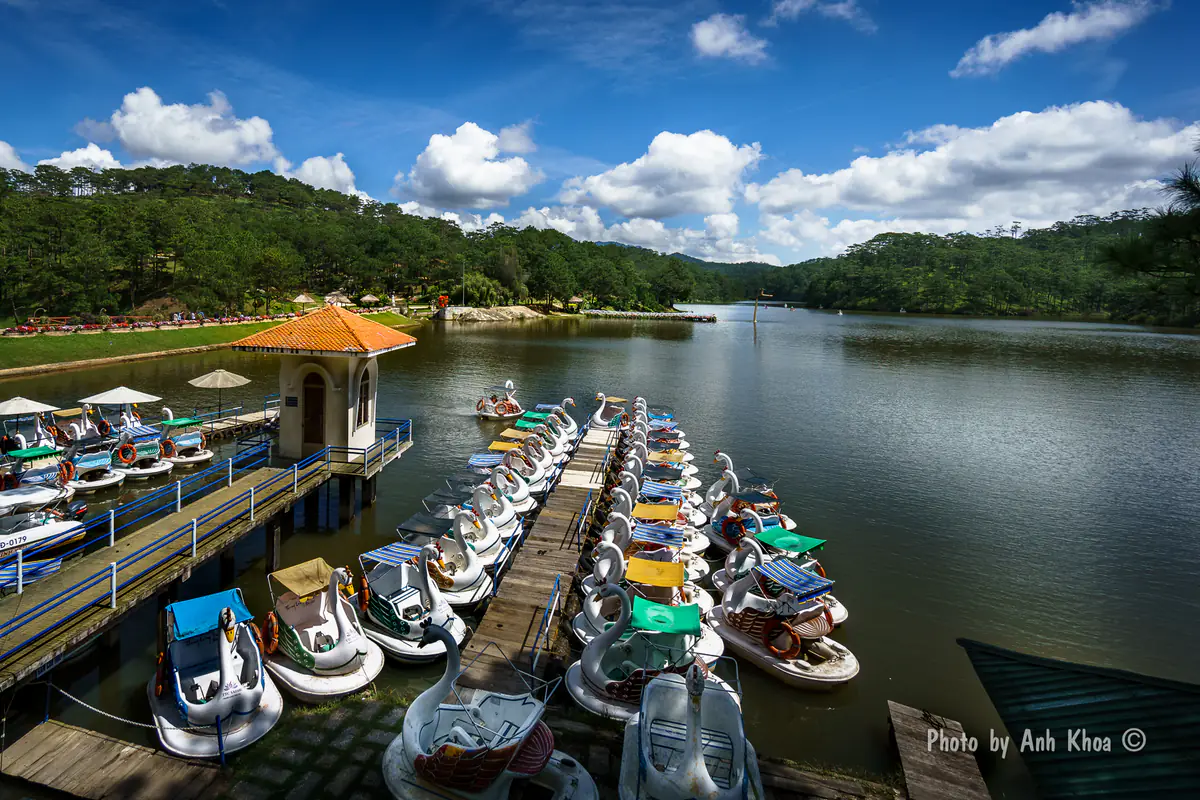
Da Thien Lake in the Valley of Love, Da Lat, with a swan pedal-boat pier and pine hills under a blue sky
Photo: Anh Khoa / CC BY-SA 2.0
#11 · A classic date spot

Valley of Love (Thung lũng Tình Yêu)

A tourist park about 5–6 km north of the center, with Da Thien Lake, pine hills and plenty of landscaped corners. It suits a relaxed half day.

Why go:
Large grounds with lots of photo spots and activities.
Heads-up:
Some scenes feel staged; if you prefer untouched nature, choose Tuyen Lam Lake instead.

Best for: Couples and friends on a first visit

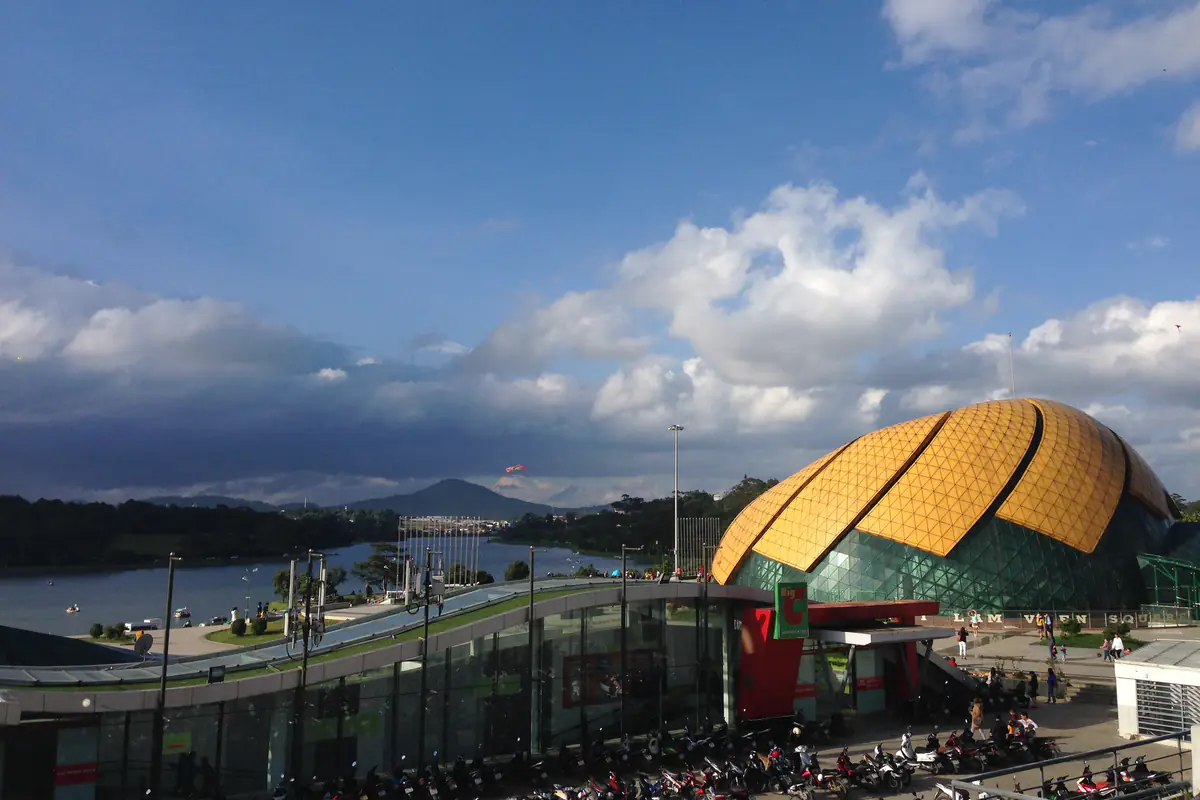
The glass wild-sunflower structure at Lam Vien Square beside Xuan Huong Lake, Da Lat
Photo: EA / CC BY-SA 4.0
#12 · The giant wild sunflower

Lam Vien Square (Quảng trường Lâm Viên)

A wide square beside Xuan Huong Lake with two glass structures shaped like a wild sunflower and an artichoke bud. In the evening it becomes a hangout for young locals and hosts many of the city’s big events.

Why go:
Spacious, central, with a café inside the glass building.
Heads-up:
It gets windy at night, so bring a jacket.

Best for: Groups of friends and anyone who likes an event buzz

Mini game

Can’t decide? Spin and let luck choose

Too many options in this Da Lat travel guide? Let the wheel decide for you. Filter by rain, early morning or evening, hit spin and get a place with a short review, the best time to go and directions.

Da Lat Slot

12 places

Tip: press Space to spin

Let fate decide!

Filter by weather or time of day, then spin. Every result comes with a short review, a heads-up and directions.

What to eat

Da Lat food: 8 local dishes to try at least once

Eating is half the fun of any trip up here, and no Da Lat travel guide is complete without a food list. The local cooking suits the cool weather: hot dishes, rich broths and food eaten straight from the stove. These are the dishes we think are most worth trying, each with a small tip for getting it right. We deliberately leave out specific restaurant names because quality changes over time; individual reviews will come in separate articles.

01

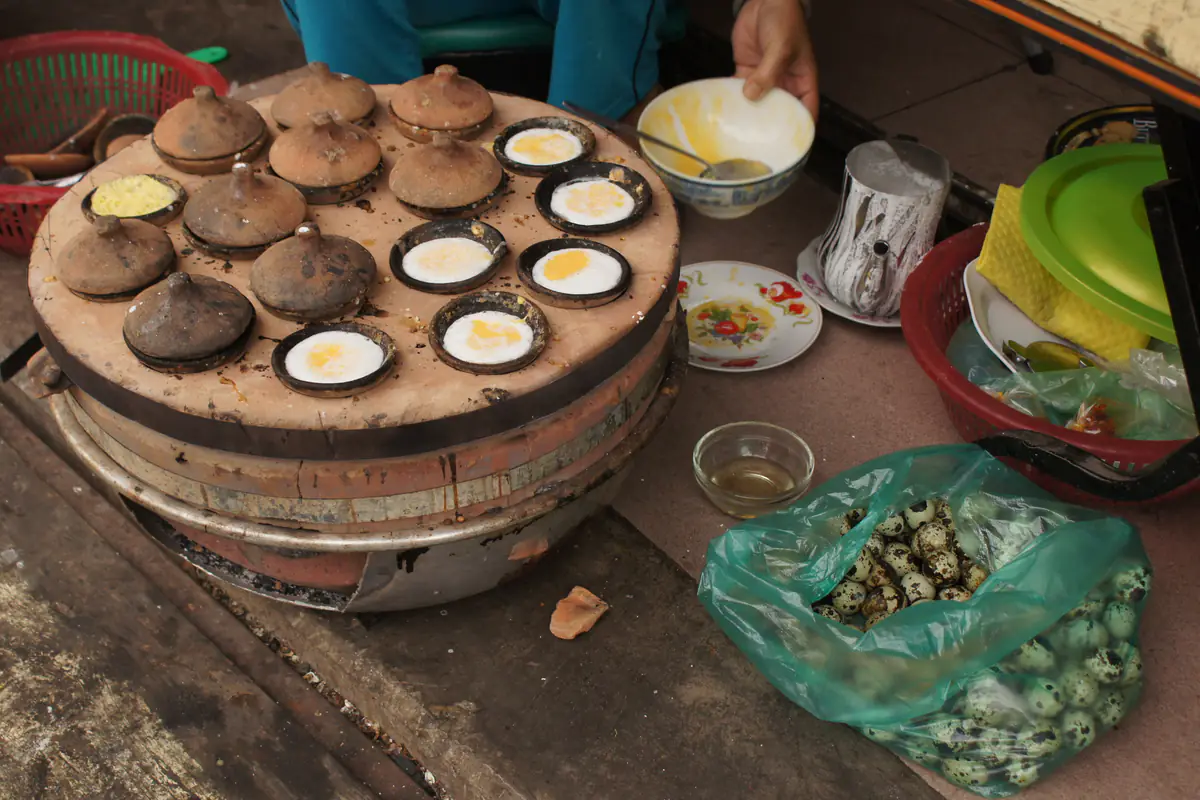
Bánh căn (mini rice-flour pancakes)

Small pancakes cooked in clay molds and served with dipping sauce and meatballs or quail eggs. The Da Lat version usually has plenty of toppings and is eaten piping hot, right beside the stove.

Tip: Eat them at the stall; they harden quickly once they cool, so skip takeaway.

02

Bánh tráng nướng (grilled rice paper)

Rice paper spread with egg, spring onion and sausage, grilled over charcoal and folded in half. A street snack tied to the memories of generations of visitors.

Tip: Best eaten straight off the charcoal at the night market or a sidewalk stall.

03

Lẩu gà lá é (chicken hotpot with é leaves)

Chicken hotpot cooked with é, a herb with a fresh, peppery aroma. Just right for a chilly evening.

Tip: Go as a group of three or four so one pot is the right size.

04

Sữa đậu nành (hot soy milk) and cakes

A glass of hot soy milk with sponge cake or cream puffs is a familiar light supper for Da Lat locals.

Tip: Look for soy milk carts busy with locals; they usually open from late afternoon.

05

Bánh mì xíu mại (meatball soup with bread)

A bowl of hot pork meatballs in a rich broth, eaten with crusty bread for dipping. The breakfast people mention most.

Tip: Go early; many places sell out before noon.

06

Kem bơ (avocado ice cream)

Smooth mashed avocado topped with coconut or durian ice cream. Sweet and rich, perfect for those rare sunny middays.

Tip: Have it at lunchtime on a sunny day; ice cream on a cold night can make your teeth ache.

07

Nem nướng (grilled pork rolls)

Grilled pork wrapped in rice paper with fresh herbs and dipped in a thick sauce. A favorite lunch or afternoon meal for groups of friends.

Tip: Ask the price per portion before you order.

08

Strawberries and artichoke tea (dâu tây, trà atiso)

Two of the area’s best-known farm products. Visit a strawberry farm to pick your own, or buy artichoke tea as a gift.

Tip: When buying gifts, choose brands with clear labels and a traceable origin.

Getting there

How to get to Da Lat: flights, buses and getting around

There are two main ways to start a Da Lat trip: fly into Lien Khuong Airport, or come by road on a long-distance bus or a limousine van. This part of our Da Lat travel guide helps you choose based on where you start, your budget and your time.

By air

Lien Khuong Airport is about 30 km from the center, a 40–50 minute drive. It reopened on August 19, 2026. Flying is the fastest option from Hanoi, Da Nang or other far-off cities; compare fares between airlines and book early for holidays.

By bus or limousine van

From Ho Chi Minh City the road trip is about 300 km and takes 6–8 hours, depending on the route and the state of the mountain passes. Overnight sleeper buses save you a night’s accommodation, while limousine vans have fewer, more comfortable seats and suit anyone prone to motion sickness.

Getting around town

Renting a motorbike is the most flexible way to reach places on the outskirts. If steep hills make you nervous, use taxis or ride-hailing apps. The area around Xuan Huong Lake, the market and the cathedral is easy to cover on foot in half a day.

What we’ve learned: if you are riding a motorbike up from a neighboring province in the rainy season, leave early so you are over the pass before the afternoon, when heavy rain and fog tend to roll in. Our Da Lat travel guide says it twice for a reason: always check the latest landslide news for the roads into Da Lat before you set off. Line-by-line costs, the status of every pass and a packing checklist are in our Da Lat travel tips.

Where to stay

Where to stay in Da Lat: hotels, homestays and which area to pick

Where you sleep shapes much of your trip. Instead of listing dozens of names, this Da Lat travel guide groups the options by area and by need, so you can filter quickly on booking platforms.

1The center (around Xuan Huong Lake and the market)

The most convenient base for first-timers without their own transport. The night market and restaurants are minutes away on foot. The downside: more noise and higher prices at weekends.

2The pine hills just outside the center

Many Da Lat homestays have pine-forest views and balconies for watching the morning mist. Quiet and good for groups of friends. You will need a motorbike or a ride to go out for dinner, as the roads are steep and dark.

3Around Tuyen Lam Lake

Home to most of the resorts and larger retreats, a good fit for families and couples who want a proper rest. It is a fair distance from the center, so budget for transport.

4Checklist before you book

Look at photos taken by guests rather than marketing shots; read reviews from the last three months; ask about hot water, heating, parking and whether the access road is very steep.

The year’s biggest event

Da Lat Flower Festival 2026: counting down to opening night

According to VOV (June 16, 2026), the 11th Da Lat Flower Festival carries the theme “Da Lat – A Harmony of Flowers and Music”. The opening ceremony is scheduled for the evening of December 19, 2026 at Lam Vien Square, and a New Year 2027 arts program combined with the closing ceremony will follow on the evening of December 31. This year’s focus is on bringing flowers, music and technology together, tied to the city’s status as a UNESCO Creative City of Music.

If your Da Lat travel guide plans point to December, remember this is the busiest stretch of the year-end season, so book rooms and bus tickets as early as you can. We will add the detailed program for each event once the organizers publish it officially.

--
days
--
hrs
--
min
--
sec

Opening planned for the evening of December 19, 2026

A cluster of pink hydrangeas in full bloom at the Da Lat Flower Garden
Photo: Prenn / CC BY-SA 3.0

Sample itinerary

A 3-day Da Lat itinerary for first-timers

If this is your first visit, the itinerary below from our Da Lat travel guide groups nearby places into the same half day so you spend less time on the road. Feel free to swap days 2 and 3 depending on the forecast; save the clearest morning for cloud hunting.

  1. 1

    Day 1

    Getting to know the center

    • Morning: check in, have bánh mì xíu mại for breakfast and walk around Xuan Huong Lake.
    • Afternoon: the Rooster Church, the Da Lat Flower Garden and Lam Vien Square.
    • Evening: the night market for grilled rice paper and hot soy milk, then a stroll through the walking streets.
  2. 2

    Day 2

    Clouds and pine forests

    • Dawn: head up to the Cau Dat tea hills for sunrise and, if the sky is clear, a sea of clouds.
    • Midday: back to the center for lunch and a rest, then a stop at Da Lat Railway Station.
    • Afternoon: Tuyen Lam Lake and Truc Lam Monastery; chicken hotpot with é leaves for dinner.
  3. 3

    Day 3

    Architecture and gifts to take home

    • Morning: Bao Dai’s Summer Palace and Hang Nga Villa (the Crazy House).
    • Midday: bánh căn and avocado ice cream; pick up gifts at Da Lat Market.
    • Afternoon: check out and head to the bus station or Lien Khuong Airport.

Travel tips

8 Da Lat travel tips we learned the hard way

Small things from our Da Lat travel guide that make a trip up to the highlands safer, cheaper and far more comfortable.

01

Check the mountain passes before you go

Landslides are common on the passes in the rainy season. Before your trip, read local government notices and the latest traffic news. It is the first rule of our Da Lat travel guide.

02

Pack warm layers, whatever the month

Days and nights can feel very different. A jacket, a scarf and thick socks cover you for most of the year.

03

Keep a raincoat in the bike

From May to October, sudden afternoon showers are normal. A two-piece rain suit works better than a poncho when riding uphill.

04

Book early for holidays and Tết

Weekends and long holidays bring a surge of visitors, and room rates and some services go up. Book at least a few weeks ahead.

05

Ask the price before you order

Most places display clear prices, but in busy tourist areas it is still worth asking first, especially for grilled seafood and packaged specialties.

06

Ride carefully on the hills

Da Lat is full of steep roads, and morning fog cuts visibility. Test the brakes when you rent a motorbike, keep your lights on and take it slow.

07

Leave the flowers, take your trash

Flowers are a farming livelihood and part of the shared landscape. Take all the photos you like, but do not break branches, step into flower beds or leave litter.

08

Get up early

Before 8am is when Da Lat looks its best: mist, soft light and few people. Many popular photo spots are only truly quiet at this hour, a tip locals give and one every Da Lat travel guide should repeat.

Fresh off the press

Latest from our Da Lat travel guide

Transparency

Why trust this Da Lat travel guide?

We write for people who are actually about to visit, so we care more about accurate, usable information than about praise. Every article goes through the same process, which we publish in our editorial policy.

  1. Real experience

    We favor places we have visited and dishes we have eaten, and we say when we experienced them.

  2. Checked sources

    Figures, traffic news and event dates link to official bodies or established newspapers.

  3. No paid praise

    Any sponsored or partnered content is clearly labeled at the top of the article.

  4. Regular updates

    Prices, opening hours and road conditions in this Da Lat travel guide are reviewed again, with the update date shown.

Quick answers

Da Lat travel guide FAQ

Where is Da Lat, and why do addresses now say “Xuan Huong - Da Lat”?

Da Lat is on the Lam Vien Plateau in Lam Dong Province, in Vietnam’s Central Highlands. On July 1, 2025 the former Da Lat City was replaced by five wards that all keep the Da Lat name: Xuan Huong - Da Lat, Cam Ly - Da Lat, Lam Vien - Da Lat, Xuan Truong - Da Lat and Lang Biang - Da Lat. It is still the same Da Lat for travelers; only the address format changed. So when a hotel lists “phường Xuân Hương - Đà Lạt”, read it as the Xuan Huong ward of Da Lat.

How many days do I need in Da Lat?

For a first visit, three days and two nights is enough to see the central sights, go cloud hunting one morning and try most of the local food, as our Da Lat travel guide itinerary shows. If you want a slower pace, a proper rest or time for the outskirts, plan four to five days.

What is the weather like in Da Lat in October and November?

October is the end of the rainy season, with afternoon showers and plenty of fog. In November the weather dries out and turns chilly, and wild sunflowers bloom yellow across the hillsides. Many travelers pick this change of season for their trip, which is why this Da Lat travel guide rates November so highly.

Is Lien Khuong Airport open again?

Yes. Lien Khuong Airport resumed flights on August 19, 2026, after closing on March 4, 2026 for runway upgrades. Check the exact schedule with your airline before you book; we update this Da Lat travel guide as schedules change.

When is the Da Lat Flower Festival 2026?

The 11th Da Lat Flower Festival is scheduled to open on the evening of December 19, 2026 at Lam Vien Square, with a New Year arts program and the closing ceremony on the evening of December 31, 2026. Its theme is “Da Lat – A Harmony of Flowers and Music”. Our Da Lat travel guide will add the full program once it is published.

Should I stay in a hotel or a homestay in Da Lat?

Central hotels make getting around easy and suit short trips. Homestays suit groups of friends who want their own space and pine-hill views. Whichever you choose, check real guest photos, recent reviews, hot water and parking, as the stay section of this Da Lat travel guide explains.

Is the rainy season a bad time to visit Da Lat?

Not if you keep your plans flexible. Mornings are usually dry and the rain tends to come in the afternoon. Favor places with a roof, check the forecast every day and avoid the mountain passes whenever there is a landslide warning. Our Da Lat travel guide weather tool above can help you pick the day.