Best time to visit Da Lat: pick your month by weather, crowds, price or flowers
The quickest way to settle on the best time to visit Da Lat is to shortlist the months with least rain, then steer clear of the public holidays inside them if you want thinner crowds and lower prices. This guide ranks all twelve months against six priorities so you can pick one and stop reading forecasts.
By Da Lat LoversPublished Updated How we review
You have one holiday left this year and you want to spend it in Da Lat. Picking the month takes two steps. First, shortlist the months with least rain, because rain is what changes most from month to month here. Second, if you want thinner crowds and a smaller bill, steer clear of the public holidays that fall inside those months.
Those two steps settle it for most travellers. What is left is what you weight most: dry skies, thin crowds, the room bill, your odds of catching a sea of clouds, one specific flower season, or the comfort of the grandparents and toddlers travelling with you. This guide sorts all twelve months against those six.
How many seasons does Da Lat really have?
Da Lat has two seasons, wet and dry. The practical marker to remember is that rain thickens from April and only really thins out again from November. April already averages 12.8 rainy days and May jumps to 20.5; going the other way, November is back down to 11.5 and December to 5.9.
Our take is to treat April and November as hinge months rather than to draw a hard line between two seasons. April has rain but not yet a lot of it; November has rain but it is thinning out. Both suit travellers who want to avoid either extreme.
Worth knowing: published descriptions of the rainy season vary widely, from May to September, from June to October, or a dry season stretching November to May, so do not lean on any single shorthand (Thanh Nien, VnExpress International). The long-term rainy-day counts in the Wikipedia climate table, drawn from Dia chi Da Lat, are the steadier measure.
One more thing before you compare months. Da Lat gets about 1,808.6 mm of rain across 176.8 days a year, and relative humidity never drops below 77% in any month. There is no dry month in the desert sense, only months with less rain. You are choosing a rain level, not choosing between dry and damp. Hourly temperatures and a comparison with your home city are in our Da Lat temperature guide.
What is the best time to visit Da Lat for your priority?
Six sections, one answer each. Find the one that matches you and skip the rest.
If you want dry, sunny days: January or February
January is the driest month of the year: 9.1 mm of rain, 2.2 rainy days and 237.4 hours of sunshine. February is almost its equal at 20.5 mm, 2.5 rainy days and 231.1 hours of sun, with slightly warmer afternoons (23.9°C against 22.3°C).
The trade is cold. January is the coldest month of the year, averaging 15.9°C with nights near 11.7°C and a record low of -0.1°C. If you feel the cold, take February. If two consecutive dry mornings matter more than anything else, January offers the best odds on the calendar. Best odds is not a guarantee: an average of 2.2 rainy days still means 2.2 rainy days somewhere in the month.
The trap in both months is Tet, the Lunar New Year, which falls in late January or in February depending on the year and changes the city completely for a week. Settling on the month still leaves the dates, so read the peak-period section below before you book.
If you want thin crowds and soft room rates: the 12th lunar month
This one gets overlooked. According to Viet Nam News (5 February 2026), the 12th lunar month is considered a low season in Da Lat, because visitors tend to wait until the Tet holiday to travel. That month usually falls across January on the Gregorian calendar.
The result is a rare window: the driest weather of the year, the first cherry blossoms already out, and a city that is still quiet. The same report notes that in 2026 the blossoms lined Le Dai Hanh slope, Ho Tung Mau Street and the road around Xuan Huong Lake, and that the Valley of Love recorded roughly 30% more visitors than the same period in 2025.
A second price marker: Thanh Nien (30 December 2025) reported that just before the 2026 New Year holiday most Da Lat properties still had rooms, at normal rates of roughly VND500,000 to VND800,000 a night. Working out a full trip budget is covered in our Da Lat trip cost tool.
If you want a sea of clouds: the shoulder months, not the driest ones
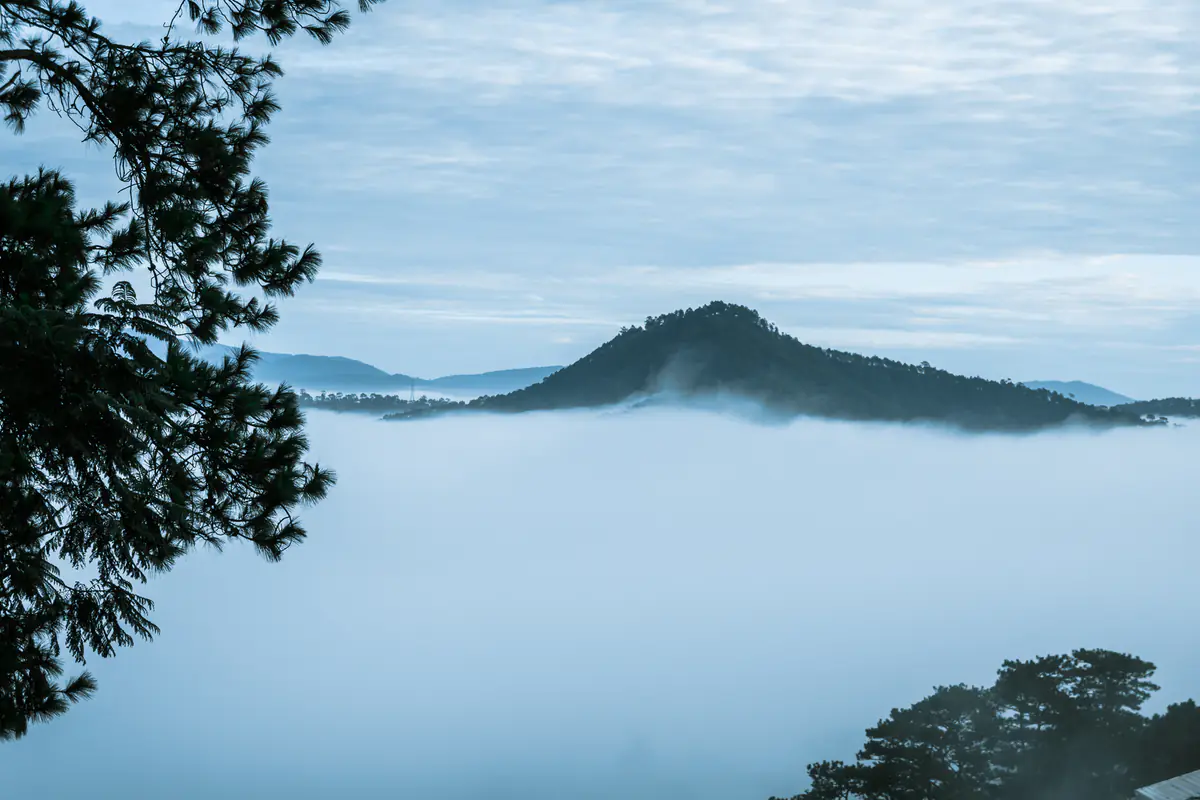
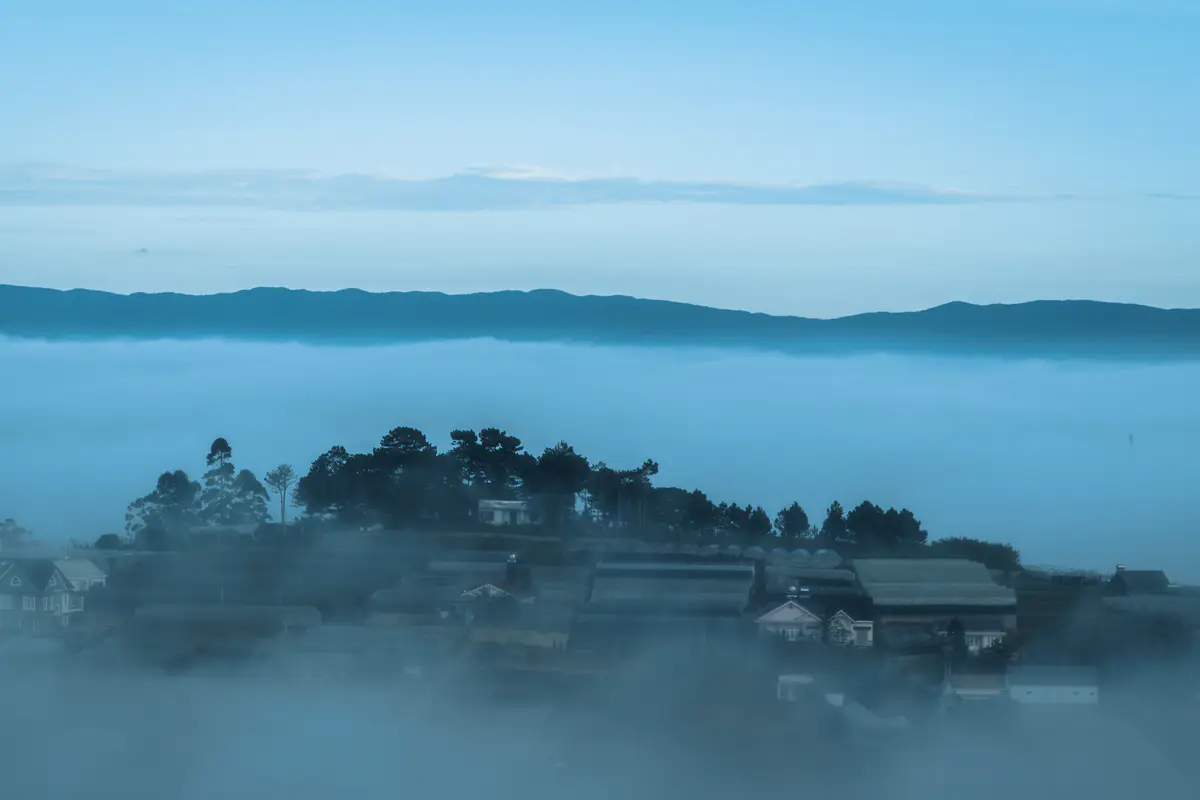
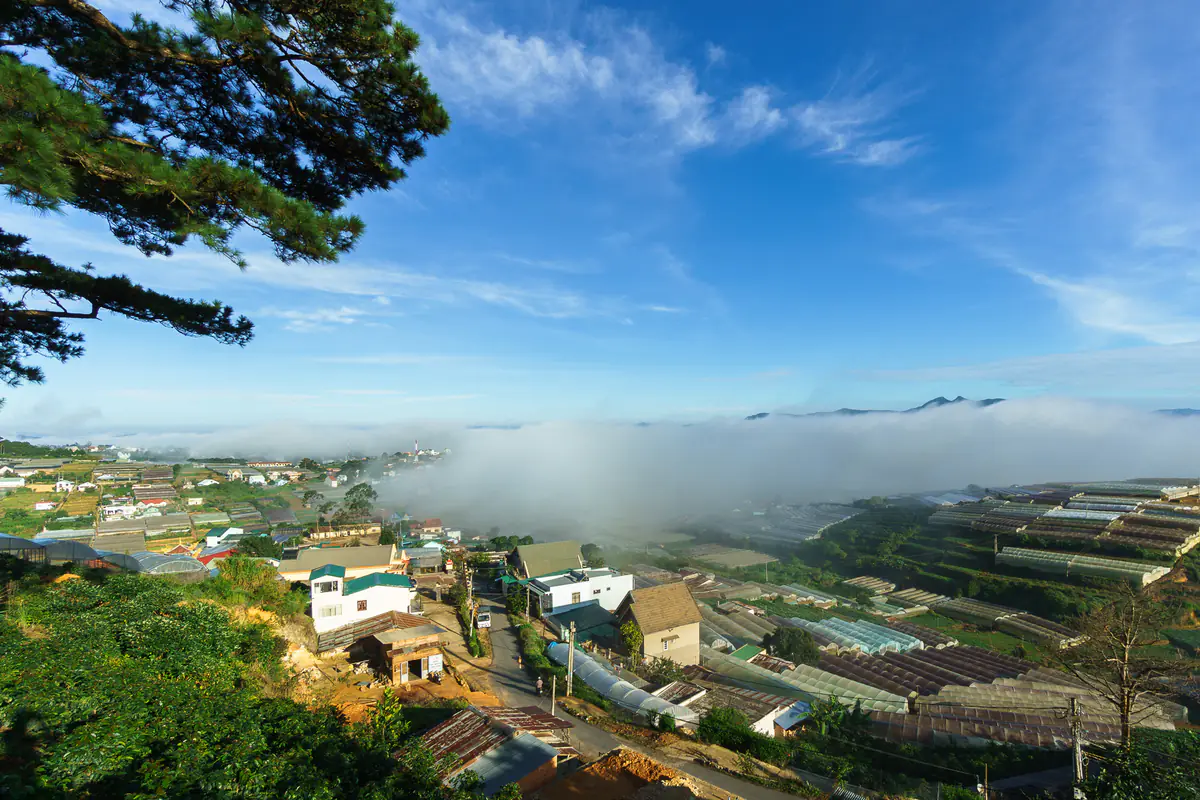
Most people assume the dry season is cloud-hunting season, but the two shoulder stretches give the best odds: roughly April to May, and late October into November. Our reasoning is simple. A sea of clouds needs two things at once, high humidity and a clear night. Mid rainy season has the moisture but often an overcast sky; mid dry season has the clear nights but not the moisture. Only the shoulders reliably have both.
Published windows vary a lot, from the rainy season of May to October, to June through August, to spring and summer in general (CafeF, VnExpress, VnExpress). Tuoi Tre (6 April 2026) reported that Da Lat entered its cloud-hunting season in early April, with visitors heading up the high hills from 4:30am.
Whichever month you pick, whether a given morning delivers depends on the night before. Specific hills, departure times and safety notes are in our cloud hunting guide.
If you are coming for one flower season: four dates to remember
When a single flower is the point of the trip, the month answers itself. Four seasons get asked about most:
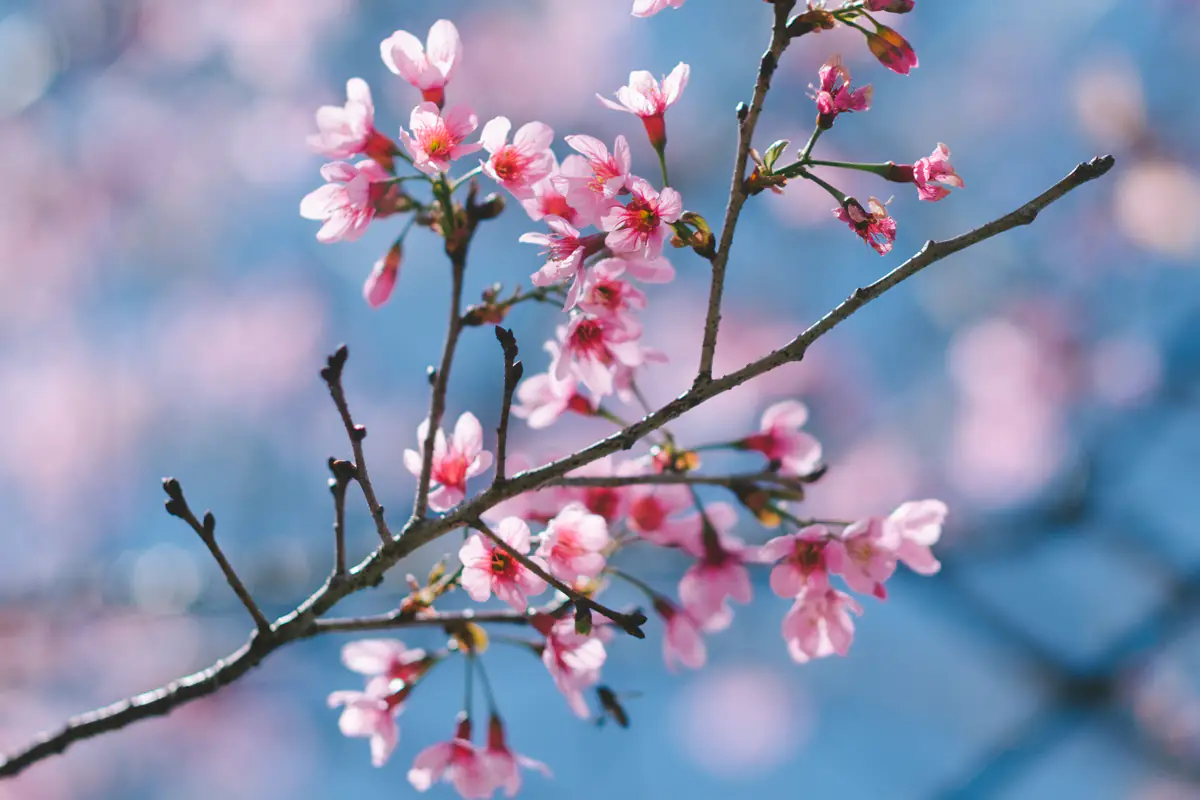
- Mai anh dao, the wild Himalayan cherry: late December to early February, with each tree peaking for one or two weeks. VnExpress (6 January 2026) reported that the 2025-2026 season ran 10 to 15 days early after a cold snap.
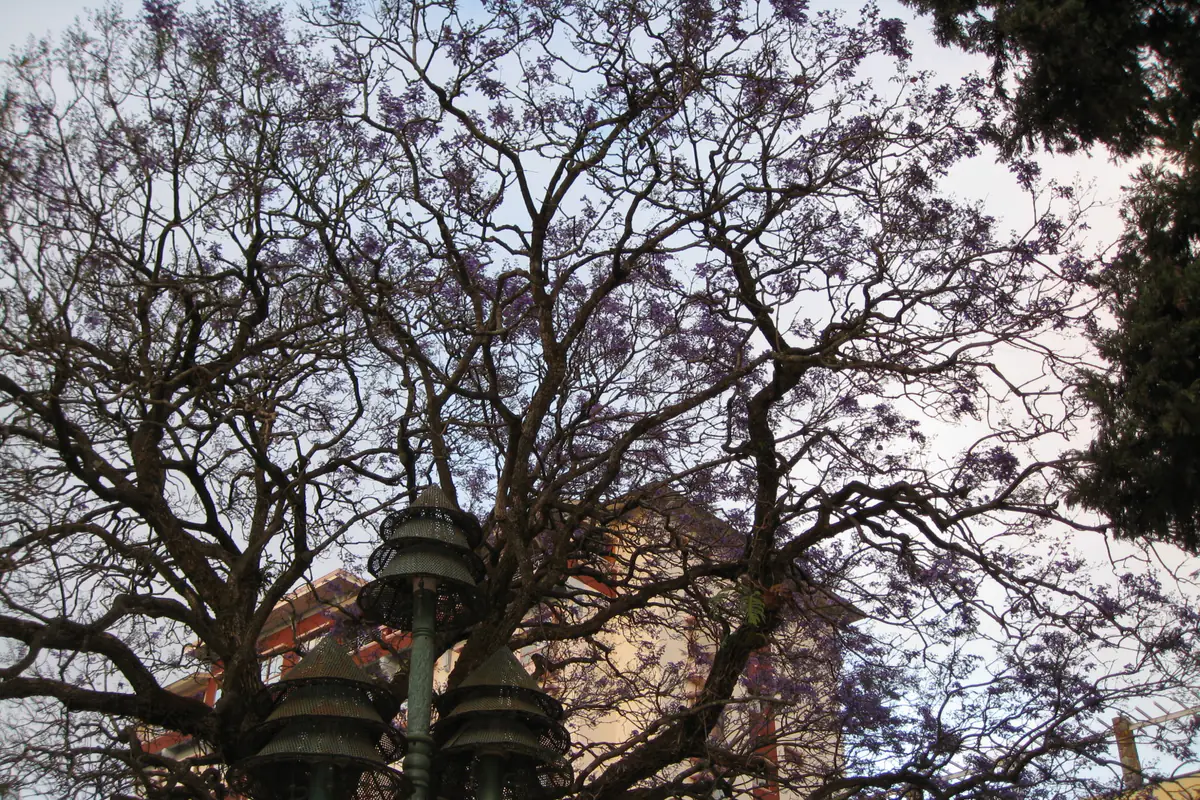
- Jacaranda: Kenh14 (20 March 2026) reports that hundreds of jacaranda trees on central streets bloom across March and April, most evenly along Nguyen Thi Minh Khai Street.
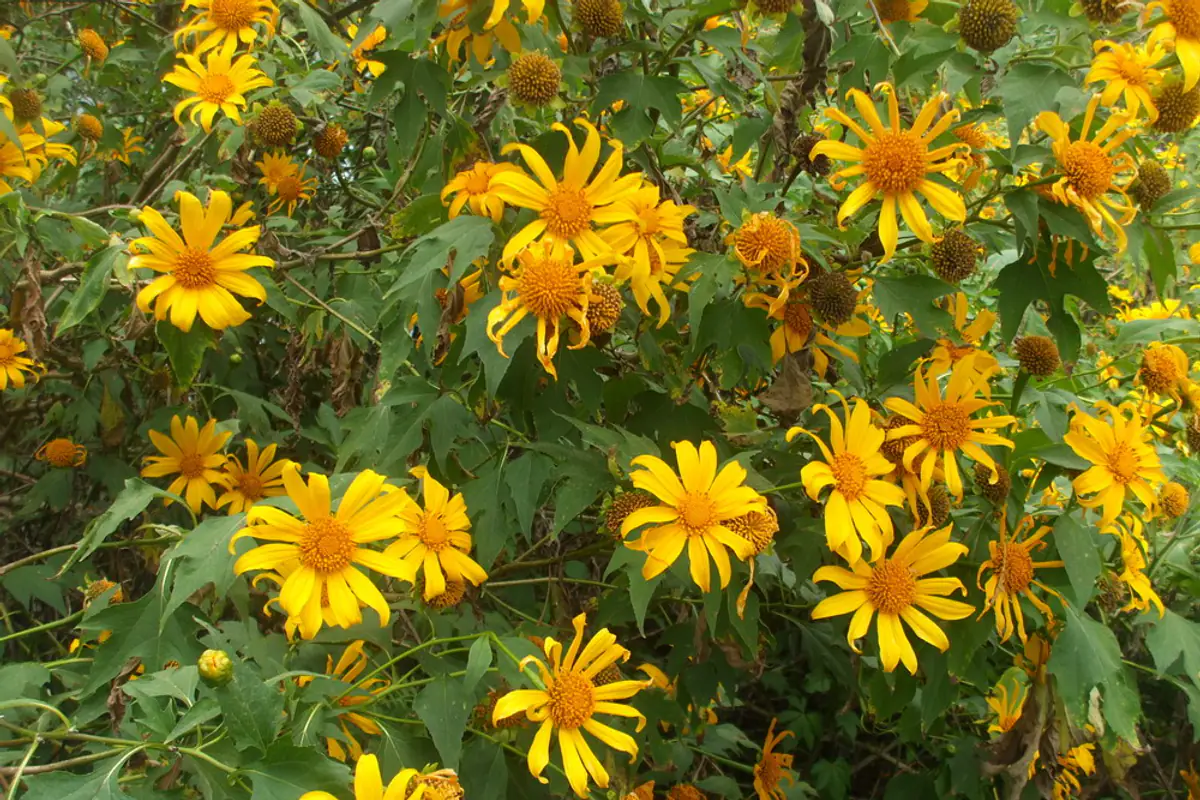
- Wild sunflowers: October to December, peaking in November. VietNamNet (1 February 2020) places them in the same October to December window as the annual Vietnamese-language coverage.
- Pink grass: VnExpress (26 November 2023) gives early November to the end of December, at its best around late November and only in the first light of morning.
One caveat for all four: flowers do not follow calendars. An early cold spell or a long wet month can shift a season by two weeks in either direction. The full twelve-species calendar, with a source for each one and a golden-hour calculator, is in our Da Lat flower season calendar.
If you are travelling with small children or older parents: March or November
For this group the question is really which month tires nobody out. What you are avoiding is not rain but the day-night temperature swing and long waits outdoors. January and December get genuinely cold after dark, and June through September can rain every afternoon.
March averages 18.1°C with nights near 13.0°C and only 5.8 rainy days. November averages 17.5°C with nights at 14.6°C and 11.5 rainy days, though those showers are usually short. March carries no public holiday at all. November has gained one, 24 November, so sidestep a few days around that date and queues at the attractions stay short.
Layering advice for each temperature band is in what to wear in Da Lat. When booking, ask about thick blankets and reliable hot water: the swing between afternoon and dawn is larger than first-time visitors expect.
If the budget is tight: May, September or October
These three sit inside the rainy season, which makes them the easiest months on your wallet. May opens the rainy season with 20.5 rainy days, September is the peak at 24, and October eases back to 20.
Do not book the first week blind, though. According to the Vietnam Government Portal, in 2026 the April 30 and May 1 break runs from 30 April to 3 May, and National Day is a holiday from 1 to 3 September after a working-day swap. Of these three months, only October has no public holiday in it. Shifting to the second or third week of May and September avoids both breaks.
The way to use them is simple: put everything outdoors in the morning. Thanh Nien (2 July 2023) describes Da Lat rain as falling in the afternoon and evening, about an hour at a time, and advises staying central, along Phan Boi Chau, around Xuan Huong Lake or in the Hoa Binh area, rather than in the pine forest or beside a stream where falling trees and landslides are a risk.
If money is your binding constraint, September or May will usually beat December or February at the same property, as long as you stay clear of the holidays at the start of each.
All 12 months side by side: temperature, rain, crowds, flowers
This table is where you answer the question for yourself instead of trusting whichever month gets mentioned most often. The temperature and rain columns come from the long-term climate table on Wikipedia, which draws on Dia chi Da Lat. The crowd column is our own judgement, based on the public holiday calendar and the figures in the peak-period section below, not on monthly visitor counts.
| Month | Mean temp | Rainy days | Busy or quiet | What is happening |
|---|---|---|---|---|
| January | 15.9°C | 2.2 | Quiet before Tet, packed if Tet lands here | Cherry blossom, first white bauhinia |
| February | 16.9°C | 2.5 | Packed if Tet lands here, then drops off fast | Late cherry blossom, white bauhinia |
| March | 18.1°C | 5.8 | Quiet, no national holiday | Jacaranda, coffee blossom |
| April | 19.0°C | 12.8 | Busy over Hung Kings’ day and April 30 | Late jacaranda, cloud-hunting season opens |
| May | 19.5°C | 20.5 | Quiet apart from the April 30 to May 3 break | Afternoon rains begin |
| June | 19.2°C | 21.2 | Filling up, school summer holidays | Steady afternoon rain |
| July | 18.8°C | 23.8 | Summer peak, weekends fully booked | Afternoon rain, heavy morning mist |
| August | 18.6°C | 23.1 | Still busy until mid-month | Wet; persimmons setting fruit |
| September | 18.5°C | 24.0 | Quietest wet month, bar the September 2 break | Rainfall peak, thick mist |
| October | 18.2°C | 20.0 | Quiet, busy only at weekends | First wild sunflowers, persimmon harvest |
| November | 17.5°C | 11.5 | Fairly quiet; weekends and 24 November busier | Wild sunflowers at their peak, pink grass |
| December | 16.4°C | 5.9 | Very busy in the last two weeks | Pink grass, Flower Festival, Christmas, New Year |
Three things this table shows that no single-month guide can. First, the temperature range across the whole year is tiny: from 15.9°C to 19.5°C. No month in Da Lat is hot, so temperature is rarely a reason to rule a month out.
Second, what separates the months is rain, not heat. Going from 2.2 rainy days in January to 24 in September is more than a tenfold difference. That is the axis worth deciding on.
Third, the crowd column runs almost exactly opposite to the rain column. Dry months are busy; wet months are quiet. The most useful exception is November and the first half of December, when the rain has gone but the crowds have not yet peaked.
Which months should you skip, and what exactly are you avoiding?
Plainly: if your trip is mostly outdoors and your daily schedule cannot move, the two hardest months are August and September.
September brings 283.4 mm of rain across 24 days, meaning roughly three days in four see rain, and just 126.5 hours of sunshine, the lowest of any month. August follows closely with 238.3 mm, 23.1 rainy days and 90.4% humidity, the year’s highest. The mountain passes carry their own risk in this stretch.
Skipping, though, is not the only option. Both months work if you change how you travel: outdoors in the morning, indoors in the afternoon, central accommodation rather than a cabin in the pines, and no attraction that needs a climb up a dirt slope. That is exactly what Thanh Nien advises, along with a list of flood-prone streets: Phan Dinh Phung, Tran Quoc Toan, Bui Thi Xuan and the area near Cam Ly stream.
Three months when you should check road news first
August, September and October are when landslides on the routes up to Da Lat get reported most often. A few days before you travel, check the bulletin at nchmf.gov.vn and the news for your specific route, then fix your departure time. Crossing the passes in daylight is safer than at night in all three months.
There is a second kind of month to avoid that has nothing to do with weather: the peak dates. If crowds bother you, the three or four days around Tet and the April 30 holiday will ruin a trip faster than any September downpour.
Tet, April 30, summer and the Flower Festival
These four periods shape your room bill and your time stuck in traffic more than the weather does. They are not equally bad, so do not lump them together.
First, the 2026 public holiday dates, from the Vietnam Government Portal: Hung Kings’ Commemoration Day is a break from 25 to 27 April, the April 30 and May 1 holiday runs 30 April to 3 May, and National Day runs 1 to 3 September. Add Tet, and those are the four windows to avoid if crowds bother you.
There is also a new date that older itineraries miss. From 2026, 24 November is Vietnamese Culture Day, and workers get the day off on full pay under Resolution 28/2026/QH16 (Vietnam Government Portal). In 2026 it falls on a Tuesday. A proposal from the Ministry of Home Affairs would swap working days to make it a four-day break, but that has not been confirmed, so check the official announcement before booking around it.
Tet: the busiest and most expensive week
Dan Tri (21 February 2026) reported that in just three days, 18 to 20 February 2026, Lam Dong province received more than 910,000 visitors, up 29% on the same days of Tet 2025. That is the province-wide figure, not Da Lat alone; the report gives no separate count for the city.
In the same report, average occupancy across the province hit 75-80%, and 85-95% at three to five star hotels, with many properties full. One hotel owner in Da Lat said room rates had tripled compared with normal days, which is one property’s figure rather than a city-wide rate.
April 30 and May 1: busy, but not evenly
In 2026 this break is four days long, 30 April to 3 May. A long holiday does not mean gridlock from day one. CafeF (2 May 2025), quoting an official from the Da Lat city culture, science and information office, reported advance bookings of around 70% for that year’s April 30 and May 1 break. On the morning of May 1, some central hotels still had vacancy signs up, and the surge only arrived that afternoon, mainly from Ho Chi Minh City and the southeast.
The practical use of that: if you have to travel over the April 30 break, the first day is usually easier than the middle ones, while the final afternoon is the worst time to be on the road home. If your dates are locked to company leave, the choice is which day inside the holiday, not which month.
Summer, June to August: busy by the weekend
VietnamPlus (14 July 2026) reported that Lam Dong province welcomed close to 12 million visitors in the first half of 2026, up more than 18% year on year. At peak weekends many central Da Lat properties run at 80-90% occupancy.
In other words, summer is busy on a weekly rhythm rather than evenly. A midweek trip in June or July can still find a fairly quiet city, as long as you accept more than 21 rainy days in the month. For families tied to the school holidays, the real choice is a weekday rather than a month.
The Flower Festival: the last two weeks of December
According to Thanh Nien (16 June 2026) and the Lam Dong Investment, Trade and Tourism Promotion Centre (15 June 2026), the 11th Da Lat Flower Festival opens on the evening of 19 December 2026 at Lam Vien Square and closes on the evening of 31 December 2026, under the theme of flowers and music.
Those two weeks pack the festival, Christmas and New Year’s Eve into a very short window. If you want December without the crush, take the week of 7 to 18 December: the weather has already dried out, the pink grass is still good, and the streets are not yet full. The full programme is in the Flower Festival 2026 section of our homepage.
October, November or December: what actually differs?
The final quarter draws the most searches and contains the three most different months of the year. One verdict each, then read the dedicated guide once you have narrowed it down.
- October is the tail of the rainy season: 20 rainy days, but the rain lands in the afternoon, mornings are misty, the first wild sunflowers appear and prices are still soft. Full detail in Da Lat weather in October.
- November is the most comfortable of the three: rain down to 11.5 days, wild sunflowers at their peak, pink grass starting, and only one public holiday, 24 November, to work around. Full detail in Da Lat weather in November.
- December has the driest, coolest daytimes (21.4°C, 5.9 rainy days) but the last two weeks are packed because of the Flower Festival and the end-of-year holidays. Full detail in Da Lat weather in December.
Comparing only these three, we would put November ahead for first-time visitors: the rain has thinned, the flowers are out, prices have not climbed, and there is only one holiday date to plan around.
English-language coverage lands in a similar place from a different angle. Tuoi Tre News (25 October 2018) calls the season of “wintry sunshine” from late October through March the most beautiful stretch in Da Lat, and notes that the cold peaks at New Year, when the city’s flowers open and its tourist season begins.
So what is the best time to visit Da Lat for you?
No month wins all six criteria, which is why the best time to visit Da Lat only becomes answerable once you know which traveller you are. Sorted that way, here is how we would pick.
- First trip, lowest risk: November or March. Little rain, comfortable by day and by night, and at most one holiday date to plan around.
- You want the lowest chance of rain: January, avoiding the Tet week, and pack properly for 11-12°C nights.
- You need it cheap: September or May, travelling midweek, skipping the holiday at the start of the month and moving everything outdoors to the morning.
- You are coming for flowers: let the flower choose. Cherry blossom in January, jacaranda in March, wild sunflowers in November, pink grass in late November.
- You are coming for clouds: April or May, or late October into November, and you have to be up at 4am.
- You are travelling with parents or small children: March, which avoids both the cold nights and the long wet afternoons.
One last point. Long-term averages tell you what a month usually does, not what your week will do. Once the month is settled, check the forecast two or three days out at nchmf.gov.vn or on our live weather widget. That is the step that turns a statistically sound choice into a trip that actually works.
FAQ
What is the best time to visit Da Lat if you only go once a year?
If nothing else constrains you, November is the most balanced month: 17.5°C on average, only 11.5 rainy days, wild sunflowers at their peak and pink grass starting. Its one public holiday is 24 November, Vietnamese Culture Day, a paid day off from 2026, so plan around that date. March is the strong alternative with 5.8 rainy days, the jacaranda season and no public holiday at all.
Which month in Da Lat has the least rain?
January, with about 9.1 mm of rain and an average of 2.2 rainy days for the whole month, according to the long-term climate table. February is close behind at 20.5 mm and 2.5 rainy days. September is the opposite extreme with 283.4 mm across 24 days.
When is Da Lat cheapest and least crowded?
There are two windows. The 12th lunar month, usually falling across January before Tet, is described by Viet Nam News (5 February 2026) as a low season because travellers wait for the Tet holiday. The second is mid-May and mid-September, quiet because of the rain. Note that early May carries the 30 April to 3 May break and early September the 1 to 3 September National Day break, and neither is cheap.
What is the best time to visit Da Lat for cloud hunting?
Our own reading is that the two shoulder stretches, April to May and late October into November, give the best odds, because they combine enough moisture with frequent clear nights. Published windows disagree: CafeF (20 July 2023) favours the rainy season from May to October, VnExpress (11 September 2022) picks June to August, and VnExpress (3 September 2022) says spring and summer beat winter.
Is Tet a bad time to visit Da Lat?
Only if you want quiet. Dan Tri (21 February 2026) reported more than 910,000 visitors to Lam Dong province over three days of Tet 2026, average occupancy of 75-80%, and one Da Lat hotel owner saying his rates had tripled. Shifting your trip one week later than Tet is usually enough to change the experience completely.
Which public holidays should you avoid in Da Lat in 2026?
According to the Vietnam Government Portal, in 2026 Hung Kings’ Commemoration Day is a break from 25 to 27 April, the April 30 and May 1 holiday runs from 30 April to 3 May, and National Day runs from 1 to 3 September after a working-day swap. Add Tet and those are the busiest, priciest windows. From 2026 there is also 24 November, Vietnamese Culture Day, a paid day off under Resolution 28/2026/QH16; a proposal to swap working days into a longer break has not been confirmed.
Can you visit Da Lat in August or September?
Yes, but change how you travel. September has 24 rainy days and only 126.5 hours of sunshine; August humidity reaches 90.4%. Rain usually falls in the afternoon and evening for about an hour at a time, so put outdoor plans in the morning, stay central rather than in the pine forest, and check landslide news for the mountain passes before you leave.
Which flower season falls in which month in Da Lat?
When a flower is the point of the trip, it picks the month for you. Mai anh dao cherry blossom runs from late December to early February, peaking around January. Jacaranda covers March and April. Wild sunflowers run October to December and peak in November. Pink grass runs from early November to the end of December and looks best in late November. Each species peaks for only a few weeks and can shift by two weeks depending on the year.
Sources
These are the sources used for this article. It was last updated on Oct 01, 2026; prices and opening hours may have changed since, so please double-check before you go.
- Viet Nam News: Cherry blossoms draw visitors to Da Lat (05/02/2026)
- Wikipedia: Da Lat, long-term climate table (accessed 01/10/2026)
- Tuoi Tre News: The most beautiful season to visit Da Lat in Vietnam (25/10/2018)
- VnExpress International: Da Lat travel guide (accessed 01/10/2026)
- VietNamNet: Searching for flowers in Central Highlands city (01/02/2020)
- VietnamPlus: Lam Dong launches new products to boost summer tourism (14/07/2026)
- Vietnam Government Portal: 2026 public holiday schedule for Hung Kings’ day, April 30, May 1 and September 2 (22/02/2026)
- Vietnam Government Portal: 24 November is Vietnamese Culture Day, a paid day off for workers (13/01/2026)
- Dan Tri: Da Lat draws spring visitors, accommodation fully booked (21/02/2026)
- CafeF: Tourism booms over the April 30 holiday (02/05/2025)
- CafeF: Cloud hunting in the Da Lat rainy season (20/07/2023)
- Thanh Nien: What to watch out for in Da Lat during the rainy season (02/07/2023)
- Thanh Nien: New Year holiday warming up (30/12/2025)
- Thanh Nien: Da Lat Flower Festival 2026, flowers meet music and technology (16/06/2026)
- Tuoi Tre: Da Lat roads in cloud-hunting season (06/04/2026)
- VnExpress: Where cloud hunting works in Da Lat (03/09/2022)
- VnExpress: Da Lat at the end of cloud season (11/09/2022)
- VnExpress: Pink grass season in Da Lat (26/11/2023)
- VnExpress: Cherry blossoms welcome spring in Da Lat (06/01/2026)
- Kenh14: Jacaranda season in Da Lat (20/03/2026)
- Lam Dong Investment, Trade and Tourism Promotion Centre: Da Lat Flower Festival 2026 (15/06/2026)
- National Center for Hydro-Meteorological Forecasting