Renting a motorbike in Da Lat: licences, prices, deposits and steep roads
The question to settle before you hand over a deposit is whether your licence is one Vietnam actually recognizes. This guide to renting a motorbike in Da Lat covers what a day costs, how to pick between a manual and an automatic on steep roads, the paperwork for foreign riders, and the days when a taxi is the better call.
By Da Lat LoversPublished Updated How we review
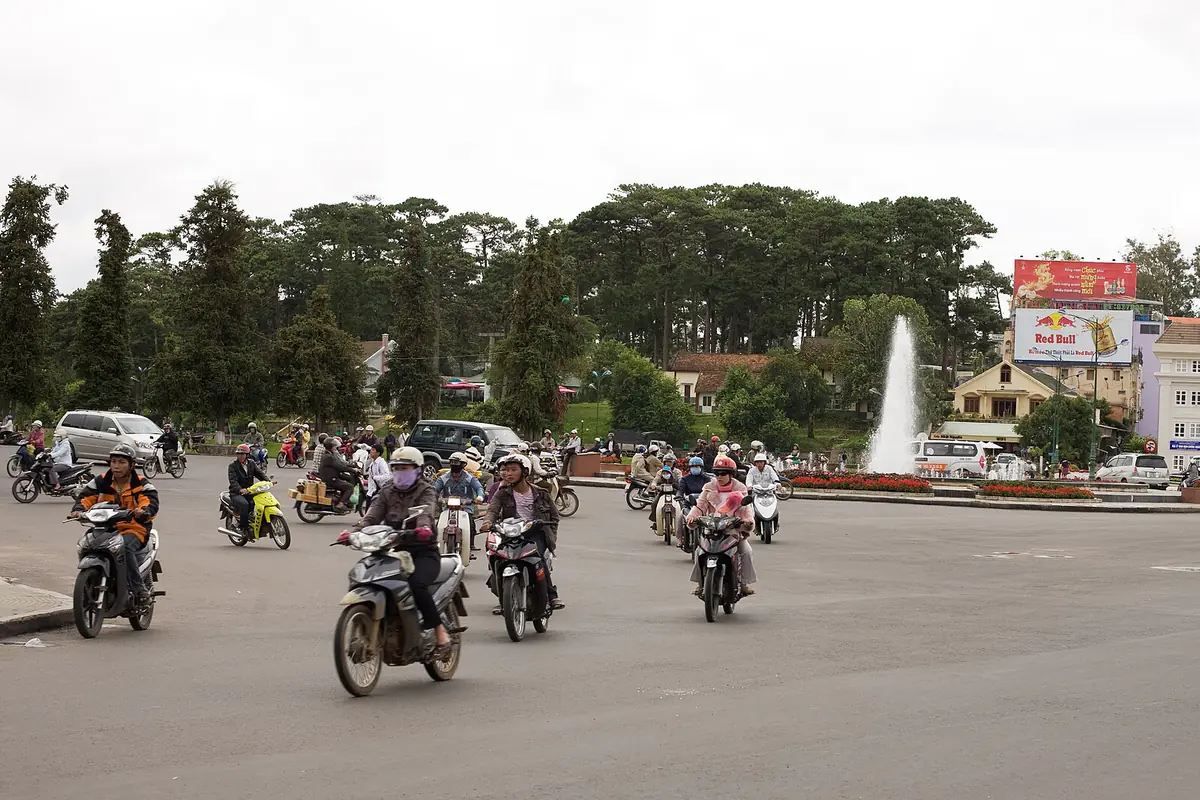
Should you ride yourself in Da Lat at all?
Three concrete things decide it: whether your licence covers the bike you are about to take, whether you have ever ridden a long descent, and whether you plan to stay inside the city or head out. Answer those and the rest is paperwork and money.
A bike suits travellers who want to stop wherever the pine forest opens up, ride lanes a car cannot turn around in, and set their own hours. It does not suit anyone who cannot already ride, anyone arriving in a long wet spell, or a group of four with suitcases.
Four common situations and what we would do in each:
- Two of you, a licence Vietnam recognizes, staying central: renting a motorbike in Da Lat is the tidiest option. Xuan Huong Lake, the market and the Chicken Church sit close together, so the bike only links the farther clusters.
- No valid licence: do not rent. The fines below are large, and the shop that hands you the keys is fined too.
- Rainy week, or your plans run into the evening: split the day. Ride in daylight, call a car after dark. There is no rule that says you must keep the bike for 24 hours.
- Travelling with small children or older relatives: take a car. A pillion seat on a steep, wet road is no place for a passenger who cannot hold on firmly.
Almost nothing that goes wrong here is about the machine. It is about your documents and the roads you pick, which is what the rest of this guide covers.
How much does renting a motorbike in Da Lat cost?
Rates move with the season, the model and the number of days. No major outlet has published a shop-by-shop price list for the city, so the table below gathers only the figures that come with a source and a date. Use it to judge whether a quote is reasonable; the binding number is the one in your contract.
| Item | Reference price | Applies to | Source, date |
|---|---|---|---|
| Motorbike rental | From VND120,000 a day | Da Lat | VnExpress, updated April 21, 2026 |
| VinFast electric bike | Just over VND300,000 a day | Da Lat | CafeF, June 1, 2025 |
| Manual bike | VND80,000-150,000 a day | Nationwide | VnExpress International, December 14, 2024 |
| Automatic scooter | VND120,000-200,000 a day | Nationwide | VnExpress International, December 14, 2024 |
| Large-capacity bike, 175 cc and up | From VND800,000 a day | Nationwide | VnExpress International, December 14, 2024 |
| Deposit | VND500,000 to 2 million | Nationwide | VnExpress International, December 14, 2024 |
| Self-drive car | From VND700,000 a day | Da Lat | VnExpress, updated April 21, 2026 |
When does a rental day actually start
This is where the advertised rate and the final bill part company. Some shops count a flat 24 hours from handover; others work on calendar days, meaning the bike is due back by a fixed time in the evening. Collect at four in the afternoon under the second model and you have paid a full day for a few hours.
Four questions worth asking at the booking stage:
- Is a day a flat 24 hours, or does it end at a fixed time of day?
- Is a late return billed by the hour or as a whole extra day, and how many minutes late triggers it?
- How full is the tank at handover, how full must it be on return, and what does a shortfall cost?
- Is delivery to your hotel charged, and is a second helmet included?
Multi-day hire is usually cheaper than the daily rate, so ask for a whole-stay price once your plans are fixed. Fuel deserves its own line in Da Lat, because hills burn more of it than flat roads; the simplest approach is to fill up the moment you collect the bike and treat that as your baseline. Rooms, food and the rest of a trip budget are broken out in our Da Lat cost table.
Manual bike or automatic scooter?
The real difference is engine braking on descents. VnExpress explains that a manual bike brakes on the engine simply by dropping a gear, while an automatic uses a CVT with no gears to drop, so you have to feed a little throttle to keep the clutch engaged and hold a steady 15-20 km/h with the brakes (VnExpress, May 2022, in Vietnamese).
The same article names the two classic mistakes: switching the engine off to coast, which removes engine braking altogether, and dragging the brakes, which heats the pads until they lose friction exactly when you need them. It advises inexperienced riders not to take an automatic scooter down a pass at all.
What we like
- Manual: drop a gear and you have engine braking on a long descent
- Manual: better grip and control on the damp dirt tracks out to the hills
- Automatic: nothing to shift, easier on short city hops
- Automatic: bigger underseat storage for a rain suit and a second helmet
Watch out for
- Manual: awkward if you have only ever ridden automatics, especially stopping mid-slope
- Manual: two up with a backpack needs an early downshift or the engine stalls
- Automatic: engine braking is hard to use, and VnExpress advises against passes for beginners
- Automatic: dragging the brakes downhill is the usual route to brake fade
Where we land: for the lake, the market and the centre, an automatic is fine and more convenient. If your plan includes a pass, the Cau Dat tea hills or a dirt climb, take a manual. If you have never ridden a long descent, leave the passes for another trip and keep the bike inside the city.
Electric bikes are the third option and increasingly common. They are quiet and cheap to run, but budget the remaining range for the climb home, because gradients drain a battery far faster than flat roads do. Motor output is also what sets the licence class, so ask for that number and read the next section.
Which licence do you need, and what are the fines?
Check this at home, not at the counter. Since January 1, 2025, Vietnamese classes follow engine capacity rather than the old 175 cc line. Class A1 covers two-wheelers up to 125 cc or electric motors up to 11 kW; class A covers anything above that (Government News, August 12, 2024, in Vietnamese). Licences issued before 2025 stay valid for the term printed on them.
Mopeds are a separate category, outside class A1
This is the part that gets collapsed by mistake. Vietnamese law separates the moped (xe gắn máy) from the motorcycle (mô tô), and only motorcycles need class A1 or A. Under Article 34 of the Law on Road Traffic Order and Safety, a moped is a two- or three-wheeler with a design speed of no more than 50 km/h and either no more than 50 cc of engine capacity or no more than 4 kW of electric motor output (Government Newspaper, January 22, 2026, in Vietnamese).
Both conditions have to hold. A 50 cc machine designed to exceed 50 km/h is a motorcycle and needs class A1 like any other.
For genuine mopeds, Article 59 of the same law sets 16 as the minimum age, while class A1 is only issued from 18. The law assigns mopeds no licence class at all; the documents you carry on one are the vehicle registration certificate and the compulsory third-party liability insurance certificate (same source).
Do not read this as a loophole
| Vehicle you want to rent | Class required | Notes |
|---|---|---|
| Moped: up to 50 cc or an electric motor up to 4 kW, with a design speed up to 50 km/h | No class A1 or A | Riders aged 16 and over |
| Motorcycle up to 125 cc, manual or automatic | A1 or higher | Most bikes offered to tourists in the city sit here; A1 is issued from 18 |
| Motorcycle above 125 cc, including geared bikes | Class A | An A1 issued after January 1, 2025 is not enough |
| Electric motorcycle above 4 kW and up to 11 kW | A1 or higher | Most electric rentals fall in this band |
| Electric motorcycle above 11 kW | Class A | Judged on motor output, not engine size |
The cheapest habit is to read the capacity or output printed on the bike and its registration and match it to your licence. Under Decree 168/2024, in Vietnamese, riding a bike up to 125 cc without a licence costs VND2-4 million, and VND6-8 million above 125 cc. Riding without a fastened helmet costs VND400,000-600,000, and the pillion passenger is fined separately.
The shop is exposed as well. Vietnamese lawyers cited by Tuoi Tre News say handing a bike to an unqualified rider can bring criminal liability under Article 264 of the Penal Code if the ride ends in death or injury; in July 2026 a hotel receptionist in Khanh Hoa was charged on exactly that basis (Tuoi Tre News, August 1, 2026). That is why questions about your paperwork have become normal.
Which international driving permit does Vietnam accept?
For foreign visitors, riding your own rental is legal only with two documents, and this is the part most travel articles get wrong. Here it is in two halves. You need both.
First, the right convention. Article 29 of Circular 12/2025/TT-BCA, in force since March 1, 2025, says an international driving permit recognized under a treaty Vietnam is party to is handled according to that treaty (full text on the Government portal, in Vietnamese). Vietnam is a party to the 1968 Vienna Convention on Road Traffic (VietNamNet Global).
In practice that means a permit issued under the 1949 Geneva Convention is not covered. Before you fly, open the first page of your own permit and read which convention it names.
Second, carry your home licence too. An international permit is a standardized translation with no standalone value. At a roadside check you have to produce the permit and your valid national licence for the right category (Sai Gon Giai Phong English, May 19, 2026). Riding on a licence that does not cover your bike carries a fine of VND6-8 million under Decree 168/2024 (Tuoi Tre News).
A detail people get backwards
Why Da Lat shops ask more questions than they used to
Lam Dong received more than 20 million visits in 2025, about 1.3 million of them international, and more than 6 million visits in the first quarter of 2026 alone, including over 524,000 foreign arrivals (Tuoi Tre News, April 17, 2026). Self-drive rentals grew with those numbers and licence checks did not keep up, which is what the April 2026 provincial order set out to fix (Dan Tri, in Vietnamese).
Rental operators are pushing in the same direction. Viet Nam News reported in May 2026 that businesses in the province now insist on a valid licence, and quoted Pascal Lefebvre, who runs a beach club in Mui Ne, arguing that visitors without a valid permit should not be given a vehicle and suggesting 50 cc mopeds as the alternative (Viet Nam News, May 14, 2026). Being asked for documents is now normal, not a shop making life difficult.
If you are a foreign visitor without valid papers, the straight answer is to drop the idea of riding yourself. Taxis, ride-hailing and driver tours are all available, and none of them comes with a fine attached.
Cash deposit or documents?
Cash. Two deposit models are common, cash and documents, and only the first protects you: a cash deposit can be counted, refunded and written into a contract. An original document left behind gives you no protection at all if the shop closes, changes hands or simply loses it.
VnExpress International is explicit about this: bring a valid passport, original or a notarized copy, plus your international driving permit or a foreign licence converted to a Vietnamese one, and do not leave the original passport with the shop (VnExpress International, December 14, 2024). You will need that passport at hotel check-in and in any dealing with the authorities.
Vietnamese customers have a clear legal line to point at: the Identity Card Law, in force since July 1, 2024, bans holding, pawning or trading citizens’ ID cards (Thanh Nien, February 21, 2024, in Vietnamese). Nobody is entitled to keep your card as security.
Four things belong in any rental contract, whether the shop is a chain or a family business:
- Plate number, model and engine capacity, so you can match it against your licence class.
- Deposit amount, how it is paid, and exactly what can be deducted from it.
- Pickup and return times, and how a late return is charged.
- What happens if the bike breaks down: who pays for repairs and recovery, and which number to call.
Tuoi Tre News reports that shops are advised to photograph or copy the rider’s licence and record its number, class and expiry in the contract, and to check passport, visa and residence card for foreign customers (Tuoi Tre News). A shop doing all of that is a good sign, not an obstacle.
Signs to walk away
If something happens, who pays?
Three layers of liability are in play. Keep them apart, because travellers routinely merge them and assume they are covered.
The bike’s compulsory insurance
Rental bikes must carry the owner’s compulsory third-party liability cover. It pays people you injure. It does not pay you, and it does not pay for the bike. Ask to see the certificate and photograph it.
Your own travel insurance
This is the part you have to read rather than look up. The exclusions clause is where a policy lists what it will not pay for, and breaking the law usually appears there. Open that clause in your own policy before you rent, and check whether it carries a separate exclusion for riding a motorcycle or a licence requirement of its own.
The part nobody can insure
Administrative fines and criminal liability sit outside every policy. The Khanh Hoa case in the licence section shows the chain running both ways: the rider is penalized, and the person who handed over the bike can be prosecuted when the consequences are severe.
What to check before you ride away
Ten minutes in the yard saves an afternoon. On this terrain the brakes and tyres are not details, they are the whole margin.
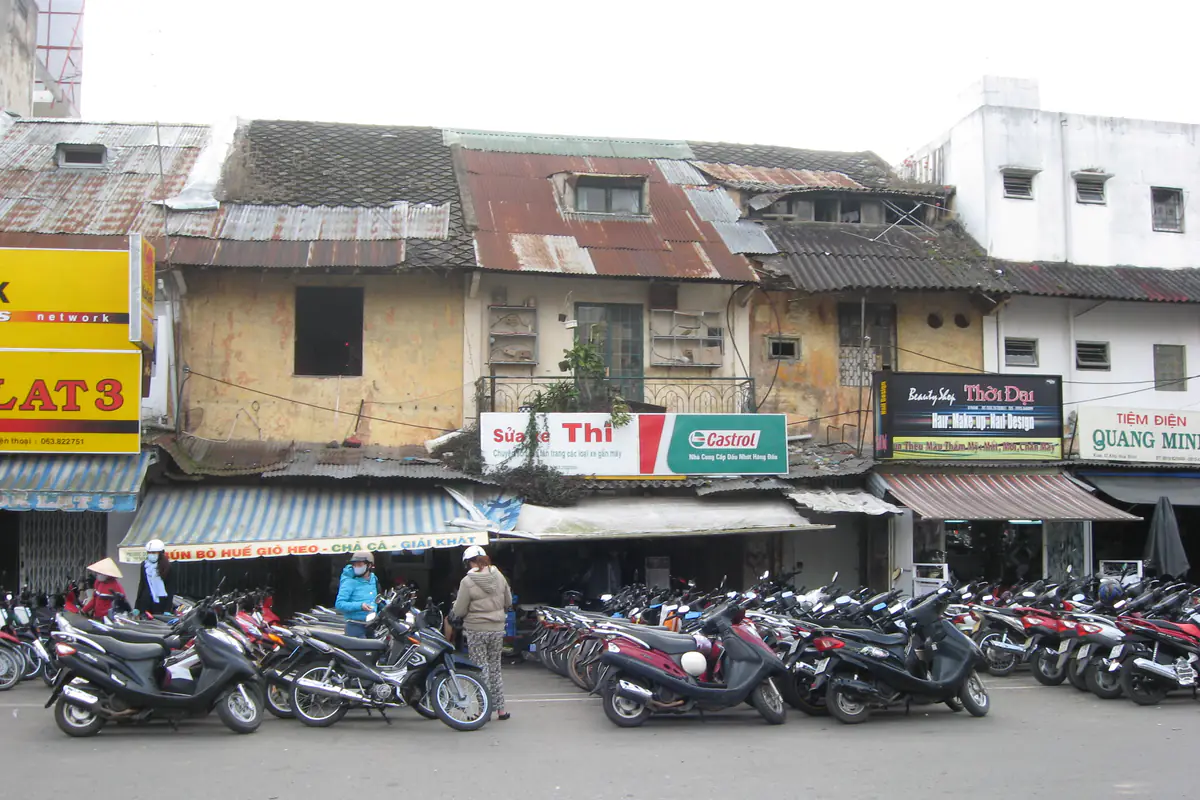
Six things to test on the spot
- Front and rear brakes: squeeze and press them standing still, then ride a few metres in the yard and listen. A brake that bites late or screeches is reason enough to ask for another bike.
- Tyres: look for clear tread and check the sidewalls for cracks. Worn rubber on a damp slope is how you lose the front wheel.
- Headlight, tail light, indicators: switch each one on. Dusk comes fast here, and a dead light means you can neither see nor be seen.
- Horn and mirrors: set both mirrors so you can see the lane behind you before you leave. Da Lat has a lot of blind bends and close following traffic.
- Helmets: test the strap and the visor. Your passenger needs one too, or you are both fined.
- Fuel and registration papers: read the gauge, ask for the registration kept under the seat, and check that the seat storage actually locks.
Registration papers: original or copy
Worth being precise here, because a plain photocopy is usually not enough. Under Article 56 of the Law on Road Traffic Order and Safety, in force since January 1, 2025, a driver must carry the vehicle registration certificate, or a certified copy, and the copy only works when it comes with the valid original confirmation letter from the credit institution or foreign bank branch holding the original because the vehicle is mortgaged (Government News, in Vietnamese).
In short: take the original, or a certified copy with that bank letter. An uncertified photocopy, or a photo of the papers on your phone, is neither. Documents already linked to a Vietnamese electronic identification account may be shown through that account instead (same source). While you are at it, ask for the bike’s compulsory third-party insurance certificate, which is also on the list of papers to carry.
Before you start the engine, walk around the bike and take a short video or four photos from each corner, plus close-ups of every existing scratch and a shot of the odometer. It is the cheapest way to avoid an argument on return.
Save the owner’s phone number too. VnExpress International advises calling the rental service or a roadside repair shop if the bike fails, dialling 113 for police or 115 for an ambulance after a crash, photographing the scene before moving anything, and buying fuel only at proper filling stations.
What makes Da Lat roads different?
Terrain is what makes riding here different from riding at the coast. The city sits on a plateau, so almost nothing is flat for long. Gradients run straight into bends, side roads join halfway up a slope, and the surface stays damp for hours in the wet season.
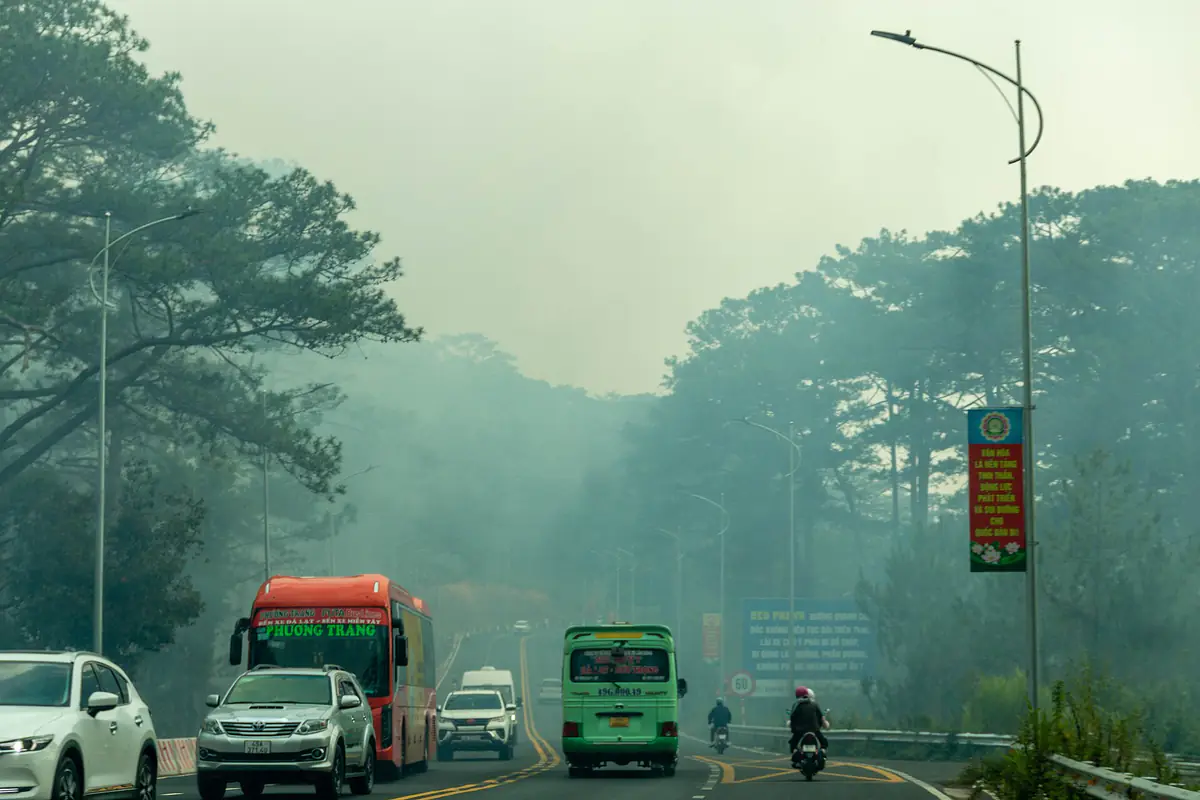
Bends on the passes are where it goes wrong. At around 6pm on September 25, 2026, two Indian nationals riding from Da Lat toward Duc Trong crossed into the oncoming lane at a curve near Datanla Waterfall on Prenn Pass and hit a car; one died and the other was seriously injured (Thanh Nien, September 26, 2026, in Vietnamese). Lam Dong Newspaper noted the bike appeared to slide across the centre line on a surface made slippery by rain (Lam Dong Newspaper).
Prenn Pass itself, the main road down from the city, has been under a landslide emergency since September 22, 2026. It is open, with lane control and speed limits (VnExpress, in Vietnamese). Pass by pass updates sit in the roads section of our Da Lat travel tips.
The second problem is navigation. Kenh14 collected riders’ accounts of Google Maps sending people into coffee farms and dead ends around Da Lat, with four fixes: switch the app to car directions so it favours bigger roads, ride with someone who knows the way, ask locals, and fill the tank before leaving the centre (Kenh14, February 19, 2021, in Vietnamese).
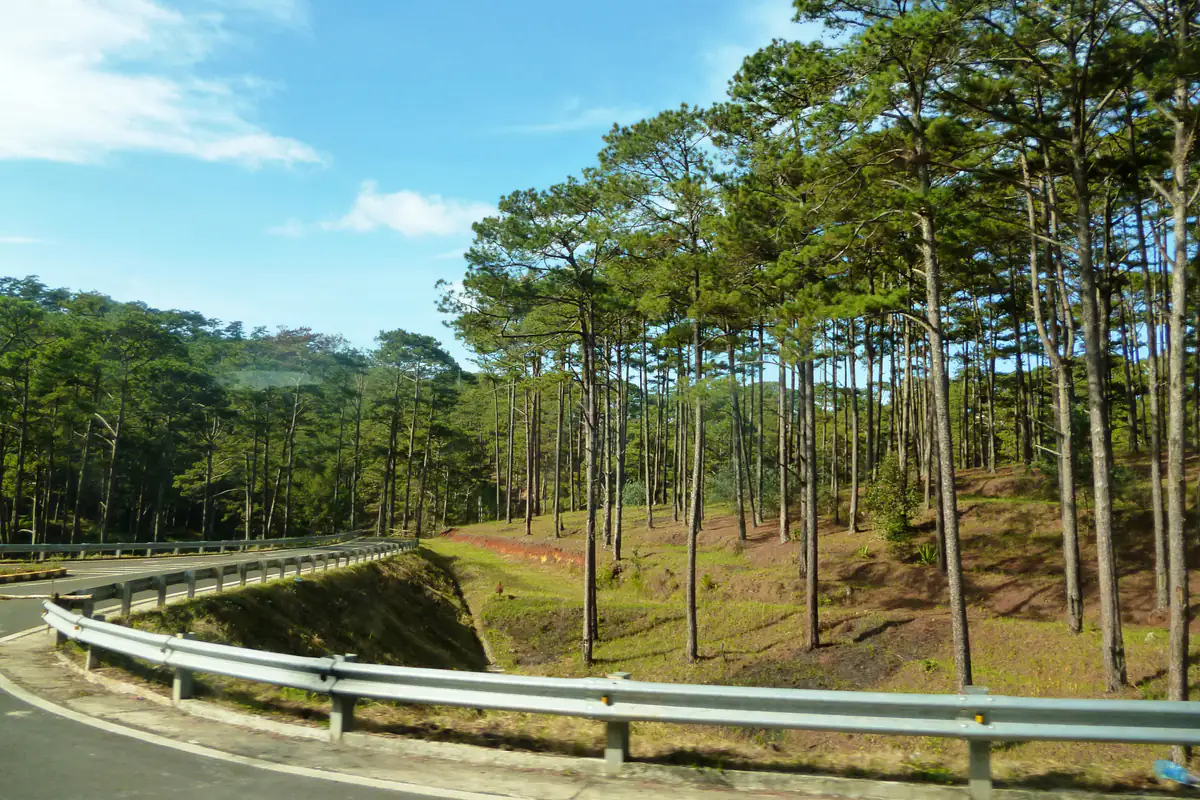
The third is weather. Fog thickens fast on forest sections in the early morning and late afternoon. Week by week rain patterns are in our Da Lat weather in October guide; if you land in a long wet spell, change the plan rather than the riding style.
One planning point people miss: distance on a map says nothing about time. The same 20 km takes roughly twice as long over a pass as it does on the flat. Group your stops by direction using the Da Lat map before you fix a day.
When to leave the bike and take a taxi
Six situations where we would use something else, even after paying for a full day:
- Rain, or just after it: sloping tarmac stays wet for a long time. The Prenn Pass crash on the evening of September 25, 2026 happened on a surface made slippery by rain.
- After dark: thick fog, unlit stretches outside the centre, and roads you do not know.
- Any pass: Prenn, Mimosa, Khanh Le, D’Ran and Gia Bac are all long mountain roads, and several have active landslide sites. This is not a first descent.
- Two up with luggage: the bike goes tail-heavy, climbs badly and is hard to hold back downhill.
- After any alcohol: Vietnam enforces a zero-tolerance limit, and the fines stack with everything else.
- If you cannot already ride: Da Lat is not the place to learn. Continuous gradients, blind bends and busy traffic are three things a learner should not meet at once.
One group gets wrongly folded into that last point: confident riders who have simply never ridden steep terrain. The advice for them is different. Take a bike for half a day, ride around Xuan Huong Lake and a few city slopes to get the feel of holding the bike back and pulling away mid-hill, and only then plan anything longer. Someone who cannot ride at all skips that trial run entirely, because learning on steep streets means starting on the hardest ground available.
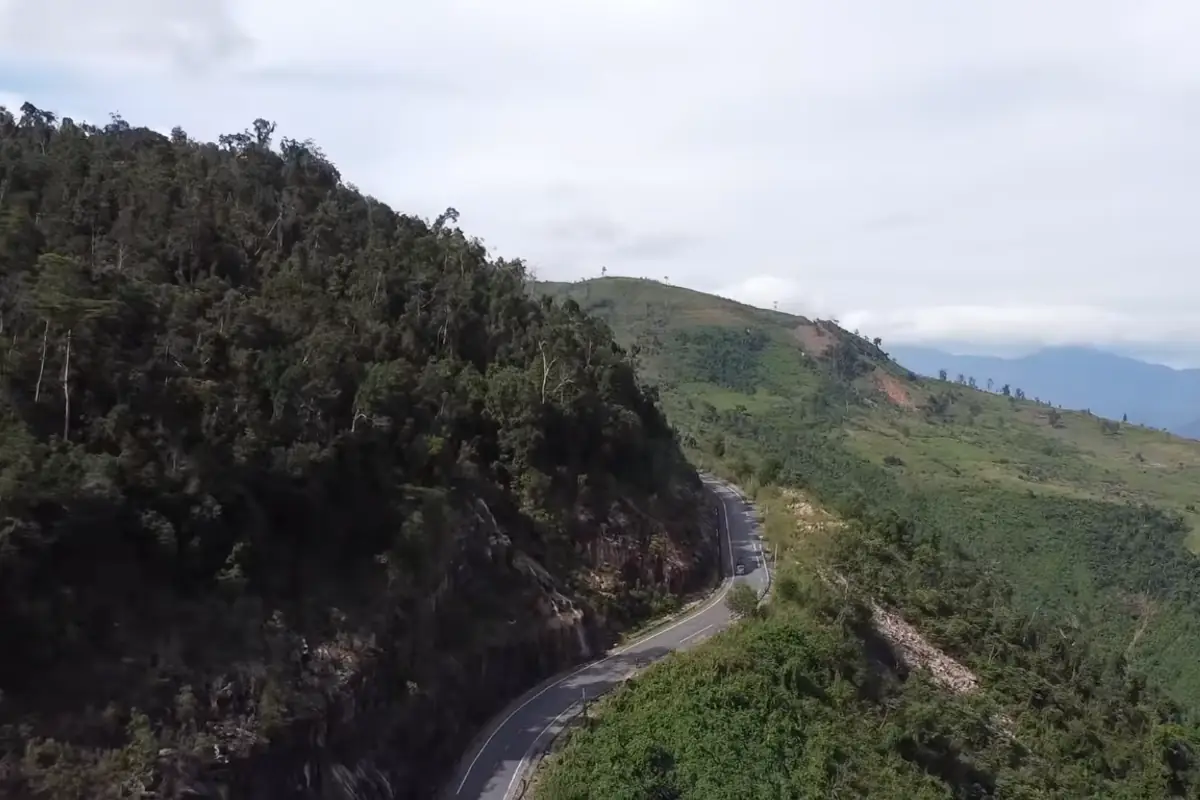
The descent to the coast is genuinely beautiful, and Saigoneer’s photo essay on the Da Lat to Nha Trang run shows why people ride it (Saigoneer). It is also a long mountain pass under repair, so treat it as a decision of its own rather than an extension of a city rental.
Alternatives are easy. Lado Taxi runs more than 2,500 electric cars in partnership with Xanh SM, bookable through an app or on 1900 1111 in Da Lat and Duc Trong (Tien Phong, in Vietnamese). Install one or two ride-hailing apps before you arrive.
Xuan Huong Lake, Lam Vien Square, Da Lat Market and the Chicken Church are within walking distance of each other. Our cluster-by-cluster list is in places to visit in Da Lat, and if you are still working out how to reach the city, see Ho Chi Minh City to Da Lat.
In short, renting a motorbike in Da Lat is worth it for riders with the right licence, on dry days, on roads they can handle. For everyone else the true cost is the fine and the risk, not the VND120,000 a day. If a price or a rule here has gone out of date, tell us and we will update it.
FAQ
How much does renting a motorbike in Da Lat cost per day?
VnExpress, updated April 21, 2026, puts motorbike rental in Da Lat from VND120,000 a day, while CafeF reported VinFast electric bikes in the city at just over VND300,000 a day in June 2025. Nationwide, VnExpress International listed manual bikes at VND80,000-150,000, automatic scooters at VND120,000-200,000 and large-capacity bikes from VND800,000 a day in December 2024. No major outlet has published a shop-by-shop list for Da Lat.
When does a rental day start and end?
There is no single standard, so ask. Some shops count a flat 24 hours from handover, others work on calendar days with a fixed evening return time. Collect the bike in the afternoon from a shop using calendar days and you pay a full day for a few hours. Ask as well how late a return has to be before it is charged, and whether it is billed by the hour or as a whole extra day.
Do I need a licence to rent a motorbike in Da Lat?
For a motorcycle, yes. Since January 1, 2025, class A1 covers motorcycles up to 125 cc or electric motors up to 11 kW, and class A covers anything larger. Mopeds are separate: Article 34 of the Law on Road Traffic Order and Safety defines one as a vehicle with a design speed up to 50 km/h and either up to 50 cc or up to 4 kW, and Article 59 allows riders aged 16 and over, with no A1 or A class attached. Almost every rental bike in Da Lat is a 110-125 cc motorcycle, so class A1 applies.
Is my international driving permit valid in Vietnam?
Only if it was issued under a convention Vietnam is party to. Vietnam is a party to the 1968 Vienna Convention on Road Traffic, and Article 29 of Circular 12/2025/TT-BCA says permits recognized under such treaties are handled under those treaties. Permits issued under the 1949 Geneva Convention are not covered. You must also carry your valid national licence for the same category, because the international permit is only a translation.
Should the registration papers under the seat be an original or a copy?
Article 56 of the Law on Road Traffic Order and Safety, in force since January 1, 2025, requires the vehicle registration certificate or a certified copy. The copy is only valid alongside the original, still-valid confirmation letter from the credit institution or foreign bank branch holding the certificate because the vehicle is mortgaged. An uncertified photocopy does not meet either condition. Documents linked to a Vietnamese electronic identification account may be shown through that account.
Should I leave my passport as a deposit?
No, pay a cash deposit instead. VnExpress International advises bringing a notarized copy and not leaving the original passport with the rental shop, since you need it at hotel check-in and in any dealing with the authorities. VND500,000 to 2 million is the nationwide deposit range, and the amount should be written into the contract.
Manual bike or automatic scooter for Da Lat?
For the city centre and the lake, an automatic is fine. For a pass or a dirt climb, take a manual, because dropping a gear gives you engine braking. VnExpress advises inexperienced riders not to take an automatic down a pass, and warns against the two usual mistakes: cutting the engine to coast, and dragging the brakes until they fade.
What if I can ride but have never handled steep roads?
Treat that as its own case. If you ride confidently but have never dealt with gradients, take a bike for half a day around Xuan Huong Lake and a few city slopes to learn how the machine holds back downhill and pulls away mid-hill, then plan longer routes. If you cannot ride at all, Da Lat is not where to learn, because the gradients, blind bends and traffic arrive together; use taxis or ride-hailing instead.
How do I get around Da Lat without riding?
Taxis and ride-hailing cover the city well. Lado Taxi operates more than 2,500 electric cars with Xanh SM, reachable by app or on 1900 1111 in Da Lat and Duc Trong. Xuan Huong Lake, Lam Vien Square, Da Lat Market and the Chicken Church are all within walking distance of each other, so many visitors only call a car for the outlying sights.
Sources
These are the sources used for this article. It was last updated on Oct 01, 2026; prices and opening hours may have changed since, so please double-check before you go.
- VnExpress International: 6 expert tips for foreign tourists renting motorbikes in Vietnam (December 14, 2024)
- Tuoi Tre News: Vietnam’s Lam Dong tightens motorcycle rental for foreign tourists (April 17, 2026)
- Tuoi Tre News: Lawyers highlight rules on renting motorcycles to foreigners after Vietnamese hotel receptionist charged (August 1, 2026)
- Viet Nam News: Lâm Đồng motorbike lending businesses insist on driving licences from foreign customers (May 14, 2026)
- VietNamNet Global: How to obtain an international driving permit in Vietnam
- Saigoneer: Down From the Mountains, Da Lat to Nha Trang by Motorbike
- Sai Gon Giai Phong English: Vietnam restricts foreign tourist motorbike rentals over traffic safety fears (May 19, 2026)
- VnExpress: 6 lưu ý cho khách thuê xe máy ở Việt Nam (December 3, 2024)
- VnExpress: Cách đổ đèo an toàn bằng xe số và xe ga (May 2022)
- VnExpress: Cẩm nang du lịch Đà Lạt, getting around section (updated April 21, 2026)
- VnExpress: Lâm Đồng declares a landslide emergency on Prenn Pass (September 22, 2026)
- Dan Tri: Lâm Đồng tightens motorbike rental to foreign visitors (April 15, 2026)
- Kenh14: Google Maps misroutes riders around Da Lat, four fixes (February 19, 2021)
- CafeF: Electric vehicle rental booms, with Da Lat rates (June 1, 2025)
- Thanh Nien: Indian visitor dies in a crash on Prenn Pass (September 26, 2026)
- Thanh Nien: The new Identity Card Law bans holding, pawning or trading ID cards (February 21, 2024)
- Lam Dong Newspaper: Motorbike and car collide on Prenn Pass, one dead (September 25, 2026)
- Government News: Licence classes from January 1, 2025 (August 12, 2024)
- Government Newspaper: Minimum age for riding a moped, with the legal definition (January 22, 2026)
- Government News: Documents a driver must carry on the road (December 28, 2024)
- Government News: Full text of Circular 12/2025/TT-BCA (March 3, 2025)
- Government News: Full text of Decree 168/2024/NĐ-CP (December 31, 2024)
- Tien Phong: Lado Taxi and Xanh SM put VinFast VF 3 on Da Lat streets