Vietnam eSIM, local SIM card or roaming: which one should you get?
If drivers and hosts need to reach you on a Vietnamese number, compare SIM and eSIM plans from Viettel, VinaPhone and MobiFone. If data is all you need, a travel eSIM or your carrier’s roaming pass can get you connected after landing, once the plan is activated and your phone connects to a supported network. Either way, check what your phone supports and compare the total cost for your trip. To register a local SIM at an airport counter, bring your original passport and be ready for a facial identity check.
By Da Lat LoversPublished Updated How we review
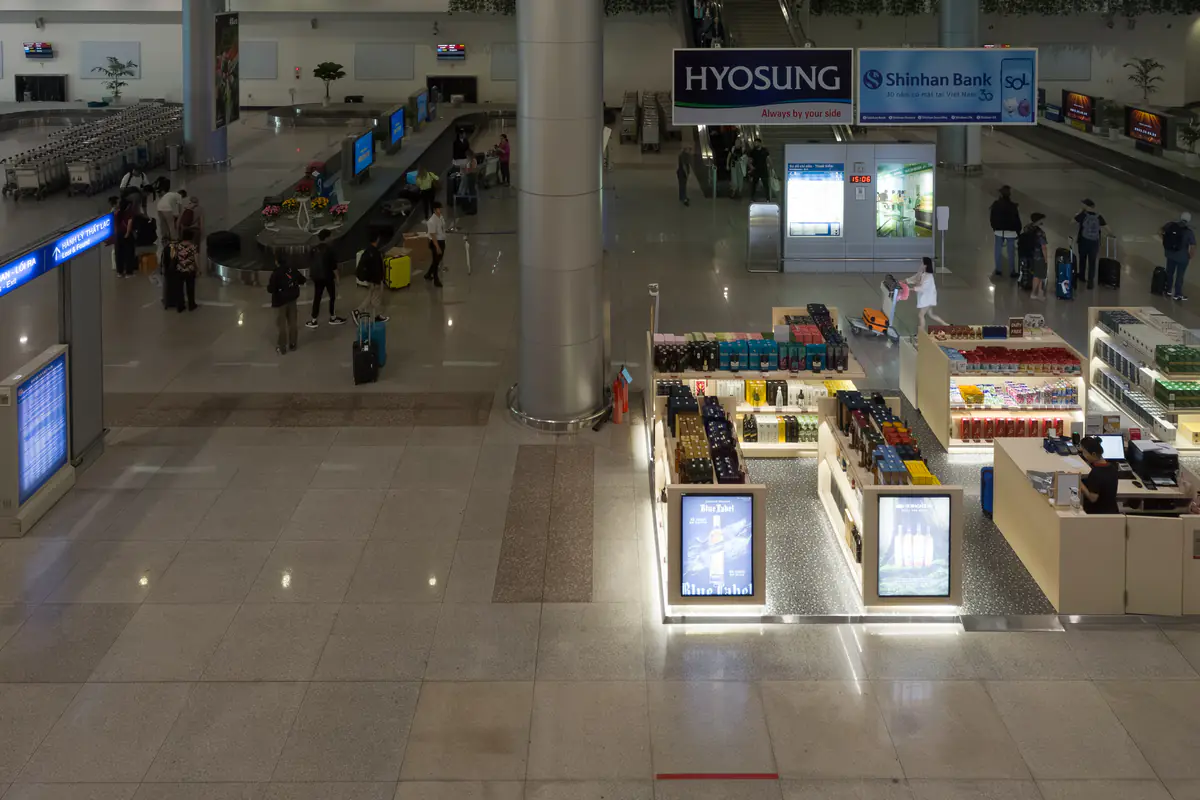
Tân Sơn Nhất Airport’s international Terminal 2, Ho Chi Minh City, August 2026. Photo: Hwi.padam / CC BY-SA 4.0
eSIM, local SIM or roaming: how to choose
Start with whether you need a local number, what your phone supports, and the cost for your trip.
- Do you need a Vietnamese number? If drivers, guesthouse owners or tour operators need to call or text you on a local number, get a SIM or eSIM from a Vietnamese carrier. Maps, ride-hailing and messaging apps run on data alone, so a travel eSIM or roaming covers those.
- What does your phone support? A carrier-locked phone only works with roaming from the carrier that locked it. A phone with no SIM tray needs an eSIM; a phone without eSIM needs a physical SIM from a counter. How to check is in the eSIM section.
- What does the whole trip cost? Add up the SIM or eSIM, a plan that covers all your days, and any top-up you are likely to need. If roaming is charged per day, multiply it by the length of your trip before comparing.
| Option | Best for | Check first |
|---|---|---|
| eSIM from an international app, bought before you fly | Data only, set up at home, skipping the airport queue | Your phone supports eSIM and is unlocked; most plans are data only, with no Vietnamese number |
| Viettel, VinaPhone or MobiFone SIM or eSIM | Needing a Vietnamese number for local calls and texts | Passport registration and face check; whether the plan applies to passport-registered SIMs; price and validity |
| Your home carrier’s roaming | Keeping your own number for calls and bank texts, a carrier-locked phone, zero setup | Vietnam is included, the daily price, data allowance, auto-renewal |
On a dual-SIM phone you can mix them: keep your home line on for calls and bank texts, and use the eSIM or local SIM for data. Turn off data roaming on the home line, and ask your carrier whether receiving texts abroad costs anything.
Vietnam eSIM: check your phone, then choose when to install
Does your phone take an eSIM?
- iPhone XS, XS Max, XR and later support eSIM. On Android, look for an “add eSIM” option in the SIM or connections settings.
- The phone must be unlocked. On an iPhone, go to Settings > General > About; “No SIM Restrictions” should appear next to Carrier Lock. Apple’s guide to using eSIM while traveling walks through the rest.
- US-model iPhone 14 and later have no physical SIM tray, so a plastic local SIM will not fit; you need an eSIM, either from an app or from a Vietnamese carrier. Most iPhones sold in mainland China have no eSIM.
Check when validity starts before you install
Read the plan details to see whether validity starts when you install the eSIM or when your phone first connects in Vietnam. If it starts when you connect in Vietnam, you can install it at home on Wi-Fi (scanning the QR code or installing in the app needs internet), then turn the line off until you land. If it starts at installation, follow the plan’s instructions on when to install, so an early install does not eat into your days.
Comparing international eSIM plans
Apps such as Airalo, Saily and Holafly sell Vietnam plans by the gigabyte or by the day, and prices change often. To compare two plans, line them up for the same number of days, then check the high-speed data allowance, any hotspot limit and the total you pay. Also read:
- Which Vietnamese network it uses, and whether it can switch between networks.
- Whether “unlimited” slows down after a daily amount.
- Whether you get a phone number (most plans are data only).
- The refund policy if you have not installed it or it will not install.
An eSIM from a Vietnamese carrier, such as MobiFone’s travel eSIM below, is a different product: it is registered to your passport like a physical SIM, and in return you get a local number for calls and texts.

Vietnamese carrier SIM or eSIM: plans, paperwork, questions
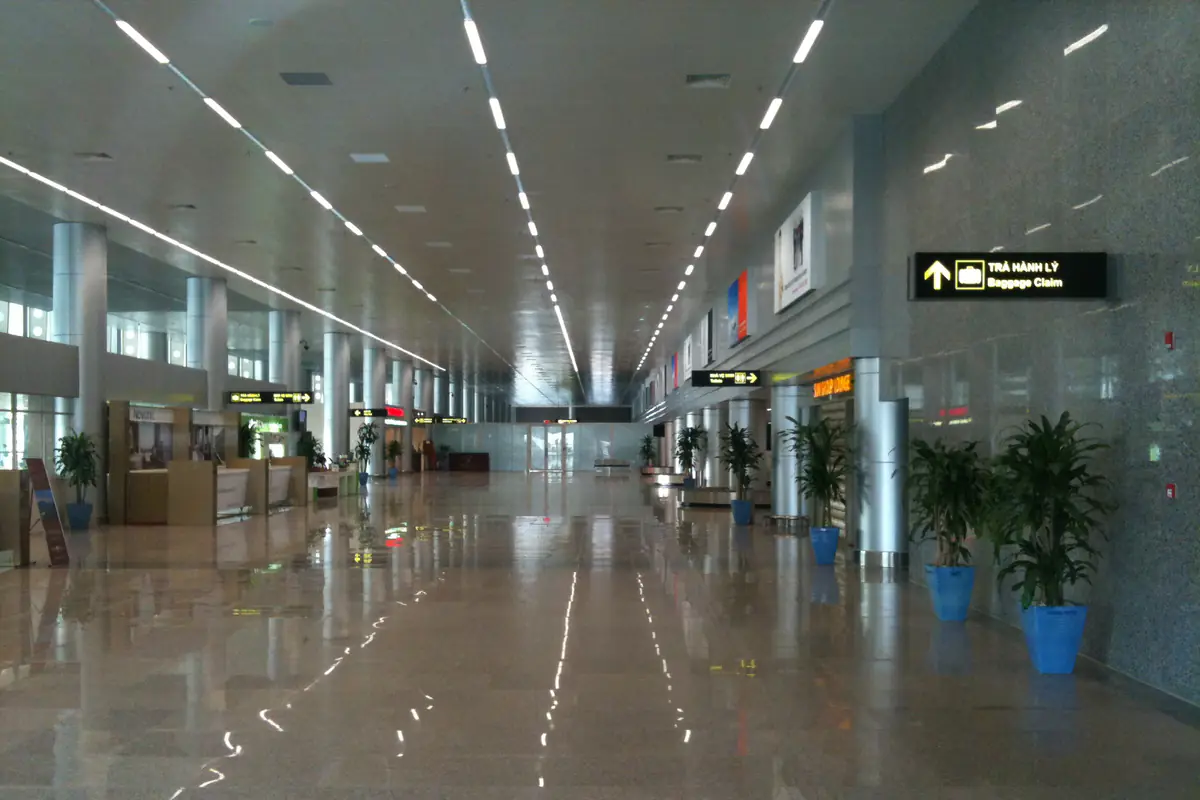
The three big carriers are Viettel, VinaPhone (part of VNPT) and MobiFone. International arrivals halls at the main airports usually have carrier booths alongside resellers; carrier stores in town do the same registration if you would rather not queue after a long flight.
Check the carriers’ tourist plans
To see prices in advance or sort things out before you fly, start with the carriers’ tourist pages (checked October 26, 2026):
- MobiFone has an eSIM page for international travelers. International visitors entering Vietnam get one free eSIM per passport, with 10 GB for 24 hours.
- Register: if you applied for an e-visa, you can register before you fly with your e-visa application number, on that page or through the link in your e-visa result email; otherwise, scan the QR code on MobiFone posters in the arrivals area of major international airports, photograph your passport and complete the online check.
- Activate: install the eSIM from the QR code you are given, then call 900 after landing. If registration is not finished when you call, you only get a small temporary allowance, and the eSIM is suspended if you have not completed it within 24 hours.
- Top-ups: for more data or call minutes, there are two: FR10 (VND 150,000 for 50 GB and 70 minutes of domestic calls, valid 10 days) and FR30 (VND 250,000 for 150 GB and 200 minutes, valid 30 days), payable by international card on the same page. MobiFone presents these as top-ups for the travel eSIM; to add one to a SIM bought at a counter, enter the number at the sign-up step and the site checks whether it is eligible, or ask the staff.
- Viettel has a sign-up page for tourists, but plans and prices only appear after you upload the photo page of your passport and a portrait. At the plan step, read the data allowance, validity and how the SIM is delivered and activated before you order.
- VinaPhone: we did not find a tourist plan page on its official site, so ask for prices at the counter or a store.
Wherever you buy, check before paying that the plan applies to a SIM registered with a passport.
Buying at a counter: passport and face scan
- Your original passport, valid for your stay in Vietnam under your visa or visa-free period. Under Decree 163/2024/ND-CP, that is the document foreigners register a phone number with.
- Be there in person. Since April 15, 2026, subscriptions registered with a foreign passport also need a face check against Vietnam’s immigration records, so staff scan your passport and photograph the passport holder. Use a SIM registered in your own name; one registered to someone else can be locked when the carrier rechecks its records.
- Put the SIM in the phone you will use and test it at the counter. Under rules in force since June 15, 2026, if the SIM moves to a different phone, the carrier blocks outgoing calls and texts within two hours until the owner repeats the face check; if that has not happened 30 days after the block, incoming service can be suspended too.
Ask before you pay
- The plan name and price, and whether the SIM itself is included.
- Is the data per day or for the whole period, and does it slow down or stop when used up?
- How many days it lasts, counted from when, and whether it includes local calls.
- Is this a carrier booth or a reseller, and where can you top up or renew?
Roaming: when it makes sense
Many carriers sell a daily or per-trip roaming pass. It makes sense when you cannot be without your own number, when your employer is paying, or when the cost for all your days still comes out no higher than a new plan. Before you fly, check that Vietnam is covered, the daily price, whether it renews by itself and what happens when the data runs out. Your phone will connect to a Vietnamese network on arrival, but the charges come from your home carrier.
If you are not using roaming, switch off data roaming on your home line before the plane lands, so the phone does not start using data the moment it powers up.
Coverage outside the cities and in the mountains
Cities, main roads and busy tourist spots generally have 4G. High mountain and border areas still have weak spots and dead zones, and one network can have a signal where another does not. If you are riding the Ha Giang Loop, the northwest or other border passes:
- Before you buy, ask your guesthouse or tour operator which network works best along your route.
- Download offline maps for the whole region, and save your accommodation’s address and phone number.
- Tell your host or someone at home your route for the day; where there is no signal, you cannot call anyone.
- Many international eSIMs use a single network. For several days in the mountains, pick a plan that can use more than one network, or carry a SIM from a second carrier as a backup in a dual-SIM phone.

No data after landing? Work through this list
- Toggle airplane mode on and off and give it a few minutes; if nothing changes, restart the phone.
- eSIM: make sure the eSIM line is on, set as the line for cellular data, and has data roaming switched on (international eSIMs reach Vietnamese networks as roaming). Keep data roaming off on your home line unless you bought a roaming pass.
- Leave network selection on automatic; if that fails, pick the network your eSIM provider names.
- Local SIM: before you leave the counter, open a web page and send a text. If there is no data, ask the staff to check the APN setting and that the plan is active.
- Outgoing calls blocked after moving the SIM to another phone: take your passport to a carrier store to redo the face check.
- Still stuck: use the airport Wi-Fi, if there is one, to contact your eSIM provider’s support, or buy a SIM at the counter as a fallback.
FAQ
Can I make calls with an international eSIM in Vietnam?
Most plans are data only, so you call and message through apps such as WhatsApp or Zalo. If drivers or hosts need to ring you on a Vietnamese number, get a SIM or eSIM from a Vietnamese carrier.
Can someone else buy a Vietnamese SIM for me?
Not in your name. The counter checks the passport holder’s face, so the person whose passport is used has to be there.
What if I run out of data mid-trip?
With an international eSIM, buy a top-up in the same app. With MobiFone’s travel eSIM, buy FR10 or FR30 at mobifone.vn/travel by international card. With a SIM bought at a counter, ask when you buy it how to top up or add a plan, or go to a carrier store with your passport.