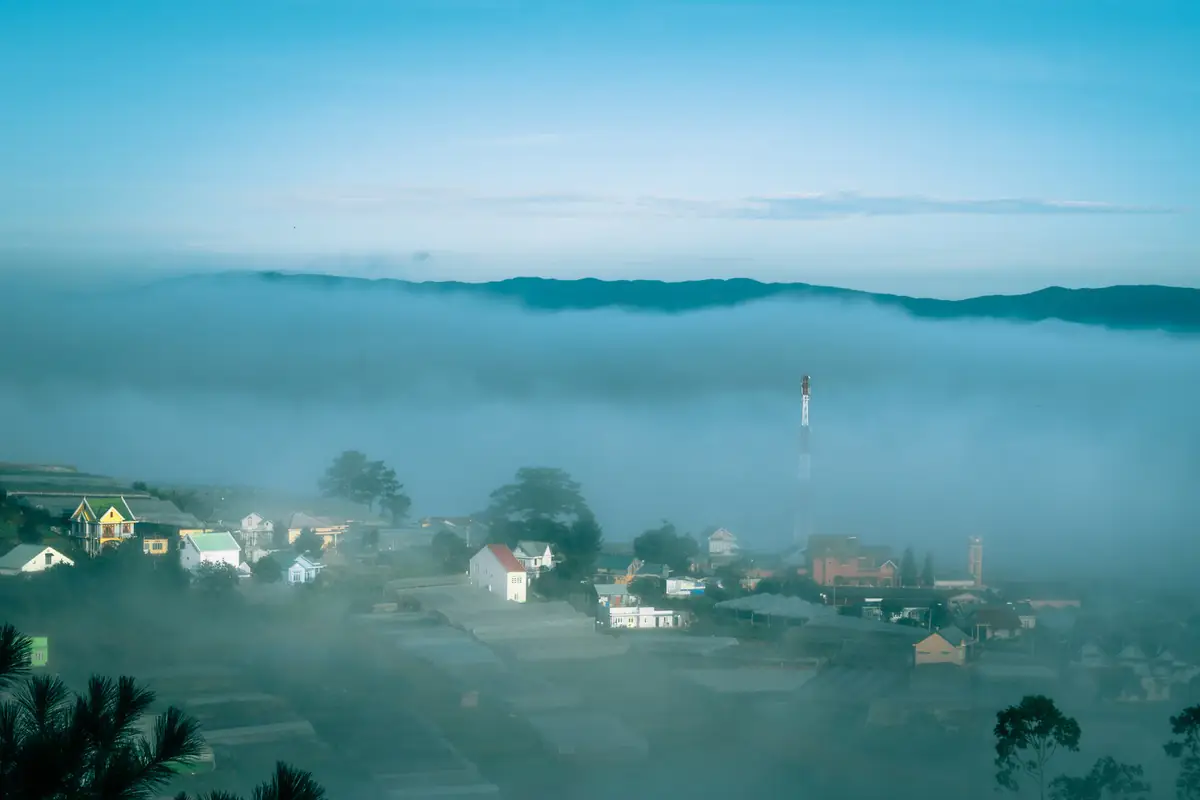
Vietnam weather in November and December: which regions are dry, which are rainy
For a trip in November or December 2026, expect dry, cooling weather in the north, the start of the dry season in the south, and the main rain and flood season on the coast from Hue to Nha Trang. For central Vietnam, choose bookings you can change. If beach time matters most, Phu Quoc is usually a drier option from December.
By Da Lat LoversPublished Updated How we review

Ha Long Bay on an overcast day, November 2023. Photo: Radek Kucharski / CC BY 2.0
Vietnam weather in November and December at a glance
The table compares November with December in six regions travelers usually combine. Rainfall and rainy days are long-term station averages: use them to choose regions, not dates.
| Region | November | December | What it means for a trip |
|---|---|---|---|
| North: Hanoi, Ha Long Bay, Ninh Binh | Dry and mild. Hanoi 19-26°C (66-78°F), 67 mm of rain, about 7 rainy days | Cooler. 16-22°C (60-72°F), 20 mm, about 5 days | Good for cities and the bay; pack warm layers for December |
| Northern mountains: Sapa, Ha Giang | Sapa 10-16°C (50-61°F), about 14 rainy days, 11 foggy days | 7-13°C (45-56°F), about 14 rainy days, 13 foggy days | Cold, poor visibility on passes; travel by daylight |
| Central: Hue, Da Nang, Hoi An | Very wet. Hue 642 mm, Da Nang 448 mm, about 20 rainy days | Still wet. Hue 350 mm, Da Nang 218 mm, 19-20 days | Flood risk; trains and mountain roads can be disrupted |
| South-central coast: Quy Nhon, Nha Trang | Nha Trang 382 mm, its wettest month; Quy Nhon 464 mm | Roughly half. Nha Trang 191 mm, 14 days | November has the highest average rainfall here; December is drier, but disruption is still possible |
| Central Highlands: Da Lat | 94 mm, about 12 days; turning dry | 36 mm, about 6 days | Good timing; cold mornings and nights |
| South: Ho Chi Minh City, Mekong Delta, Phu Quoc | End of the wet season. HCMC 128 mm, Phu Quoc 164 mm, 9-14 days | Dry season. HCMC 41 mm, Phu Quoc 59 mm, 5-6 days | December is clearly drier; good for southern beaches |
The dividing line is the Hai Van Pass, just north of Da Nang: north of it, Vietnam has a real winter; south of it, there is none.
The late-2026 outlook: warmer, fewer storms, but heavy rain is still possible
As of the October 15, 2026 seasonal outlook, El Niño is likely to stay very strong from November 2026 to January 2027. What that means for travelers:
- November is forecast at 1-2°C above the long-term average nationwide; December at 0.5-1.5°C above, and 1-2°C above in the south.
- Cold surges should be weaker than usual, with severe cold arriving later in the north, though short, sharp cold snaps are still possible.
- Fewer storms and tropical depressions than average from November to January; the long-term average for that period is 2.8 forming in the South China Sea (called the East Sea in Vietnam) and 1.1 making landfall.
- Rainfall in much of central Vietnam may come in below average, but spells of moderate to heavy rain are still expected from Ha Tinh to Hue and along the south-central coast in November and December.
A seasonal outlook cannot tell you whether your travel week will be wet. Keep bookings flexible and use local forecasts for decisions closer to departure.
North: dry, mild, then cold; mist in the mountains
Hanoi averages 19-26°C (66-78°F) in November and 16-22°C (60-72°F) in December, with rain falling from 67 mm to 20 mm. The city’s main station has recorded 5.1°C (41°F) in December. A light jacket usually covers November; for December, bring layers, especially for early starts and boat trips.
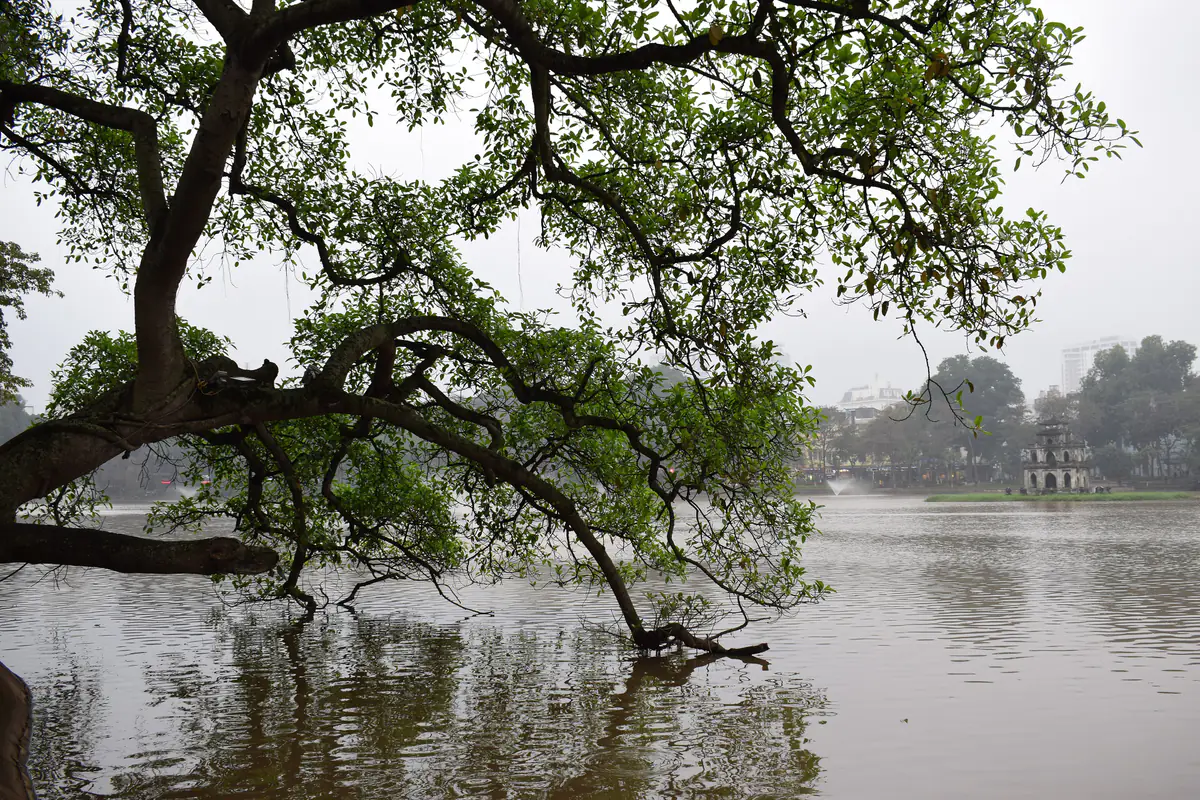
Ha Long Bay is drier still: 39 mm of rain in November and 18 mm in December at the Bai Chay station. Ninh Binh sits on the same Red River delta and follows a similar pattern. The northeast monsoon can still bring strong gusts and rough seas, so if you book an overnight cruise, ask how date changes work when a strong-wind warning is issued.
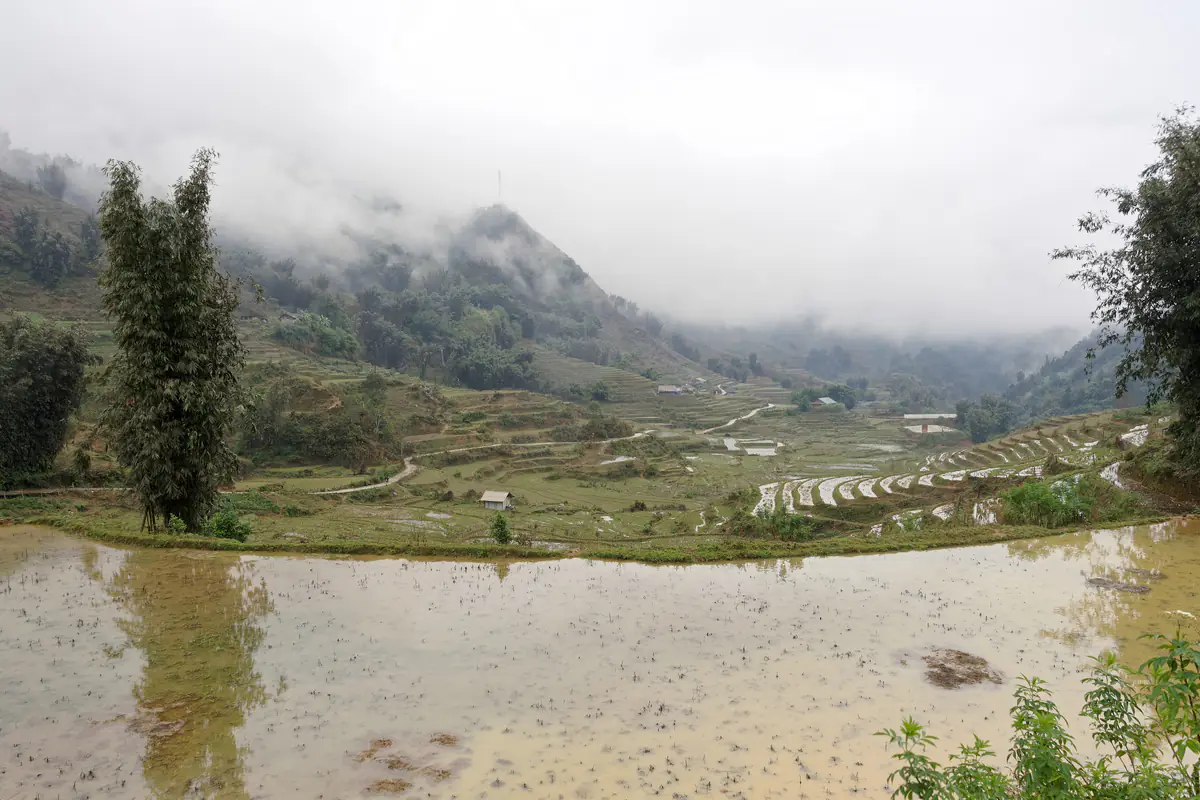
The mountains are a different trip. Sapa averages 7-13°C (45-56°F) in December, and the station has recorded -3.2°C (26°F). Expect around 13-14 rainy days and 11-13 foggy days a month. Pack proper warm clothes, plan mountain roads for daylight, and allow extra time when the fog is thick. November is buckwheat flower season in Ha Giang.
Hue, Da Nang and Hoi An: still the heart of the rainy season
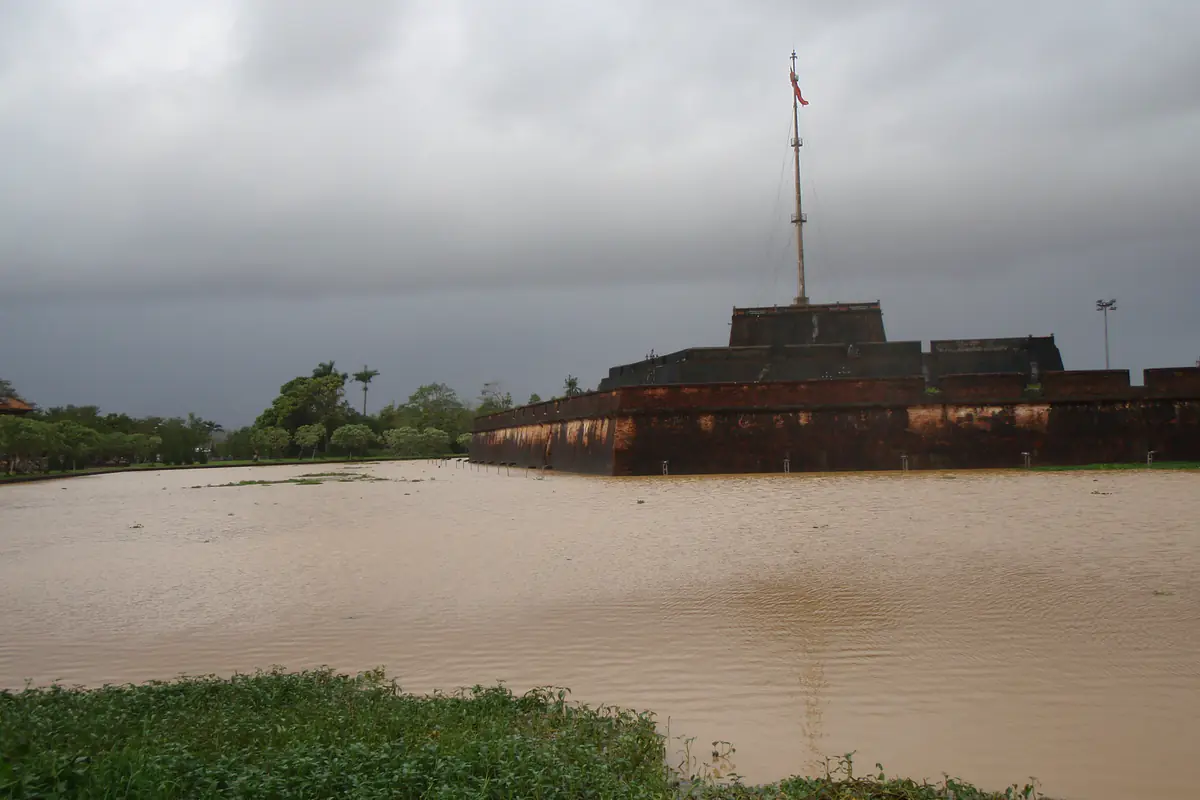
In Hue and Da Nang, October is the wettest month and November the second: 642 mm in Hue and 448 mm in Da Nang, each with about 20 rainy days. December is lighter but still wet (350 mm and 218 mm). Da Nang averages 22-27°C (72-81°F) in November, though wet, windy spells can feel cooler, so pack a light jacket. Hoi An, a short drive south of Da Nang, gets the same rain. The river flood season here officially runs from September 1 to December 15.
Flooding brought tourism in Hoi An’s old town to a near standstill for four to five days from October 27, 2025. Keep your sightseeing dates flexible and check local conditions before traveling. If your trip includes this area in November:
- Keep your Hoi An and Hue Imperial City days movable rather than tying each to a single date.
- Stay on higher ground, and ask your hotel whether the street floods and what it does when the water rises.
- Taking the Hue to Da Nang train over the Hai Van Pass? Check your train’s status before you travel. Going by road, check traffic news first: the pass road can close after landslides in heavy rain.
Nha Trang and Quy Nhon: November is the peak
Nha Trang gets more rain in November than in any other month (382 mm over about 18 days), dropping to 191 mm and 14 days in December. Quy Nhon sees about 464 mm in November and 206 mm in December. Over 1961-2017, November was the month when storms and depressions most often made landfall on the coast between Binh Dinh and Ninh Thuan; by December the frequency falls sharply.
Flooding disrupted trains between Nha Trang and Dieu Tri in November 2025. Before travel, check your train’s status and the current change or refund policy.
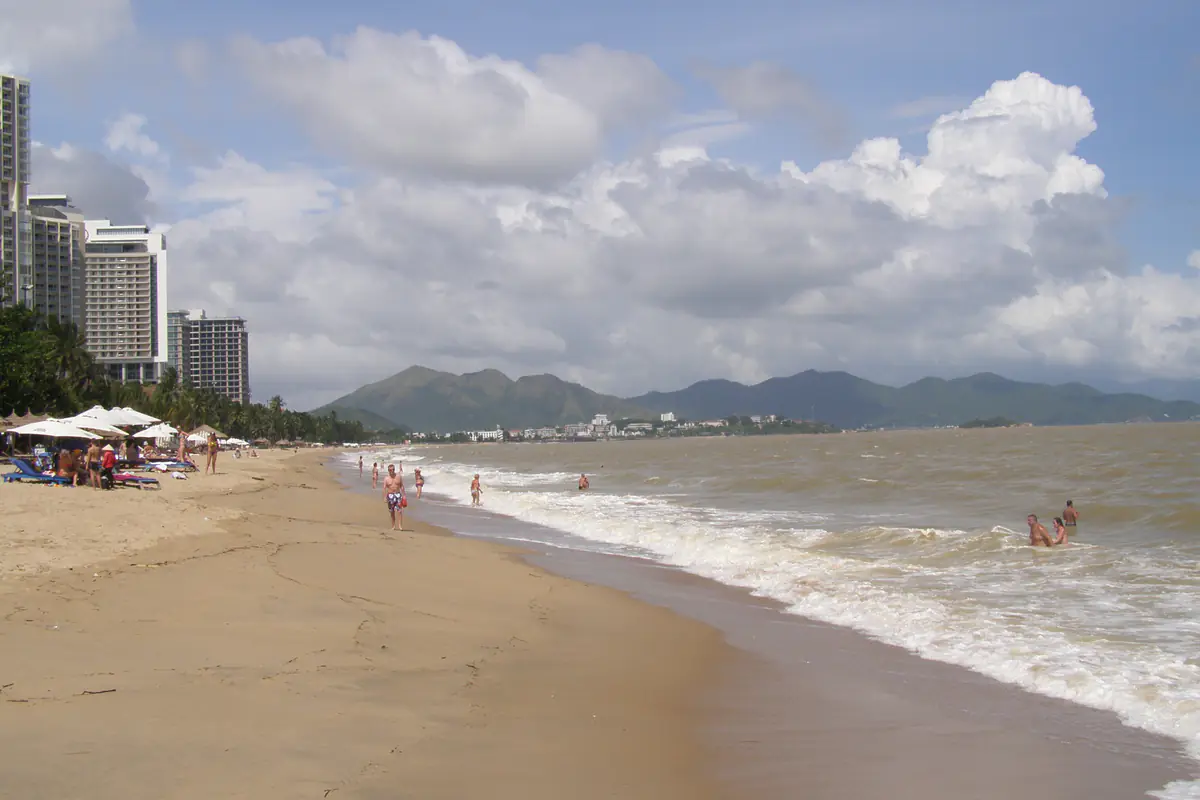
The road to watch is the Khanh Le Pass (Highway 27C) between Nha Trang and Da Lat. On the night of November 16, 2025, a landslide hit a bus on the pass and killed six people. As of September 10, 2026, cars, buses and trucks were barred from the pass from 6 pm to 5 am. Current hours and vehicle limits need confirming before you book a transfer.
Da Lat: the dry season begins
Da Lat in November still gets about 94 mm of rain over 12 days as it turns dry. December falls to 36 mm over 6 days, with averages of 13-21°C (55-70°F): good timing, though mornings and nights are cold.
Ho Chi Minh City, the Mekong Delta and Phu Quoc: dry from December
November is the tail end of the wet season: Ho Chi Minh City averages about 128 mm over 9 days, Can Tho in the Mekong Delta 137 mm, and Phu Quoc 164 mm over 14 days. December is clearly drier: 41 mm and 5 days in Ho Chi Minh City, 42 mm in Can Tho, 59 mm and 6 days on Phu Quoc. Temperatures barely change; Ho Chi Minh City averages 24-32°C (75-90°F).
For year-end beach weather, Phu Quoc averages fewer than half as many rainy days in December as Nha Trang (6 against 14).

Vietnam rainy season travel risks and how to plan around them
What usually gets disrupted
- Trains: sections close when tracks flood or embankments slip. Give a working phone number when you book so you get schedule-change messages, and check notices on dsvn.vn.
- Flights: airports near a storm’s path can close for several hours, as five central airports did from the afternoon of November 6 to the morning of November 7, 2025 for Typhoon Kalmaegi. On storm days, watch for messages and emails from your airline.
- Mountain roads and sights: passes can close at set hours after landslides; old towns and river tours can shut for days after a flood.
How to reduce the risk
- Choose rooms, tickets and tours you can change or cancel, and read the refund terms before you pay.
- If your route crosses central Vietnam, keep at least one free day before your international flight home.
- Base same-week decisions, such as crossing a pass or moving a day, on 1-3 day forecasts and the warnings on the English site of Vietnam’s National Center for Hydro-Meteorological Forecasting (NCHMF). The Vietnam Disaster Monitoring System map shows rain and flood alert levels.
- In heavy rain, do not cross flooded roads, fords or bridges, keep away from riverbanks and slopes, and follow local authorities.
- Check your own government’s travel advice before you go: the UK FCDO, Australia’s Smartraveller or the US State Department’s Vietnam page.
Before you book
- Does your route include Hue, Da Nang, Hoi An, Quy Nhon or Nha Trang in November, and does each of those days have a plan B?
- Change and cancellation terms for flights, trains, rooms and tours, especially same-day connections.
- What your travel insurance says about natural disasters, weather delays and storms that were already forecast when you bought it.
- The visa and entry rules for your passport.
FAQ
Does it snow in Sapa in December?
It cannot be predicted far ahead. The Sapa station has recorded -3.2°C in December, so frost and ice are possible on the high peaks during a strong cold surge, but it does not happen every year. If ice or snow is the point of your trip, watch the forecast a few days out and keep your dates flexible.
A storm is in the news. Should I cancel?
First check whether NCHMF warnings put the storm near where you will be, on the days you will be there. If so, contact your airline, hotel and tour operator early to move dates. If not, keep your plans but read the bulletins daily. Where evacuation orders or road closures are in place, follow the authorities.
How far ahead can I get a forecast for my dates?
NCHMF publishes a 10-day forecast, monthly outlooks and disaster warnings. Use climate averages to choose regions well ahead of travel, then check local forecasts and warnings as departure approaches.