Hue to Da Nang train: timetable, fares and which side to sit on
As of October 2026, allow around three to four hours for the Hue to Da Nang heritage train, with reported fares of VND227,000-395,000 one way, depending on the carriage. Check your travel date before booking connections: the railway website currently shows conflicting times. For coastal views, consider a left-hand window toward Da Nang or a right-hand window toward Hue.
By Da Lat LoversPublished Updated How we review
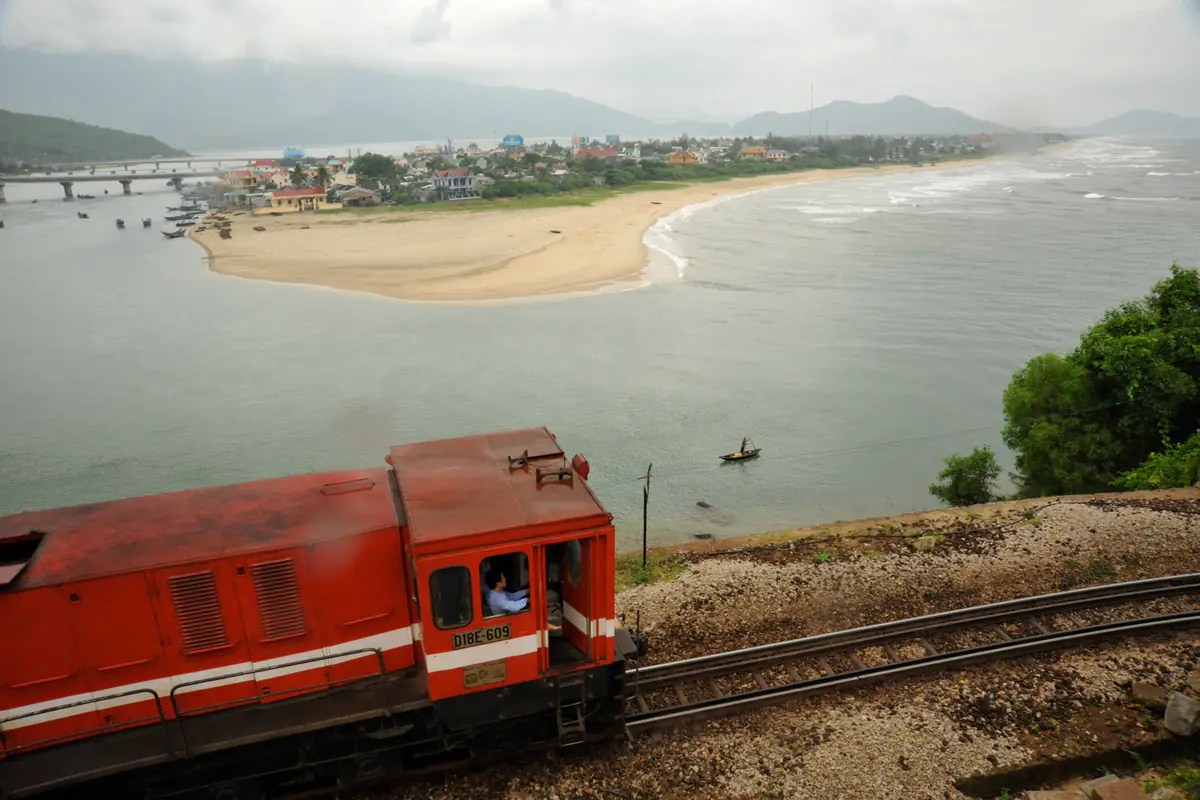
A passenger train passing Lang Co above the mouth of the Lap An lagoon and the beach in 2009 (not the current heritage train). Photo: Emilio Labrador / CC BY 2.0
Is the heritage train worth it, and how is it different?
In October 2026, readers of the US magazine Condé Nast Traveler ranked this ride 10th among the world’s best train trips, according to VnExpress International; at about US$11 one way, the magazine called it the most affordable train on the list.
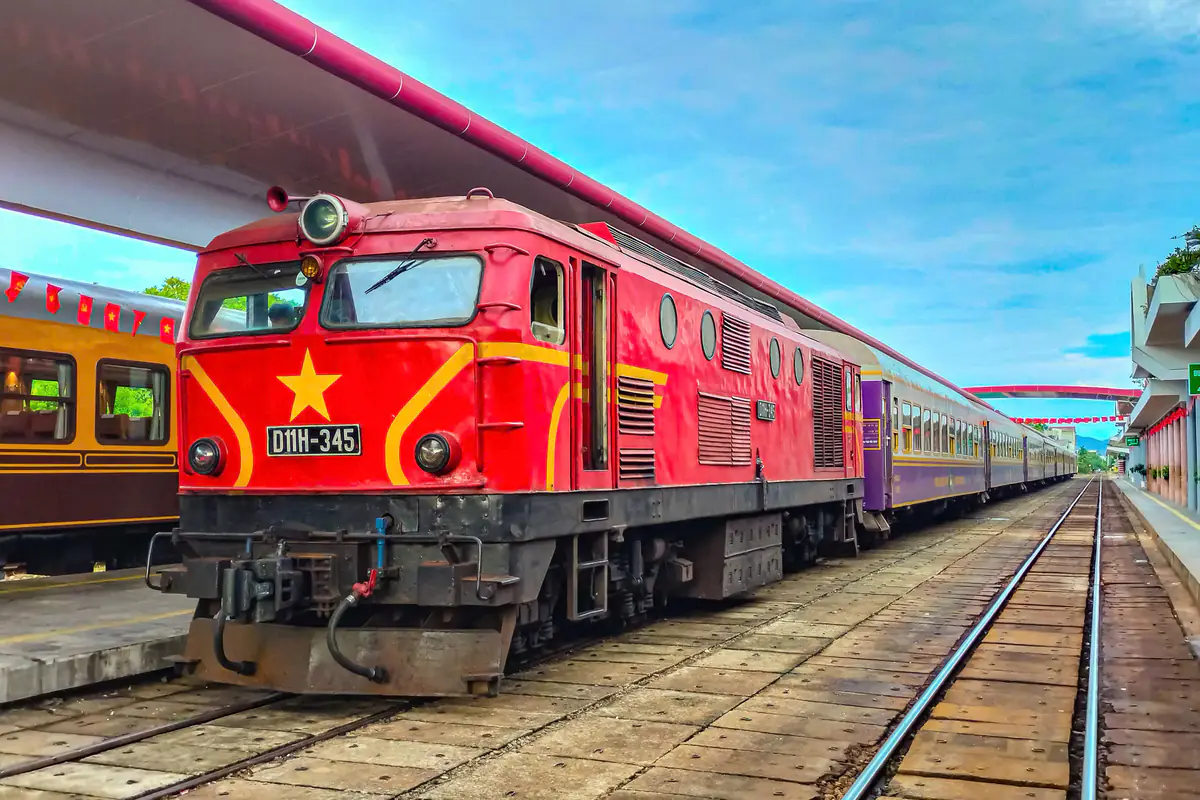
The service is officially called the Vietnam Central Heritage Connection (“Kết nối di sản miền Trung”). It has run since March 26, 2024, covering a little over 100 km between Huế and Đà Nẵng stations, with one stop at Lang Co (Lăng Cô). On March 26, 2026 the trains were refreshed with purple coaches, seats that rotate to face the direction of travel and a VIP car. Do not confuse this service with The Vietage, which does not operate on the Hue-Da Nang route.
How it compares with the alternatives:
- Reunification Express (SE trains): the long-distance North-South trains use the same track over the Hai Van Pass (đèo Hải Vân), so the view is the same. When they cross the pass depends on that day’s North-South timetable, and the 10-minute photo stop at Lang Co and the live performances are specific to the heritage train. A good option if you are already traveling the length of Vietnam and your train crosses in daylight.
- Car or motorbike: the road between the two stations is about 96 km. A car through the Hai Van tunnel takes about two hours to Hue, faster than the train, but you see no sea inside the tunnel. You cannot ride a motorbike through the tunnel. If you do not want to take the pass road, check whether the motorbike shuttle is operating and confirm its hours. The winding pass road itself has been closed by landslides in the rainy season.
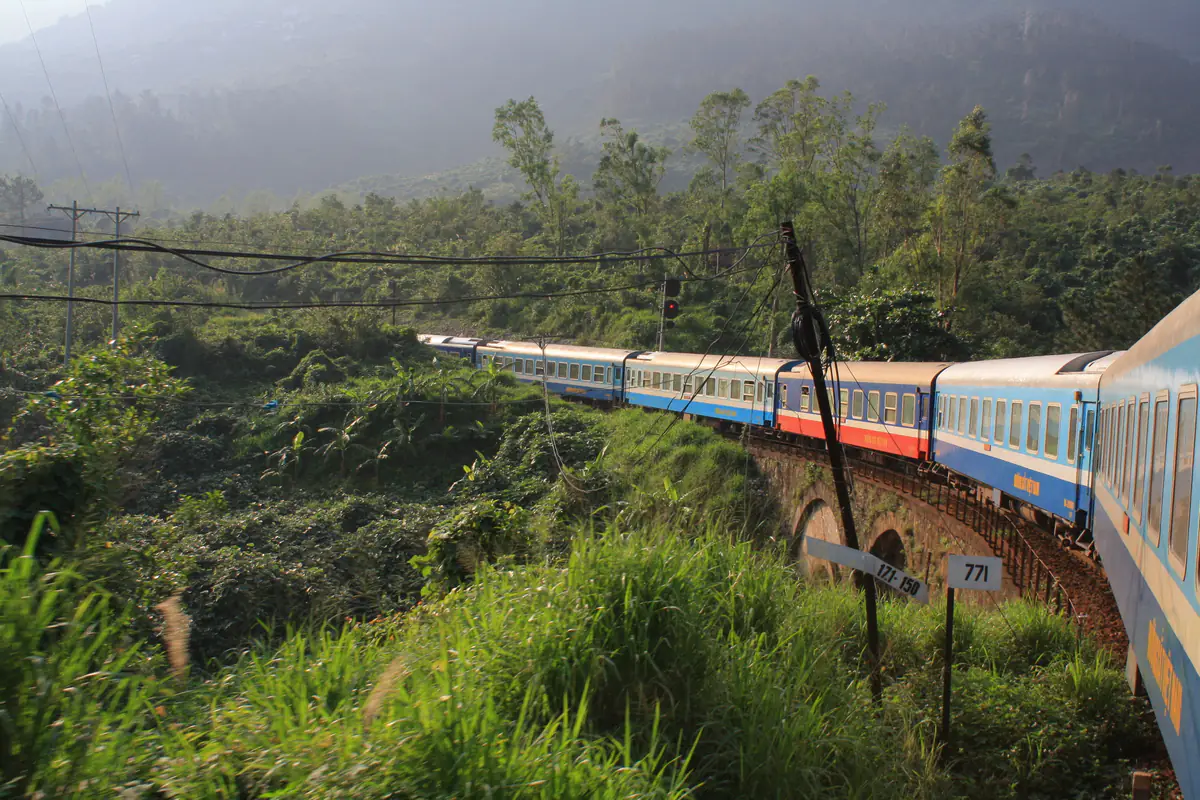
Our take: the heritage train suits travelers who want the Lang Co and Hai Van coastline without riding the pass themselves, or who want a day trip between Hue and Da Nang. If time matters more, the morning ride from Da Nang to Hue takes almost four hours, about twice as long as a car through the tunnel.
Hue to Da Nang train timetable and journey time
The railway’s heritage train page currently shows two sets of times: the timetable below, and a booking box on the same page that still lists the 2024 launch times (HĐ1 from Hue at 7:45 am, HĐ2 from Da Nang at 7:50 am, HĐ3 at 2:25 pm, HĐ4 at 3:00 pm). Before you book a transfer to the station, a room or an onward connection, select your exact date when booking and go by the time printed on your ticket.
| Train | Departs | Lang Co | Arrives | Journey |
|---|---|---|---|---|
| HĐ1 Hue to Da Nang | 7:05 am | 8:38 am | 10:10 am | 3 h 5 min |
| HĐ3 Hue to Da Nang | 2:30 pm | 4:42 pm | 6:15 pm | 3 h 45 min |
| HĐ2 Da Nang to Hue | 7:05 am | 9:14 am | 11:03 am | almost 4 h |
| HĐ4 Da Nang to Hue | 3:20 pm | 4:50 pm | 6:15 pm | 2 h 55 min |
The train stops at Lang Co station for about 10 minutes so passengers can step off for photos; the timetable lists no other stop between the two cities.
How to buy tickets, what they cost and which car to choose
Buy from the ticket counters at Hue and Da Nang stations, from official railway agents, or online at dsvn.vn, the national railway’s booking site, which has an English version. The train’s own page, ketnoidisan.dsvn.vn (Vietnamese only), also sells the short Hue-Lang Co and Lang Co-Da Nang legs.
Fares change with the date, seat class and promotions. In October 2026, a soft seat was reported at about VND227,000 and the VIP car at about VND395,000 one way, based on the railway’s booking site. Use these figures as a budgeting reference; check the fare for your date and carriage before paying.
- Soft-seat cars: 56 seats each, which rotate 180 degrees to face forward. Fine for most travelers, especially if a window seat is all you need.
- VIP car: 32 seats in a Hue royal-court style, with a counter along the windows, coffee and live music; the operator says the car is laid out to face the sea. Worth it if you want a table by the window and don’t mind paying more.
- Community car: where Hue chamber music (ca Huế), traditional music and dance are performed and local products are showcased. If the performances matter to you, check the community car’s program for the departure you plan to book.
Which side should you sit on for sea views?
Going by where the coast lies on the map, aim for a left-hand window from Hue to Da Nang and a right-hand window from Da Nang to Hue. The Cau Hai and Lap An lagoons and the coast from Lang Co over the Hai Van Pass to Kim Lien all lie east of the track, which is on your left heading south to Da Nang. What you actually see still depends on the weather, the tunnels and where your seat is in the car.
Because the seats turn to face forward, left and right here mean as you face the front of the train. If the seat map does not identify the side, ask the ticket office before paying. Do not count on changing to a window seat after boarding. The stop at Lang Co gives both sides a chance to step off for photos.
In order, heading to Da Nang:
- Rice fields, then the Cau Hai lagoon, part of the Tam Giang-Cau Hai lagoon system, in places only a few hundred meters away.
- The Lap An lagoon and Lang Co town, then the stop at Lang Co station.
- The 19.8 km Hai Van section: the track clings to the mountainside above the sea, through several short tunnels and over the Don Ca stone arch bridge, more than 100 years old, about 100 m long and 20 m above the stream bed.
- Da Nang Bay at Kim Lien and Nam O before the city.
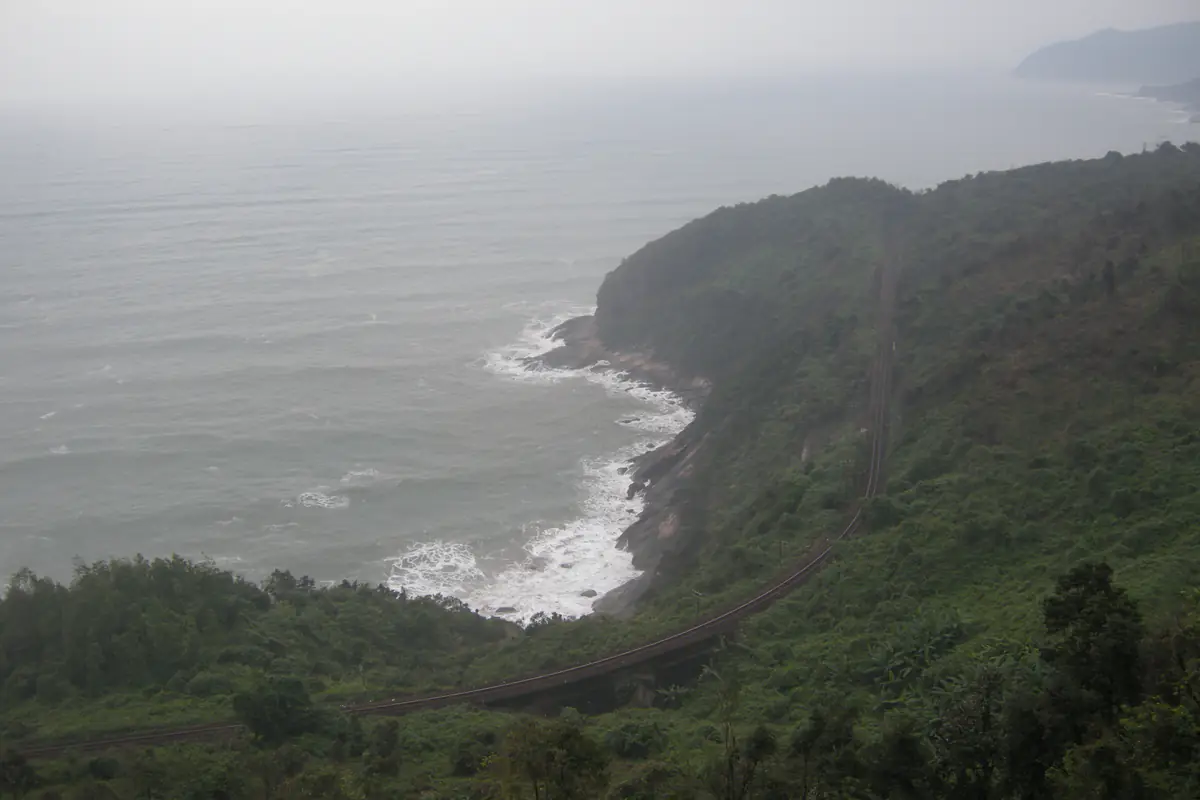
On the afternoon HĐ3, the train passes Lang Co at 4:42 pm, while the sun sets at Lang Co around 5:15-5:20 pm from late October to December, so the second half of the coast may already be dark. To see the Hai Van section clearly in these months, take a morning train or HĐ4, which crosses the pass before reaching Lang Co at 4:50 pm.
Planning a day around the train: Hue, Da Nang and Hoi An
Staying in Da Nang: a day trip to Hue
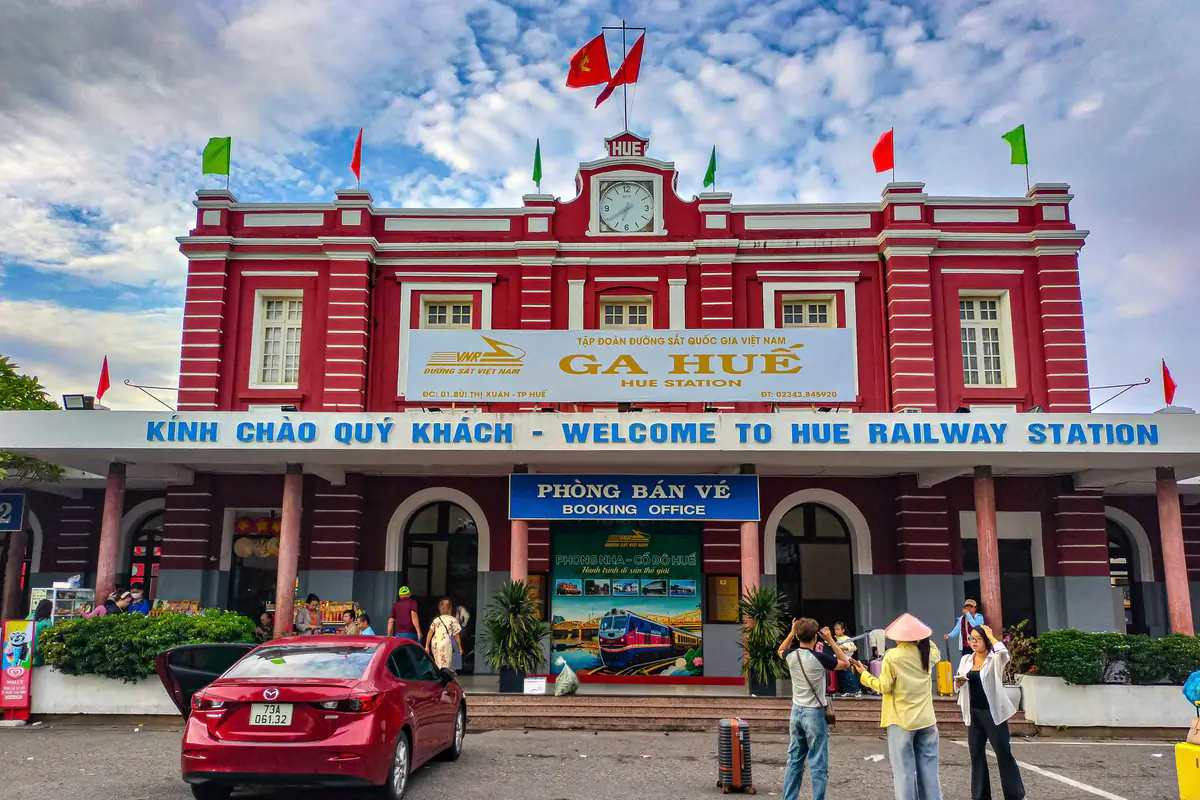
Take HĐ2 at 7:05 am, reaching Hue at 11:03 am, and return on HĐ3 at 2:30 pm, back in Da Nang at 6:15 pm. That leaves a gap of 3 h 27 min between arrival and departure. Hue station is about 3 km by road from the Ngo Mon Gate, the main entrance to the Imperial City.
That gap includes transfers and the time you need back at the station. A short visit to part of the Imperial City and a quick meal may fit, but take a car back through the tunnel or stay overnight if you want an unhurried visit or time for the royal tombs.
Staying in Hue: Da Nang, or moving on to Hoi An
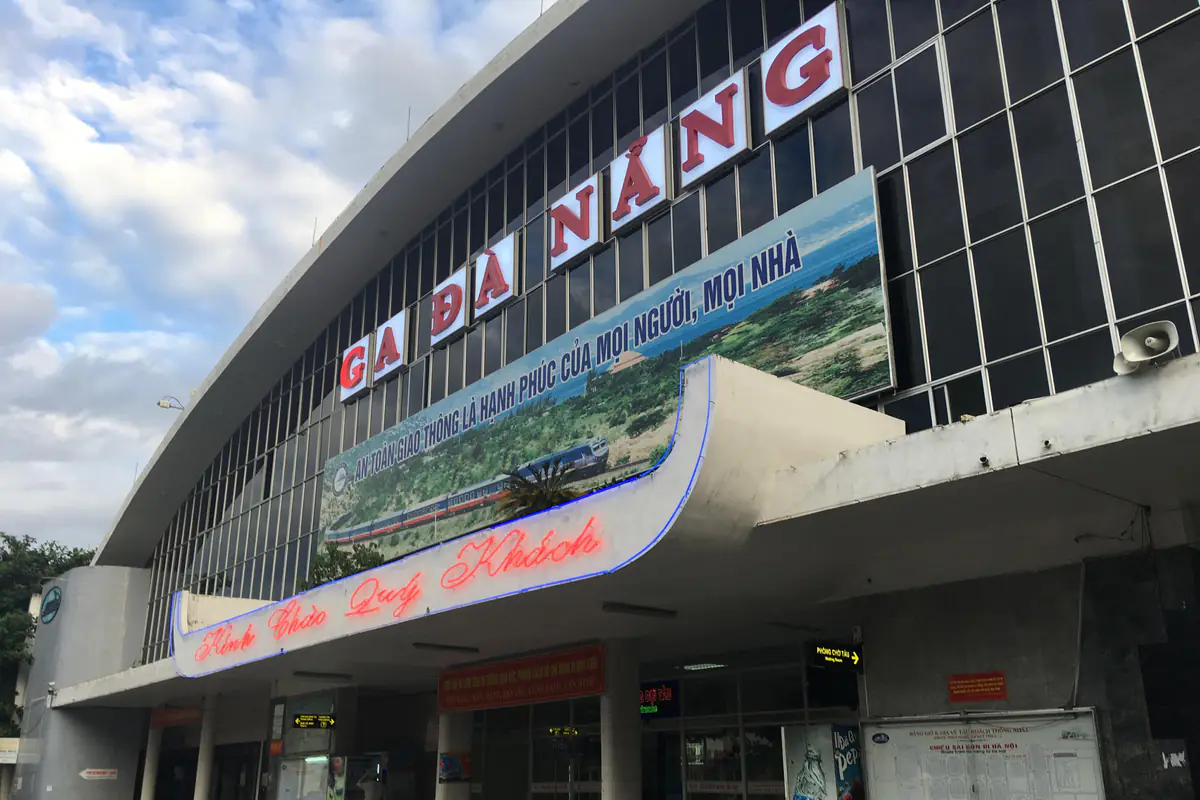
HĐ1 leaves Hue at 7:05 am and reaches Da Nang at 10:10 am; HĐ4 leaves Da Nang at 3:20 pm and gets back to Hue at 6:15 pm, leaving a gap of about five hours in Da Nang before transfers. Hoi An’s old town is about 32 km by road from Da Nang station, so if Hoi An is where you are headed, taking the train one way and staying on is more relaxed than returning to Hue the same day.
A day at Lang Co
From Hue, take HĐ1 to Lang Co (8:38 am) and come back on HĐ4, which calls at Lang Co at 4:50 pm. From Da Nang, take HĐ2 to Lang Co (9:14 am) and come back on HĐ3, which calls at 4:42 pm. Buy a short-leg ticket for each direction.
Extra days in Hue: the Hue-Phong Nha heritage train
A second heritage train, “Cố đô Huế - Phong Nha”, opened on August 28, 2026, linking Hue with Tho Loc station near Phong Nha-Ke Bang National Park. Before you go, check the current schedule and how you will get from the station to the caves. Another short scenic tourist train runs in the Central Highlands, from Da Lat railway station to Trai Mat.
Flood season and other practical tips
Floods have stopped this train before: on October 28 and 29, 2025, the railway canceled both heritage train pairs because of flooding in central Vietnam. Passengers were notified by text message, Zalo, the website and Facebook page, and could obtain a refund at the station within 30 days without a cancellation fee.
- Enter a working phone number when you book so you receive schedule-change messages.
- The evening before and on the morning of travel, check the notices on dsvn.vn and the railway’s Facebook page, and local flood warnings for Hue and Da Nang.
- The road can be disrupted too: in October 2023 the Hai Van Pass road was closed by a landslide after heavy rain, and motorbikes had to be carried through the tunnel on shuttle vehicles.
Before you book
- The exact times for your date, since the railway website shows two sets of times (see the timetable section).
- The fare for your date and car, especially at weekends and on public holidays.
- Whether your chosen departure has performances, and when they take place.
- If you plan to continue to Phong Nha: the Hue-Phong Nha train’s winter schedule, fares and onward transport from Tho Loc station to the caves.
- If you are interested in the steam-hauled tourist train between Hue and Da Nang: plans reported in September 2026 pointed to a trial run in October 2026, possibly with a stop on the Hai Van Pass. Schedule and fares need confirming.
FAQ
Is there food on the train?
Yes. As reported in October 2026, food is sold on board, including central Vietnamese specialties such as banh mi, banh beo (small steamed rice cakes topped with shrimp) and banh nam (flat rice cakes steamed in banana leaf). Prices are shown on board; on the 7:05 am trains, a light breakfast beforehand is a good idea.
Can I bring a suitcase?
Yes, within the railway’s free carry-on allowance: up to 20 kg, no longer than 0.8 m, no wider than 0.5 m and no more than 0.16 cubic meters. Anything larger is charged and travels in the baggage car if there is room.
Which side should I sit on the Reunification Express over the Hai Van Pass?
The same advice as for the heritage train, because it runs on the same track: going by the coastline, aim for the left side heading south toward Da Nang and the right side heading north toward Hue, counted by the direction of travel rather than the way your seat faces.
Sources
These are the sources used for this article. It was last updated on Oct 22, 2026; prices and opening hours may have changed since, so please double-check before you go.
- VnExpress International: Vietnam boasts 2 out of world’s top 20 train journeys (October 18, 2026)
- Condé Nast Traveler: The Best Train Trips in the World, 2026 Readers’ Choice Awards (October 2026)
- Vietnam’s railway: Hue-Da Nang heritage train page, HĐ1-HĐ4 timetable and ticket legs (accessed October 21, 2026)
- Vietnam’s railway: dsvn.vn ticketing site (accessed October 21, 2026)
- Vietnam Railways: Carry-on baggage size and weight rules (in Vietnamese, January 4, 2019)
- Tuoi Tre News: Admire Vietnam’s Hue-Da Nang train, ranked among world’s 10 best rail trips (October 20, 2026)
- Viet Nam News: Railways reinvent themselves with tourism, heritage trains (July 22, 2026)
- VietNamNet: Four train journeys for the September 2 holiday, with HĐ1-HĐ4 times (in Vietnamese, August 17, 2026)
- Kenh14: Vietnam’s VND200,000 train ride among the world’s most beautiful (in Vietnamese, October 18, 2026)
- CafeF, from Doi song & Phap luat: the heritage train’s weekday, weekend and VIP fares (in Vietnamese, May 16, 2026)
- Dan Tri: Heritage train upgraded on one of the world’s most scenic rail routes (in Vietnamese, March 26, 2026)
- Dan Tri: Central heritage train in the world’s top 10, VIP car and Don Ca bridge (in Vietnamese, October 20, 2026)
- Tuoi Tre: One of the world’s 10 most beautiful train rides crosses central Vietnam (in Vietnamese, October 20, 2026)
- Nhan Dan: Heritage train pairs suspended because of floods (in Vietnamese, October 27, 2025)
- Tuoi Tre: Hai Van Pass closed by landslide, how to travel between Da Nang and Hue (in Vietnamese, October 13, 2023)
- Chosun Ilbo: Lang Co and Hue travel feature, driving times through the Hai Van tunnel (in Korean, June 13, 2026)
- VnExpress: Hue-Phong Nha tourist train route announced (in Vietnamese, July 31, 2026)
- VOV: Hue-Phong Nha heritage train makes its first trip (in Vietnamese, August 28, 2026)
- VnExpress: Nha Trang-Quy Nhon luxury car, VND10 million, 12 seats (in Vietnamese, August 15, 2025)
- Tuoi Tre News: Steam train linking Hue, Da Nang expected to launch in October (September 17, 2026)
- OpenStreetMap: track position relative to the coast and the Cau Hai and Lap An lagoons; road distances between the stations and to Hoi An and Ngo Mon Gate (measured October 21, 2026)
- Sunrise-Sunset.org: sunset times at Lang Co, October-December 2026 (accessed October 21, 2026)