Best time to visit Phu Quoc: the driest months, the calmer coast and where to stay
For a trip in the 2026-27 dry season, December to March is the driest stretch on Phu Quoc, averaging four to seven rainy days a month; November and April are transition months. The wind then blows mostly from the east, so the west coast is usually the calmer side. If your trip overlaps Lunar New Year (Tet starts February 6, 2027), book early and reconfirm before you travel.
By Da Lat LoversPublished Updated How we review
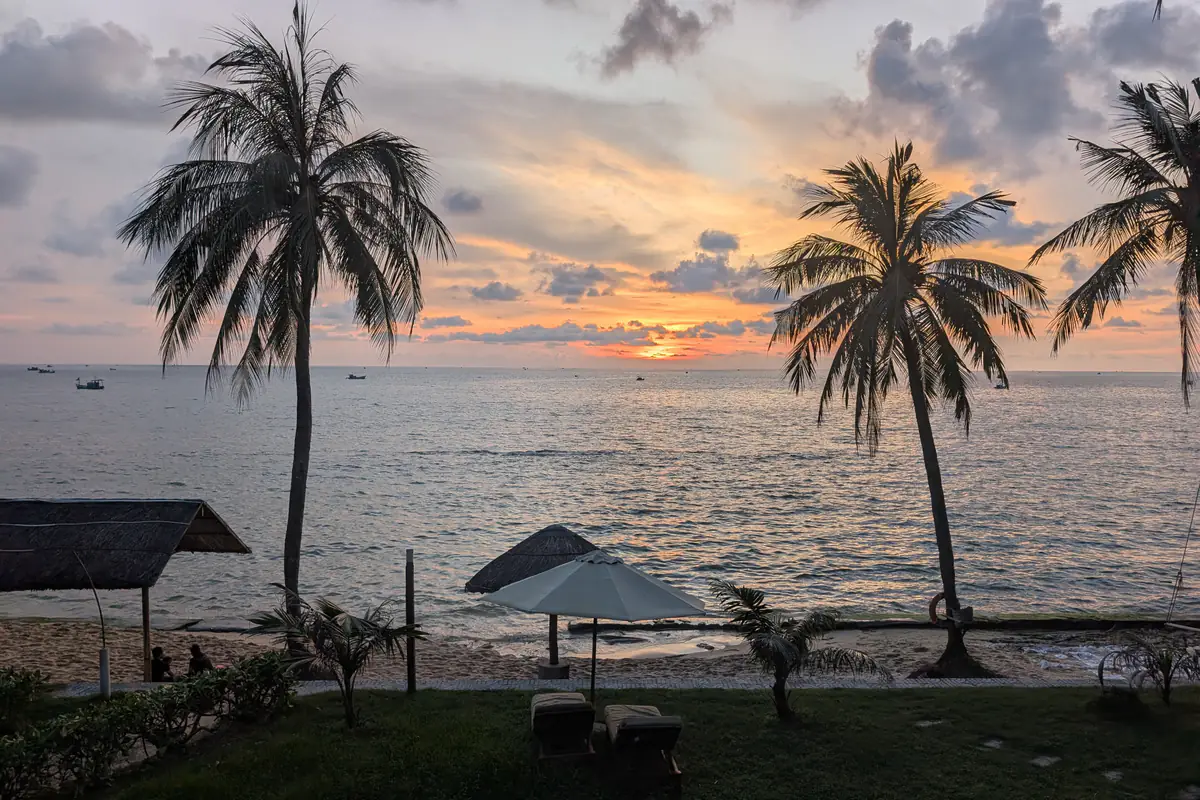
Sunset over the sea from the north end of Long Beach in Duong Dong, on Phu Quoc’s west coast, November 2025. Photo: Elmschrat / CC0
Best time to visit Phu Quoc: which months are dry, which coast is calm?
If you want the least rain and the most sun, go between December and March. On long-term averages, January and February get about 27-28 mm (1.1 in) of rain, and December and March at about 60 mm (2.4 in). November and April are transition months with roughly 150-160 mm (6 in) each, and from May to October every month gets 280-490 mm (11-19 in).
These are averages, not a forecast for this season, so check the rain and wind forecast for Phu Quoc in the week before you go.
| Month | Weather and sea | Crowds |
|---|---|---|
| Nov | 164 mm, about 14 rainy days; 24-31°C (75-88°F). Wind turns northeast. | Winter charter flights from Russia and Central Asia already running since late September. |
| Dec | 59 mm, about 6 rainy days; 23-30°C (73-86°F). Northeast wind on most days. | For Christmas and New Year, check room availability early and compare cancellation terms. |
| Jan | 28 mm, about 5 rainy days; 23-31°C (73-88°F), the coolest nights of the year. | Between New Year and Tet. |
| Feb | 27 mm, about 4 rainy days; 24-31°C (75-88°F). Wind shifts toward east and southeast. | Tet (Lunar New Year): rooms and flights are often hard to get (see peak dates below). |
| Mar | 61 mm, about 7 rainy days; 25-32°C (77-90°F), the most sunshine hours of the year. | No long Vietnamese public holiday. |
| Apr | 148 mm, about 12 rainy days; 26-33°C (79-91°F), the hottest days of the year. | Late April to early May holidays: a long break for Vietnamese travelers, so book ahead if your dates overlap. |
| May-Oct | 281-486 mm a month, 19-24 rainy days. West and southwest winds blow straight onto the west coast. | Vietnamese summer and school holidays. |
In the dry season, which coast is calmer?
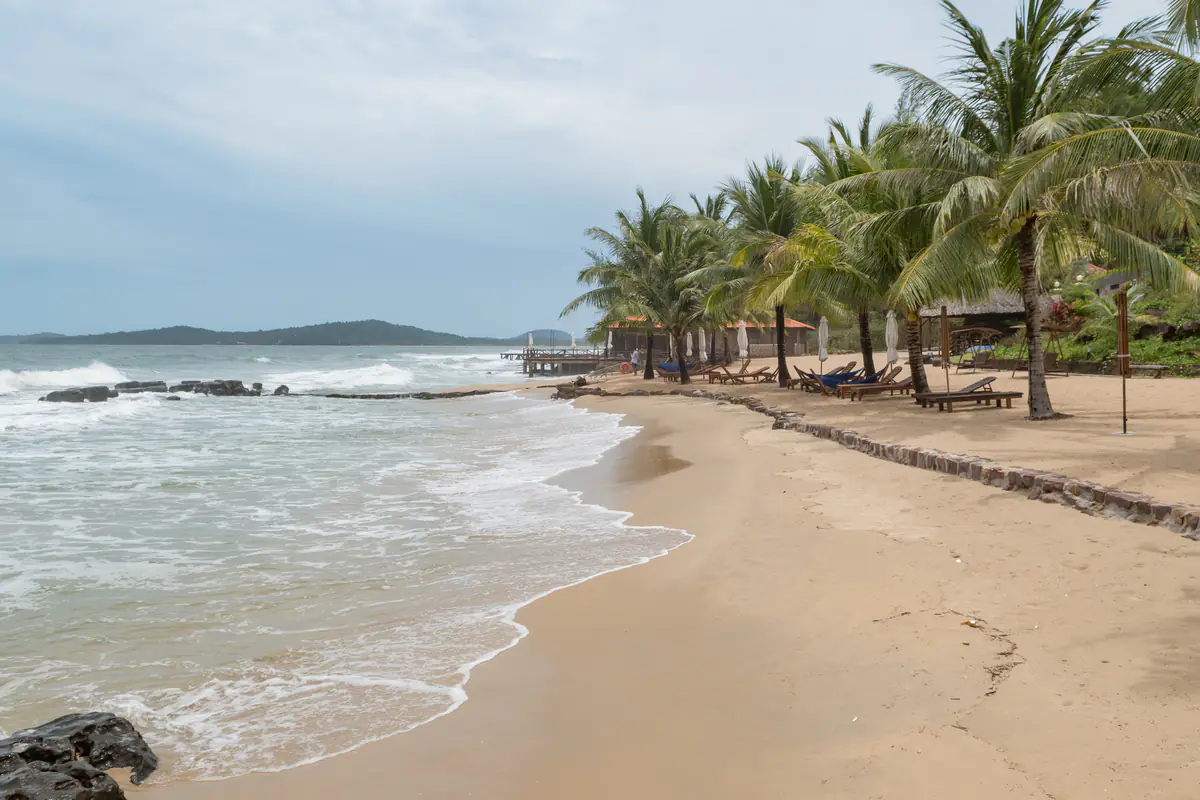
From November to January, the wind on Phu Quoc comes from the northeast or east on roughly two-thirds to more than four-fifths of days; from February to April it swings east and southeast. The west coast, with Long Beach (Bãi Trường), Ong Lang, Ganh Dau (Gành Dầu) and Bai Dai, is generally more sheltered from easterly winds, though waves still vary from day to day. It is also where the sun sets over the sea.
The east and southeast coast, including Sao Beach (Bãi Sao), Khem Beach (Bãi Khem) and Ham Ninh, faces the wind and can be choppier on windy days. In the rainy season it is the other way round: southwest winds push waves onto the west coast and the southeast beaches are more sheltered. This is a tendency based on average wind direction, so check the wind and wave forecast before a beach day.
Where to stay: the north, Duong Dong or the south?
The island is about 50 km (31 miles) from north to south. By road, the airport is about 11 km from Duong Dong (Dương Đông) town, 18 km from Sao Beach, 21 km from the cable car station at An Thoi (An Thới) and 37 km from Ganh Dau at the northwest tip. Ganh Dau to An Thoi is about 53 km, usually more than an hour by car, so base yourself near what you will visit most.
The north: Ganh Dau and Bai Dai
The northwest has a large theme park and safari-style zoo complex near the national park. It suits families planning a day or two there. If quiet matters, check traffic, nearby construction and evening activities around the property you are considering. The downside is distance from the airport and from the southern sights such as the cable car and the An Thoi island trips. For a starfish stop at Rach Vem on the north coast, check recent beach conditions before making a special trip.
The middle: Duong Dong and Long Beach
The closest of the three areas to the airport, with the most restaurants, markets and services. Long Beach runs south from Duong Dong and is the west coast’s main stretch for an afternoon swim and the sunset. It suits first-time visitors, people without their own transport, and anyone who wants day trips both north and south.
The long-running night market on Bach Dang street was told it could trade only until February 28, 2026, when its site lease ended, and it is not clear whether it still trades there or has moved. If the market is your reason to stay in town, ask your hotel for its current location and opening hours before you book.
The south: An Thoi, Sao Beach and Khem Beach
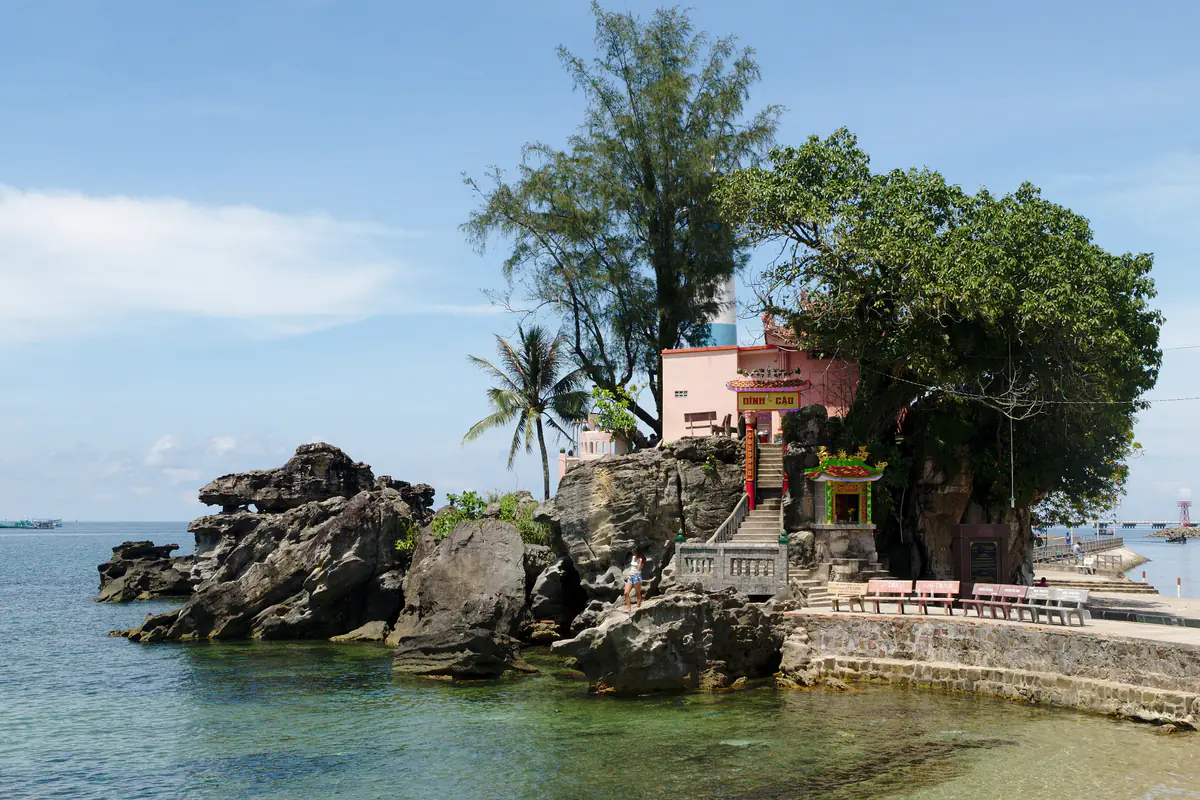
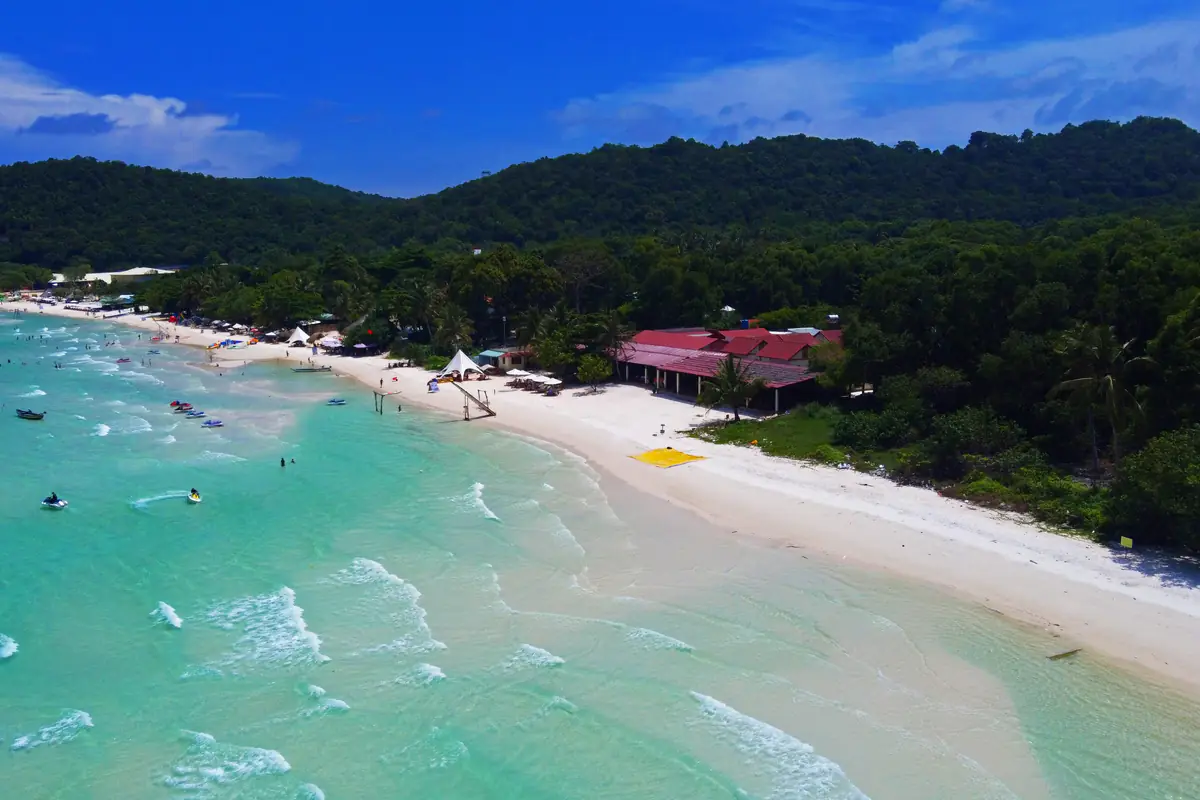
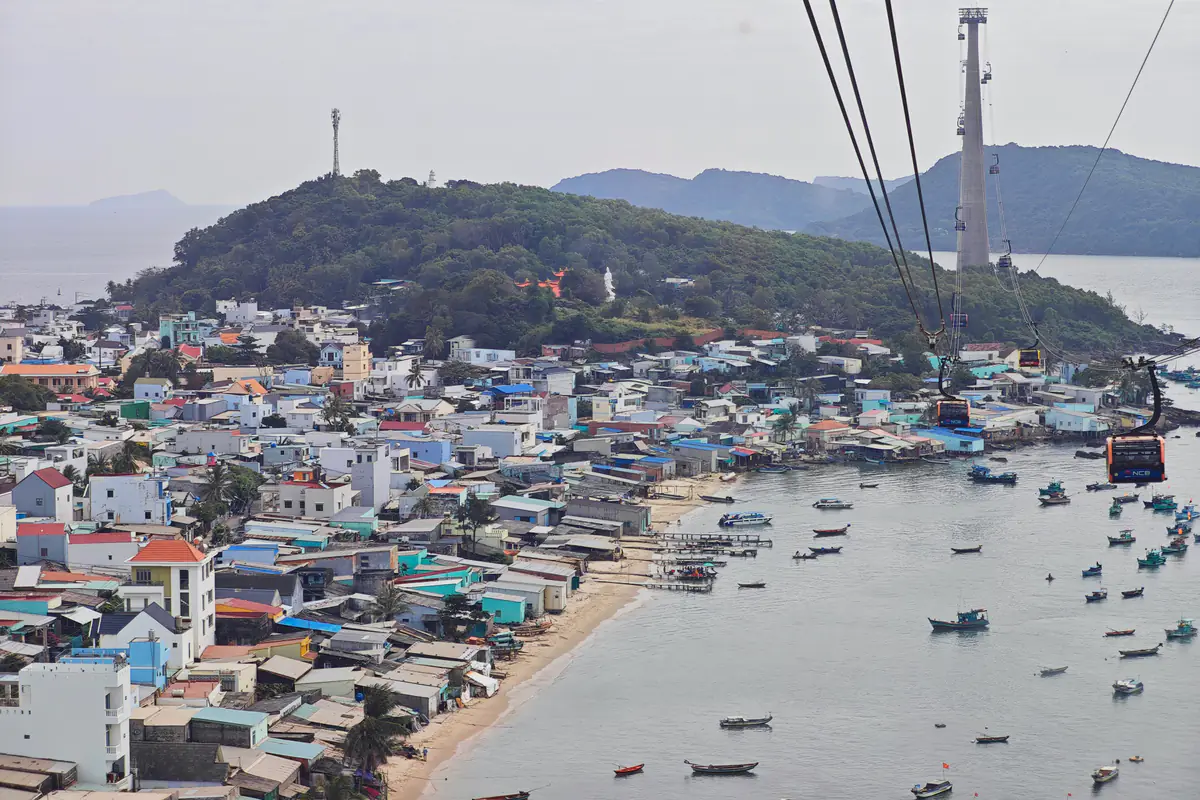
This is where the sea-crossing cable car runs from An Thoi to Hon Thom island and where boat trips leave for the An Thoi islands; the white-sand Sao and Khem beaches face southeast. It suits island hopping, snorkeling and staying close to the cable car. The APEC convention center is also in the south, at Bai Dat Do (see the construction section below).
Boat trips depend on the wind. On July 11, 2026, a tourist speedboat capsized in rough seas and strong wind near Hon May Rut Ngoai, and 15 tourists died. Wear a life jacket for the whole trip, book a licensed operator, and cancel or postpone in strong wind, even if it is not raining.
On a stay of four or five nights with young children, if you want both the northern theme park and the southern cable car, splitting your stay between two bases means less time in the car than commuting from one.
Getting there and the entry rules
Phu Quoc International Airport has direct flights from South Korea (Incheon and Busan) and Taiwan, plus winter charters from Russia and Central Asia. From elsewhere, connect in Ho Chi Minh City (about one hour’s flight) or Hanoi (about 2 hours 10 minutes).
From India, Air India ran a series of eight direct New Delhi-Phu Quoc flights between December 10, 2025 and January 10, 2026. Whether direct flights run this winter needs confirming; otherwise plan on a connection through Ho Chi Minh City or Hanoi, and read the connection point below before you book it.
- Phu Quoc’s own 30-day visa-free rule: any foreign national entering Phu Quoc from abroad can stay up to 30 days without a visa, including eligible connections where travelers remain in the transit area before continuing to Phu Quoc. Indian passport holders, for example, can use it even though they generally need a visa for the rest of Vietnam. It covers the island only. If you connect through another Vietnamese airport, check that your routing qualifies against Vietnam Airlines’ entry guidance before you book.
- Connections: before booking a connection through another Vietnamese airport, ask the airline to confirm that your itinerary qualifies for the Phu Quoc exemption.
- Pre-arrival declaration: since June 1, 2026, arrivals at Phu Quoc file their details at prearrival.immigration.gov.vn within three days before arrival and show the QR code at immigration.
If Hanoi, Ho Chi Minh City or Da Nang is also on your route, the 30-day rule will not cover it. For mainland travel, check whether you qualify for a separate visa exemption. If you do not, arrange a suitable visa before departure.
Peak dates and the APEC construction: what to expect
When rooms run out
Vietnamese civil servants get February 4-10, 2027 off for Tet. Ahead of Tet 2026, most of Phu Quoc’s hotel rooms were already booked, so if your trip falls in that week, sort out rooms and flights as early as you can.
The same holiday brought last-minute cancellations of confirmed bookings and price hikes. Since February 26, 2026, the island has run a 24/7 tourism rapid response team that takes complaints about prices and services. Book with written confirmation, read the cancellation terms, reconfirm a few days before you travel and be wary of unusually cheap offers.
Winter is also the main season for international visitors: charter flights from Russia have been running since late September 2026 and continue until May, and some upscale hotels paused sales for year-end dates. Christmas and New Year deserve the same early planning as Tet.
APEC 2027 construction
Phu Quoc hosts the APEC Economic Leaders’ Week in 2027, and the related projects must be finished by May 31, 2027. That means work continues right through this dry season, with night shifts at some sites. Three areas matter when you choose a base and plan transfers:
- Bai Dat Do in the south, where the APEC convention center and the hotels around it are being built.
- The DT.975 north-south road, with road works and a light rail line along its median from the airport to the south.
- The airport, where a new terminal is under construction.
Traffic arrangements for visitors this season need confirming closer to your dates. If you are staying near Bai Dat Do or right on DT.975, ask your hotel about nearby building work and working hours. Before airport runs and north-south trips, check your route on a map and allow extra time.
Before you book
- Do your dates overlap Christmas, New Year or Tet (February 4-10, 2027)? If so, book early and choose refundable rates.
- Does your base match your plans: theme park days in the north, or island trips and the cable car in the south?
- Written confirmation for every booking, reconfirmed a few days before you travel.
- Any construction near your hotel, especially around Bai Dat Do and DT.975.
- For boat trips: the wind forecast on the day, life jackets and a licensed operator.
- Passport, the pre-arrival declaration, and either a valid visa or a qualifying visa exemption for any mainland visit.
- For India: whether a direct flight runs on your dates this winter.
- The night market’s current location and opening days, if that is why you are choosing a hotel in town.
FAQ
Can you swim in Phu Quoc in December?
Usually, yes. On windy days, ask your hotel or the beach staff before going in, especially with children, and do not swim after drinking alcohol.
Is the rainy season worth it?
It can be if your plans are flexible. Leave a spare day or two for boat trips and snorkeling, because they can be canceled when the sea is rough.
How many days do you need on Phu Quoc?
Three days and two nights covers one area and a few main sights. Four or five days lets you see both the north and the south without rushing.