Things to do in Sapa: a two- or three-day itinerary and how to get there
With two full days in Sapa, spend one on the town and Cat Cat village and choose either Fansipan by cable car or the Lao Chai to Ta Van walk in the Muong Hoa Valley for the other; with three days you can do both. Ta Phin and the O Quy Ho pass are separate half-day trips in other directions. From late October to December, Sapa is cold and often foggy, and the rice has been harvested.
By Da Lat LoversPublished Updated How we review
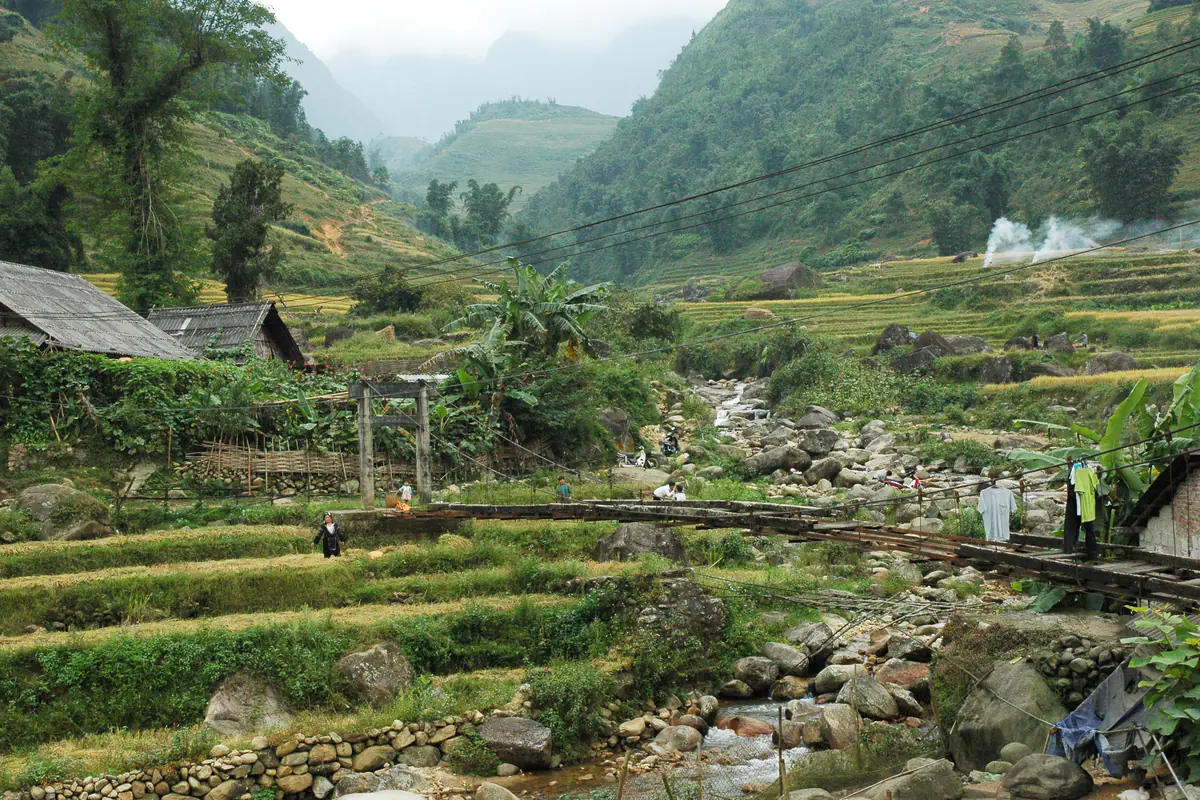
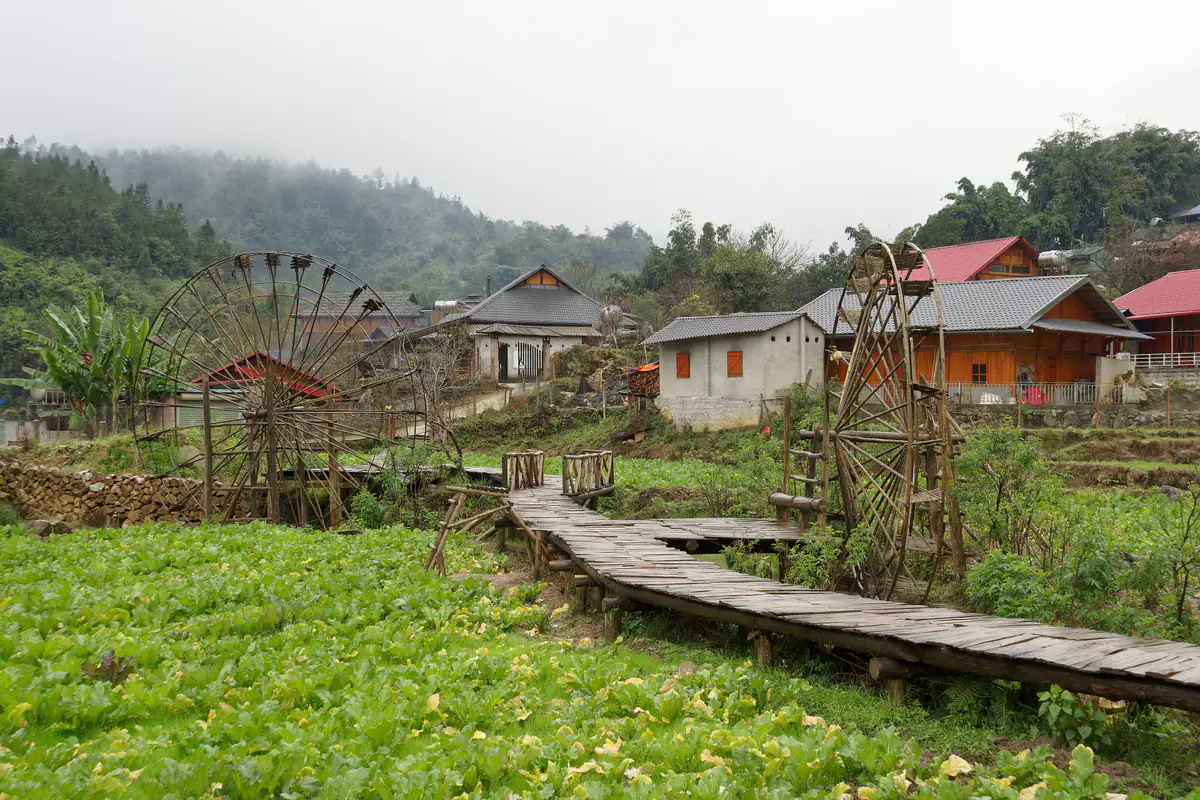
A suspension bridge over the stream in a Muong Hoa Valley village, Lao Chai - Ta Van area, near Sapa, October 2011. Photo: Lori_NY / CC BY-SA 2.0
Things to do in Sapa: how far each place is and how long it takes
Sapa (officially Sa Pa, in Lao Cai province) is a mountain town at about 1,500 m, and most of what visitors come for lies within about 15 km (9 miles) of the center. The table runs from nearest to farthest, with the time to allow and the latest adult ticket prices we could find. Prices here change often, so each one carries its year.
| Place | From the center | Allow | Adult ticket |
|---|---|---|---|
| Sapa town: stone church, lake, market | In the center | 1-2 hours on foot | Free |
| Ham Rong mountain | In the center | 1.5-2 hours, many steps | VND70,000, about US$3 (2023-2026) |
| Cat Cat village | About 2 km (1.2 miles) | 2-3 hours | VND90,000-150,000, US$3.50-6; sources from 2023-2026 differ |
| Fansipan by cable car | The Muong Hoa train runs from the center to the cable car station | Half a day | Return cable car VND850,000 (about US$33), return Muong Hoa train VND200,000, summit funicular uphill about VND150,000, downhill tickets sold separately (2026) |
| Lao Chai and Ta Van, Muong Hoa Valley | About 10-12 km (6-7.5 miles) southeast | A day on foot, or half a day by car | VND70,000-75,000, about US$3 (2023-2026) |
| Ta Phin village | About 12 km (7.5 miles) northeast, away from Muong Hoa | Half a day | VND40,000 (2023) |
| Silver Waterfall and Heaven’s Gate, O Quy Ho pass | 12-15 km (7.5-9 miles) along National Road 4D | Half a day by car | Silver Waterfall VND20,000; Heaven’s Gate VND80,000 (2023-2026) |
The Muong Hoa Valley (Lao Chai and Ta Van), Ta Phin and the O Quy Ho pass lie in three different directions from the center. On a short trip, visit them in separate half-day outings rather than trying to combine all three.
Sapa town and Cat Cat village: your first half day
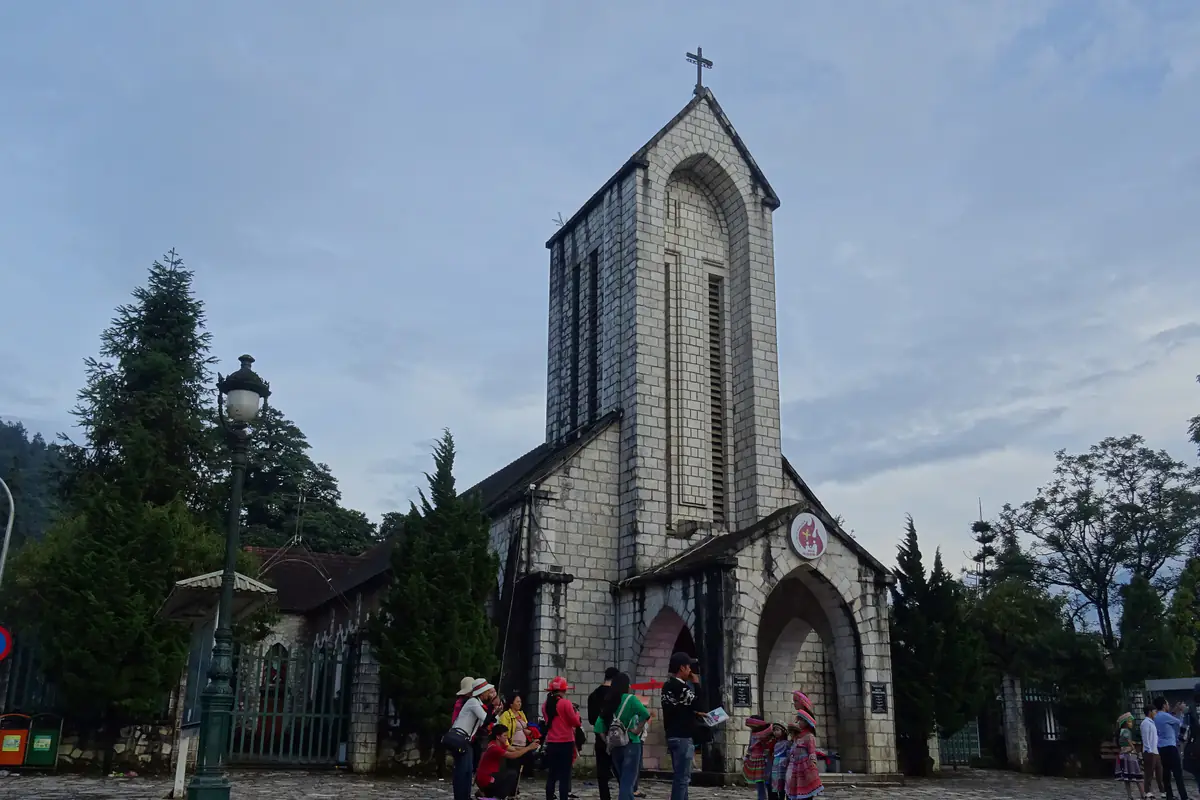
The stone church, the lake and the market sit close together and are easy on foot. Ham Rong mountain rises right behind the center: stone steps lead through flower gardens and a rock forest to a lookout at about 1,700 m (5,600 ft), with most of Sapa spread out below.
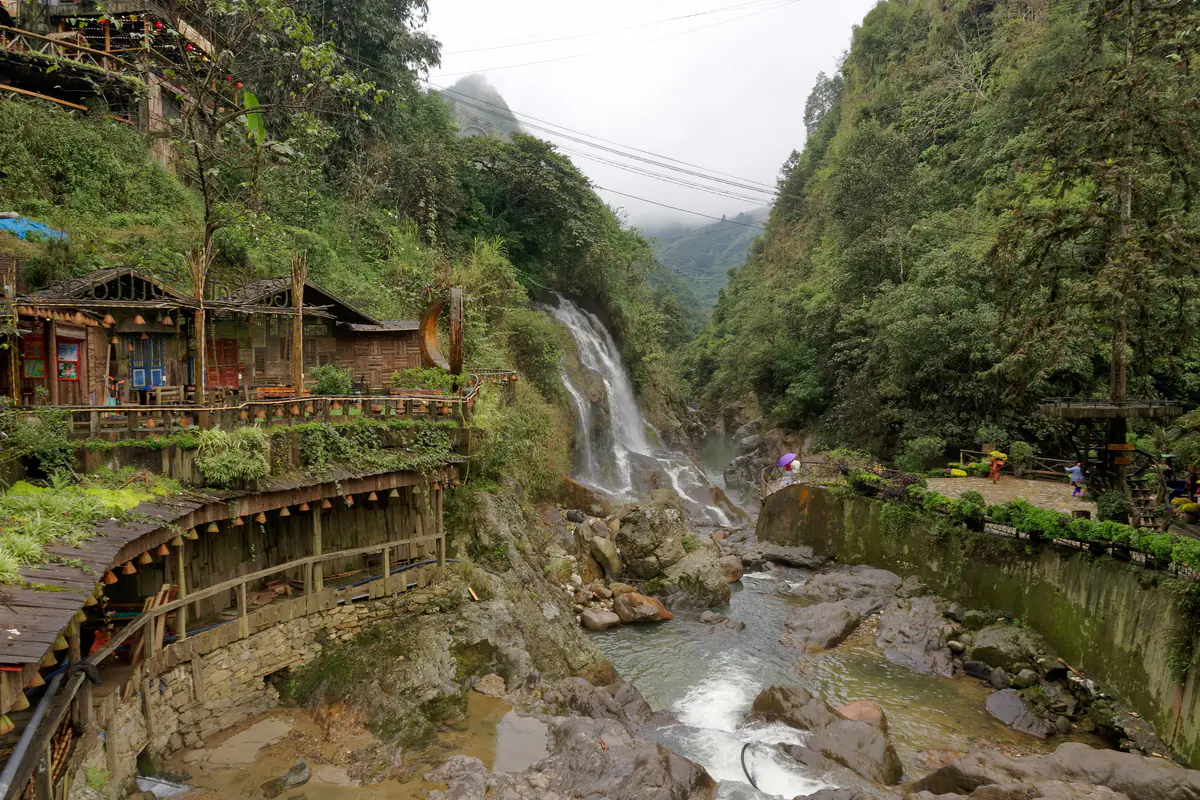
Cat Cat is a Hmong village about 2 km from the center. The visitor path is a long run of steps down to a waterfall and stream, so the way back is uphill; if you are traveling with older relatives, budget for a ride back. The village website lists daily opening from early morning to 6 p.m., with seven short folk shows a day between 9 a.m. and about 5:40 p.m.
The ticket price is reported inconsistently: VND90,000 in a Vietnamese newspaper in September 2025, VND150,000 on many travel sites in 2026. Confirm the current admission fee with Cat Cat village on 088 638 1188 before making a special trip.
Fansipan by cable car: half a day, on the day with the best forecast
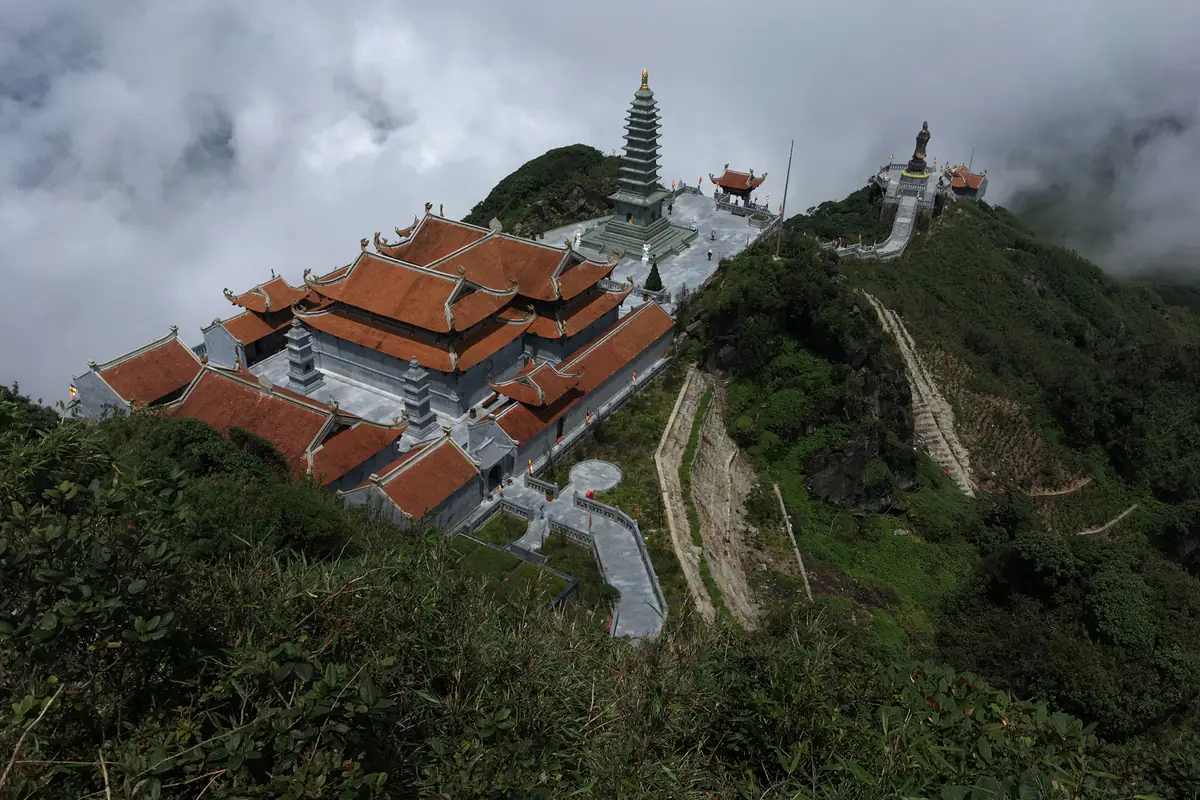
From the center, the Muong Hoa train takes about 6 minutes to the cable car station. The cabin climbs to just below the 3,143 m (10,312 ft) summit in about 15 minutes, and a funicular replaces the last stretch of roughly 600 stone steps.
Reference prices for 2026 from Sun Group, the operator: return cable car VND850,000, return Muong Hoa train VND200,000, and about VND150,000 for the funicular up. Riding up and walking the steps down comes to about VND1.2 million (US$46) per adult. The funicular is sold as up, down or return tickets, so the total depends on whether you ride it one way or both; check the price of the exact ticket on the booking site. Children 1 to 1.4 m tall pay about VND550,000 for the cable car; under 1 m usually ride free.
On October 24, 2026, the Sun World Fansipan Legend site listed these hours: Monday to Thursday 7:30 a.m.-4 p.m., Friday 7:30 a.m.-5 p.m., Saturday 7 a.m.-5 p.m., Sunday 7 a.m.-4 p.m. The operator notes that hours can change, so check the day before.
The top is much colder than town: in a strong cold spell the summit can drop below 0°C (32°F) while the foot of the mountain sits at 7-10°C (45-50°F). Cloud can also hide everything all day. With three days, keep Fansipan flexible and choose the day with the clearest forecast, even if that is day one.
Muong Hoa Valley: Lao Chai and Ta Van
This is the heart of most Sapa trips: trails along the rice terraces, Hmong, Dao and Giay villages beside the Muong Hoa stream, and a field of ancient carved boulders in the valley. Lao Chai and Ta Van lie about 10-12 km southeast of the center. The usual plan is to walk down to Lao Chai, continue to Ta Van and ride back, or stay a night in a Ta Van homestay and keep walking the next day.
Ta Phin: a separate trip northeast of Sapa
Ta Phin is also about 12 km from the center, but to the northeast, in a different direction from Lao Chai and Ta Van. On a short trip, allow a separate half-day for Ta Phin rather than combining the two. It is home to many Red Dao families and known for Dao herbal baths. Half a day by car is enough, and it suits a drizzly day when a long walk stops being fun.
O Quy Ho pass, Silver Waterfall and Heaven’s Gate: go when it is clear, and drive carefully
National Road 4D climbs from Sapa over the O Quy Ho pass toward Lai Chau. The pass runs for nearly 50 km (31 miles) and tops out at close to 2,000 m. On the way up you pass the Silver Waterfall, about 12 km from the center, and reach Heaven’s Gate at the top, about 15 km out. On the Lai Chau side is the Rong May glass bridge; reported prices range from VND400,000 (2023) to VND500,000 (2025). In thick fog you may see nothing from the top, so this is a trip for a sunny morning or afternoon.
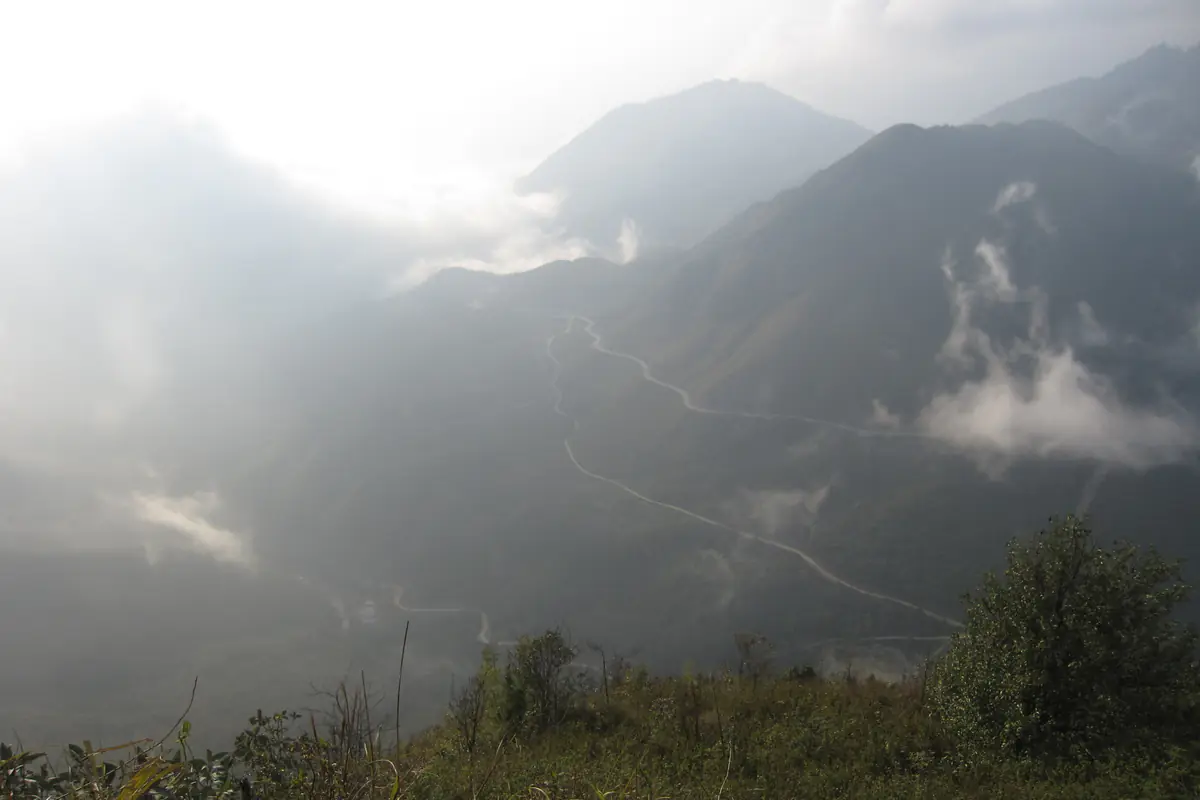
It is also the stretch of the trip that needs the most care:
- Travel in daylight. In winter the Sapa side of the pass can sit in fog for most of the day, and the weather near the top changes fast.
- On a motorbike: pick a manual (geared) bike over a scooter for the long descents, check brakes, tires and lights, wear a helmet and slow down for every bend. If you are not a confident rider, hire a car with a local driver.
- Ice: on some winter mornings the top of the pass drops below freezing and the road ices over (as on January 24, 2024). Then wait for the sun or skip the pass.
- Rainy season: National Road 4D has landslide-prone sections. After long heavy rain, ask your hotel about road conditions before setting off.
A two- or three-day Sapa itinerary
Each group of sights above takes half a day to a day. This plan follows distances and transport times; treat it as a starting point.
- Day 1: arrive (early morning by night train, early afternoon by morning bus), drop your bags, walk the town and the stone church, then go down to Cat Cat. If you still have the legs, climb Ham Rong.
- Day 2: Fansipan in the morning if the forecast is good, then the Silver Waterfall and Heaven’s Gate in the afternoon. If the summit is socked in, swap: walk the Muong Hoa Valley today and do Fansipan tomorrow.
- Day 3: walk Lao Chai to Ta Van until early afternoon, ride back to town and take an afternoon or evening bus to Hanoi; with an extra night, sleep in Ta Van.
Only two full days? Spend day one on the town and Cat Cat, then choose for day two: Fansipan if the forecast is clear and you want less walking, or the Lao Chai - Ta Van walk if you would rather hike, which still works in fog. Keeping both needs three days; save Ta Phin and the pass for another trip.
On a wet day, a herbal bath in Ta Phin or a short visit to Cat Cat works better than a long trek. Bac Ha’s market meets only on Sunday mornings and the road goes via Lao Cai city, so it needs a day of its own.
Hanoi to Sapa: travel time by bus and by night train
Most international visitors fly into Hanoi’s Noi Bai airport; before booking, check whether you need a visa for Vietnam. From Hanoi there are two practical ways up.
| Option | Travel time | One way | Good to know |
|---|---|---|---|
| Sleeper bus, cabin bus or limousine van | About 5.5-6 hours on the Noi Bai - Lao Cai expressway | From about VND210,000 (US$8); most VND250,000-450,000 (US$10-17); premium cabins up to about VND570,000 (US$22) | Departures almost around the clock; pickups in the Old Quarter and at My Dinh, drop-off in central Sapa |
| Night train to Lao Cai | Just under 8 hours, plus about 1 hour by road to Sapa | VND450,000-1,000,000 (US$17-39) by berth type (September 2025) | SP15 leaves 9:45 p.m., SP3 10 p.m., SP7 10:40 p.m.; arrivals in Lao Cai 5:20-6:27 a.m. |
Take the bus if you want to arrive in the center itself, pay less and choose your hour. Morning buses arrive in time for check-in; overnight buses save a hotel night but can reach Sapa before dawn. If you are heading up straight after landing, ask when booking whether the bus can pick you up at Noi Bai airport.
If you prefer the train, book a sleeper berth and arrange the onward transfer from Lao Cai. You arrive at 5:20-6:27 a.m. with more than 30 km of mountain road still to go, and a pre-booked shuttle or taxi is the way to lock in your time. City bus no. 1 runs from the station square to near the stone church, but the only timetable we found (5:50 a.m. to 6:45 p.m.) dates from 2021, so reconfirm the pickup point and first bus before you rely on it. Coming back, SP16 leaves Lao Cai at 9:25 p.m., SP4 at 9:50 p.m., and the daytime SP8 at 12:05 p.m. Since May 1, 2026, Vietnam Railways prices vary with demand, so check the fare for your date on dsvn.vn.
Sapa weather by season: what you will see each month
These are long-term averages from the Sapa weather station (1,570 m), not a forecast for this year.
| When | Temperature, rain | What it looks like |
|---|---|---|
| October | 13.7-19°C (57-66°F), 18.6 rainy days | Harvest under way, turning cool; start of the cloud-sea season on Fansipan |
| November | 10.2-16.1°C (50-61°F), 13.8 rainy days but only about 106 mm (4 in) | Drizzle, about 11 foggy days, little sun |
| December to February | December 7-13.2°C (45-56°F); January 6.2-12.3°C (43-54°F) | Coldest months, 13-17 foggy days a month; frost in some years, snow rarely |
| March to April | March 10.8-18.2°C (51-65°F); April 14-21.3°C (57-70°F) | Warming up; apricot, peach and plum blossom season |
| Late April to mid-May | May 16.3-22.4°C (61-72°F) | Water season: terraces flooded for planting |
| June to August | 17.4-23°C (63-73°F), 23-26 rainy days | Green rice, but the wettest months (July about 460 mm, 18 in); landslide risk |
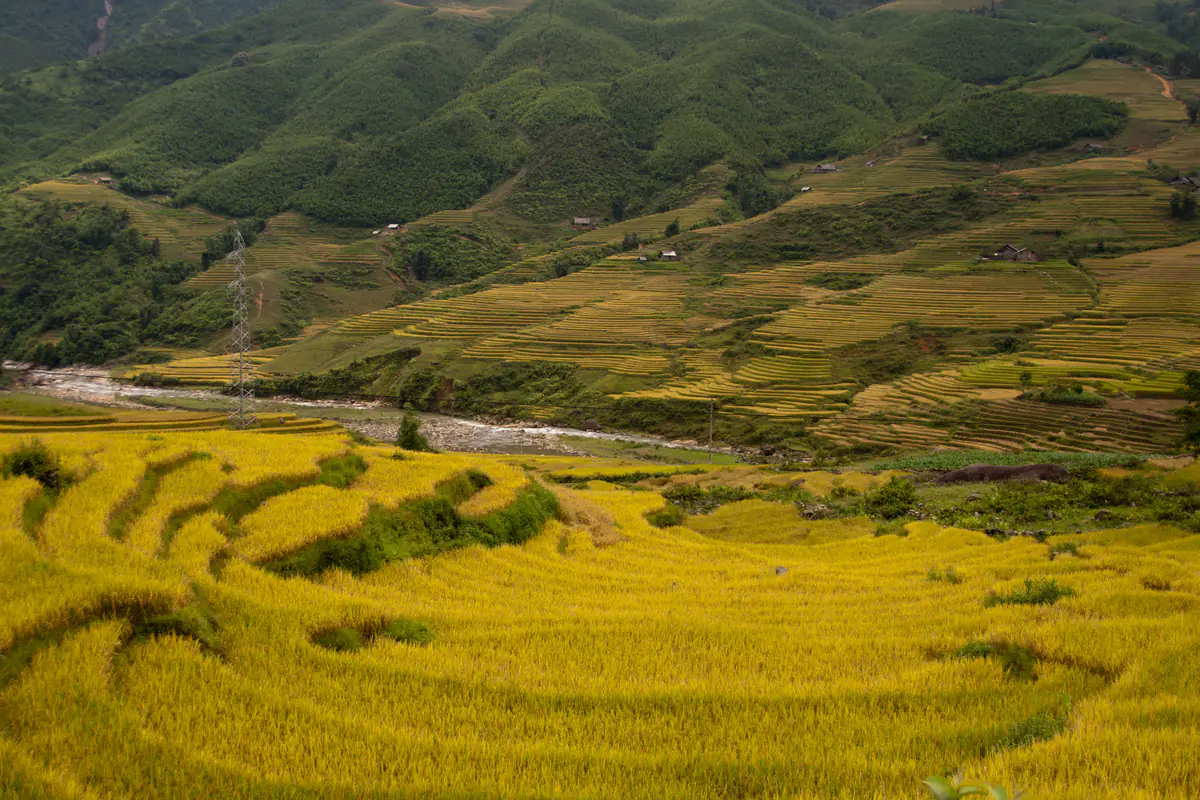
| Late August to September | September 15.9-21.7°C (61-71°F) | Golden rice; busiest around Vietnam’s National Day holiday (September 2) |
Late October to December: cold, foggy, the terraces already cut
Do not expect golden rice at this time of year. Sapa’s rice ripens from late August and peaks in September, so by November most terraces are bare earth and stubble. The upside is that there is no long Vietnamese holiday in this stretch apart from New Year’s Day.
It is damp and misty rather than stormy: November has about 14 rainy days but only about 106 mm of rain, mostly drizzle. From October to December, Sapa gets just 94-121 hours of sunshine a month. The station has recorded 1.5°C (35°F) in November and -3.2°C (26°F) in December.
Pack a warm waterproof jacket, a thermal base layer, gloves and shoes with good grip, plus one more layer for Fansipan. Mornings and evenings are coldest, so plan long walks for the middle of the day. If you are choosing between two highland towns for a winter trip, Da Lat is drier and milder from December to February.
Frost and snow: possible, never guaranteed
Snow has fallen in Sapa town (January 2016) and on the Fansipan summit (January 2025), but only in very strong cold surges, and it rarely lasts. Do not plan a trip around it. Check the forecast a few days out, and change your mountain plans if ice or road restrictions are announced.
Water season and rice harvest
The water season, when the terraces are freshly flooded for planting, is usually at its best from late April to mid-May. The rice ripens from late August and peaks in September, which overlaps Vietnam’s National Day holiday, when Sapa gets very crowded. If you can, pick weekdays outside the holiday.
Trekking through the villages with a local guide
The Muong Hoa walk follows terrace walls, stream crossings and small paths between villages, and it is easy to lose the way when fog comes down. A guide from the villages picks the safe path, knows which stretches turn slippery after rain, and can explain the life of the places you walk through. Your hotel or homestay can usually suggest one, or you can book through groups of local guides.
Before you set off, agree on:
- Distance, walking time and how steep it gets; where a car can pick you up if you tire.
- Whether the price includes village tickets, lunch and the ride back, and whether it is per person or per group.
- What happens in rain or thick fog: a shorter route or another day.
After rain, terrace edges and stone steps are slick, so grip matters more than style. Ask before photographing people, especially children.
To climb Fansipan on foot, book with an operator that provides a guide, a first-aid plan and clear rules for postponing or turning back.
How much does a budget Sapa trip cost?
The table adds up the prices above for one person on a weekday trip of three days and two nights from Hanoi, sleeping in a dorm or sharing a double room. It is our own estimate and leaves out shopping and holiday surcharges.
| Item | Estimate | Based on |
|---|---|---|
| Return bus Hanoi - Sapa | VND500,000-600,000 | VND250,000-300,000 each way (October 2026) |
| Two nights’ lodging | VND200,000-600,000 | Dorm beds from VND100,000 a night; central rooms from VND300,000 |
| Food for three days | VND600,000-1,000,000 | A bowl of bun cha about VND45,000; a local specialty meal about VND200,000 per person (September 2025) |
| Cat Cat, Muong Hoa, Ham Rong tickets | VND230,000-300,000 | From the table above |
| Motorbike hire or motorbike taxis | VND100,000-200,000 | Motorbike hire VND100,000-200,000 a day |
| Total | About VND1.6-2.7 million (US$62-105) | Without Fansipan |
| Fansipan, if you go | From about VND1.2 million more (US$46), depending on one-way or return funicular | Return cable car, return Muong Hoa train, funicular one or both ways (2026) |
To spend less, travel midweek because weekend rooms fill quickly, sleep a night in a Ta Van homestay so you can keep walking without returning to town, and share a car to the pass. Around holidays and Tet, bus fares and rooms can cost more than the table shows.
FAQ
Is there an airport in Sapa?
Not yet. A Sapa airport is on Vietnam’s list of new airports planned to open before 2030, but there is no opening date. For now, fly into Hanoi’s Noi Bai airport and take a bus (about 5.5 to 6 hours) or the night train to Lao Cai.
What do I do after the night train reaches Lao Cai at 5 a.m.?
The three evening trains arrive between 5:20 and 6:27 a.m. A pre-booked shuttle is the surest way up to Sapa; if you plan on city bus no. 1 from the station square, reconfirm the first departure, as the 5:50 a.m. start we found is from a 2021 timetable. If your room is not ready, leave your bags at your hotel, have breakfast and start with the town or Cat Cat, which opens early.
Is Sapa worth visiting in December?
Yes, if you want cold mountain air and village walks and can live with fog. The average low is about 7°C (45°F) and the average high about 13°C (56°F), there are 13-14 rainy days and around 13 foggy days, and the terraces are bare after the harvest. Keep a flexible half day for Fansipan in case the summit is clouded in.
Do I need a guide to trek in Sapa?
We found no official rule requiring one for the village walks, but a local guide is worth it in the Muong Hoa Valley, where paths cross terraces and streams and fog is common from November to February. Climbing Fansipan on foot should always be done with an experienced local team.