Da Lat wine: which bottle to buy, where to buy it and how to fly home with it
A bottle with dinner, a bottle for a friend and a bottle packed for the flight home call for different choices. With Da Lat wine, start with the label: what it is made from, who made it and how strong it is.
By Da Lat LoversPublished Updated How we review
What kinds of Da Lat wine are there, and which should you pick?
On one shelf in a Da Lat specialty shop you may see bottles labeled “Vang Đà Lạt” (vang means wine), “Chateau Dalat”, and strawberry or plum liqueur. They differ first in what they are made from, so the most useful question for the seller is simple: is this made from grapes or from other fruit?
| Type | Made from | Worth knowing |
|---|---|---|
| Vang Dalat (the producer’s everyday range) | Cardinal grapes blended with some other wine grapes and “a small proportion of Da Lat berry fruit” (strawberry or mulberry is not specified) | Mostly not oak-aged, except the Classic Special line |
| Chateau Dalat (the producer’s higher range) | 100% wine-grape varieties of European origin | Mostly oak-aged, except the whites |
| Young wine (vang non) | Wine still part-way through fermentation, poured from the tank; red from Shiraz, white from Sauvignon Blanc; under 5% alcohol | The producer recommends drinking it chilled and says it is sold only in Da Lat |
| Strawberry or plum liqueur, traditional style | Fruit macerated with sugar for its juice, then mixed with rice spirit | Can be stronger than wine; check the label before flying |
Table sources: Lam Dong Newspaper (October 2020); company-sponsored articles on young wine (2022); the Da Lat Gazetteer for the traditional strawberry liqueur method.
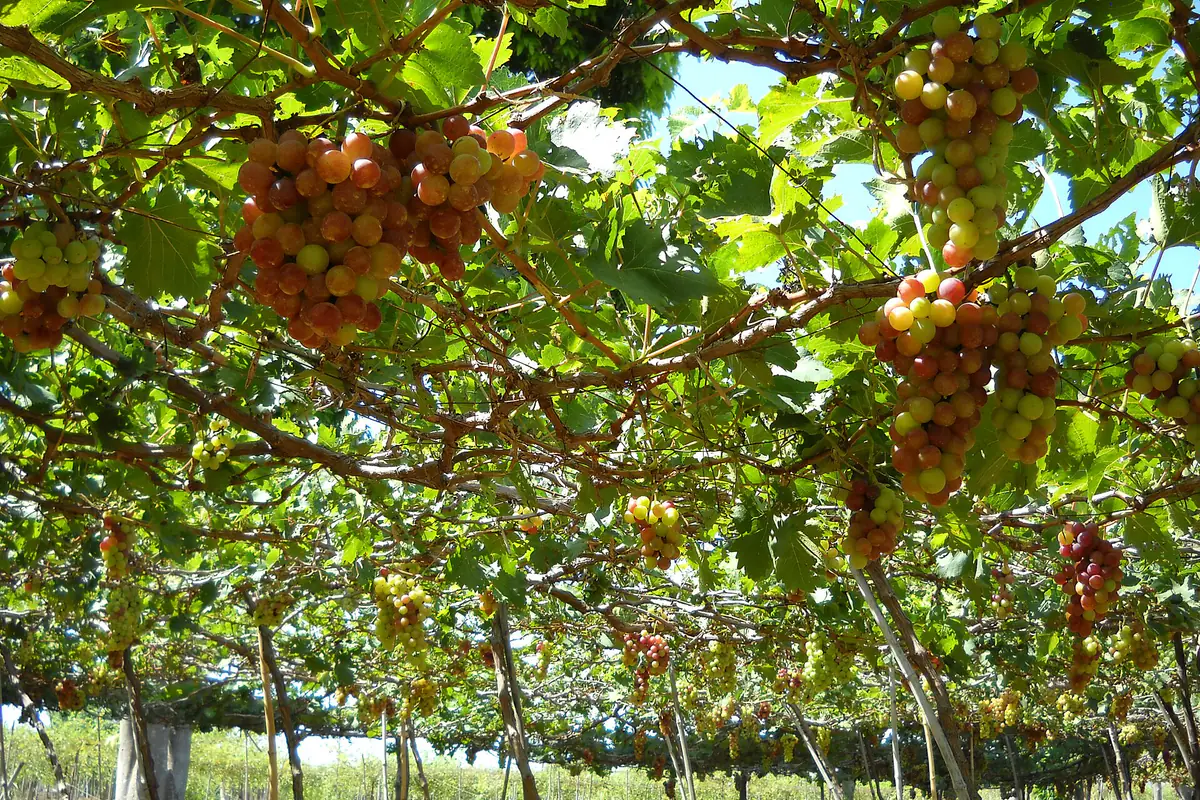
If you want wine made entirely from grapes, look at the Chateau Dalat range; many of its bottles name the grape on the label, such as Cabernet Sauvignon, Merlot or Shiraz. Ladofoods grows its grapes in Ninh Son, former Ninh Thuan province (now part of Khanh Hoa); Da Lat is where the wine is fermented, aged and bottled.
Young wine is something to try on the spot. The producer compares it to German Federweisser and French vin bourru; if you want to take some away, ask how to keep it cold and how long it lasts.
One more name that confuses visitors: ruou can, which some guides translate as “local wine”, is rice or grain wine fermented in a jar and sipped through long bamboo straws in villages around Langbiang. It is not grape wine and is not what a “Da Lat wine” label means.
Three bottles to start with
All three are 750 ml bottles from Ladofoods, covering both ranges and three price levels. In a shop, find the exact range name on the label and compare the price with this table.
| Bottle | Reference price | Good for |
|---|---|---|
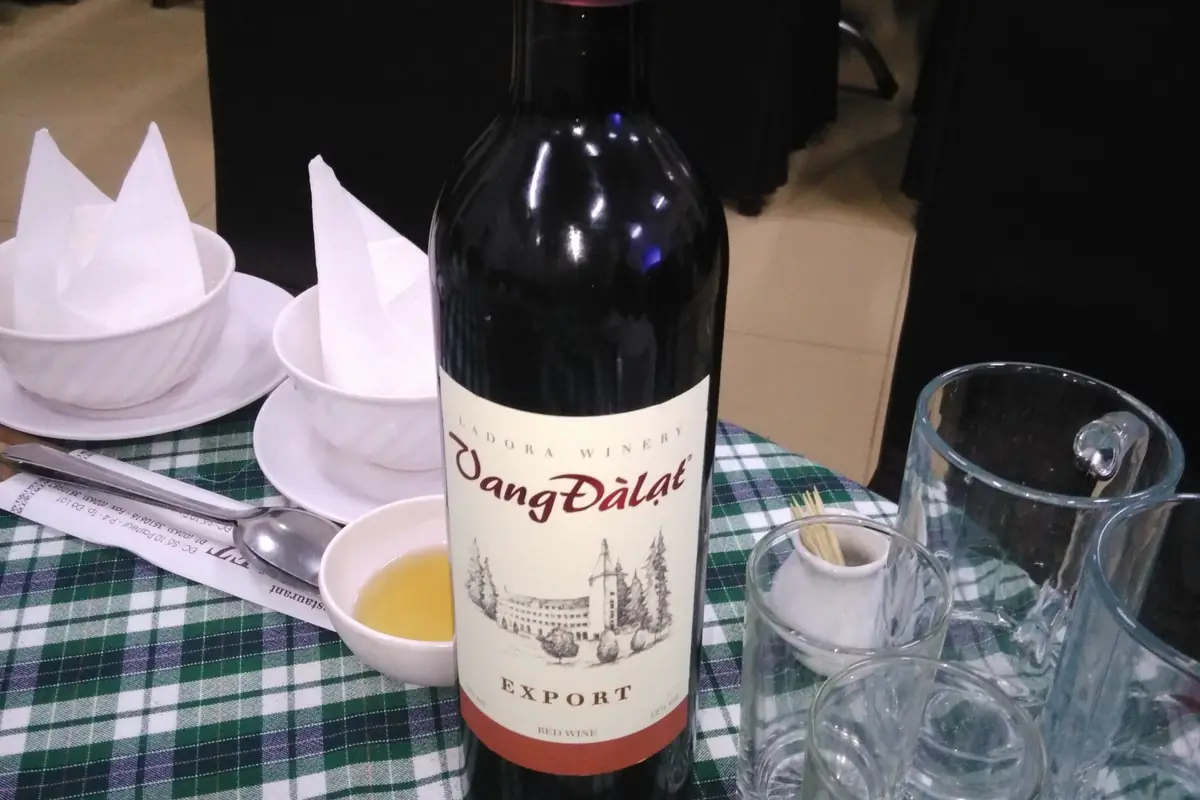
| Vang Dalat Export Red | VND 135,000 | A bottle with dinner or a gift on a modest budget; same Export line as the bottle in the photo at the end of this section |
| Vang Dalat Classic Special Red | VND 165,000 (regular price VND 180,000) | An everyday-range bottle with oak aging: Classic Special is the oak-aged exception in the Vang Dalat range |
| Chateau Dalat Special Cabernet Sauvignon | VND 240,000 | A gift for someone who drinks grape wine: 100% wine grapes, grape variety named on the label |
Prices: Ladofoods online store, checked October 2, 2026. Range details: Lam Dong Newspaper (October 2020).
Choosing by what you plan to do with the bottle
| You want | Go for | Keep in mind |
|---|---|---|
| A few glasses without buying a bottle | Da Lat Wine Cellar tour: VND 70,000 with 1 glass, VND 120,000 with 3 glasses | Book a time slot between 8 a.m. and 4 p.m. on the cellar’s website |
| A bottle with dinner in Da Lat | Vang Dalat Export Red or Classic Special Red | At a restaurant, ask the bottle price before it is opened; after drinking, take a taxi rather than ride |
| Something hard to find elsewhere | Young wine, if the seller still pours it | The latest public information on young wine is from 2022; call the cellar first |
| A gift for someone who drinks grape wine | Chateau Dalat Special Cabernet Sauvignon, or another Chateau Dalat bottle that names the grape | Sealed bottle, receipt kept |
| A gift you will carry by road within Vietnam | Vang Dalat Export Red, about VND 135,000 a bottle | Wrap it and pack it between soft clothes |
| A bottle to take abroad | Factory-sealed 750 ml bottle, fully labeled, receipt kept | Check it in, and check the allowance of the country you are entering (see the flying section) |
Price sources: Ladofoods online store and the Da Lat Wine Cellar booking page.
Reading a Da Lat wine label: who made it, from what, and how strong?
Under Vietnam’s labeling decree (Decree 43/2017, amended by Decree 111/2021), every bottle must show the product name, the name and address of the company responsible, origin, volume and alcohol content; wine must also carry storage instructions. The required list for alcoholic drinks has no ingredients line, so many bottles do not say whether they are grape or fruit wine.
- Producer’s name and address: the words “Đà Lạt” in a product name do not tell you where it was made. Vietnam’s IP Office once ruled that a Ho Chi Minh City company using labels such as DALAT BECO and DALAT LAFARO had infringed the “Vang Đà Lạt” trademark. Read the company line, not just the big name on the front.
- Grape or fruit: if the label doesn’t say, ask the seller or check the producer’s website. “Da Lat wine is grape wine” is not a full answer, since even the best-known everyday range includes a little berry fruit.
- Bottled here is not grown here: one factory in the Phu Hoi industrial park imports French wine, then filters, treats and bottles it for sale in Vietnam and for export. Ladofoods’ grape wines, on the other hand, use grapes from former Ninh Thuan. Read the origin line and ask.
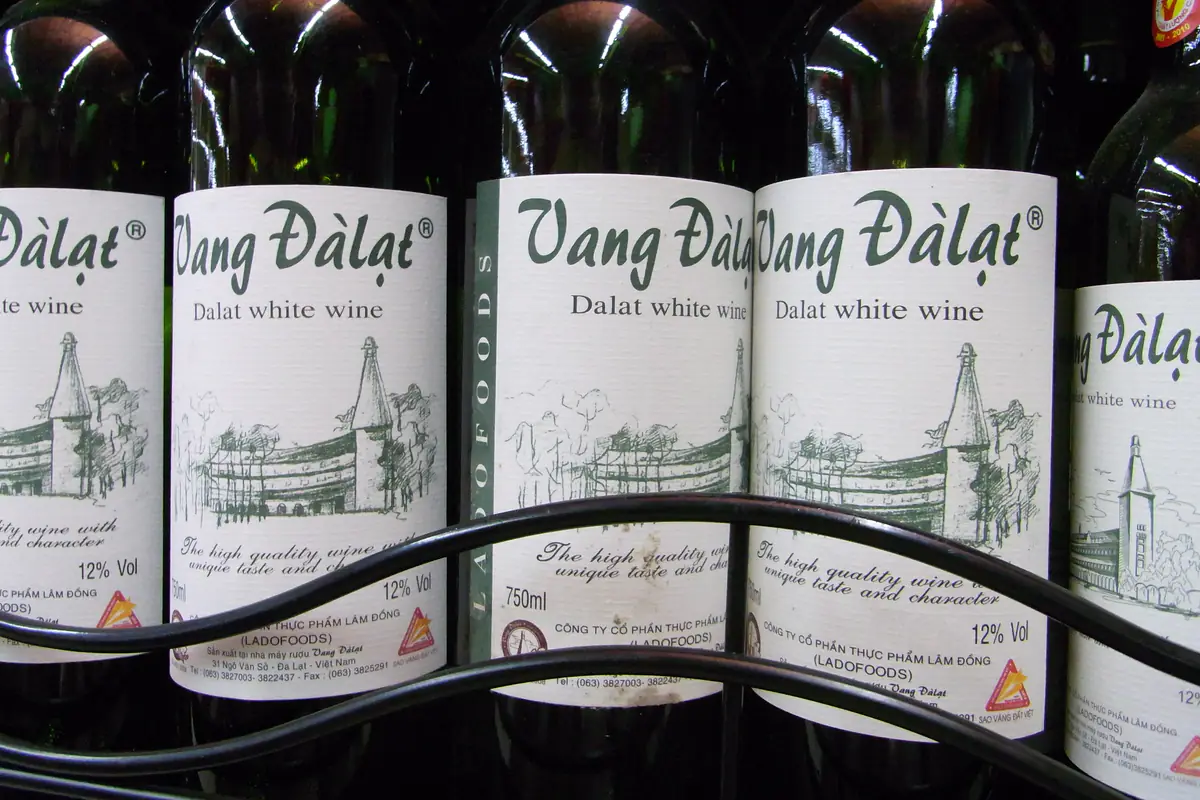
- Alcohol (% vol): this number decides how much you can fly with. The bottles in the photo below say 12% Vol.
- Vietnamese sub-label on imports: imported goods missing the required Vietnamese information must carry a sub-label. A “foreign” bottle with no sub-label, priced well below others in a shop with no clear supplier, is one to skip.
Two kinds of fakes to know
Where to buy Da Lat wine
Pick the place by what you need. To ask detailed questions about origin, buy where the wine is made. For convenience and a receipt, use a specialty shop or supermarket in town. In late December, the Flower Festival adds a wine street.
- At the winery showroom: the ground floor of Ladofoods’ Da Lat Wine Cellar (Hầm Vang Đà Lạt) is a showroom selling its products. Address: Phat Chi industrial site, Xuân Trường - Đà Lạt ward (map), phone +84 918 978 470. You can ask about grapes and ranges and get a receipt. The cellar’s website does not mention a shuttle, so plan on a taxi both ways.
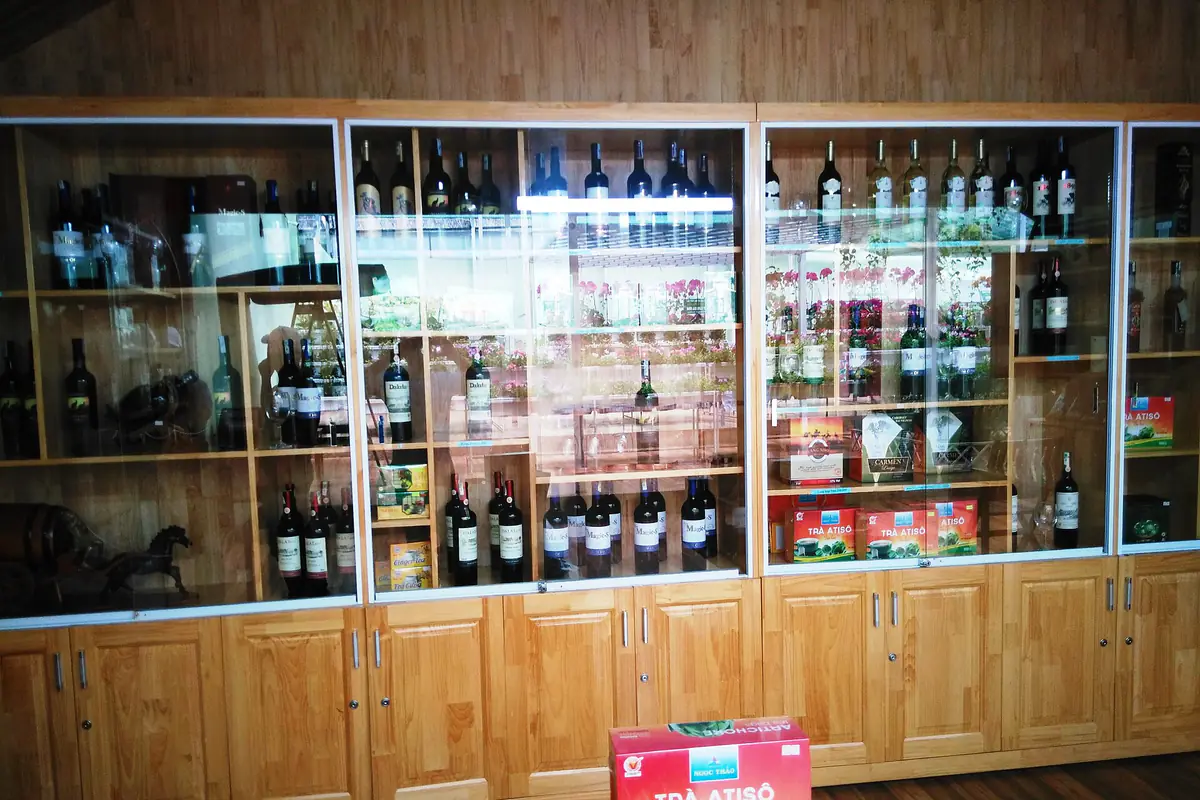
- Specialty shops and supermarkets in town: handy if you are also buying tea, candied fruit or coffee. Choose sealed bottles that pass the five label checks above, and ask for a receipt if the bottle is going abroad.
- The festival wine street: a “Tea - Coffee - Wine Street” is one of 11 main programs of the Da Lat Flower Festival, December 19-31, 2026. This year’s location has not been announced; at the 2024 festival it ran on Ho Tung Mau Street with 35 local businesses. The wider festival schedule is in our Da Lat weather in December guide.
- Drinking in town: The Milla at 28 Ba Trieu Street (map) is a wine bar with more than 300 labels, many from international wineries. If you only want a glass, ask first whether they pour by the glass. For dinner ideas, see where to eat in Da Lat.
What we like
- At the winery: you can ask about grapes and ranges, and get a receipt.
- Specialty shops in town: easy to buy several kinds of gifts in one stop.
- Festival wine street: many producers in one place, easy to compare labels.
Watch out for
- Unlabeled bottles, or labels without the producer’s name and address: not gift material.
- Homemade liqueur in reused water bottles: does not meet airline packing rules if it is over 24% alcohol.
- Imported wine at suspiciously low prices from an unclear supplier: a common sign of fakes.
Buying several gifts at once? The checklists in buying Da Lat coffee as a gift and Da Lat dried persimmons follow the same logic.
Can you visit a winery or wine cellar in Da Lat?
Two cellars take visitors. Both are a ride from the center, so they suit groups taking a taxi or with a driver who is not drinking, and people who want to see how wine is made rather than just buy a bottle.
Ladofoods’ Da Lat Wine Cellar at Phat Chi (Xuân Trường - Đà Lạt ward)
The cellar sits on the factory grounds at Phat Chi, on the same side of town as the Cau Dat tea and coffee area; the address, map and phone number are in the buying section above. It opened in 2019 and has four levels: an underground aging cellar, a ground-floor showroom, a first floor with a documentary room on winemaking and a tasting area, and a rooftop.
| Ticket | Price | Includes |
|---|---|---|
| Basic | VND 70,000 | About 60 minutes, 1 tasting glass: 12% wine, a light low-alcohol wine or a non-alcoholic sparkling fruit drink |
| Advanced | VND 120,000 | About 60 minutes with a guide, 3 glasses of wine, bottled water and breadsticks |
Source: the Da Lat Wine Cellar booking page. The booking form offers time slots from 8 a.m. to 4 p.m.
Vinh Tien wine cellar (Cam Ly - Đà Lạt ward)
This cellar is part of the Dalat Fairytale Land complex, where visitors can learn about wine processing. Ask directly about tickets, opening hours and whether tastings are offered before you go.
Before you go
Phat Chi pairs well with a morning in Cau Dat; how to combine it with a coffee farm is covered in Da Lat coffee.
Flying with Da Lat wine: 5 tips for the trip home
- Domestic flights in Vietnam: drinks of no more than 24% alcohol have no quantity limit, but the bottles still count toward your baggage weight and size allowance. Over 24% and up to 70%: they must be in the manufacturer’s sealed, labeled container of no more than 5 liters, up to 5 liters per passenger across carry-on and checked baggage. Over 70%: not allowed. See Vietnam Airlines’ food and drinks rules; the general framework for domestic flights is Decision 633/QĐ-CHK of the Civil Aviation Authority of Vietnam (in Vietnamese), in force since May 1, 2016.
- International flights: liquids in hand luggage must be in containers of no more than 100 ml, up to 1 liter per passenger (Article 71, Circular 13/2019 of the Ministry of Transport). A 750 ml bottle therefore goes in checked baggage. Alcohol bought at a duty-free shop past security can be carried on in a sealed security bag. Vietnam Airlines notes that international passengers must also follow the rules of the departure, connecting and arrival points.
- Check the strength before packing: a wine at around 12%, like the bottles pictured above, is within the no-more-than-24% band. Traditional strawberry or plum liqueur is made with rice spirit, so read the number on the label.
- Pack it well: keep the factory seal intact, wrap the bottle, put it in the middle of a hard suitcase between clothes, and keep the receipt. Airlines may have their own packing rules; check your airline’s page before you fly.
- The allowance of the country you are entering: duty-free limits are set by the country where you clear customs, which may not be your home country if you fly on. As checked on October 2, 2026: Japan Customs allows travelers aged 20 or over 3 bottles of alcohol (about 760 ml each) duty-free; Singapore Customs allows options including 2 liters of wine for travelers aged 18 or over who have spent at least 48 hours outside Singapore and are not arriving from Malaysia; Malaysia’s Royal Customs allows 1 liter of wine, spirits and beer in total. Check the official customs page of your destination before you buy a case.
Bringing food back as well? Fresh fruit and homemade jars are a different matter from sealed wine; see what travels well, and what customs may stop.
Further reading: where Da Lat wine began
Before 1975, Da Lat wine was made from mulberries, not grapes: the Farraut wine house, founded by Nguyen Huu Duc, used mulberries brought from France. Press and company histories instead trace today’s factory to the French-era Lafaro distillery. In the 1960s, strawberry and plum liqueurs were the city’s specialties.
After 1975, the state-run Da Lat Liquor Enterprise (1979) made wine and fruit liqueurs; it merged into Lam Dong Food Company in 1990, which became Ladofoods in December 2003. The wine grapes don’t grow in Da Lat: the city is cool but humid, so vineyards moved to Phan Rang on the coast, one of Vietnam’s driest areas. Ladofoods planted its 25-hectare vineyard in Ninh Son in 2015.
Which bottle for which plan
If you have half a day and want to taste before you buy, go to the Da Lat Wine Cellar at Phat Chi, take the VND 120,000 ticket for three glasses, then buy at the ground-floor showroom. If you just need a gift and won’t leave town, look for Vang Dalat Export Red or Chateau Dalat Special Cabernet Sauvignon in a specialty shop, pick a sealed bottle and compare the price with the producer’s listing. If the bottle is going abroad, check it in, keep the receipt and know the limit of the country you are entering. For the rest of your trip planning, see our Da Lat travel tips.
FAQ
Is Da Lat wine made from grapes?
It depends on the range. The everyday Vang Dalat range blends Cardinal grapes with other wine grapes and a small share of local berry fruit, while Chateau Dalat uses 100% wine-grape varieties. Before 1975, Da Lat wine was made from mulberries. Vietnamese wine labels don’t have to list ingredients, so ask the seller.
Which Da Lat wine should I buy as a gift, and how much is it?
Three 750 ml bottles are an easy start: Vang Dalat Export Red at VND 135,000, Vang Dalat Classic Special Red at VND 165,000 and Chateau Dalat Special Cabernet Sauvignon at VND 240,000 (Ladofoods online store, checked October 2, 2026). For someone who drinks grape wine, pick a Chateau Dalat bottle that names the grape. Shop prices may differ.
Are the grapes grown in Da Lat?
Mostly not. The main producer’s wine vineyard is in Ninh Son, former Ninh Thuan province (now part of Khanh Hoa), on the dry south-central coast. Da Lat is where the wine is fermented, aged and bottled.
Can I take Da Lat wine in my hand luggage?
On domestic flights within Vietnam, drinks of no more than 24% alcohol have no quantity limit, though they still count toward your baggage weight and size allowance; over 24% and up to 70%, the limit is 5 liters per passenger in the manufacturer’s sealed, labeled container (Vietnam Airlines; Civil Aviation Authority of Vietnam, Decision 633). On international flights, liquids in hand luggage must be in containers of 100 ml or less, so a full bottle goes in checked baggage, unless you buy it at a duty-free shop past security.
How much wine can I bring into Japan, Singapore or Malaysia?
As checked on October 2, 2026: Japan allows travelers aged 20 or over 3 bottles of about 760 ml duty-free; Singapore allows options including 2 liters of wine if you are 18 or over, have been away at least 48 hours and are not arriving from Malaysia; Malaysia allows 1 liter of alcoholic drinks in total. The rules that apply are those of the country you are entering; check its official customs page before you fly, as limits change.
Can I visit a winery in Da Lat?
Yes. Ladofoods’ Da Lat Wine Cellar at Phat Chi (Xuân Trường - Đà Lạt ward) sells tour tickets at VND 70,000 with 1 tasting glass and VND 120,000 with 3 (checked October 2, 2026); phone +84 918 978 470. The Vinh Tien cellar is at Dalat Fairytale Land (Cam Ly - Đà Lạt ward); ask about tickets and hours before you go. Don’t ride a motorbike after tasting.
What is Da Lat young wine?
According to the producer’s 2022 materials, it is wine still part-way through fermentation, poured from the tank, under 5% alcohol and best served chilled, similar to German Federweisser. It suits drinking on the spot; if you want to take some away, ask how to keep it cold and how long it lasts.
Sources
These are the sources used for this article. It was last updated on Oct 02, 2026; prices and opening hours may have changed since, so please double-check before you go.
- Civil Aviation Authority of Vietnam: No limit on liquids and drinks under 24% alcohol on domestic flights (June 17, 2016, in Vietnamese)
- Vietnam Airlines: Food and drinks, restricted baggage (viewed October 2, 2026)
- Japan Customs: Duty-free allowance for alcoholic beverages (viewed October 2, 2026)
- Ladofoods: online store ladofoods.com.vn, Vang Dalat and Chateau Dalat ranges (viewed October 2, 2026, in Vietnamese)
- Da Lat Wine Cellar: tour page hamvangdalat.vn, tickets and contact (viewed October 2, 2026, in Vietnamese)
- VnExpress: Can you bring alcohol on a plane? (September 23, 2022, in Vietnamese)
- VTV: Lam Dong speeds up preparations for Da Lat Flower Festival 2026 (September 28, 2026, in Vietnamese)
- Thanh Nien: Cam Ly - Da Lat, Lam Dong’s agritourism hub (July 17, 2025, in Vietnamese)
- Lam Dong Newspaper: Tasting and “touching” wine culture in Da Lat (May 29, 2025, in Vietnamese)
- Viet Nam News: Wine - tea - coffee street launched in resort city of Đà Lạt (December 26, 2024)
- Lam Dong Newspaper: Ladofoods named a National Brand for the fourth time (November 6, 2024, in Vietnamese)
- Lam Dong Newspaper: Wine, more than a drink (December 25, 2023, in Vietnamese)
- Kenh14: Fresh young wine, a taste of Da Lat (December 16, 2022, company-sponsored, in Vietnamese)
- VnExpress International: Da Lat travel guide (June 2022)
- Lam Dong Newspaper: Ladofoods raises the profile of Vietnamese wine (October 22, 2020, in Vietnamese)
- VnExpress: Vietnam’s largest wine cellar (September 13, 2019, sponsored content, in Vietnamese)
- Tuoi Tre News: Producing European wine in Vietnam (June 24, 2018)
- VnExpress: Wine market mixes real and fake (December 1, 2016, in Vietnamese)
- Tuoi Tre: Another dispute over “Da Lat” on a wine bottle (July 12, 2005, in Vietnamese)
- Da Lat Gazetteer (Địa chí Đà Lạt), Part 3: Industry and crafts in Da Lat (Lam Dong provincial portal, in Vietnamese)
- Decree 43/2017/ND-CP on goods labeling (LuatVietnam, in Vietnamese)
- Singapore Customs: Duty-Free Concession and GST Import Relief (viewed October 2, 2026)
- Royal Malaysian Customs Department: Traveler’s Guide (viewed October 2, 2026)