Da Lat coffee: Arabica history, farms you can visit and how to buy the real thing
Da Lat coffee is Vietnam’s best-known Arabica, grown above 1,500 meters in Cau Dat and at the foot of Langbiang. Drawing on Vietnam’s IP office, Tuoi Tre, Dan Tri and VnExpress (updated September 25, 2026), we cover its history, prices, farm visits and buying tips.
By Da Lat LoversPublished Updated How we reviewĐọc bản tiếng Việt
How we put this guide together
What Da Lat coffee is: a century of highland Arabica
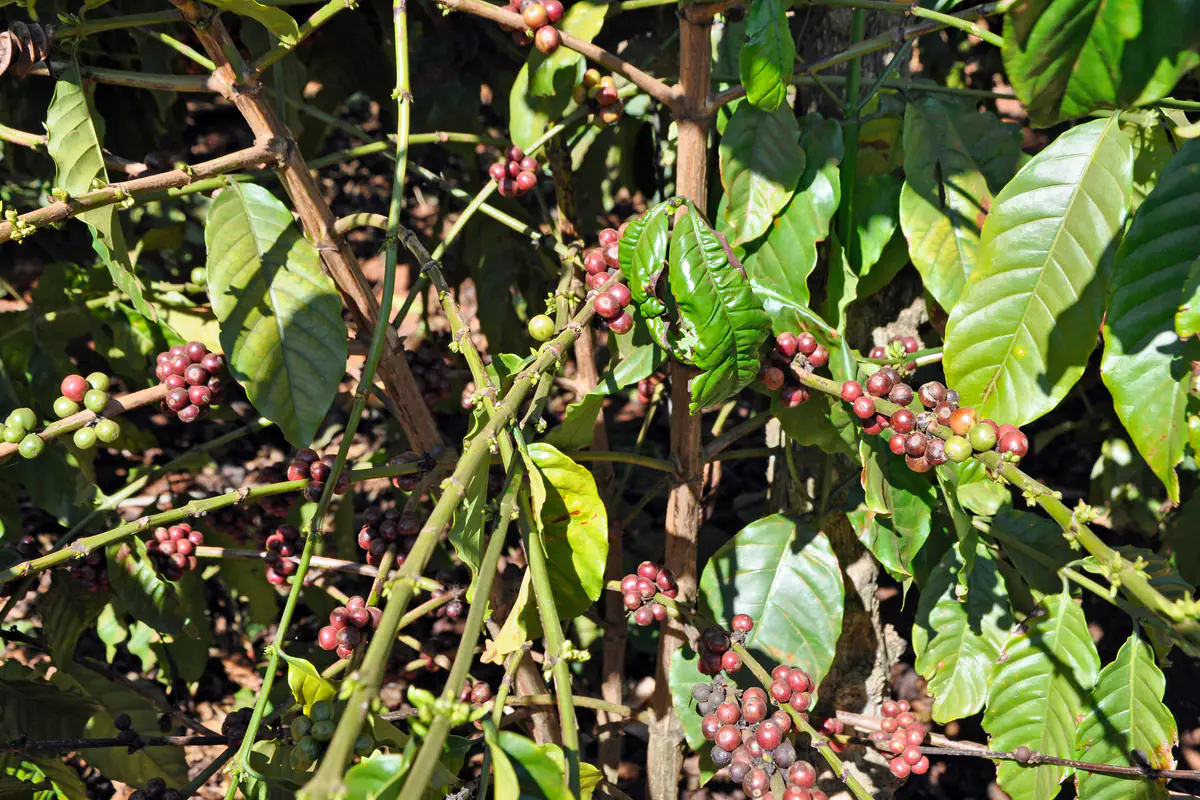
When people talk about Da Lat coffee, they almost always mean Arabica grown on the Lam Vien (Langbiang) plateau around the city. That sets it apart from the rest of Vietnam’s Central Highlands, which are dominated by Robusta. Lam Dong Province produces more than 1 million tons of coffee a year, but only about 10% is Arabica, according to Nhan Dan (March 12, 2026, in Vietnamese).
The French brought Arabica to Vietnam. VnExpress (May 10, 2017, in Vietnamese) dates the first plantings to the 1930s, in Di Linh, Bao Loc, Don Duong, the outskirts of Da Lat and Cau Dat. More recent coverage, including Dan Tri (November 25, 2025, in Vietnamese), calls Da Lat the “cradle” of Vietnamese Arabica, with more than 100 years of commercial growing. The two dates fit together: trees can arrive decades before a region becomes known for them.
The K’Ho family that kept the old trees
The story is not only about French estates. According to Vietnam.travel, the national tourism website (viewed September 25, 2026), a K’Ho farmer named Brai Co Lieng took Arabica seeds from French trees in the 1940s and planted them on his family land at the foot of Langbiang. In 2012 Rolan Co Lieng, a fourth-generation farmer in the family, founded the K’Ho Coffee cooperative, which still grows and roasts that heirloom line.
A more recent milestone came in 2017. Dan Tri (October 27, 2017, in Vietnamese) reported that the IP Office granted the “Cầu Đất Đà Lạt” trademark to the city’s Arabica, noting that Starbucks had once picked it as one of seven great coffees of the world. At the time Da Lat had about 3,500 hectares of Arabica producing nearly 11,000 tons a year.
Arabica vs Robusta, and why Da Lat coffee is Arabica country
Knowing the difference helps you read labels, price headlines and café menus. As Wikipedia explains, Arabica (Coffea arabica) prefers cool highlands, while Robusta (Coffea canephora) handles heat and pests better. The table below uses Lam Dong’s own numbers from the geographical indication file published by Vietnam’s IP Office (October 13, 2025, in Vietnamese).
| Point | Arabica (cà phê chè) | Robusta (cà phê vối) |
|---|---|---|
| Growing altitude in Lam Dong | 1,200 m to above 2,200 m | Mostly 700-850 m |
| Caffeine (green beans) | 1.57% or more | 2.64% or more |
| Share of provincial output | About 10% | About 90% |
| Yield (2015 figures) | 1.5-2 tons per hectare | 8-10 tons per hectare |
| Price | Roughly 1.5-2 times Robusta | The price quoted in daily “coffee price” news |
The GI file describes roasted Lam Dong Arabica with notes of apricot, lemon, peach, orange, green apple, almond, brown sugar, chocolate, rose tea and honey, and a citrus-like acidity. If you grew up on dark Vietnamese drip coffee, that brightness can taste “sour” at first; it is a trait, not a flaw. VnExpress (2017) described Cau Dat Arabica as a light, amber-colored brew.
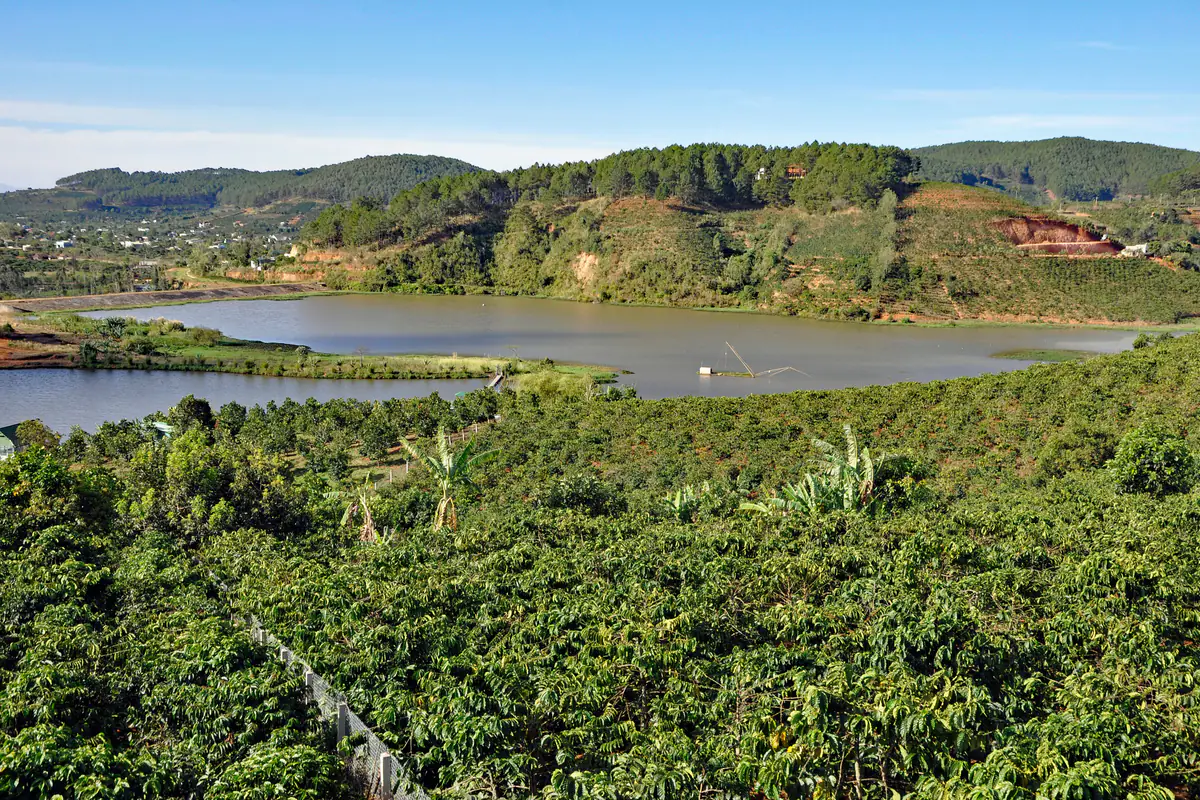
Why does it grow so well here? Cau Dat sits at around 1,600 meters, VnExpress (2017) reported, and the plants soak up moisture from night fog, so farmers can skip irrigation in the dry season. The cool air also slows ripening, which the GI file links to denser, firmer beans.
Quick label check
Where Da Lat coffee grows: old names and new ward names
On July 1, 2025, Vietnam abolished district-level government and merged many communes and wards. Coffee bags often still carry the old names, so this table links them to today’s addresses, based on official ward and provincial portals.
| Name you may see on the bag | Now part of | Notes |
|---|---|---|
| Cau Dat, Tram Hanh, Xuan Truong, Xuan Tho | Xuân Trường - Đà Lạt ward | Formed from old Ward 11 and three communes (ward portal, in Vietnamese); Da Lat’s main Arabica area (Dan Tri, 2017) |
| Lac Duong, foot of Langbiang | Lang Biang - Đà Lạt ward | Formed from Ward 7, Lac Duong town and Lat commune (Lam Dong portal, in Vietnamese); home of K’Ho Coffee |
| Ta Nung, Wards 5 and 6 | Cam Ly - Đà Lạt ward | Formed from Wards 5, 6 and Ta Nung commune (ward portal, in Vietnamese); home of Me Linh Coffee Garden |
| Don Duong (Lac Xuan) | Lam Dong, outside Da Lat | A farm here placed third in the 2025 Arabica contest (Tuoi Tre) |
Cau Dat is the most famous name in Da Lat coffee, and also the one most often used loosely. It is also a French-era tea estate and a sunrise spot for cloud watching, which we cover in places to visit in Da Lat. Here we only talk about it as Arabica country.
Area and output: Da Lat coffee in Lam Dong’s big picture
Arabica data is patchy, and every source measures a different area at a different time. We list them by year so you do not confuse “Da Lat” with “the whole province.” Figures from 2025 onward cover the new, larger Lam Dong, which absorbed Dak Nong and Binh Thuan.
| Year | Area covered | Figure | Source |
|---|---|---|---|
| 2015 | Xuan Truong commune | Arabica down 300 ha in five years, to about 1,000 ha | VietNamNet, November 3, 2015 |
| 2017 | Da Lat city (old borders) | About 3,500 ha of Arabica, nearly 11,000 tons a year, 2.7 tons/ha | Dan Tri, October 27, 2017 |
| 2022 | Lam Dong (old borders) | 175,915.7 ha of coffee, 532,373.8 tons; Arabica 16,972 ha (10.2%) | IP Office, October 2025 |
| 2025 | Lam Dong (new borders) | About 327,000 ha (45.02% of Vietnam), over 1 million tons forecast (50.49%) | Lam Dong Newspaper, November 14, 2025 |
| 2024/25 crop year | Lam Dong (new borders) | About 158,253 tons of green coffee exported, worth US$478.86 million | Lam Dong Newspaper, November 30, 2025 |
The takeaway: Arabica is a small niche inside a Robusta powerhouse, and Da Lat’s Arabica area has shrunk at times. VietNamNet (2015) explained why: Arabica is harder to grow, more vulnerable to pests and yields about a fifth as much as Robusta, so its higher price did not always cover the cost. That is also why genuine Da Lat coffee costs more than everyday coffee.
Coffee prices in 2025-2026: how to read the headlines
“Giá cà phê hôm nay” (coffee price today) was one of Vietnam’s trending searches this week. One thing to know: the numbers in those daily reports are almost always the farm-gate price of Robusta green beans in the Central Highlands. They are not Arabica prices, and they are certainly not what a bag of roasted beans costs in a shop.
| When | Price | Source |
|---|---|---|
| March 2025 | Record above 135,000 | CafeF, October 24, 2025 |
| October 2025 | About 115,000 | CafeF, October 24, 2025 |
| Early August 2026 | About 99,000-99,500 | Tuoi Tre News, August 6, 2026 |
| September 22, 2026 | 92,000-93,500 (close to 96,000 in early September) | Tuoi Tre, September 22, 2026 |
According to CafeF (October 24, 2025, in Vietnamese), Vietnam’s coffee exports hit a record US$8.4 billion in the 2024/25 crop year, up 60%. Prices have cooled since. Citing the Vietnam Coffee and Cocoa Association, Tuoi Tre (September 22, 2026, in Vietnamese) reported rising global stocks and a new crop expected to be 15-17% larger, which could keep prices under pressure.
And Arabica? Nhan Dan (March 2026) says it usually sells at 1.5-2 times the Robusta price. We found no major news outlet publishing daily Cau Dat Arabica prices, so we give no number. A “Cau Dat Arabica price today” table on a shop website is simply that shop’s list price.
Specialty Da Lat coffee and the awards behind it
Specialty coffee means coffee that scores high on the Specialty Coffee Association (SCA) tasting scale. The best Vietnamese Arabica now scores 85-86 points, Nhan Dan reported in March 2026, while top coffees worldwide pass 90. In other words, Da Lat coffee has earned its place, with room to grow.
- 2025 Arabica contest: the 11th Vietnam Arabica quality selection was held at Da Lat University on April 24, 2025, Tuoi Tre reported (in Vietnamese). First and second prizes went to two farms in the old Tram Hanh commune, part of the Cau Dat area; third went to Lac Xuan in Don Duong. It was the second year in a row that Cau Dat took first place, and the winning lots are sold in UCC Group specialty shops in Japan.
- National specialty contests: the GI file notes that four Lam Dong companies won with five products in 2019; three Robusta and five Arabica samples won in 2022; and in 2023 two Arabica and two Robusta samples made the Top 10.
- Rare varieties: Saigoneer (January 21, 2019) profiled a farm in old Ward 5 (now Cam Ly - Đà Lạt) growing Pacamara, Typica and Bourbon. The story is old, and we could not confirm the farm still hosts visitors.
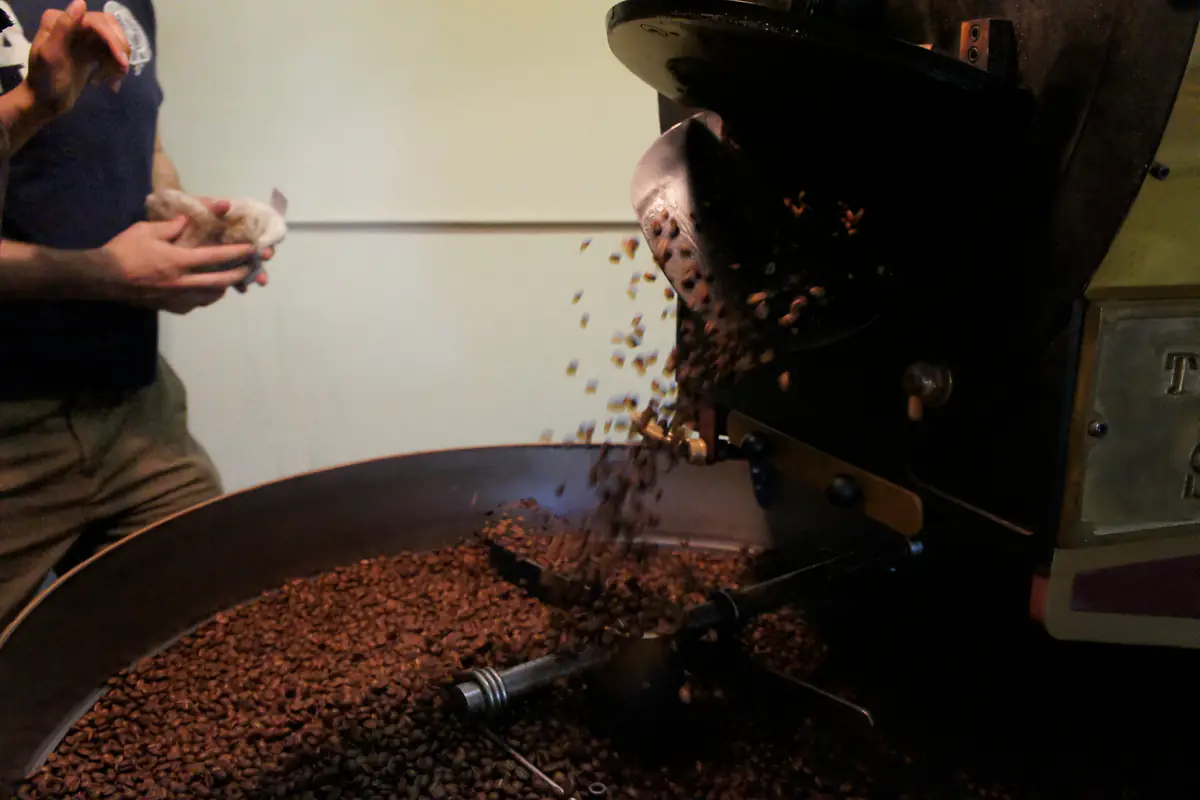
The wider trend, as Tuoi Tre News (August 6, 2026) put it, is that takeaway coffee, home brewing and specialty coffee are becoming mainstream in Vietnam. In Da Lat you see it in pour-over bars and small roasters that print the farmer’s name, altitude and processing method on the bag.
Da Lat coffee farms you can visit
We only list places named by an official site or a major news outlet, with the date of the information. Tour prices and hours may have changed, so message ahead, especially in the rainy season.
K’Ho Coffee (Lang Biang - Đà Lạt ward)
According to Vietnam.travel (viewed September 25, 2026), the farm and roastery sit in Bonneur’C village at the foot of Langbiang, about 10 km from central Da Lat. A half-day workshop walks you through the coffee trees and more than 15 steps, from picking and wet-milling to fermentation, hulling, roasting and cupping, for VND700,000 per person including lunch. The gift shop and garden café open 8 a.m. to 4 p.m., Monday to Saturday. Its coffee has scored 84-89 in cupping tests.
Me Linh Coffee Garden (Cam Ly - Đà Lạt ward)
This is a café, garden and civet coffee operation on about 15 hectares, per Tuoi Tre (August 4, 2025, in Vietnamese). Drinks cost VND90,000-120,000 in August 2025 and sparked a price debate online; local officials confirmed prices were clearly posted. VnExpress International (August 5, 2025) quoted the café as saying prices include access to the civet coffee area and live music, and that its civet Arabica beans sell for about VND4.8 million per kilogram.
A word on civet coffee: the animals are kept in cages to produce it. If animal welfare matters to you, ask how they are kept before you buy. We have no independent source on conditions there.
What we like
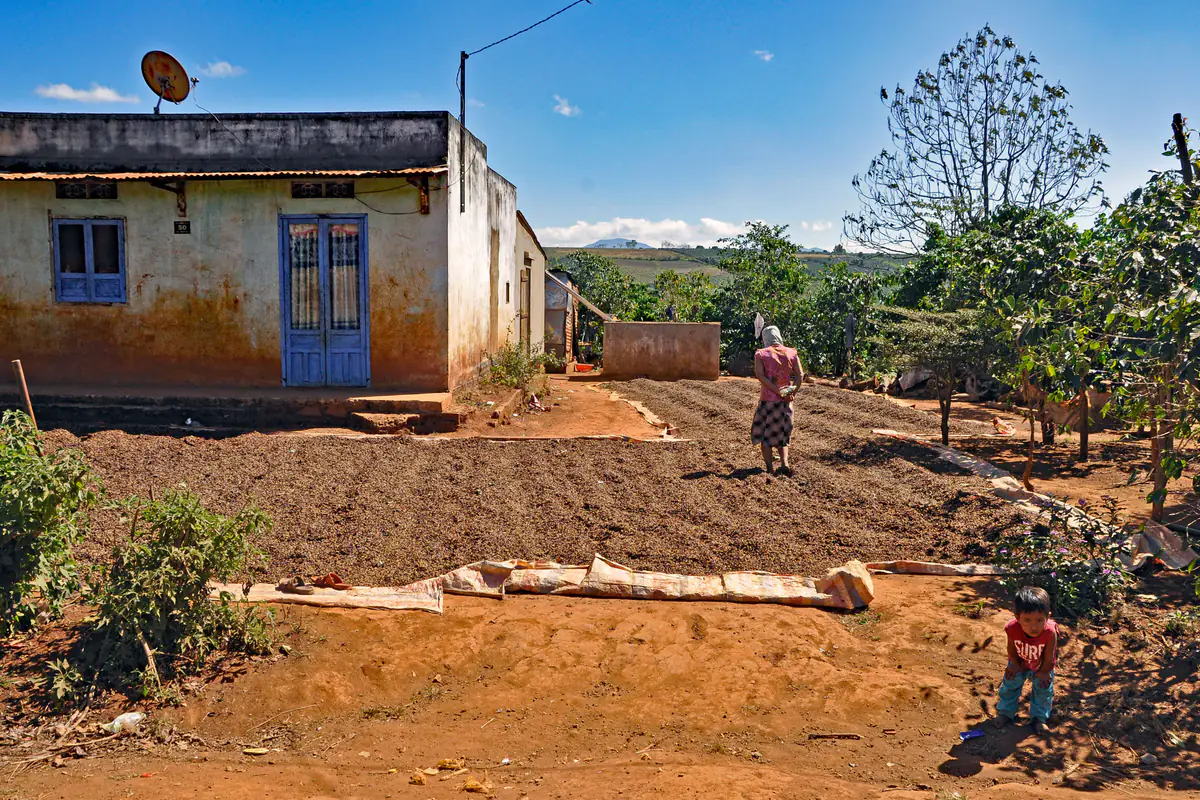
- Visit during harvest (roughly October to March) to see ripe cherries, pickers and drying yards.
- A guided tour explains why Arabica costs more: selective picking and many processing steps.
- Buying at the roastery lets you ask about roast date, farm and processing.
Watch out for
- Farm tracks can turn muddy in the rain; September and October are peak rainy months in Da Lat.
- Drinks at tourist-style farms cost more than in town, so check the menu first.
- Family gardens are not attractions: do not walk in uninvited or pick cherries.
- Press reports on small farms can be out of date; message before you go.
To fit a farm into your trip, pair Langbiang with a mountain hike and Cau Dat with a sunrise. Transport, pass conditions and travel times are in our Da Lat travel tips, and for rain odds this month see Da Lat weather in October.
Buying Da Lat coffee as a gift: 7 things to check on the bag
Buying Da Lat coffee to take home is easy. Buying the coffee you actually want takes a closer look. We don’t name shops because we take no sponsorship, but here is what to check.
- Species and blend: the bag should say 100% Arabica or state the Robusta share. Blends are fine; the price should reflect them.
- Specific origin: Cau Dat or Langbiang plus a farm or cooperative name is a good sign. A vague “Da Lat coffee” label deserves a follow-up question.
- Roast date: more useful than the expiry date. Coffee tastes best in the first few weeks after roasting; a two-year “best before” with no roast date tells you little.
- Whole beans or ground: whole beans keep their aroma longer. If your friends have no grinder, ask the shop to grind for their brewer (phin, pour-over or espresso).
- GI and trademarks: since October 10, 2025, Lam Dong coffee has geographical indication No. 00147, managed by the provincial Department of Agriculture and Environment (IP Office). Before that came the “Cầu Đất Đà Lạt” trademark (2017) and the “Đà Lạt - Kết tinh kỳ diệu từ đất lành” certification mark for Arabica; the province now has 21 protected coffee trademarks (Lam Dong Newspaper, November 30, 2025, in Vietnamese). Good small roasters may have no stamp, but a stamp is reassuring.
- QR code: if it opens the Lam Dong provincial traceability system, you can see the producer’s details. A QR code that only opens a sales page is just marketing.
- A sensible price: Arabica yields little and sells at 1.5-2 times Robusta, so “pure Cau Dat Arabica” priced below everyday coffee is a reason to ask more questions.
Storage: keep the bag sealed, away from sun and humidity, and finish it within a few weeks of opening. Check your home country’s customs rules for food; roasted, sealed coffee is usually simple to carry. For another light, long-lasting gift, see Da Lat dried persimmons.
Da Lat coffee culture: from plastic stools to hillside views
Locals start early. Tuoi Tre (May 15, 2024, in Vietnamese) described sidewalk coffee stands in the Hoa Binh area opening around 5 a.m., busiest between 5 and 8:30, with customers on plastic stools watching mist over the rooftops around the Chicken Church bell tower. The same piece mentions a bicycle turned espresso bar in an alley off Co Giang Street, a sign of new coffee culture moving into old habits.
Cafés with history
Hoa Binh is also home to Cafe Tung (Cà phê Tùng), which VnExpress (November 1, 2015, in Vietnamese) described as more than half a century old, founded by a northern migrant, with worn furniture and old French and pre-war Vietnamese songs. Thanh Nien (December 2018) noted its regulars are mostly older locals happy to talk about old Da Lat. We are not reviewing it, just pointing to a piece of the city’s coffee history.
Phin coffee, highland style
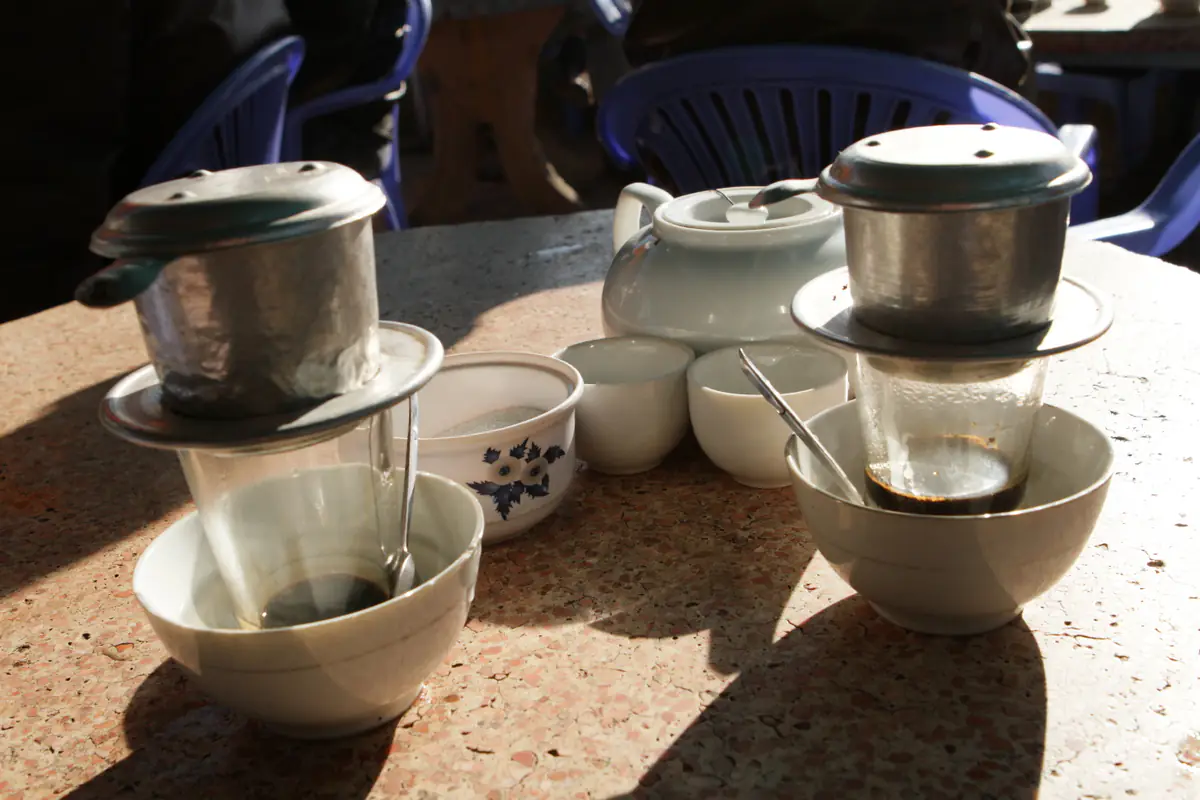
An aluminum phin dripping into a glass, with a pot of hot tea on the side, is the classic street scene. Because the air is cool, many cafés stand the cups in a bowl of hot water so the coffee stays warm. A cup of Da Lat coffee at a basic café is often still Robusta or a blend; if you want Arabica, ask, or look for cafés that name the growing area.
Hillside cafés, cloud watching and entry fees
Over the past decade Da Lat coffee has become tied to hillside cafés overlooking the valleys. We have reviewed two separately: Cheo Veooo cafe for sunsets and Binh Minh Oi Da Lat for sunrise. Some cloud-watching cafés in Cau Dat charge about VND120,000 per person including a drink and have been criticized for aggressive touting (Kenh14, March 13, 2024, in Vietnamese); a lakeside café at Tuyen Lam charges VND100,000 with a drink (Dan Tri, November 29, 2025, in Vietnamese).
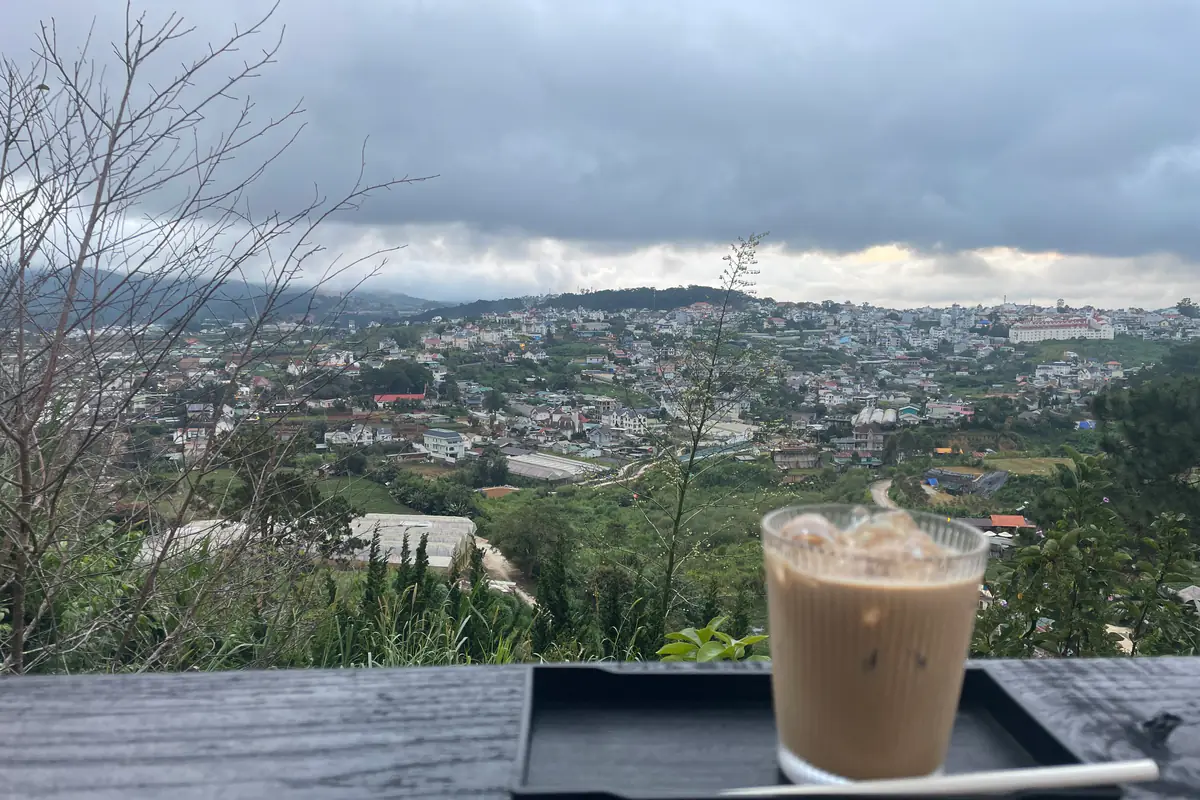
For food near these cafés, see where to eat in Da Lat; we deliberately do not repeat café lists here.
The Global Coffee Heritage Festival in Da Lat
The first Global Coffee Heritage Festival ran in Da Lat from December 18, 2025 to January 2, 2026, organized by the Lam Dong People’s Committee and TNI King Coffee (Dan Tri, November 25, 2025). The program included a “Global Coffee Journey” week with a 1932 heritage train at Da Lat Station, an international barista competition at Lam Vien Square, an international coffee conference, the launch of a Vietnam-World coffee alliance and an artwork made of Robusta beans that set a Vietnamese record, as VietNamNet also reported (November 25, 2025).
The opening ceremony took place on December 21, 2025 at Lam Vien Square, Xuan Huong - Da Lat ward, with 34 booths and a 46-meter coffee cup installation, according to Viet Nam News (December 22, 2025). The stated goal is to position Da Lat as a “global coffee capital” and to move from exporting raw beans to deeper processing and premium brands.
Will there be a 2026 festival?
Final thoughts: getting the most out of Da Lat coffee
If you remember one thing, make it this: Da Lat coffee is most worth it when you know what is in your cup. Ask whether it is Arabica or Robusta, buy bags that state the origin and roast date, and read “coffee price today” headlines as Robusta farm-gate prices. With a free half day during harvest, visit a farm. For the full trip picture, month-by-month weather and dishes to try, start at our Da Lat travel guide.
FAQ
Is Da Lat coffee Arabica or Robusta?
The coffee that made Da Lat famous is Arabica, grown in Cau Dat, at the foot of Langbiang and on other high ground around the city. Across Lam Dong Province, though, about 90% of output is Robusta (Nhan Dan, March 2026), and a cup at a basic café is often Robusta or a blend.
Which ward is Cau Dat in now?
Since July 1, 2025, the Cau Dat area (the old Tram Hanh, Xuan Truong and Xuan Tho communes) belongs to Xuân Trường - Đà Lạt ward, Lam Dong Province. The Lac Duong area at the foot of Langbiang is now Lang Biang - Đà Lạt ward.
Is the daily “coffee price today” the price of Da Lat coffee?
Not really. Daily reports usually quote Robusta green beans bought from Central Highlands farmers, for example VND92,000-93,500/kg on September 22, 2026 (Tuoi Tre). Arabica typically sells at 1.5-2 times the Robusta price, and roasted retail coffee costs more again.
When is the coffee harvest in Da Lat?
In Cau Dat, coffee is picked roughly from October to March, with only ripe cherries harvested (VnExpress, May 2017). Visit in that window to see red cherries on the trees and beans drying in the sun.
Can I visit a coffee farm in Da Lat?
Two places with clear sources are K’Ho Coffee at the foot of Langbiang (a half-day workshop for VND700,000 per person with lunch, per Vietnam.travel, viewed September 2026) and Me Linh Coffee Garden in Cam Ly - Da Lat ward (drinks VND90,000-120,000, Tuoi Tre, August 2025). Check hours and prices before you go.
What should I check when buying Da Lat coffee as a gift?
Look for the Arabica share, a specific origin, the roast date, whole beans versus ground, a geographical indication stamp or trademark, and a QR code that opens Lam Dong’s provincial traceability system. Pure Arabica priced below everyday coffee is a reason to ask more questions.
Sources
Facts in this article were checked against the sources below, accessed on Sep 25, 2026. Prices and opening hours change, so please double-check before you go.
- Viet Nam News: First global coffee heritage festival opens in Việt Nam’s coffee capital (December 22, 2025)
- Vietnam IP Office: GI “Lâm Đồng” protected for coffee products (October 13, 2025, in Vietnamese)
- Nhan Dan: Lam Dong Arabica coffee (March 12, 2026, in Vietnamese)
- Tuoi Tre: Coffee prices fall below VND95,000/kg as new crop looms (September 22, 2026, in Vietnamese)
- Tuoi Tre News: From Robusta powerhouse to value-added coffee (August 6, 2026)
- VietNamNet: Global Coffee Heritage Festival to feature nearly-2-century journey of VN coffee (November 25, 2025)
- Dan Tri: Plan to make Da Lat a “global coffee capital” (November 25, 2025, in Vietnamese)
- Lam Dong Newspaper: 21 coffee trademarks protected across the province (November 30, 2025, in Vietnamese)
- Dan Tri: Da Lat café visitor numbers soar (November 29, 2025, in Vietnamese)
- Lam Dong Newspaper: Lam Dong coffee gets its “name” (November 14, 2025, in Vietnamese)
- CafeF: Coffee exports break the US$8 billion record (October 24, 2025, in Vietnamese)
- VnExpress International: Tourist’s complaint over $4 coffee in Da Lat sparks online debate (August 5, 2025)
- Tuoi Tre: Is a VND110,000 coffee at Me Linh Coffee Garden unusual? (August 4, 2025, in Vietnamese)
- Tuoi Tre: Cau Dat farmers win first prize for Vietnamese Arabica (April 24, 2025, in Vietnamese)
- Tuoi Tre: Street coffee, mist and clouds like a true Da Lat local (May 15, 2024, in Vietnamese)
- Kenh14: Visitors confused by Da Lat’s cloud-watching café “maze” (March 13, 2024, in Vietnamese)
- Saigoneer: Da Lat, the unlikely home of El Salvador’s rare Pacamara coffee beans (January 21, 2019)
- Dan Tri: Da Lat coffee receives trademark rights for the first time (October 27, 2017, in Vietnamese)
- VnExpress: Cau Dat coffee, “bathed in sun, drinking the mist” (May 10, 2017, in Vietnamese)
- VnExpress: Old Da Lat inside a 50-year-old café (November 1, 2015, in Vietnamese)
- VietNamNet: Dalat farmers abandon arabica coffee due to low profits (November 3, 2015)
- Thanh Nien: Back to old Da Lat at Tung and Ba Nam cafés (December 28, 2018, in Vietnamese)
- Vietnam.travel (national tourism website): A tour for coffee lovers in Da Lat (viewed September 25, 2026)
- Lam Dong provincial traceability system (viewed September 25, 2026)
- Lam Dong provincial portal: Lac Duong town becomes Lang Biang ward (in Vietnamese)
- Xuan Truong - Da Lat ward portal (in Vietnamese)
- Cam Ly - Da Lat ward portal (in Vietnamese)
- Wikipedia: Coffea arabica