Vietnam vs Thailand: which one fits your trip
Pick Thailand for a shorter beach trip with fewer hotel changes. Pick Vietnam if you have two weeks or more and want a trip where the food and scenery change every few days. Street food costs about the same in both; the bigger differences are how many days you have, which coast is in season, and, on a US or Australian passport, the visa.
By Da Lat LoversPublished Updated
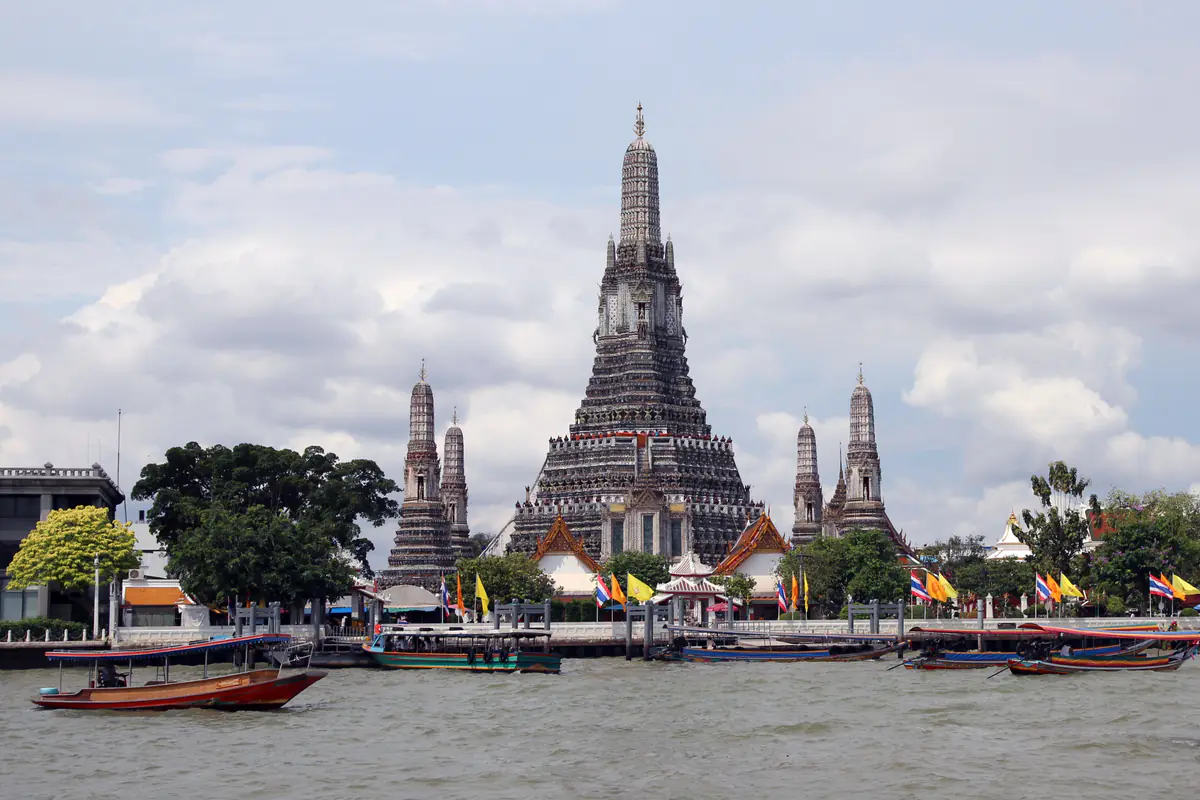
Wat Arun on the Chao Phraya River, Bangkok, March 2012. Photo: Rolf Heinrich, Köln / CC BY 3.0
Who should pick Vietnam, and who should pick Thailand
Both countries are easy to travel, good value and full of great food, so the choice comes down to how long you have, when you go and what kind of trip you want. Our short version:
Pick Thailand if
- You have a week to ten days and don’t want to change hotels every two nights.
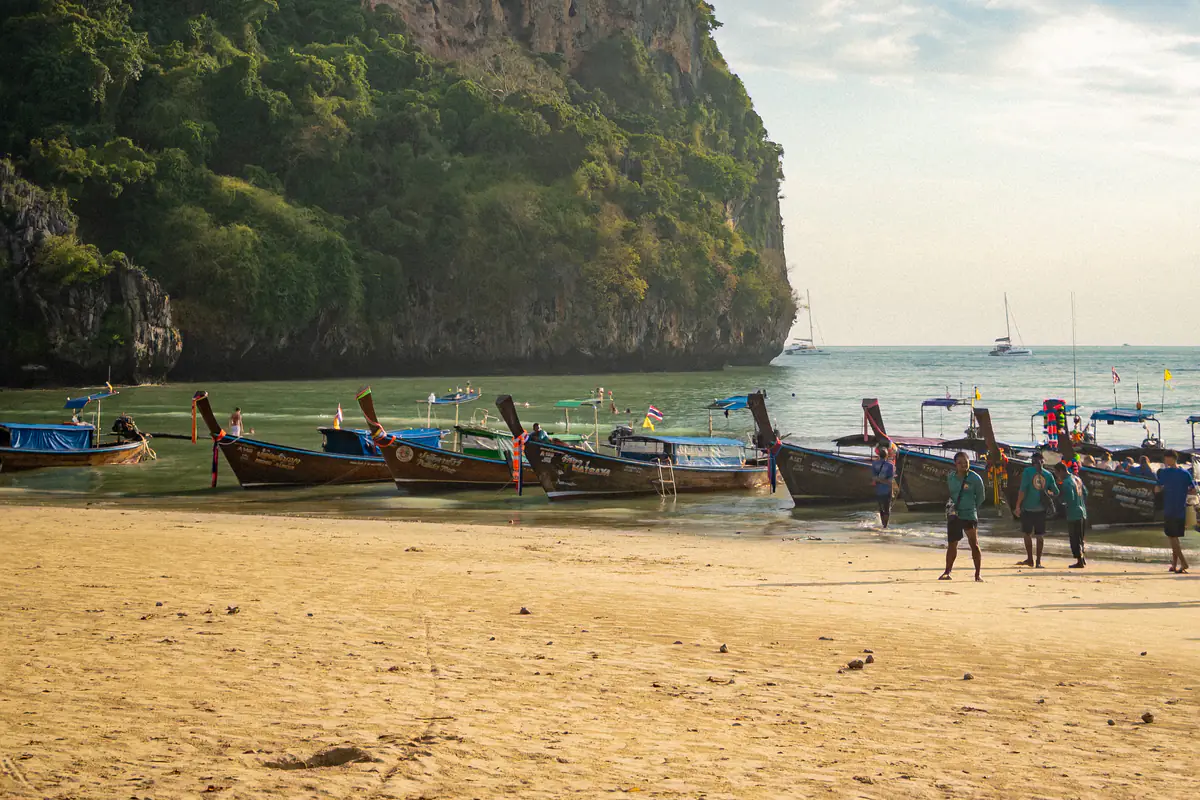
- Beaches and island hopping are the main point, especially from December to March on the Andaman coast (Phuket, Krabi).
- It is your first trip to Southeast Asia, or you are traveling with small children and want fewer moves.
- You hold a US or Australian passport and would rather not apply for a visa: Thailand lets you in for up to 30 days without one.
Pick Vietnam if
- You have two weeks or more and like a trip that moves: a new city or landscape every two or three days.
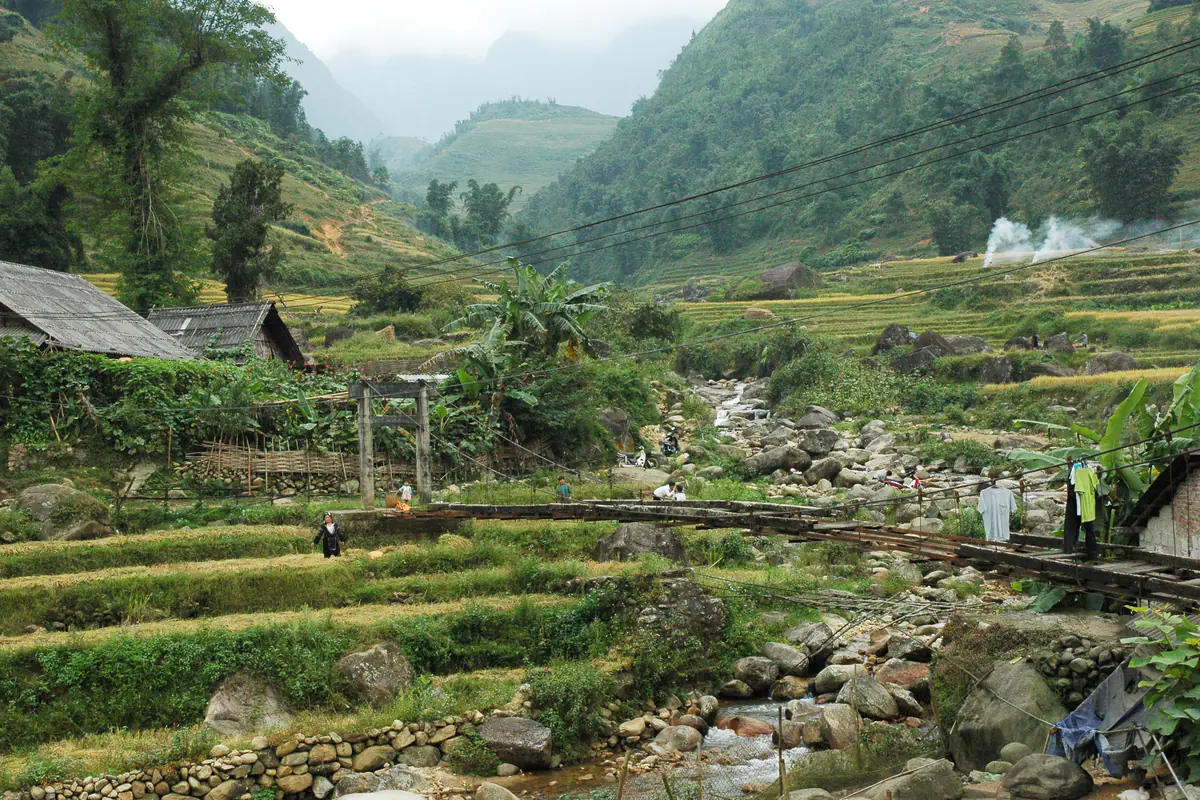
- You want scenery as much as beaches: the limestone karsts of Ha Long Bay and Ninh Binh, the rice terraces around Sapa, the mountain roads of Ha Giang.
- You love noodle soups, herbs and food that changes from region to region.
- History is part of the draw: the old capital of Hue, Hoi An’s old town, the war museums in Hanoi and Ho Chi Minh City.
If two items from each list fit you, look at the season first (below). In some months, one country has more beaches in season.
Trip shape: a long line or a Bangkok base
The shape of the route decides how many days you need.
Vietnam is a line. Hanoi and Ho Chi Minh City are about 1,700 km (1,050 miles) apart by road, with Hue, Hoi An and the central beaches in between. A first trip usually starts at one end, works its way along the coast and flies home from the other end. You fly the long hops and take the train or a car on the short ones. A full north-to-south Vietnam itinerary takes about two weeks; with only ten days, pick one or two regions (the north, or the center and the south) rather than the whole country.
Thailand usually starts in Bangkok. From there, the north (Chiang Mai) is about 1 hour 10 minutes by air and Phuket about 1 hour 25 minutes, so a typical first trip is Bangkok plus one or two other regions, such as the north and one island coast. You stay in fewer places for longer, and a week is enough to feel you have seen something.

Beaches and islands: which coast is in season
Both countries have two beach seasons running at once, because each has coasts facing different monsoons. Thailand’s split is east-west: the Andaman Sea side (Phuket, Krabi, Phi Phi) and the Gulf side (Koh Samui, Koh Phangan, Koh Tao). Vietnam’s split is north-south: the central coast (Da Nang, Hoi An, Nha Trang) and the far south (Phu Quoc).
| Months | Vietnam’s beaches | Thailand’s beaches |
|---|---|---|
| December-February | Phu Quoc and the south are dry. The central coast is still wet in December and showery and cool in January. | Andaman coast in season. Gulf islands are wet in December and drier from January. |
| March-April | Phu Quoc and the central coast both good; hot. | Good beach weather on both coasts; also the hottest time of year. |
| May-August | Central coast in season. Phu Quoc in its rainy season. | Andaman coast in the southwest monsoon, with rough seas on many days. The Gulf islands are the better side. |
| September-November | Central coast in its rain and storm season; Phu Quoc still wet until November. | Andaman coast wet until October and drying out in November. The Gulf islands get their heaviest rain in November. |
In short: from December to March, Thailand’s Andaman coast and Vietnam’s Phu Quoc are both at their best. From June to August, Vietnam’s central coast competes with Thailand’s Gulf islands. September and October are the weakest months for beaches in both countries (the Andaman coast picks up again in November), while October and November are the best months for northern Vietnam.
Some Andaman marine parks close for the monsoon: the Similan Islands, for example, are open only from mid-October to mid-May. In either country, skip boat trips when strong wind is forecast and wear a life jacket for the whole trip.
Food: big flavors or fresh herbs
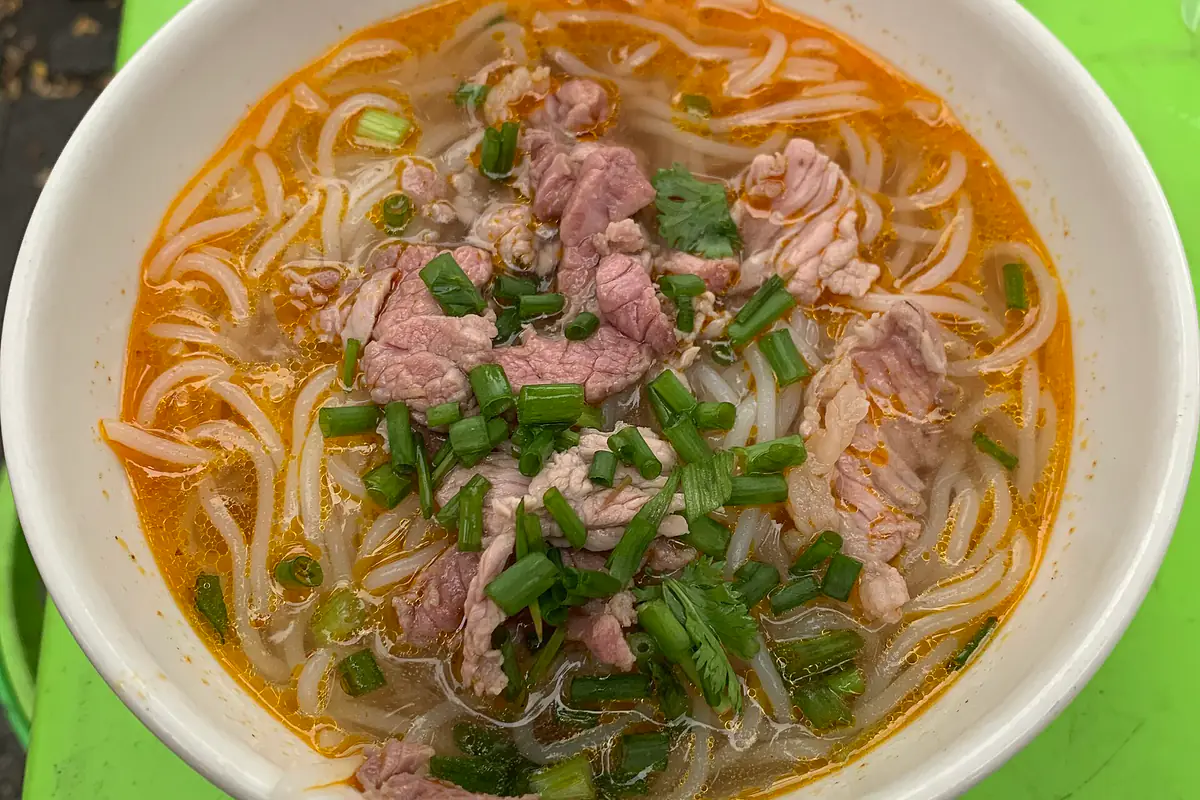
Thai food hits harder. Chili, lime, palm sugar and fish sauce often arrive in the same mouthful, curries are rich with coconut, and the heat is usually cooked into the dish. Vietnamese food is built around broth, rice noodles and a plate of fresh herbs, with chili and lime on the table so you season it yourself. That makes Vietnam the easier country if you don’t eat spicy food.
Vietnam also changes more from region to region: pho and bun cha (grilled pork with rice noodles) in Hanoi, spicy beef noodle soup (bun bo Hue) in Hue, cao lau noodles in Hoi An, broken rice with grilled pork (com tam) in Ho Chi Minh City. In Thailand, you could stay in Bangkok alone and eat something different every day for a week.
Vegetarians do fine in both. Look for “chay” on signs in Vietnam and the yellow “jay” flags in Thailand. Fish sauce goes into a lot of dishes in both countries, so ask if that matters to you.
Costs, compared like for like
“Vietnam is cheaper” is the usual line, but it depends on what you compare. Put the same things side by side and the gap is smaller than people expect, with a few clear differences:
| Same thing | Vietnam | Thailand |
|---|---|---|
| A bowl of noodle soup at a street stall in the capital | Pho in Hanoi: about VND40,000-70,000 (US$1.50-2.70) | Noodle soup in Bangkok: about 50-80 baht (US$1.50-2.40) |
| Ticket to the best-known royal palace | Hue Imperial City: VND200,000 (about US$8), the same for Vietnamese and foreign visitors | Grand Palace, Bangkok: 500 baht (about US$15) for foreigners; Thai citizens enter free |
| Separate prices for foreigners | Rare: most sights and parks charge everyone the same | Common at national parks: the Similan Islands charge foreign adults 500 baht (about US$15), Thai adults 100 baht |
| Visa on a US or Australian passport | E-visa: US$25 single entry, US$50 multiple entry | None for stays up to 30 days |
| Cash from an ATM with a foreign card | Some banks charge foreign cards and some don’t; the amount varies by bank | Most machines add a flat fee, often 220-250 baht (US$6.50-7.50) per withdrawal |
So street food costs about the same. Thailand charges foreigners more at many national parks and big sights, and Thai ATMs add a flat fee to every withdrawal, so take out larger amounts less often. Vietnam costs US and Australian travelers a visa fee.
What usually decides the total is the flight and the hotel dates. Price both trips for the same number of nights, the same hotel class and your real travel dates; Phuket in late December and Phu Quoc in late December are both peak-priced.
Visas and entry for the main passports
On September 15, 2026, Thailand cut its visa-free stay from 60 to 30 days for the passports on its exemption list, which include the US, UK, Australia and the Philippines. Older guides may still say 60. A longer stay means applying for an extension inside Thailand, and that is up to the immigration officer.
| Passport | Vietnam | Thailand |
|---|---|---|
| United States, Australia | Visa needed; the e-visa covers up to 90 days | Visa-free up to 30 days |
| United Kingdom | Visa-free up to 45 days | Visa-free up to 30 days |
| Philippines | Visa-free up to 21 days | Visa-free up to 30 days |
- Thailand: every foreign visitor fills in the Thailand Digital Arrival Card online within the three days before arrival. It is free on the official TDAC site, so ignore sites that charge for it. Visa-free visitors are also expected to have 20,000 baht per person or 40,000 baht per family, in cash or the equivalent, and immigration can ask to see it.
- Vietnam: if you need a Vietnam visa, apply for the e-visa only on the official portal; lookalike sites charge more.
Both countries have changed their rules in the past two years. Check the official pages for your passport before you book flights.
Getting around
In Vietnam, the North-South railway suits short or scenic legs and overnight runs, and sleeper buses go where there is no train. Each domestic flight still eats about half a day door to door, which is why a Vietnam trip needs more days than the map suggests.
In Thailand, you fly domestic or take the overnight train to Chiang Mai (about 11-13 hours). Bangkok has two airports, and budget airlines often use Don Mueang rather than Suvarnabhumi. Check the airport codes before booking. If you must change airports, allow for immigration, baggage collection, the road transfer and the next flight’s check-in deadline. Islands mean ferries and speedboats, so build in a buffer before any flight home.
Grab works in the big cities of both countries, and Bangkok also has a good elevated train and metro network. If you don’t already ride a motorbike, don’t learn on vacation. Rent one only if you have riding experience and the right license, and always wear a helmet.
Crowds
Both countries have places that feel packed in high season: in Thailand, Phi Phi, the Grand Palace and the island ferry piers; in Vietnam, Ha Long Bay, Hoi An’s old town in the evening and the main cruise departures.
The busy dates differ. In Thailand, the islands are fullest and priciest from Christmas to early January, and Songkran (April 13-15) fills buses, trains and domestic flights as people head home. In Vietnam, Tet (Lunar New Year, February 6, 2027) fills trains, flights and rooms across the country, and the beach towns are busy with Vietnamese families in the summer school holidays, June to August. Book early if your dates overlap those.
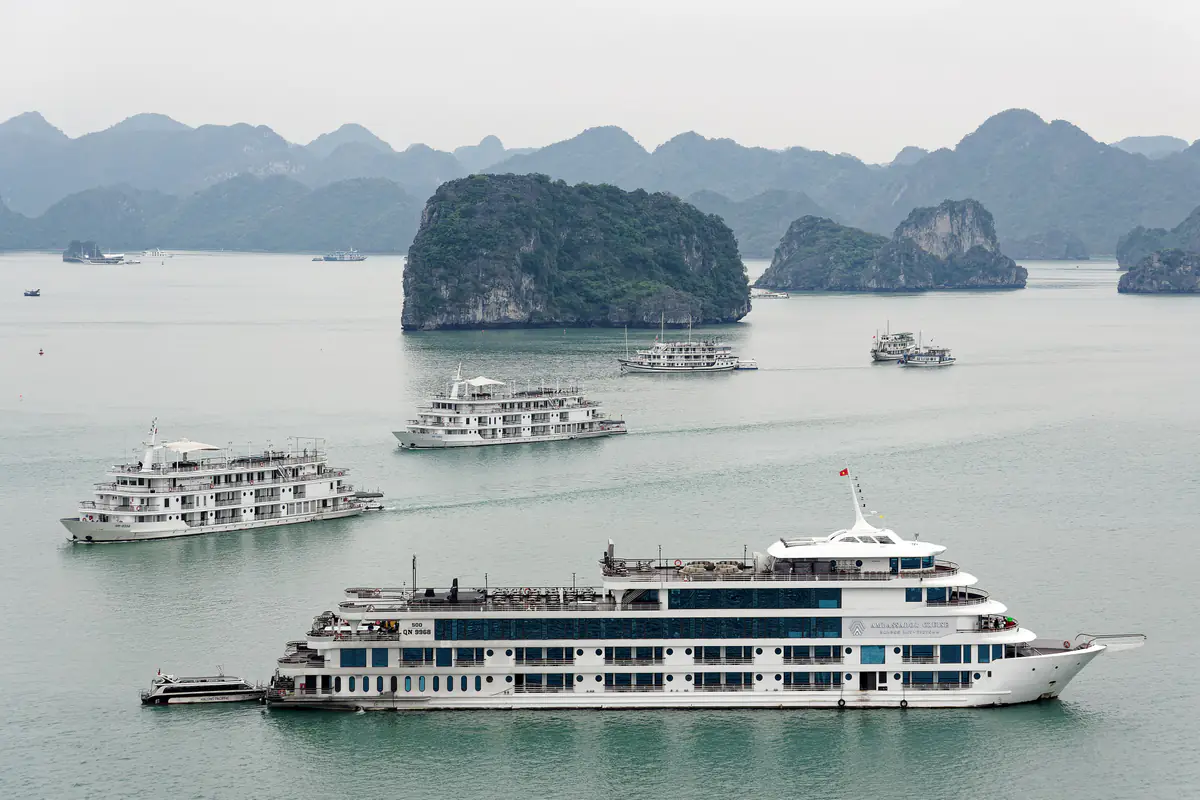
Combining Vietnam and Thailand in one trip
Bangkok to Hanoi or Ho Chi Minh City is under two hours by air, so combining the two is easy. What you need is time. With three weeks, you can travel through Vietnam and still spend time in Bangkok and one other Thai region; with two weeks, take one region of each, such as Hanoi and Ha Long plus Bangkok and Chiang Mai, or southern Vietnam plus the Andaman coast.
- Fly in to one country and out of the other, so you never backtrack. From December to March, a common order is Vietnam from north to south, then Bangkok and the Andaman coast. From June to August, try Vietnam’s central coast and Thailand’s Gulf islands.
- Visa on a US or Australian passport: a multiple-entry e-visa is the simplest option for a trip from Vietnam to Thailand and back. Make sure it covers both entries; if you have already used a single-entry visa, get a new visa before returning.
- Phu Quoc only? If your Vietnam leg is just the island and you fly there directly from abroad, Phu Quoc’s own 30-day visa-free rule applies to any passport. Check whether a direct flight from Bangkok runs on your dates.
- Overland via Cambodia: the Cambodia-Thailand land crossings are currently closed, so plan to fly between the two countries rather than cross by road.
- Phone and money: a regional eSIM that covers both countries saves buying two local SIMs. Spend your dong before you leave Vietnam; it is hard to change outside the country.
If you are still torn, let the month decide: whichever country has the coast or region you want in season gets the bigger share of your days.
FAQ
Is Vietnam cheaper than Thailand?
Not by as much as people say. A bowl of street noodles costs about the same in both. Thailand charges foreigners more at many national parks and big sights and Thai ATMs add a flat fee per withdrawal, while Vietnam costs US and Australian travelers a visa fee. Flights and hotel dates usually decide the total.
Vietnam or Thailand in December?
Thailand’s Andaman coast (Phuket, Krabi) is in season and Bangkok is at its most comfortable. In Vietnam, December suits Phu Quoc and the south; the central coast can still be wet and Hanoi is cool and often grey.
Which is easier with young children?
Thailand, mainly because a typical trip needs fewer hotel changes. In Vietnam, pick one region in its good season, such as Da Nang and Hoi An from February to August or Phu Quoc from December to March, instead of the whole north-south route.