Hanoi in November and December: weather, packing and travel tips
November is usually the easier month for walking: fairly dry, around 25-26°C (77-79°F) by day and 19°C (66°F) at night, so a light jacket usually covers the evenings. December is colder, about 16-22°C (61-72°F) and damp, with cold snaps that can last a few days. Close to your dates, check the forecast for cold surges and the daily air quality index (AQI), since late autumn and winter are smog season.
By Da Lat LoversPublished Updated How we review
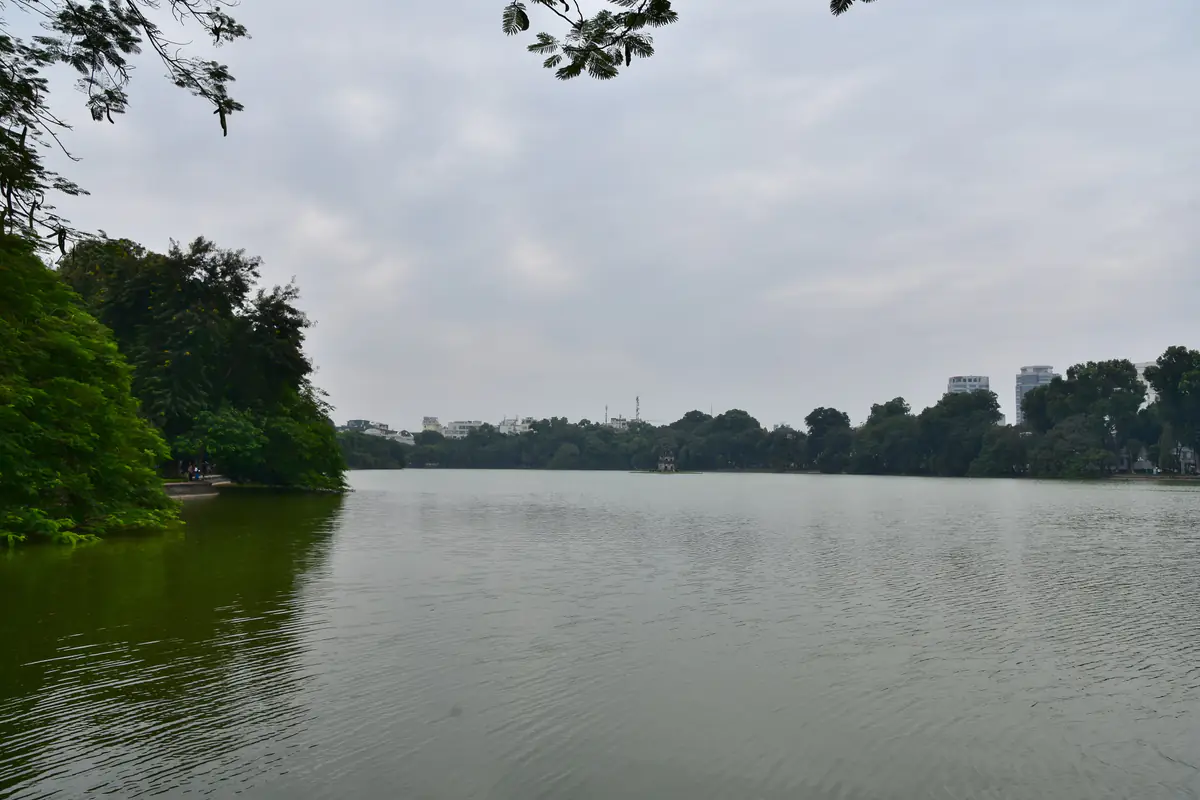
Hoan Kiem Lake on a cloudy late morning, November 2017. Photo: Richard Mortel / CC BY 2.0
Hanoi weather in November and December, and what to wear
Northern Vietnam has a real winter, which surprises people who picture the whole country as tropical. November is usually mild and relatively dry, warm at midday and cool in the morning and evening. December is usually drier still and about 4°C (7°F) cooler by day, though skies can still be overcast, and a northeast monsoon surge can make the city properly cold for a few days.
| Month | Temperature and rain | What to wear |
|---|---|---|
| November | 19-26°C (66-79°F); 67 mm (2.6 in), about 7 rainy days. Record low 10.6°C (51°F). | T-shirts by day; a light jacket or sweater is usually enough for the evening, warmer layers in a cold snap. |
| December | 16-22°C (61-72°F); 20 mm (0.8 in), about 5 rainy days. Record low 5.1°C (41°F). | Layers: a thermal top or sweater plus a windproof jacket; a scarf at night. |
| January (if you stay past New Year) | 15-20°C (58-68°F); 9-10 days with rain, about half of them drizzle; the least sun of the three. | A warmer jacket and closed shoes that cope with damp. |
In December there is roughly 6°C (11°F) between midday and early morning, so wear a thin base layer and an outer layer you can take off. Average humidity sits around 76-77%, and damp cold feels colder than the number on your phone. When you book for late December, ask whether the room has a heat-pump air conditioner or a heater.
This winter: a warmer outlook, but cold snaps still happen
Vietnam’s national forecasting center said on October 15, 2026 that November is likely to be 1-2°C warmer than average, and December and January 0.5-1.5°C warmer, with weaker cold air and a later, shorter cold season. Short spells with sharp temperature drops are still possible, and northern Vietnam may see 15-30% more rain than usual in November. Pack one compact warm layer even for a November trip, and check the 3-5 day forecast before you finalize your bag.
If your route continues to central or southern Vietnam, our region-by-region guide to Vietnam in November and December helps you pick the drier stretches.
Air quality: check the AQI every day
Hanoi’s air pollution peaks in the dry season. November to March carries the highest risk of bad days, especially calm, hazy ones, and the index can go above 200. Air quality changes from day to day and between neighborhoods, so before a long walk or photo session outdoors, check the station nearest your hotel on the Hanoi environmental monitoring portal (in Vietnamese, but the color scale is easy to read):
- Green or yellow (0-100): carry on as planned.
- Orange (101-150): fine for most healthy adults. Children, older people, pregnant women and anyone with heart or lung conditions should cut long walks and bike rides short and wear a mask that filters fine particles.
- Red (151-200): everyone should ease off strenuous outdoor activity, and long walks or photo sessions are better moved to another day if you can. Sensitive groups should stay indoors most of the time.
- Purple or maroon (above 200): keep time outdoors short and switch to museums and indoor cafés.
N95 or KN95 masks filter fine dust far better than cloth or thin surgical masks. If you travel with children, older relatives or anyone with asthma, keep a couple of flexible half-days in the plan.
Daisy season: when it usually is and where to see it
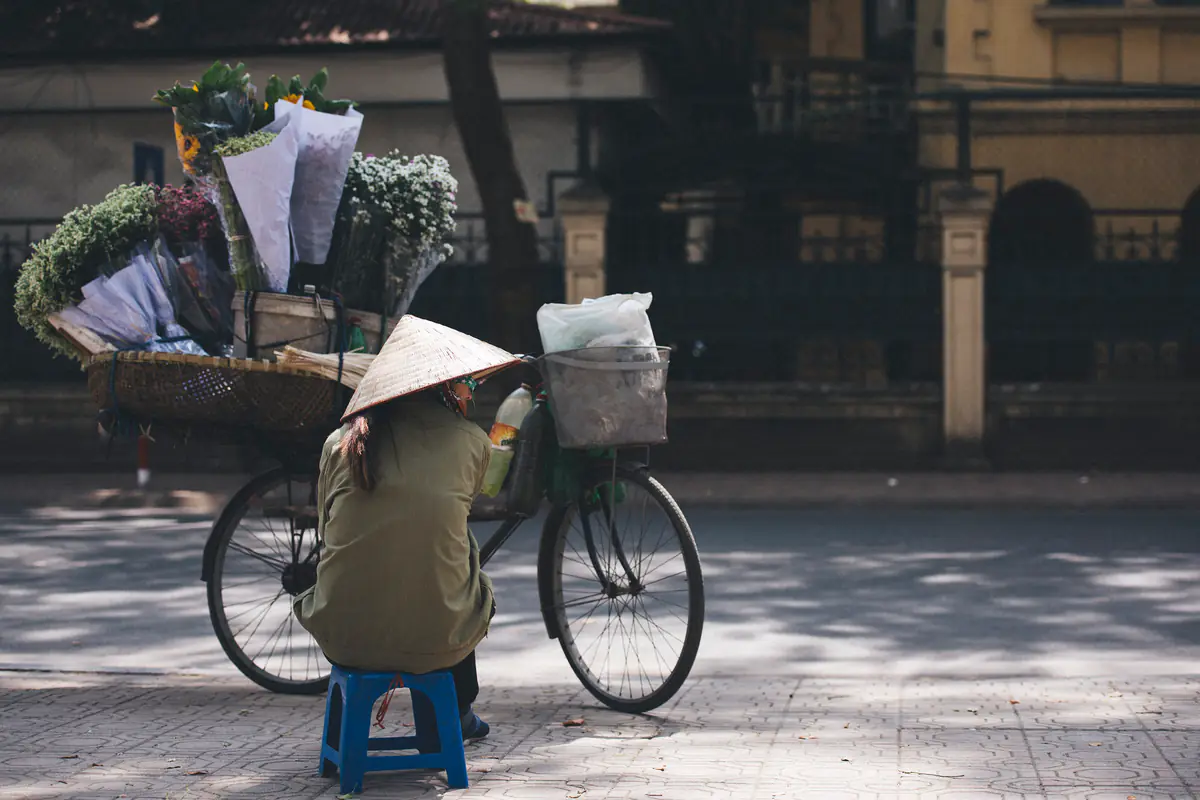
Every late autumn, Hanoi gets a few weeks of cúc họa mi, small white daisies sold from bicycles all over the old town. They are planted in May and June and bloom when the weather turns cold. In many years they reach the streets in late October or early November and last about three to four weeks, sometimes into early December. The timing changes with the weather: in 2025 floods killed many plants and the flowers only peaked in late November. Treat them as a bonus, or if they are the whole point of your trip, wait until local news reports them on the streets before you book.
- Flower bicycles: around Hoan Kiem Lake, on Dinh Tien Hoang Street and in the Old Quarter. In the 2025 season a bunch cost 140,000-170,000 VND (about US$6).
- Phan Dinh Phung Street: the stretch from Cua Bac Church to Phan Dinh Phung High School is the classic photo spot; in 2025 vendors rented out bunches for photos at 30,000-50,000 VND (about US$1-2).
- Riverside garden: a daisy garden on the Red River bank (end of lane 264 Au Co, Tay Ho) charged 40,000 VND (about US$1.60) entry in 2025. The growing villages of Nhat Tan and Tay Tuu mostly cut flowers for sale.
A weekday morning around 9 am gives soft light and fewer people than a weekend. If the AQI is red or worse, consider moving an outdoor photo session to another day, especially if you are in a sensitive group.
Late-year events: planned dates and updates to check
As of October 25, 2026, most of the dates below are planned or still waiting for a detailed program. Hanoi usually announces its Christmas and New Year programs close to the day, so check again before you plan around an event.
| When | What and where | Notes |
|---|---|---|
| Until December 2, 2026 (as scheduled) | “Ribbon of Memories,” a lit art installation and raised walkway on the west shore of Hoan Kiem Lake (Le Thai To Street) and southwest of Turtle Tower | Open for visits and photos; takes up part of the lakeside path |
| November 13-29, 2026 (planned) | Hanoi Creative Design Festival: opening planned for November 13 on the square east of Hoan Kiem Lake; venues include the walking street, the Old Quarter, Dong Xuan market, the Hang Dau water tower and Thong Nhat Park | No venue-by-venue schedule yet (October 25); watch the festival website (Vietnamese) |
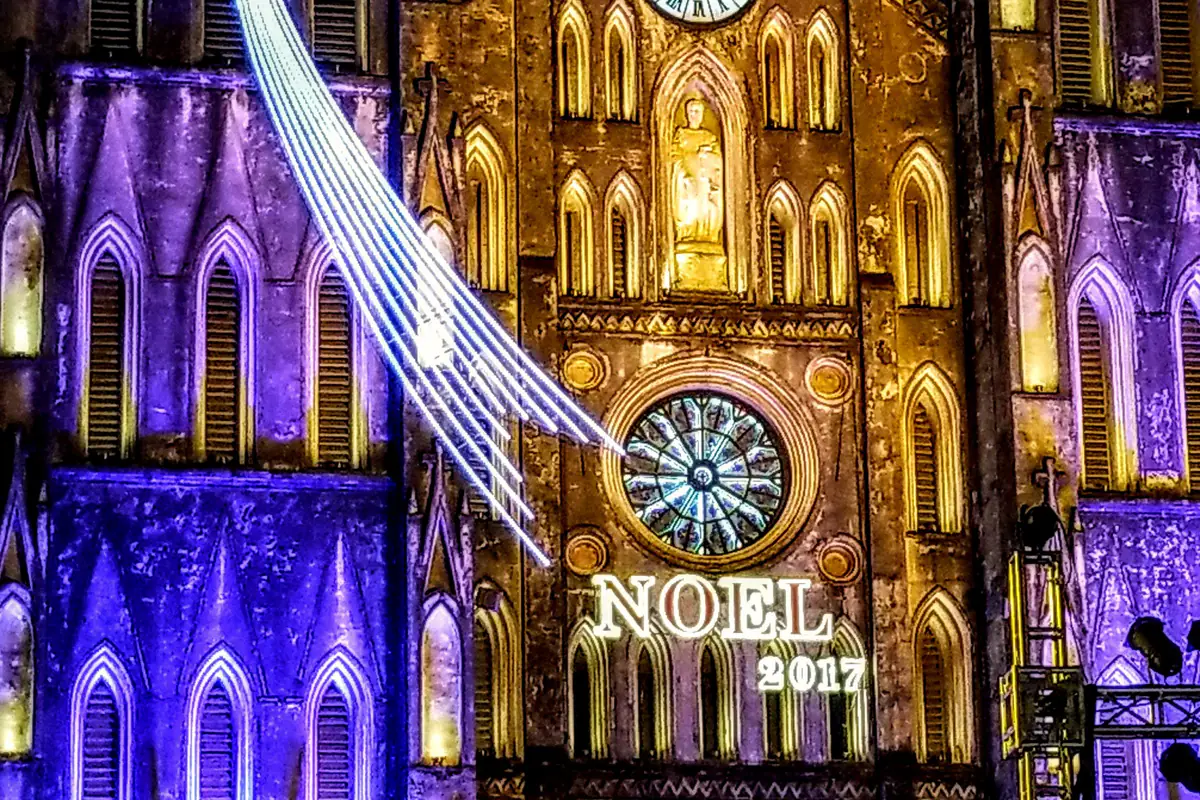
| December 24-25 | Christmas: St Joseph’s Cathedral and other city churches are lit up | Christmas Eve around the cathedral is packed; walk there |
| December 31, 2026 to January 3, 2027 | New Year around Hoan Kiem Lake. January 1, 2027 is a Friday, giving people who normally have weekends off a three-day break, so the lake gets very busy | This year’s program not yet announced; Hoan Kiem ward usually posts it in December |
The Old Quarter and the weekend walking street
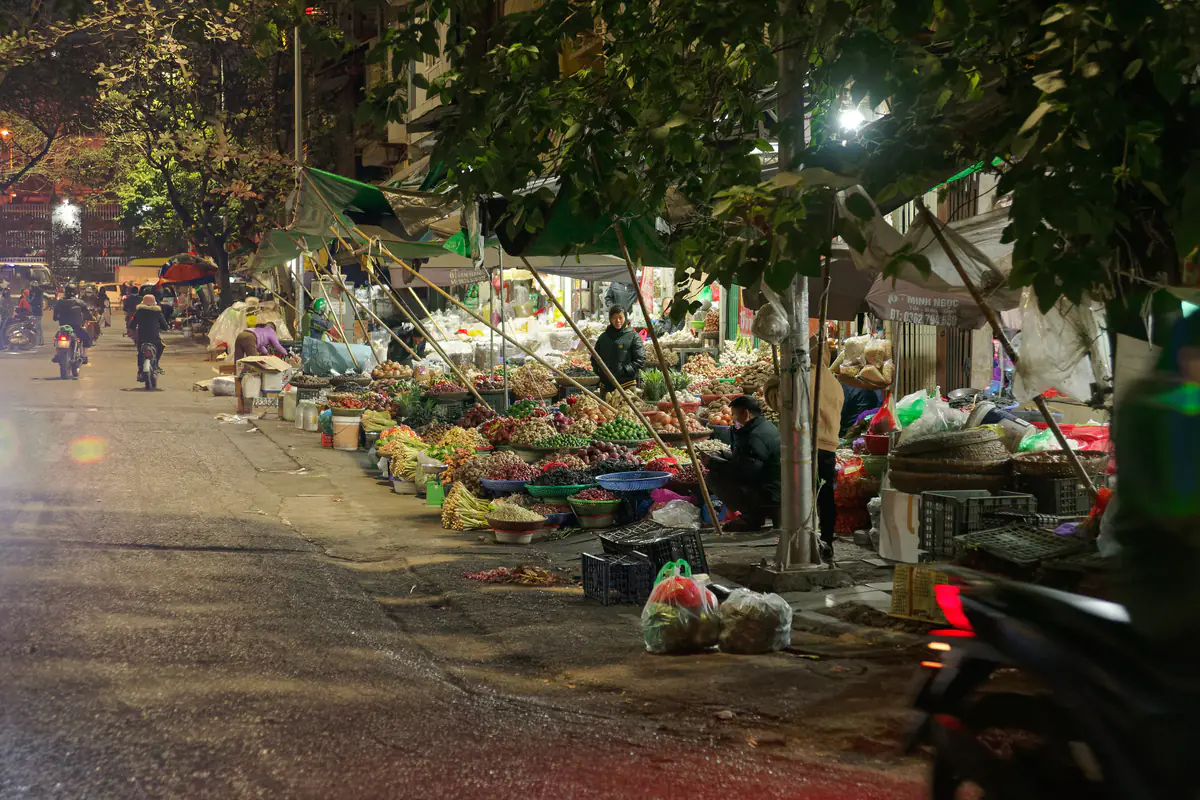
The streets around Hoan Kiem Lake close to traffic from 7 pm on Friday until midnight on Sunday, with longer hours on big holidays. The weekend night market runs along Hang Dao to Dong Xuan market on Friday, Saturday and Sunday evenings, from dusk until about 11 pm.
From July 1 to December 31, 2026, Hanoi is trialing a low-emission zone in Hoan Kiem ward. The rule visitors are most likely to meet applies in Area 1, which matches the lakeside walking street, the pedestrian streets of the Old Quarter and the night market route: from 7 pm to midnight on Fridays, Saturdays and Sundays, motorbikes and cars of all kinds may not drive there, apart from priority vehicles. The walking street and night market carry on as before.
Area 2 is larger, covering most of the Old Quarter and the streets around the lake. It restricts fossil-fuel passenger vehicles with more than 16 seats from 6 to 9 am and 4 to 7:30 pm every day, with exemptions including public buses and school transport, so a large tour bus may not be able to collect you at an Old Quarter hotel door. The streets bounding each area and the four transfer drop-off points are listed in VOV’s guide to the zone (Vietnamese). The quickest check is to ask your hotel whether its address is inside Area 1, and your tour operator where pickup will be.
Arriving at an Old Quarter hotel on a weekend evening
Planning a few days
- Three days in Hanoi: keep a Friday or Saturday evening for the walking street and night market, a weekday morning for the daisies if they are out, and one loose half-day you can switch to a museum if the air is bad.
- Add two days: November’s clearer weather suits an overnight Ha Long Bay cruise. In December the bay is windier and colder, so pack warm clothes and check the rebooking terms if strong winds are forecast.
- Add two or three days: Sapa averages only 7-13°C (45-55°F) in December, with many foggy days, so you need noticeably warmer clothes than in Hanoi.
Getting from Hanoi airport to the Old Quarter
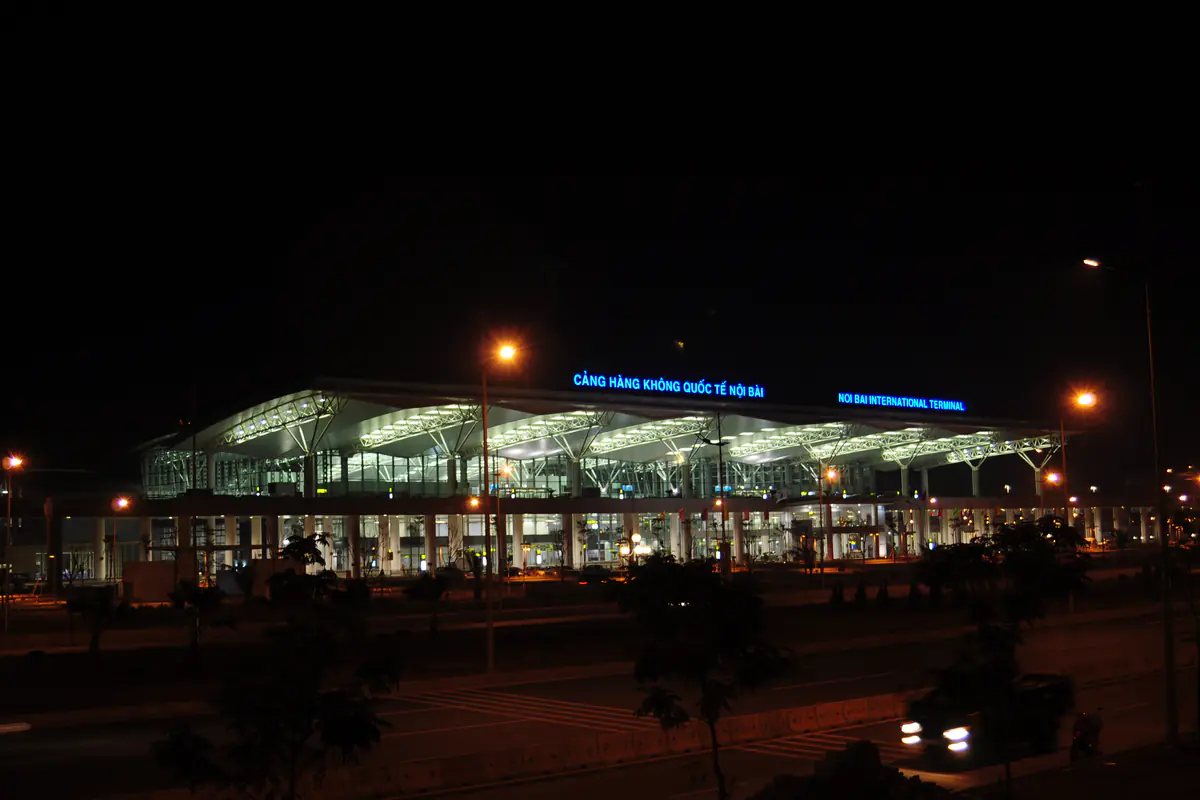
Noi Bai Airport is about 26-30 km (16-19 miles) from the Old Quarter. By car it usually takes 40-60 minutes, longer in the weekday evening rush. International flights use Terminal 2.
| Option | Typical cost | Good to know |
|---|---|---|
| Ride-hailing car (Grab or similar) | About 300,000 VND (US$12) as of June 2025, plus tolls and the airport access fee | New airport fares took effect on August 6, 2026, so check the price in the app before you book. Go to the pickup point the app shows |
| Metered taxi from the official rank | Agree a total price to the Old Quarter, or make sure the meter is on, before you set off | Only take cars from the supervised taxi rank |
| Airport bus 86 (airport, Hoan Kiem Lake, Hanoi Railway Station) | 50,000 VND (about US$2), the fare the airport lists (checked October 25, 2026) | The airport lists 7 am to 10:05 pm (10:15 pm on its English page), every 25-30 minutes; about 50-60 minutes to the lake. Ask the conductor for the stop nearest your hotel |
| City buses 07, 17, 90 | 12,000-15,000 VND (under US$1) | End at Cau Giay, Long Bien or Kim Ma, so you still need a transfer; last buses around 10-10:30 pm. Only worth it with light bags |
The airport’s two pages don’t agree on bus 86 hours: the Vietnamese page says 7 am to 10:05 pm, and the English page says 7 am to 10:15 pm. Check the last departure from the airport before you fly, and plan around the time you actually walk out of the terminal after immigration and baggage claim, not your landing time. If that is close to 10 pm, or before bus 86 starts at 7 am, have a ride-hailing car or a hotel pickup lined up; for a cheaper option, check which city buses are already running and the onward connection.
Ignore anyone who offers you a ride inside the terminal: visitors have been picked up by men in uniforms that look like a ride-hailing driver’s and then charged about three times the normal fare. If you book through an app, check the number plate before getting in, pay using your selected payment method and check the final receipt; question any unexplained extra charge.
Before you fly, check Vietnam’s visa and entry rules for your passport.
Before you go
- The 3-5 day Hanoi forecast: is a cold surge due during your stay?
- The daily AQI at the station nearest your hotel, so you know which days to move long outdoor plans.
- Local news on whether the daisies are out, if they matter to you.
- The official program for the design festival and for Christmas and New Year, once published.
- Whether your hotel is inside Area 1 of the low-emission zone, if you arrive on a Friday to Sunday evening.
- The last bus 86 from the airport, compared with when you expect to clear the terminal.
FAQ
Is November or December better for Hanoi?
November if you want warmer days for walking and a chance of daisy season; December if you want Christmas and New Year atmosphere and don’t mind the cold. Both months can have smoggy days, so leave some room in the plan.
Do I need a winter coat in Hanoi in December?
Usually not a heavy one. A thermal or sweater under a windproof jacket covers most days. If a cold surge is forecast with nights below about 12°C (54°F), a light down jacket is worth packing, and you will want it anyway if you go on to Sapa.
Is bus 86 still running if I land late?
Noi Bai’s Vietnamese page lists bus 86 from 7 am to 10:05 pm and its English page to 10:15 pm, so check the last departure before you fly. Count from when you clear immigration and collect your bags; if that is close to 10 pm, book a ride-hailing car or a hotel pickup.
Where should I stay?
For a first, short visit, the Old Quarter and the streets around Hoan Kiem Lake put most of this guide within walking distance, though weekend evenings are crowded and cars cannot enter Area 1. Tay Ho (West Lake) is quieter and closer to the riverside daisy garden, but you will need a ride into the old town.