Ha Giang Loop: how many days, self-ride or easy rider, the route and costs
The Ha Giang Loop is a 350-400km ride, depending on the way back, through the mountains of far northern Vietnam. Three days is the usual pace, four is more comfortable. Unless you hold a motorbike license Vietnam recognizes and have real mountain-riding experience, ride on the back of an easy rider or go by car.
By Da Lat LoversPublished Updated
How many days do you need for the Ha Giang Loop?
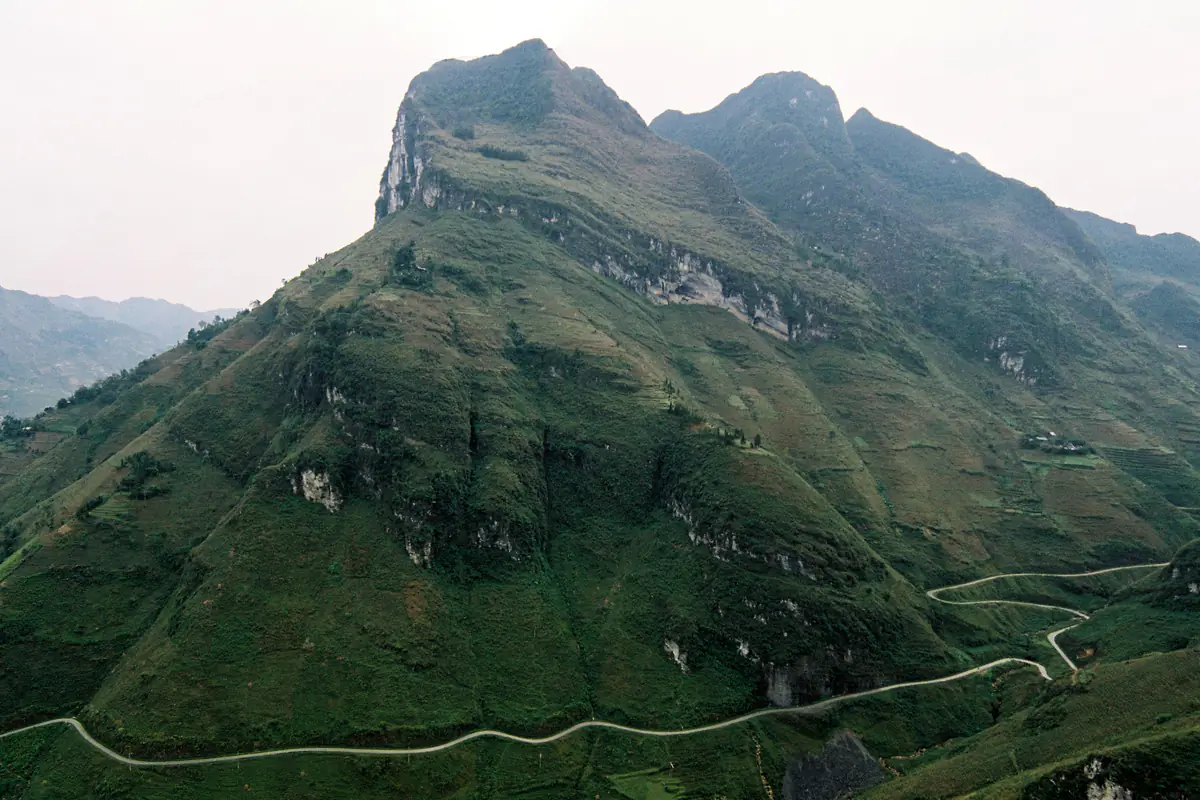
The classic loop runs clockwise from Ha Giang city up through Quan Ba and Yen Minh to Dong Van, over the Ma Pi Leng Pass to Meo Vac, then back south via Du Gia or Yen Minh. With the side trip to Lung Cu near the Chinese border, it comes to about 350-400km (220-250 miles), depending on the way back. That sounds short, but hairpins, steep grades and photo stops pull the average speed down to roughly 20-30km/h, so 100-150km is a full day.
| Length | Works for | Trade-off |
|---|---|---|
| 2 days, 1 night | Car travelers who want a taste of the karst plateau | Most of the time is spent in the vehicle; Lung Cu or Meo Vac usually gets cut |
| 3 days, 2 nights | The standard easy rider and car tour | Long first and last days (about 145km and 150-180km); one rainy day means dropping stops |
| 4 days, 3 nights | Riding yourself, or adding a night in Du Gia | One more night and one more rental day, in exchange for a spare day if the weather turns |
| 5 days or more | Adding the Hoang Su Phi rice terraces in the west | Hoang Su Phi is a separate branch, not on the loop |
When comparing tours, ask whether “3 days” starts in Hanoi or in Ha Giang. Many packages use overnight sleeper buses both ways: you arrive in Ha Giang before dawn, ride the loop, and take another night bus back. That can add two nights on a bus to your two homestay nights. If you sleep badly on buses, book a night in Ha Giang before you start riding.
Counting the buses, a 3-day loop takes about four days out of a trip based in Hanoi. In a two-week Vietnam itinerary, that usually means dropping or shortening another stop rather than squeezing it in.
Easy rider, self-ride or car?
Decide in this order: paperwork, riding skill, then preference. A license alone does not make a first-time rider ready for these passes.
Easy rider: riding pillion with a local driver
You sit behind a local driver and travel as a small group. It is the common choice for foreign visitors, and the way to ride the loop on two wheels if your license does not cover motorbikes in Vietnam. After a 19-year-old British traveler died on a Ha Giang Loop motorbike tour in early April 2026, the province tightened the rules: easy riders must work under a contract with a travel company and may not merge groups, change the route or swap drivers on their own, and unlicensed operators may not sell tours.
Before you pay a deposit, get these in writing:
- A contract or confirmation with the travel company’s name, the driver’s name, the plate number and the day-by-day plan.
- How many hours you ride each day, and whether each day ends before dark.
- What helmet you get (full-face or open), plus rain gear, gloves and knee or elbow pads.
- How many bikes are in the group.
Homestays often pour corn liquor (rượu ngô, sometimes called “happy water” by tourists) at dinner. Vietnam bans driving with any alcohol in your system, and a heavy evening can still show the next morning. When you book, make it clear your driver does not drink during the trip; if you see them drinking, do not get on the bike and call the tour company for another driver.
Car or jeep
Better for families, anyone who gets tired on a bike all day, and cold or wet weeks. You stop less freely and see some stretches through a window. Ask for photos of the actual vehicle, whether every seat has a belt, and how many hours you drive per day.
Riding yourself: the license question
What you need depends on where your license was issued. For most visitors it is a home license that covers motorbikes plus an international driving permit (IDP) issued under the 1968 Vienna Convention with category A, both valid on the day you ride and carried with your passport. The United States issues IDPs under the 1949 Geneva Convention, which Vietnam generally does not accept, so most American travelers cannot ride legally on a US license plus IDP. Open the first page of your permit and check which convention it names before you fly. Korean permits are an exception under a bilateral agreement, but only with category A. If your license was issued in an ASEAN country, check the rules for that license and vehicle category before renting; the IDP convention alone does not settle your case.
In mid-April 2026 police began patrolling the road from Ha Giang to the karst plateau and checking foreign riders’ documents, and many rental shops signed pledges not to rent to riders without the right license. If your papers do not cover the bike, ride pillion.
If you do ride: semi-automatic 110-125cc bikes are the usual rentals, and they let you use engine braking on passes like Ma Pi Leng and Tham Ma. Paved roads do not make this an easy scooter ride. If you are not confident controlling your speed on long descents, choose a local driver or a car tour. Whatever you rent, check the brakes, lights and tires and take a short test ride around town before heading up.
The Ha Giang Loop route and map, stage by stage
Distances are rounded road distances, good enough to split your days. Open the loop on Google Maps and download the area for offline use, because mobile signal drops on many passes. Since 2025 the old Ha Giang province has been part of Tuyen Quang province, but buses, maps and tours still use Ha Giang.
| Stage | Distance | Along the way |
|---|---|---|
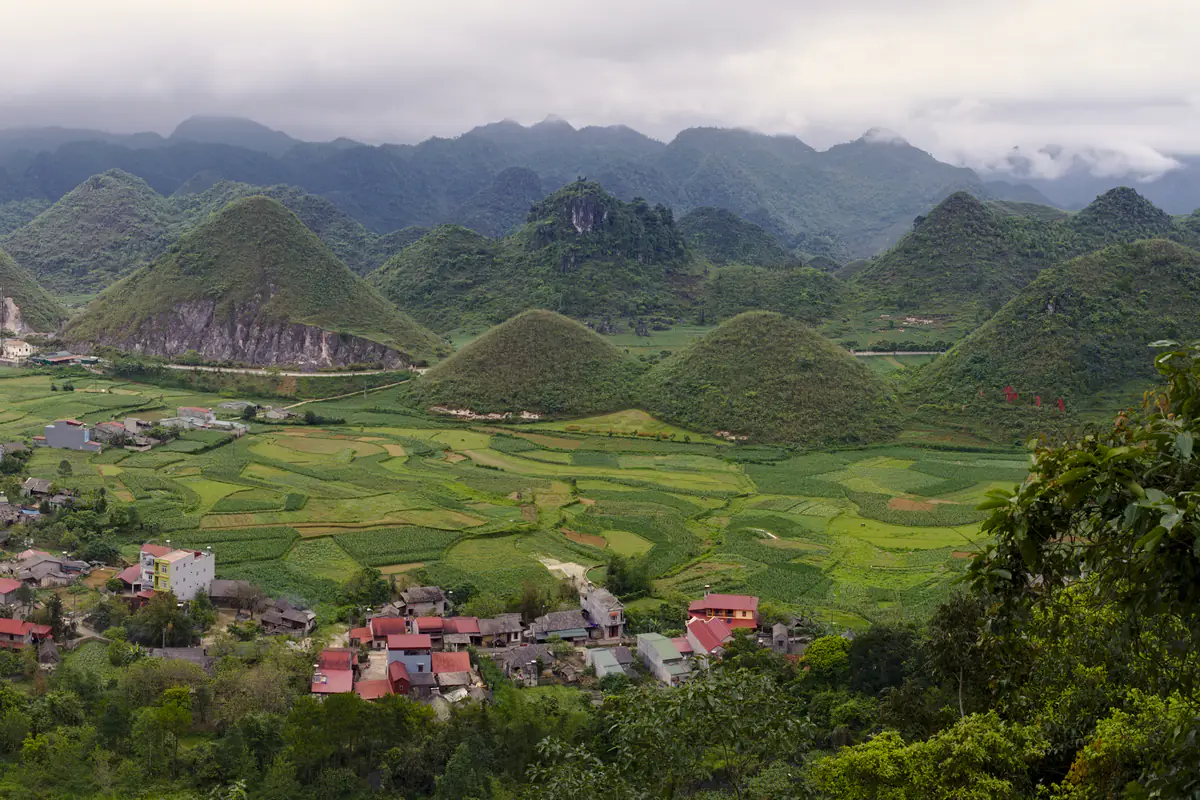
| Ha Giang to Yen Minh | about 100km | Bac Sum Pass, Quan Ba Heaven Gate and the Twin Mountains, Yen Minh pine forest |
| Yen Minh to Dong Van | about 45km | Tham Ma Pass, Sa Phin and the Vuong family mansion, Dong Van old quarter |
| Dong Van to Lung Cu and back | about 50km round trip | Lung Cu flag tower, Lo Lo Chai village |
| Dong Van to Meo Vac | about 25km | Ma Pi Leng Pass, the road down to the Nho Que River boat dock |
| Meo Vac to Ha Giang | about 150-180km | Via Mau Due and Du Gia (narrow, rough in places), or back through Yen Minh on the way you came up (easier) |
A 3-day plan
- Day 1: Ha Giang to Quan Ba, Yen Minh and Tham Ma Pass, overnight in Dong Van, about 145km. Leave Ha Giang before 8am so you arrive before dark.
- Day 2: morning trip to Lung Cu, back to Dong Van, then over Ma Pi Leng to Meo Vac for the night. About 75km, the lightest day, with time for photo stops or a Nho Que River boat.
- Day 3: Meo Vac back through Yen Minh to Ha Giang, about 160km and most of the day on the road. Book an evening or overnight bus to Hanoi, not an afternoon one.
Where a fourth day helps
Split day 3: ride from Meo Vac to Du Gia and spend a night in the village, then return to Ha Giang the next morning. The Du Gia road is narrow, rough in places and slippery after rain, so take it only in dry weather and with a rider used to bad roads. If day 2 brings heavy rain, use the extra day to wait in Dong Van for it to clear instead of pushing on, then return through Yen Minh.

How much does the Ha Giang Loop cost?
These are typical per-person prices outside holidays and the flower season, when tours and rooms usually cost more. Compare what each tour includes before comparing the headline prices.
| Item | Typical price | Ask about |
|---|---|---|
| Bus, Hanoi to Ha Giang | from about VND200,000 one way on a standard sleeper; cabin and limousine buses cost more | Pickup point in Hanoi, arrival time |
| Easy rider tour, 3 days | about VND3.7-5.5 million (roughly US$140-210) | Hanoi bus included or not, dorm or private room, how many meals |
| Car tour from Hanoi, 3 days | from about VND2.8 million (roughly US$105) | Shared or private car, passengers per car |
| Motorbike rental | VND150,000-250,000 a day for a semi-automatic or scooter; from about VND500,000 for a 150cc manual | Cash deposit or passport, who handles a breakdown on the road |
| Fuel if riding yourself | about VND70,000-100,000 a day | Fill up whenever you pass a town with a gas station, especially before the Du Gia road |
| Entry tickets, Nho Que River boat, flower field fees | tens of thousands to a few hundred thousand dong each | Whether your tour covers them |
Easy rider tours usually include the bike, driver, fuel, helmet, rain gear, beds and most meals. Check whether entry tickets, the Nho Que boat trip, drinks and a private room are included. Riding yourself, you pay for rooms and meals night by night, and Dong Van rooms fill early on weekends and in the flower season. Withdraw enough cash in Ha Giang and carry small notes, since many stops, small eateries and flower fields take cash only. If your dates fall in the buckwheat flower season, book the Dong Van night first and pick a refundable rate.
Do you need a permit for the Ha Giang Loop?
The northern part of the loop, around Lung Cu, Dong Van and Meo Vac, runs through communes in the border zone with China, and under Vietnamese rules foreigners entering the border zone need a permit from the provincial police. On a tour, the travel company handles it; ask when you book. Riding independently, have your rental shop or guesthouse in Ha Giang arrange it before you set off, and ask what it costs. Bring your passport: homestays on the plateau need it to register your stay.
Is the Ha Giang Loop dangerous?
It is a serious mountain road, and fatal crashes do happen. The risks come from the conditions: steep drops, blind corners, buses and trucks taking the whole road, fog, and tired or drinking drivers. The habits below address those risks; they do not remove them.
Before every pass
- Photo stops: only at viewpoints or pull-outs with room off the road, never on the pass itself or on a bend. From July 1, 2026, Dong Van commune closed the famous rock ledge on Ma Pi Leng to visitors for safety repairs; follow the signs on site and do not climb past the barriers.
- Nho Que River boats: wear a life jacket for the whole trip, and skip any boat that is overloaded or has none.
- Rainy season (roughly May to September): landslides, rockfall and muddy construction zones. If there are heavy rain or landslide warnings, postpone that stage and ask your guesthouse about the road before riding.
- Cold season (roughly December to February): nights near freezing on the high plateau, and morning fog that leaves the road wet and visibility short. Wait for thick fog to lift before you set off, and bring gloves and warm layers.
- If something happens: call 115 for an ambulance, 113 for police. Serious cases usually go to Ha Giang or Hanoi, many hours away on mountain roads. When you are tired, stop for the day rather than push to keep the schedule.
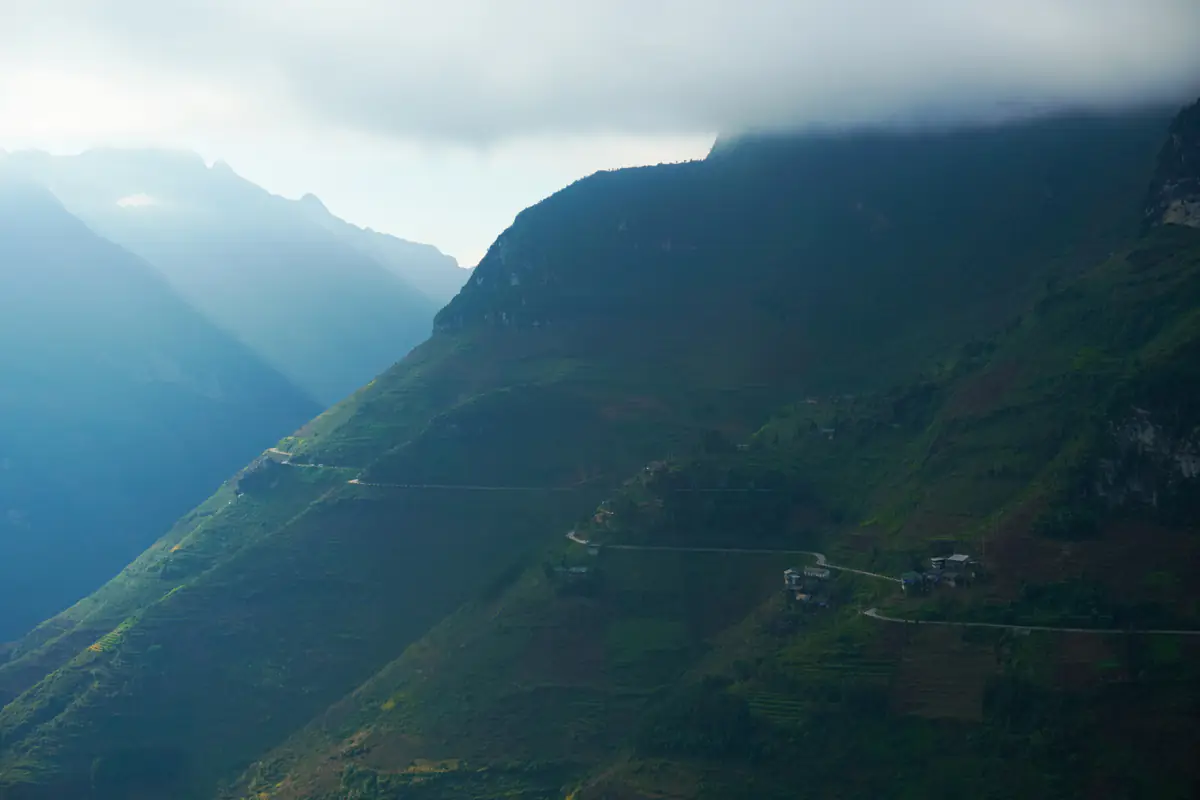
October and November usually bring less rain, clearer skies and mild days, which makes them easier for riding; February and March bring peach and plum blossoms but often drizzle. Before you buy travel insurance, check how it treats motorbikes, as a rider and as a passenger, including helmet and license conditions; the insurance checklist for Vietnam lists the clauses that matter.
FAQ
Is 3 days enough for the Ha Giang Loop?
Yes, for the main loop with a driver or by car, but days 1 and 3 are long and there is no spare day for bad weather. If you ride yourself or want a night in Du Gia, plan 4 days.
Can I ride the Ha Giang Loop with a US license?
Generally not legally. Vietnam recognizes international driving permits issued under the 1968 Vienna Convention, and US permits are issued under the 1949 Geneva Convention. Ride with an easy rider or go by car instead.
How do I get from Hanoi to Ha Giang?
By sleeper, cabin or limousine bus, about 6-7 hours depending on the bus and the road. Many tours include a night bus both ways; ask where you are picked up and when you arrive.
What is the best month for the Ha Giang Loop?
October and November usually have less rain and clearer skies, before the cold sets in. In the rainy season (roughly May to September) do not ride during heavy rain warnings, and pack warm layers from December to February.