What to buy in Vietnam: gift ideas, prices and customs rules
Coffee, roasted cashews, dried fruit and tea come in small packs that are easy to carry. Check your destination’s rules before buying: sealed packaging alone does not guarantee entry. Leave fresh fruit and anything with meat behind, and check your airline before packing fish sauce or spirits.
By Da Lat LoversPublished Updated How we review
What to buy in Vietnam, and what it costs
Here are the gifts worth considering, with prices to give you a benchmark. They are shelf prices from WinMart’s online store for its Times City branch in Hanoi, checked on October 25, 2026, converted at that day’s Vietcombank rate (about 25,640 dong to the US dollar). Other branches, promotions and market stalls will differ.
| Item | Supermarket price | Packing it to fly home |
|---|---|---|
| Instant coffee (a 288 g box of G7), single-serve drip bags (Con Soc, 160 g box) | 82,800-89,000 dong (about US$3.20-3.50) a box | Light and sealed. Roasted, processed coffee is the easiest kind to get through customs. |
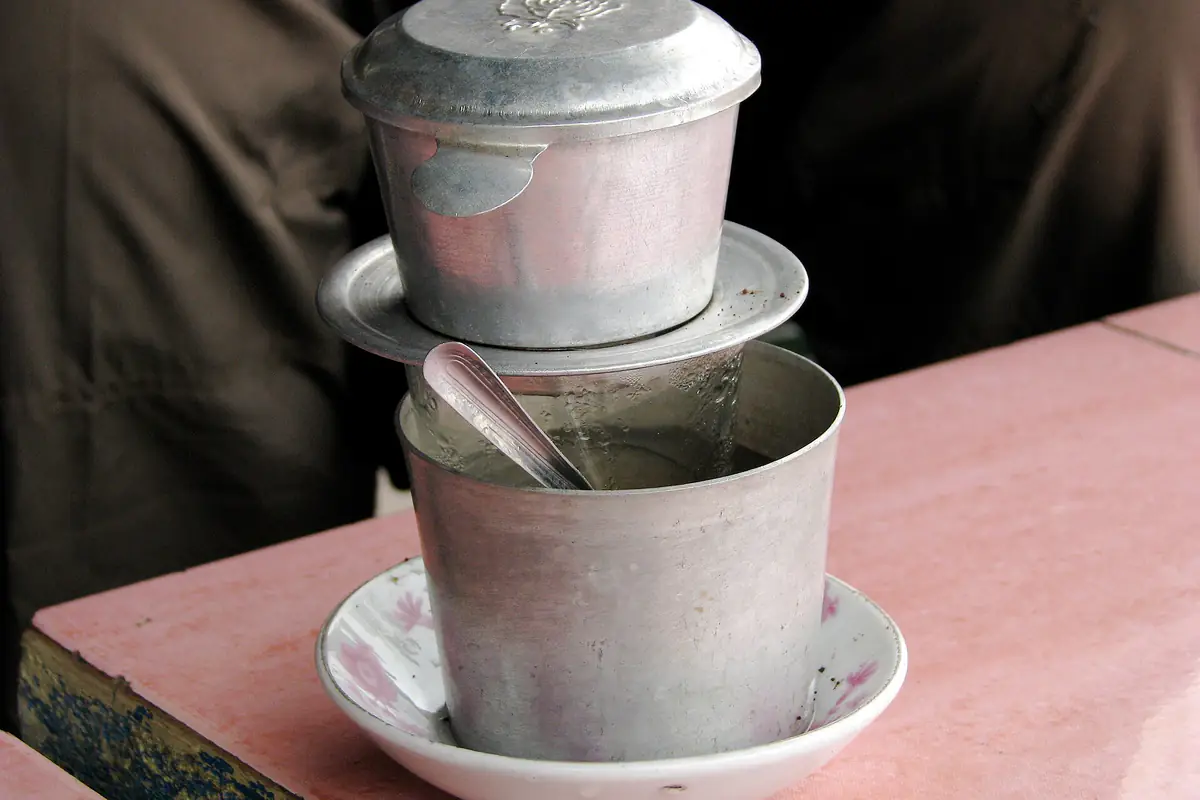
| Ground coffee for a phin (Trung Nguyen, 500 g) and an aluminium phin filter | Coffee 160,200 dong (about US$6.25); phin 46,900-70,000 dong (US$1.80-2.70) | Fine in hand luggage. Avoid green (unroasted) beans, which several countries inspect or restrict. |
| Roasted salted cashews | 400 g bag 212,100 dong (about US$8.30); 160 g tub 113,000-132,000 dong | Choose roasted nuts in labelled retail packs, then check your destination’s import and declaration rules. Raw nuts face stricter rules in some countries. |
| Dried fruit: crispy jackfruit, soft dried mango | Jackfruit 250 g 116,000 dong (about US$4.50); mango 160 g 52,900 dong (about US$2) | Buy branded, sealed bags rather than loose fruit sold by weight. |
| Green tea from Thai Nguyen, lotus tea | 100 g 36,400-47,100 dong (US$1.40-1.85); lotus tea bags 46,000 dong | Keep it in the sealed retail pack. |
| Marou chocolate | Check the price on the shelf; well above everyday supermarket chocolate | Keep it cool. Don’t leave it in a hot car or a sunny window. |
| Phu Quoc pepper | Varies; look for sealed, labelled packs | Sealed retail packs are simpler than loose peppercorns scooped from a sack. |
| Phu Quoc fish sauce | 520-525 ml bottle 107,000-147,600 dong (US$4.20-5.75) | Checked bag only, packed the airline’s way (see the flights section). |
| Crafts: conical hats, seagrass baskets, chopsticks, bamboo trays, lacquerware, ceramics | Varies by shop | Some countries, Australia among them, want wooden and plant-based items declared. Genuine antiques cannot leave Vietnam. |
| Fresh fruit; beef jerky, Chinese-style sausage, pork floss, anything with meat | - | Leave them behind. Australia and the UK, for example, restrict meat and most fresh fruit. |
For a sense of scale, two boxes of G7, a bag of ground coffee, a phin, 400 g of cashews, two bags of dried mango and two packs of tea come to about 763,000 dong at those prices, roughly US$30.
Matching the gift to the person
- Coffee lovers: a phin and a bag of ground coffee make a gift they can use the next morning. If they already brew with a phin, pick coffee ground for one, in a pack that shows the growing region and roast date, such as Da Lat Arabica.
- The office: boxes of instant coffee or small bags of dried fruit. Cheap, light and nothing to explain.
- Keen cooks: pepper and fish sauce. Fish sauce is heavy and has to be boxed for the hold, so one or two bottles is plenty.
- Something that lasts: lacquerware, ceramics or a silk scarf. Ceramics and silk scarves avoid food-related restrictions; lacquerware with a wooden or bamboo core may still need a biosecurity check in countries such as Australia. Wrap anything fragile well.
- Coming back from Da Lat: candied fruit, artichoke tea and boxed dried persimmons. Pick a box with a label and a best-before date.
Where to buy: supermarkets, markets or the airport
Supermarkets: WinMart, Lotte Mart, Co.opmart
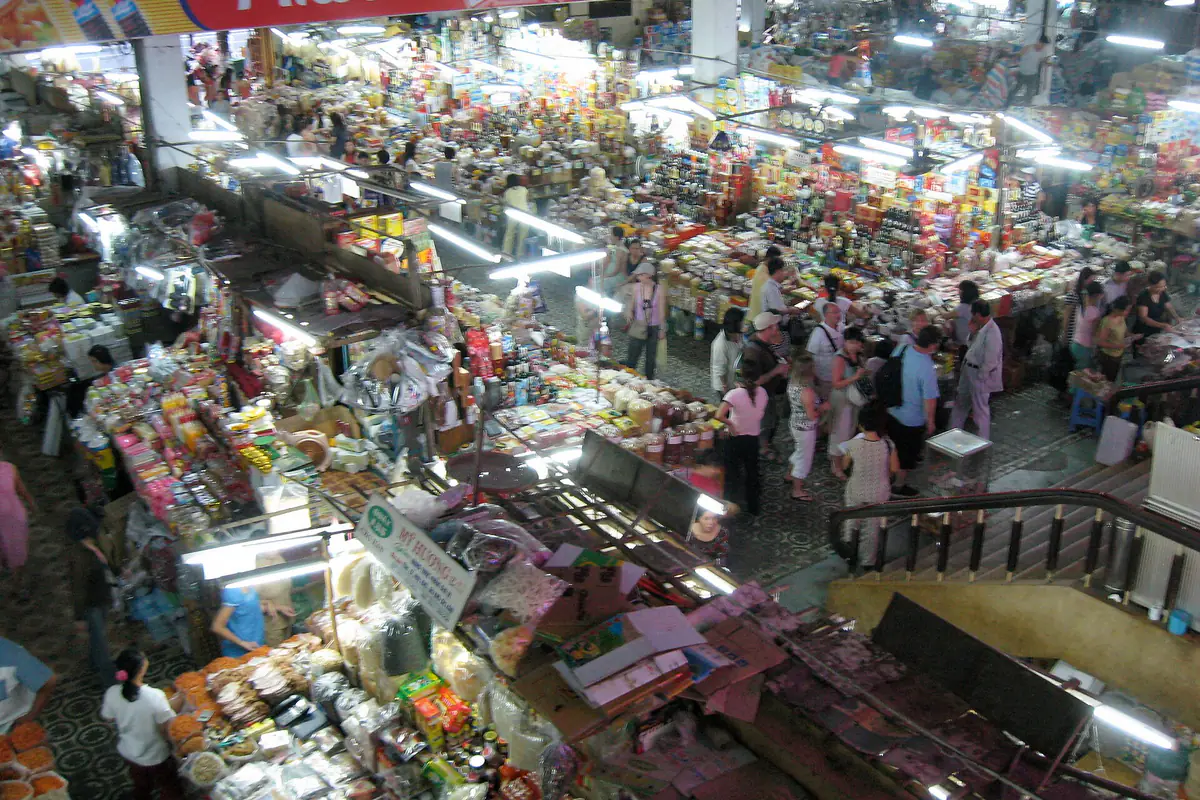
The best place for packaged food. Prices are on the shelf, you get a receipt, products carry labels and dates, and there are plenty of small packs for sharing out. Keep the receipt until you are home: it is the quickest way to show what you paid if customs asks.
Markets: Ben Thanh, Han, Dong Xuan, Da Lat
Markets have more variety and let you taste and buy loose, but you have to ask the price and quality varies from stall to stall.
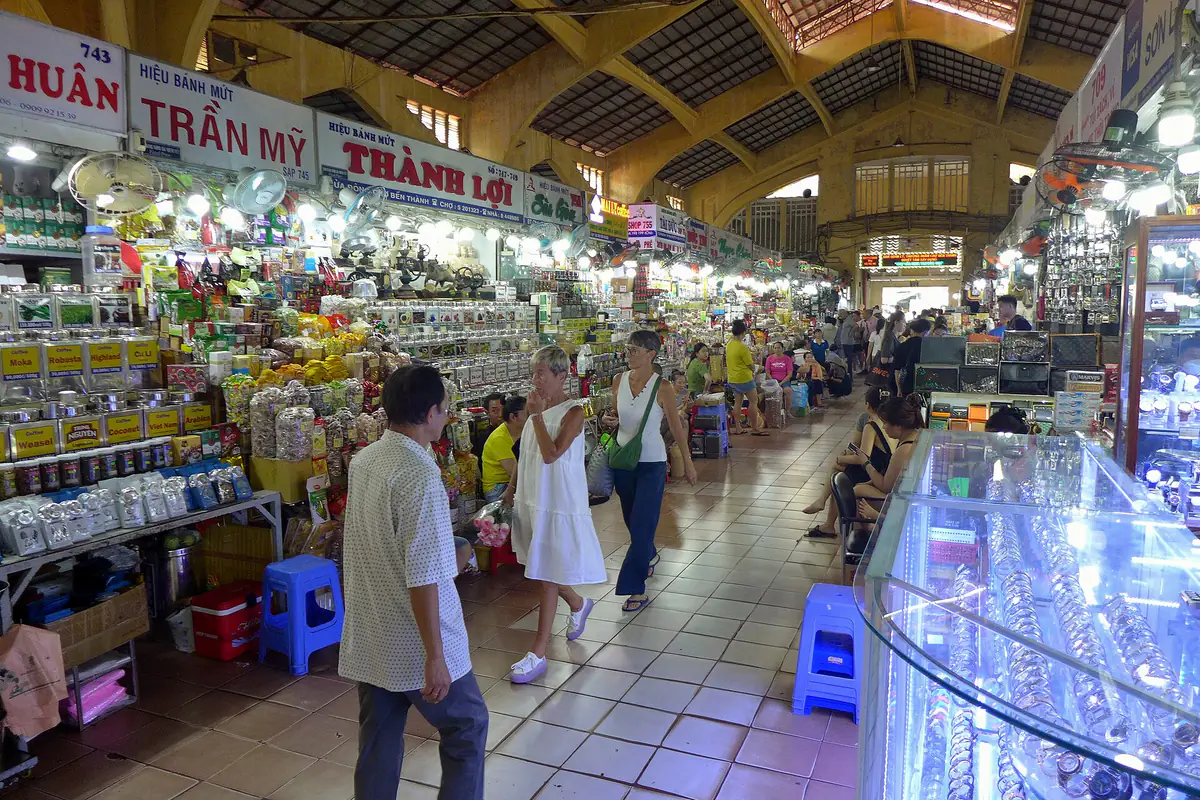
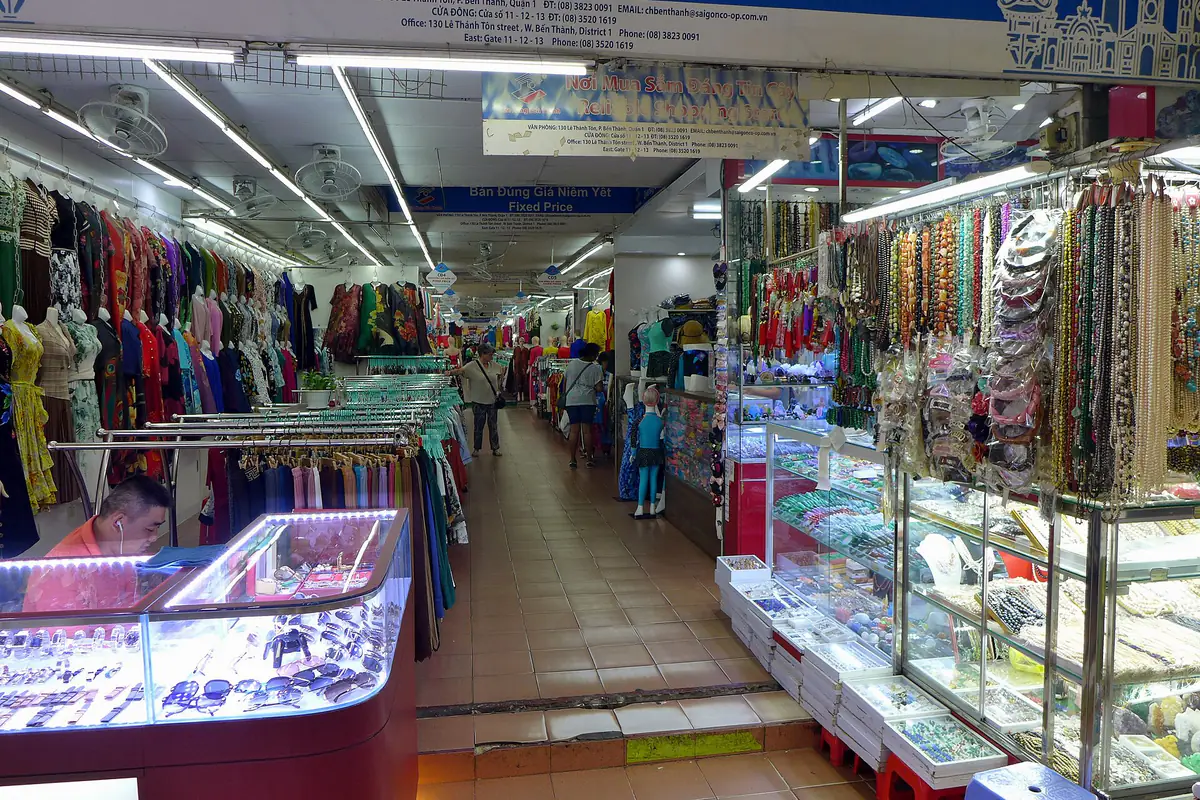
- Ben Thanh, Ho Chi Minh City: rows of stalls with ready-packed coffee, cashews and candied fruit, well used to tourists. In 2023 the market had “Fixed Price” signs up, but still ask before anything goes on the scales.
- Han Market, Da Nang: a big dried-goods section with candied fruit, sweets and dried seafood. Dried seafood smells, so wrap it in several sealed layers if it goes in your suitcase.
- Dong Xuan, Hanoi: a large wholesale market that also sells retail, handy if you need lots of identical packs.
- Da Lat Market: candied fruit, artichoke tea, coffee and dried persimmons. Shop for these during the day; in the evening the Da Lat night market is busy and better for eating and wandering.
The airport
Treat it as a back-up for anything you forgot. The range is smaller than in town and prices are hard to compare. Before buying spirits or other liquids after security, ask the shop about a sealed security bag and check the airline’s rules and any transfer-airport restrictions: the bag does not guarantee the bottle will get through every leg. Fish sauce is also subject to rules for strong-smelling items, so don’t plan on carrying it on.
How to avoid fakes and getting overcharged
- Photograph a few supermarket prices before you go to a market. They give you a baseline for haggling and show what isn’t cheaper there.
- Ask whether the price is per pack or per kilo, watch the scales and agree on the total before it is bagged.
- Read the label: producer name and address, production date, best-before date. Vacuum packs and sealed boxes keep longer, and a label listing the ingredients makes them easier to declare than loose goods.
- “Weasel” coffee: the real thing is rare and expensive. Many packs labelled weasel are fermented or flavoured to imitate it, so read the ingredients, and be wary of anyone promising the genuine article at a bargain price.
- Agarwood, cordyceps, lingzhi mushrooms: expensive and almost impossible for a buyer to verify. Only buy where you get an invoice listing what is in it. If a shop on a group tour has no price tags, you don’t have to decide on the spot.
Taking gifts home: check your own country’s rules
Every country sets its own limits, so look up the official page for wherever you are flying to before you shop. Across the countries below, the same pattern holds: roasted, cooked and sealed products are the easy ones, while fresh produce, meat, eggs and dairy are where people get stopped. If you aren’t sure, declare it.
- Australia is one of the strictest. You must declare food, animal products and plant material, including wooden items, or bin them at the airport. Declare everything and you won’t be penalised, even if an item isn’t allowed in; false or missing declarations can bring a fine and a cancelled visa. Ordinary roasted coffee, including whole beans, ground and instant coffee, is permitted for personal use in quantities up to 10 kg. Civet coffee has separate conditions, including a 1 kg limit. Check the Australian biosecurity rules for travellers.
- United States: declare all agricultural products. Roasted coffee and leaf tea are allowed in any quantity, and roasted or oven-dried nuts are fine. Green coffee beans are banned in Hawaii and Puerto Rico. See the USDA page on coffee, tea, nuts and spices.
- Great Britain (England, Scotland and Wales): no meat or dairy from outside the EU; shelled and processed nuts are fine. Northern Ireland has separate rules. Failing to declare banned food can mean a fine of up to £5,000 in England. See bringing food into Great Britain on GOV.UK.
Mooncakes and other pastries are easy to forget about: many contain pork, Chinese sausage or salted egg yolk, which puts them in the meat or egg category in a lot of countries. Read the ingredients before you pack them.
Fish sauce, spirits and your flight
- Hand luggage on international flights: containers of 100 ml or less, up to 1 litre in total in a clear bag. Normal-sized bottles of fish sauce or alcohol go in the hold. Spirits bought after security can only come on board if your airline and any transfer airport accept the sealed bag.
- Alcohol, under Vietnam Airlines’ rules: at 24% ABV or below there is no separate quantity limit, though it still counts toward your baggage allowance and cabin-liquid rules; over 24% and up to 70%, in the manufacturer’s container and no more than 5 litres per person across hand and checked luggage; over 70% is not allowed at all. Your home country’s duty-free allowance is a separate question.
- Fish sauce, under Vietnam Airlines’ strong-smelling baggage rules: checked baggage, up to 3 litres or 3 kg per passenger, in plastic bottles with the caps sealed and each bottle taped, filled to no more than 95%, packed in a taped foam box. Glass bottles are refused, and strong-smelling baggage isn’t accepted at all on flights operated with ATR72 aircraft.
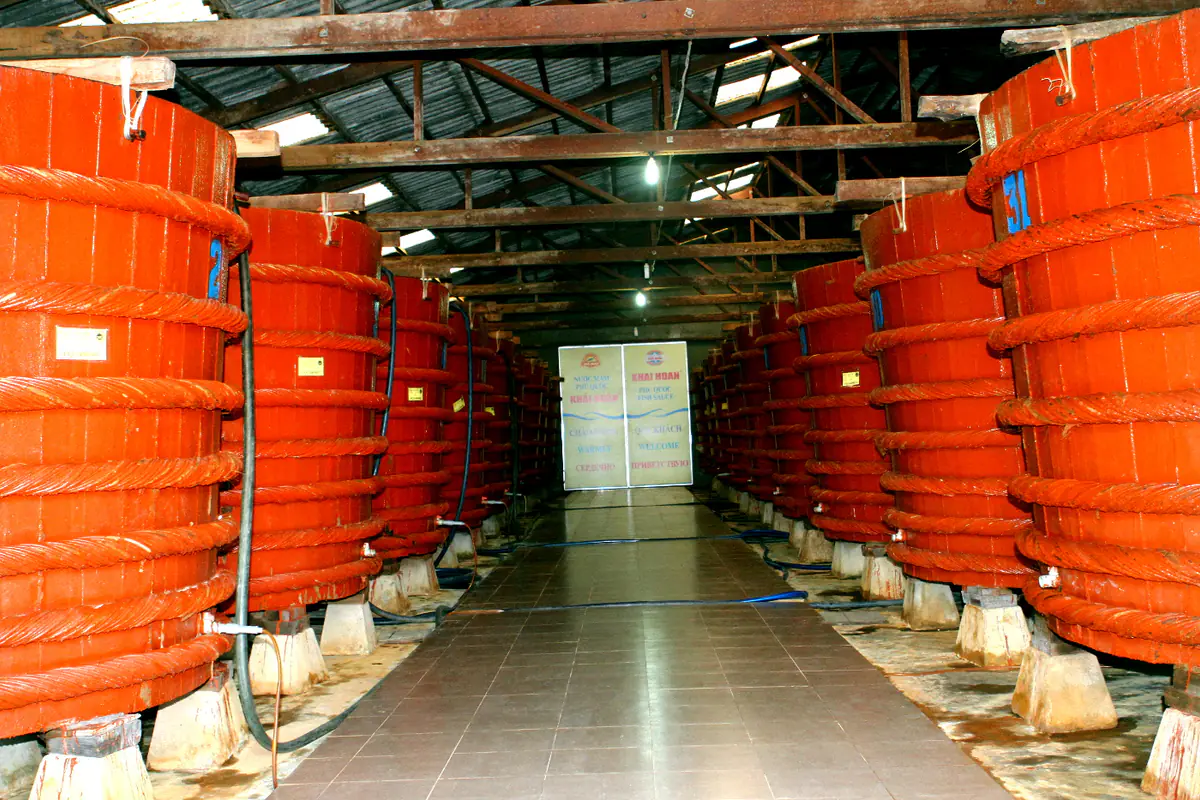
A lot of Phu Quoc fish sauce comes in glass, so pick plastic bottles or ask the shop to decant and box it. Other airlines set their own rules and some won’t take strong-smelling items at all, so check your airline’s baggage page before you buy.
What can’t leave Vietnam
- Antiques: Vietnam’s 2024 Cultural Heritage Law bans taking antiques and relics out of the country without authorisation; the permitted cases are temporary loans for exhibitions or research, approved by the state. If you buy an antique-style piece as a souvenir, ask for an invoice that describes it as new handicraft.
- Agarwood: it is CITES-listed. Small amounts for personal use may be exempt from permits, but the allowance and how it is applied depend on the country; large pieces or bulk quantities need a CITES permit. Ask your home customs before buying anything costly.
- Wildlife products: ivory, tortoiseshell, pangolin scales, and snake or gecko wine can fall under CITES and be seized when you land.
FAQ
Can I bring Vietnamese coffee home?
Roasted, ground and instant coffee are the easy kinds, though you may still need to declare them. Australia allows ordinary roasted coffee up to 10 kg for personal use, while civet coffee has separate conditions, including a 1 kg limit. The US allows roasted coffee in any quantity, but you must declare it. Green beans are where the restrictions start.
Can I post gifts home instead of carrying them?
Posting doesn’t get round the rules. Australia’s biosecurity import conditions, for example, cover mail as well as luggage, so check your own country’s rules for parcels before you send food.
Is it worth buying gifts at the airport?
Only for things you forgot. The range is limited and you can’t easily compare prices. If you buy liquids after security, check your airline’s rules and any transfer airport first, because a sealed bag does not guarantee they will get through every leg. Fish sauce also falls under strong-smelling baggage rules.