Ta Xua Vietnam: worth two days, not a rushed day trip
Ta Xua makes a good weekend escape from Hanoi, but staying at least one night gives you a much better chance of seeing the clouds at sunrise. On a first trip, picking the right season, transport, and place to sleep matters more than rushing between viewpoints.
By Da Lat LoversPublished Updated

The first thing to arrange when planning a trip to Ta Xua is an overnight stay. Book your transport and choose sightseeing spots afterward. Ta Xua is in Son La Province, approximately 200-240 km from Hanoi depending on the route, with bus journeys usually taking five to seven hours. For your first visit, aim for November to March, keep the following morning free for cloud hunting, and resist the temptation to squeeze every viewpoint into one weekend.
Where is Ta Xua? Is it in Son La or Yen Bai?
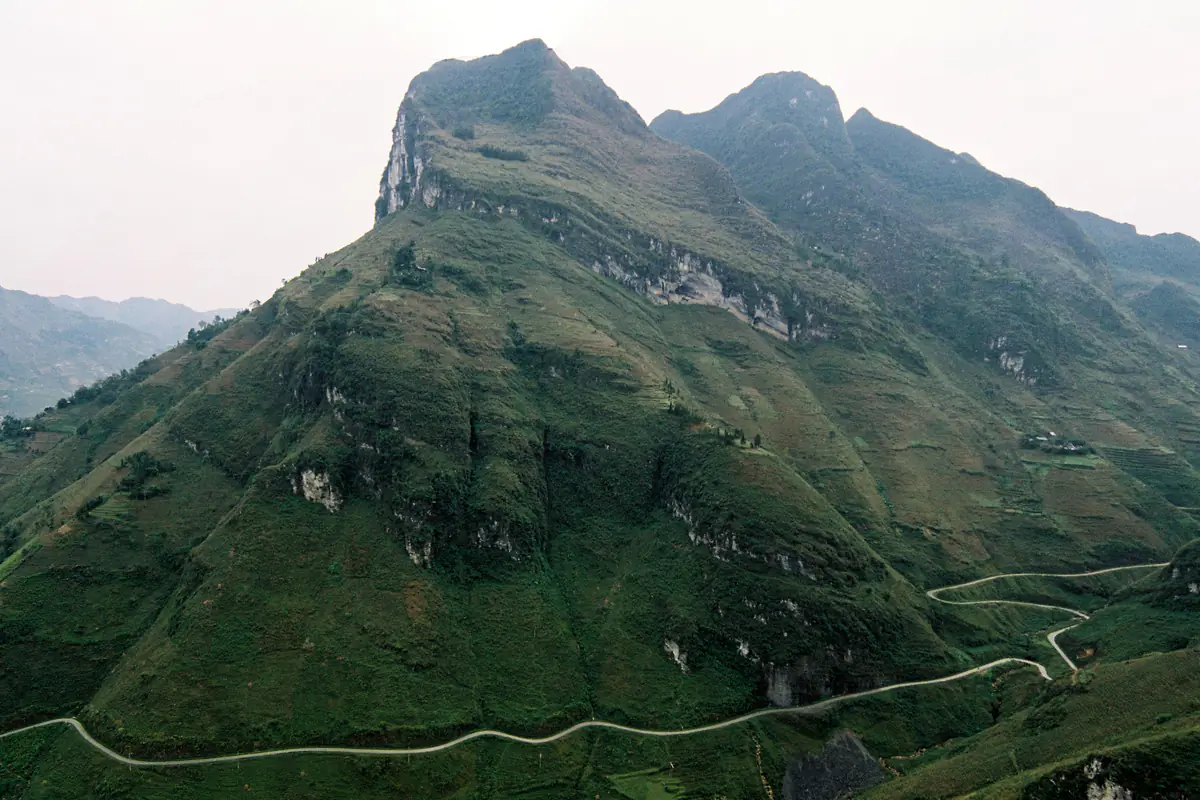
Ta Xua is a mountainous area in northern Son La Province, formerly part of Bac Yen District. The region is known for its villages scattered across steep hillsides, deep valleys, and cloud-viewing spots along Provincial Road 112.
On July 1, 2025, the former communes of Ta Xua, Hang Dong, and Lang Cheu were merged into the new Ta Xua Commune, Son La Province.
You may still find accommodation listings and travel guides using addresses such as "Bac Yen District" or "Hang Dong Commune." These refer to the former administrative boundaries, not separate destinations in different provinces.
The tourist area commonly known as Ta Xua sits at approximately 1,500-1,800 meters above sea level. The weather is generally cool, winter nights can be cold, and houses, cafés, and homestays are spread across the mountainsides.
There are two destinations with the same name that travelers should not confuse:
- Ta Xua cloud-hunting area in Son La: This includes central Ta Xua, Dinh Gio (Wind Peak), the Dinosaur Spine in Hang Dong, cafés, and mountain homestays. It is suitable for a two-day, one-night trip.
- Ta Xua Mountain summit at 2,865 meters: This is a high-altitude trekking destination, commonly approached from the former Tram Tau District in Yen Bai, now part of Lao Cai Province. Reaching the summit generally requires a multi-day trek and a local guide.
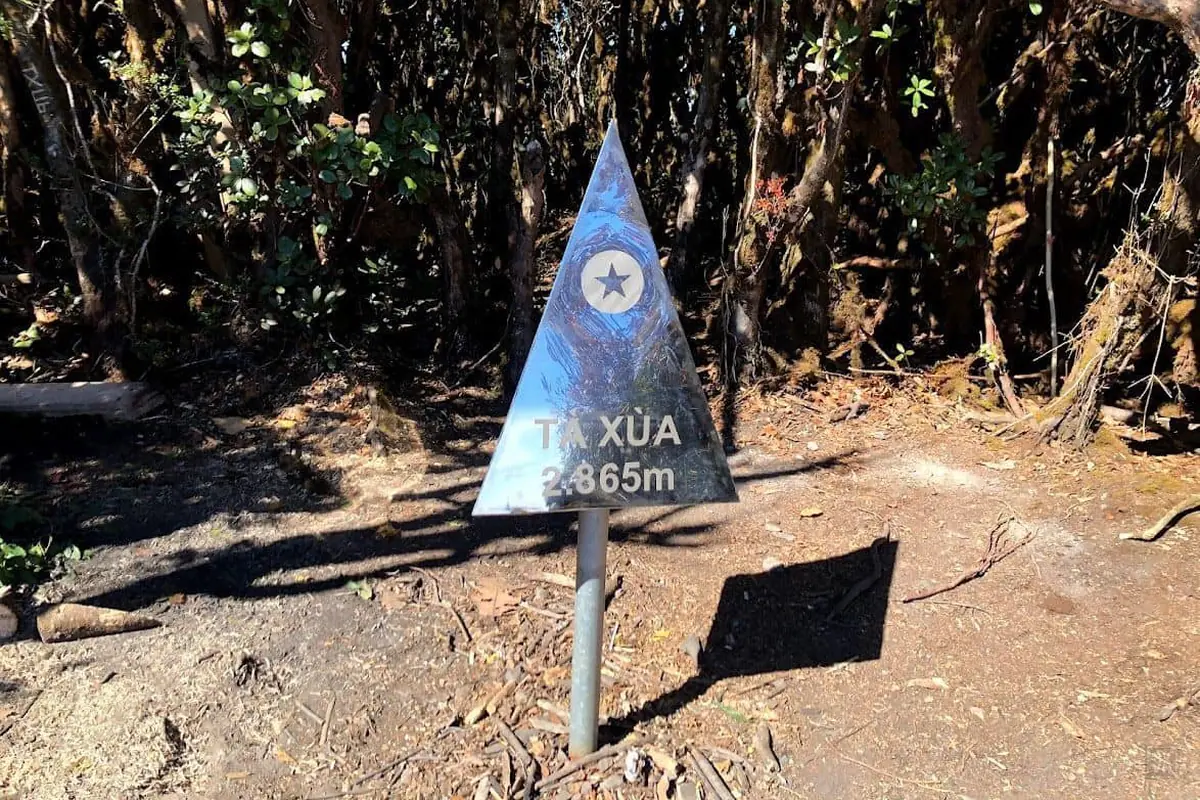
If your plan involves watching clouds, drinking coffee overlooking the mountains, walking along the Dinosaur Spine, and staying in a homestay, choose the Son La destination.
You do not need to book an expedition to the 2,865-meter summit.
Compared with Sapa, Ta Xua has fewer tourist facilities, commercial attractions, and entertainment options. In return, it offers expansive mountain scenery and places where you can look directly into the valleys from your accommodation.
It is also worth considering if you are an international traveler looking for a mountain destination different from Sapa.
However, do not assume Ta Xua is always quiet. On weekends during the cloud-hunting season, its popular cafés and the Dinosaur Spine can attract plenty of visitors.
How far is Ta Xua from Hanoi?
Ta Xua is approximately 200-240 km from Hanoi, depending on your starting point and chosen route.
A commonly used route follows:
Hanoi - Son Tay - Trung Ha Bridge - Thanh Son - Thu Cuc - Phu Yen - Bac Yen - Ta Xua.
From Hanoi, head toward National Highway 32 through Son Tay and Trung Ha Bridge. Around Thu Cuc, continue toward National Highway 37, traveling through Phu Yen and Bac Yen before following Provincial Road 112 up to Ta Xua.
From the former Bac Yen town center, the mountain road to Ta Xua is another 13-15 km.
This final section requires particular attention. It has long climbs, sharp bends, and corners where the mountainside obstructs visibility.
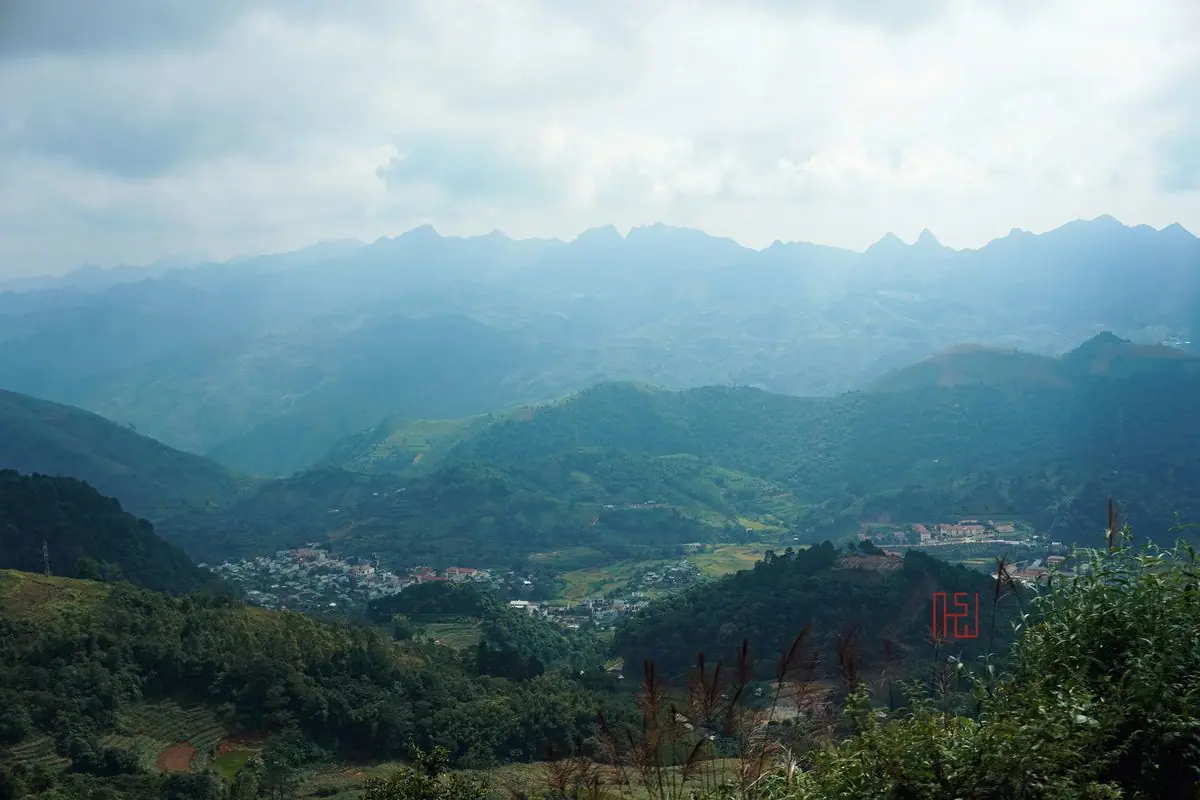
The overall distance is manageable, but the journey is nothing like driving on an expressway. Vehicles slow down considerably on mountain curves, through villages, and on steep inclines. Rain and dense fog can make the trip even longer.
Allow around five to seven hours each way by bus or private car, excluding additional delays for passenger pickups and stops.
Leaving Hanoi on Saturday morning gives you enough time to arrive and check in during the afternoon.
Trying to travel there and back in a single day means spending most of your time on the road, with no opportunity for cloud hunting the following morning.
What is the best month to visit Ta Xua?
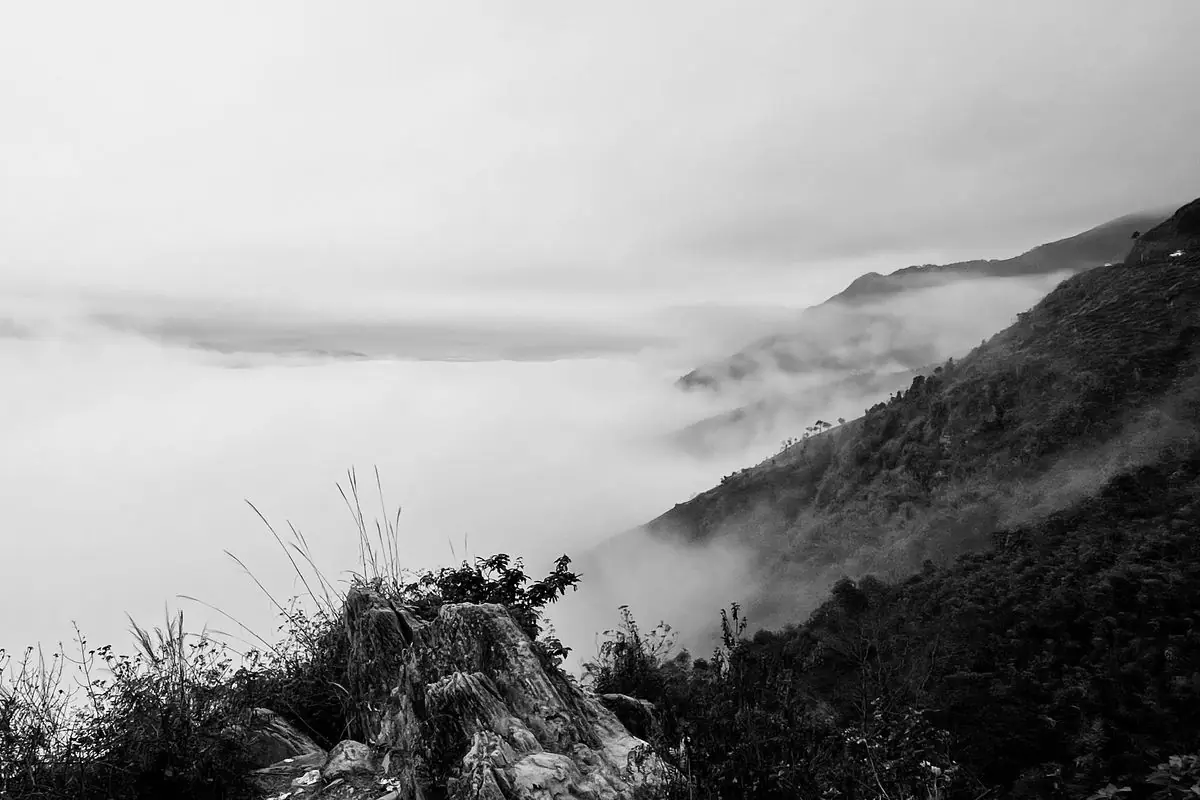
November to March is the best period to prioritize for a first cloud-hunting trip to Ta Xua. November, December, January, and February are particularly popular because cooler weather can favor the formation of low clouds in the valleys during the early morning.
The broader cloud-hunting season may begin in October and continue into April.
However, visiting during the right season does not guarantee a sea of clouds every morning.
| Period | Typical scenery and weather | Recommendation |
|---|---|---|
| October | Beginning of the cloud season, with the weather transitioning from wet to drier conditions | Worth considering, but monitor rainfall |
| November-December | Cooler temperatures and favorable opportunities for morning cloud formations | Highly recommended |
| January-February | Cold weather, potentially thick cloud layers, and frequent early-morning mist | Beautiful, but bring warm clothing |
| March | Cloud hunting remains possible, with generally milder temperatures | Good for travelers who dislike intense cold |
| April | Toward the end of the main cloud season, with greener mountain scenery | Worth visiting without expecting guaranteed clouds |
| May-September | Rainy season, potentially slippery roads, and rapidly changing visibility | Not the first choice for a cloud-hunting trip |
November and December: the strongest choices
If your goal is to see white clouds filling the valleys beneath the mountain ridges, prioritize a weekend in November or December with a favorable weather forecast.
Daytime sunshine is possible, but mornings and evenings can still be cold. Motorbike riders should bring a windproof jacket, gloves, rain protection, and closed shoes.
The downside is higher visitor demand.
Homestays with balconies directly overlooking the valleys can fill up early, especially on Saturday nights.
January and February: beautiful clouds, colder mornings
Cold temperatures also make early-morning motorbike journeys more uncomfortable. You may encounter dark roads, wet surfaces, and condensation from dense mist.
For a January or February trip, a well-insulated room with hot water and sufficiently warm bedding matters more than a photogenic balcony.
March: a good option for a more relaxed trip
March is still within the period when cloud hunting is possible.
Temperatures are generally more comfortable than in the middle of winter, making it a reasonable choice for people who dislike very cold mornings.
It also suits groups who want to combine sightseeing with a relaxed mountain stay rather than depending entirely on one spectacular sunrise.
Is Ta Xua worth visiting in summer?
Yes, but the purpose of your trip should be different.
From May to September, the vegetation becomes greener, and the mountains have their own appeal. However, heavy rain can make steep roads slippery, increase landslide risks, and reduce visibility.
You may still encounter clouds after rainfall, but the conditions are less predictable.
For first-time visitors unfamiliar with northern Vietnam's mountain roads, the drier months are generally easier for planning and transportation.
What time should you go cloud hunting in Ta Xua?
The main cloud-hunting window is approximately 5:30 AM to 8:00 AM, depending on the season and sunrise time.
During these hours, clouds that formed overnight may still be sitting inside the valleys. As sunlight increases, they can change quickly, sometimes dissipating before 9:00 AM.
You do not need to stand on an exposed ridge before dawn to enjoy the scenery.
For a first visit, consider starting around 6:00-6:30 AM at a safe viewpoint near your accommodation, where you can look down into the valley.
How can you predict whether there will be clouds?
Check three things together:
- Weather forecast: Look for mornings following cool, humid nights, preferably without persistent strong winds.
- Local observations: Ask your homestay host the previous evening and again in the morning. They may know whether the valley currently has a cloud layer or whether fog is covering the entire area.
- Visibility at the viewpoint: Fog at your accommodation does not necessarily mean there is no cloud sea below. Conversely, a clear sky does not guarantee clouds in the valley.
Ta Xua is not an attraction where buying a ticket and arriving at the right time guarantees the expected view.
Some mornings bring a continuous blanket of white clouds. On others, clouds appear only in certain valleys. There are also completely clear mornings when you can see distant mountain slopes without any cloud sea.
If you reach a viewpoint after 8:00 AM and the conditions are disappointing, there is no need to leave immediately. You can wait at a safe observation spot to see whether the fog clears or the cloud layer shifts.
In the afternoon, around 4:00-5:30 PM, Dinh Gio is also worth visiting for the changing light and sunset.
That is primarily a sunset-viewing opportunity, not a guaranteed second cloud-hunting session.
How to get from Hanoi to Ta Xua
There are three practical options: bus or limousine, private car, and motorbike.
For people who have little experience traveling on mountain roads in northwest Vietnam, a direct bus or limousine to Ta Xua is the easiest option.
You avoid a long drive and can rest for most of the journey.
Hanoi to Ta Xua by bus or limousine
Minh Chau Limousine, Hien Huu, and Tuan Thuy (Ta Xua) all run services on the Hanoi-Ta Xua route. Fares and departure times in 2026:
| Operator | Indicative one-way fare in 2026 | Departure information |
|---|---|---|
| Minh Chau Limousine | Around VND 320,000 for sleeper or cabin options and VND 350,000 for seating options | Pickup available at 28 Dinh Nup, Hanoi; departures around 6:30 AM, 7:00 AM, and 10:00 PM, depending on the service |
| Hien Huu | Around VND 270,000-320,000 depending on seat or sleeper type | Evening departures around 9:30 PM; confirm the pickup location on your ticket |
| Tuan Thuy (Ta Xua) | Around VND 400,000 | An evening departure around 10:00 PM, with pickup at 68 Mac Thai Tong |
Fares, departure times, vehicle types, and pickup points can change with the travel date.
Before paying, confirm four details: whether the vehicle goes directly to Ta Xua or stops at Bac Yen, the exact boarding address, the estimated arrival time, and the baggage and ticket-change policies.
Should you take a night bus or morning bus?
A morning bus is better for travelers who want a comfortable arrival and prefer to avoid reaching an unfamiliar mountain area in darkness.
Leave Hanoi around 6:30-7:00 AM, arrive around midday or early afternoon, check in, and explore the nearby viewpoints.
You then have the following morning for cloud hunting.
The limitation is that you only get one main cloud-hunting morning.
A night bus is better if you want more time in Ta Xua.
A departure around 9:30-10:00 PM on Friday may get you into Ta Xua early Saturday morning.
However, your room is unlikely to be ready for check-in at 4:00 AM.
Not every homestay offers free early check-in or a place to sleep before the regular check-in time.
Taking an overnight bus and immediately riding a motorbike into the mountains after little sleep is not a comfortable plan.
Arrange luggage storage, an early arrival option, and transportation with your host before leaving Hanoi.
Avoid navigating unfamiliar mountain roads in the dark.
Traveling by private car
A private car is suitable for families, travelers with older relatives, or groups with a driver experienced in mountain conditions.
You can choose when to stop in Phu Yen or Bac Yen, control your arrival time, and carry luggage directly to your accommodation.
However, ask about the access road before booking.
Some hillside homestays have narrow or steep entrances. Others only allow cars to park above the property, leaving guests to walk down steps or paths to reach their rooms.
Do not drive onto a small dirt track simply because a navigation app displays it as an available route.
Riding a motorbike from Hanoi
A motorbike gives you the most flexibility.
You can stop at scenic viewpoints, visit roadside cafés, and move between attractions without relying on public transport schedules.
The downside is the length of the journey.
Allow most of the day for the ride when breaks are included, followed by more steep roads once you reach Ta Xua.
For someone without mountain-riding experience, a motorbike is not the best choice merely to save money.
If you do not have a valid motorcycle license for the vehicle category, or you are unfamiliar with long mountain roads, take a bus and use a local driver for sightseeing.
International visitors should also verify that their driving documents are legally valid in Vietnam before renting a motorbike.
How to get around Ta Xua
Ta Xua's attractions are not arranged within a compact tourist district.
The Dinosaur Spine is approximately 13 km from central Ta Xua. Dolphin Rock and the Lonely Tree are on another sightseeing route, roughly 15-16 km from the center, depending on the exact locations.
Loading map...
- Bac Yen: former town center, 13-15 km below Ta Xua
- Dinh Gio (Wind Peak): homestays and cafés overlooking the valley
- The Dinosaur Spine: former Hang Dong area, about 13 km from the center
You cannot comfortably walk between all these places in one morning.
Experienced motorbike riders can ask their homestay or a local rental provider about available vehicles.
Before accepting a rental, check the brakes, tires, lights, horn, mirrors, and fuel level.
Clarify whether the rental price is calculated by the day or hour, whether fuel is included, and how breakdowns or damage are handled.
If you do not ride, ask your homestay to arrange a local motorcycle taxi or a suitable car.
Agree on the price, waiting time, pickup point, and return location before leaving.
For a group of three or four, hiring a local driver may be more comfortable than renting several motorbikes and navigating independently.
At night, stay relatively close to your accommodation for meals and other activities.
Do not plan an extra 15-km mountain-road journey just to visit a café after dark.
How to visit the Dinosaur Spine in Ta Xua
The Dinosaur Spine
Former Hang Dong area, about 13 km from the center
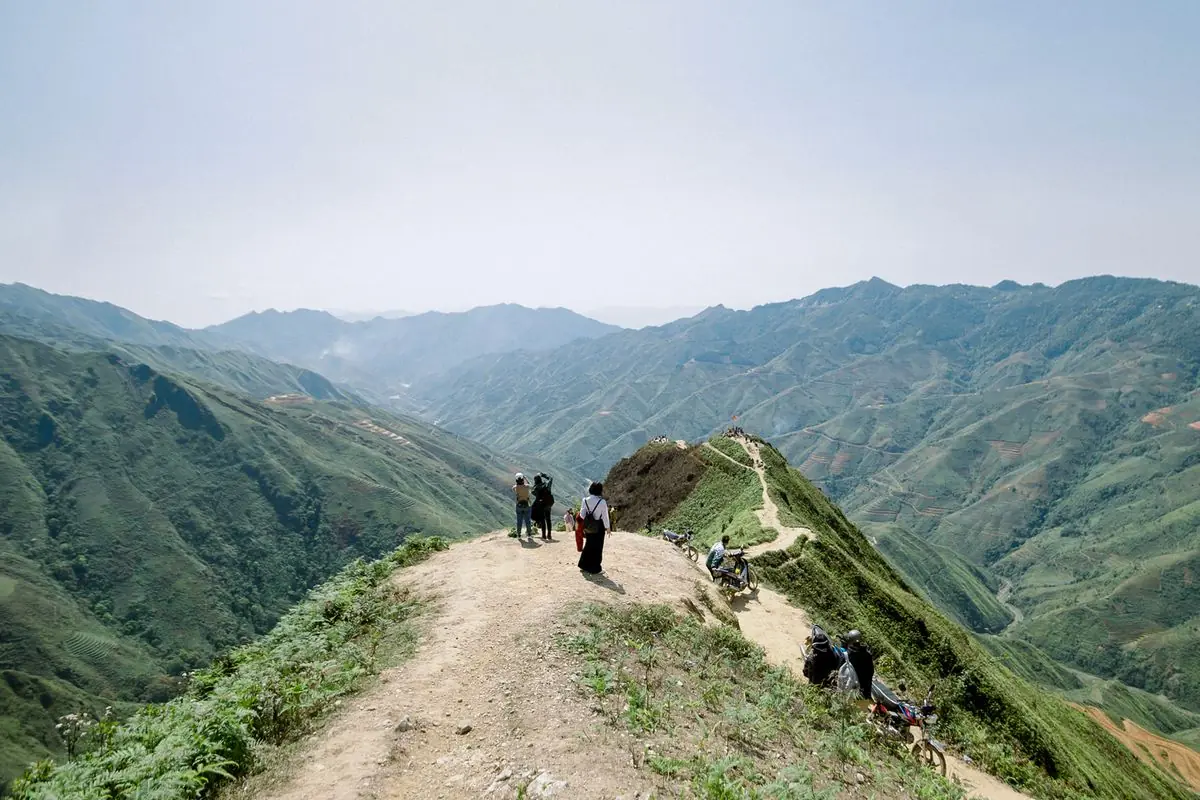
The Dinosaur Spine is Ta Xua's most famous natural attraction.
It is located in the former Hang Dong area, now part of Ta Xua Commune, Son La Province.
From central Ta Xua, follow the road toward Hang Dong for approximately 13 km. The journey usually takes around 30-40 minutes, sometimes longer depending on road conditions.
The approach includes numerous bends and steep sections. Heavy morning fog may slow the journey further.
Near the attraction, you will find places where visitors stop their vehicles and paths leading down toward the narrow mountain ridge.
Ask local people where parking is currently permitted rather than leaving your vehicle on a narrow bend.
Do you need to trek a long distance to reach the Dinosaur Spine?
No.
This is not the multi-day trekking route to the 2,865-meter Ta Xua summit.
Most visitors only walk a short distance from the parking or drop-off area to one of the viewing spots along the ridge.
Depending on where you start and how far you want to explore, the walk may be a few hundred meters to more than a kilometer.
The more important consideration is the terrain, not the distance.
Parts of the ridge are narrow, with earth and rock underfoot and steep slopes on both sides.
Dry conditions can make walking easier, but after rain or when condensation has settled, the surface may become slippery.
You do not need to walk to the farthest point to enjoy the landscape.
A wider section of the path may give you a clear view into the valley without exposing you to the narrowest parts of the ridge.
For people afraid of heights, visitors with young children, or anyone wearing shoes with poor grip, this is the better option.
What time should you visit?
For morning cloud hunting, aim to reach the Dinosaur Spine area around 6:00-7:00 AM, depending on sunrise and road conditions.
If your accommodation is in central Ta Xua, allow another 30-40 minutes for the journey.
In winter, do not rush onto the ridge before there is enough daylight to see the path clearly.
You may need a flashlight around the parking area, but wait for suitable visibility before continuing onto exposed trails.
When a sea of clouds forms, distant mountain peaks can rise above the white layer.
On a clear day, you can still appreciate the long, winding ridge and the valleys below.
Avoid standing directly at the edge of a steep drop simply to fit more scenery into a photograph.
You can often get a better composition from a safer position by changing your camera angle or lens.
Can you take a motorcycle taxi toward the ridge?
Local motorcycle-taxi services may operate on certain sections of the approach road.
However, not every part of the route is suitable for motorcycles.
Use services operating at the site, agree on the price beforehand, and do not ask drivers to take vehicles onto unsafe trails.
For first-time visitors, walking on permitted paths and stopping before the difficult sections is usually the more manageable option.
What else is worth visiting in Ta Xua?
You do not need to visit every famous location on a two-day trip.
After allocating one morning to the Dinosaur Spine, choose one additional short sightseeing route.
Dinh Gio (Wind Peak)
The easiest afternoon stop
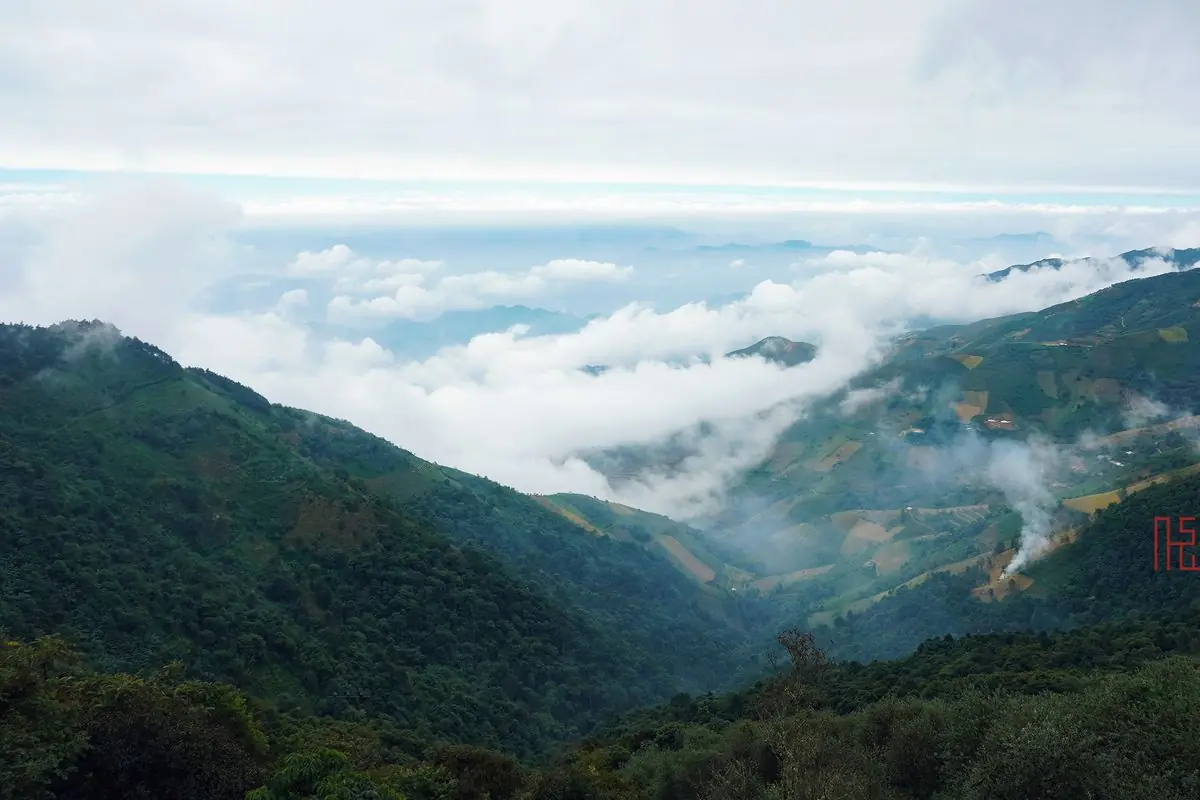
Dinh Gio is an area with several homestays and cafés overlooking the valley.
Places worth considering include Nha Cua An Homestay & Coffee, Hien Cafe, Cloud Forest, and other cafés currently operating nearby.
It is a practical choice for your first afternoon because you do not need a long hike.
Nha Cua An operates a café in the Dinh Gio area, open 7:00 AM-9:00 PM, with drinks starting at VND 30,000 (2026 prices). Opening hours may change, so confirm before visiting.
Around 4:00-5:30 PM, choose a table overlooking the mountains and watch the light change.
Some afternoons, clouds drift through the valley. On others, the view consists of distant green ridges fading into the horizon.
Dinh Gio is worth including even when the forecast for the following morning does not look promising.
Dolphin Rock
Worth visiting for landscape photography
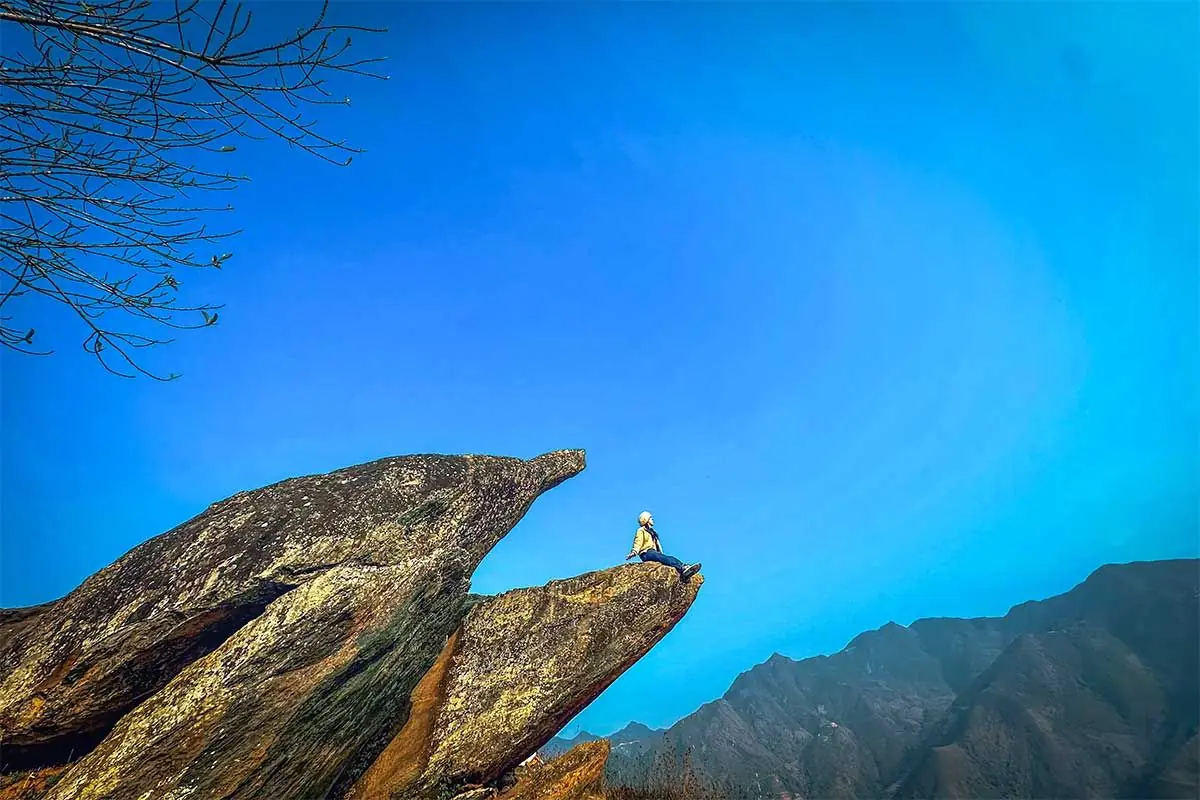
Dolphin Rock, known locally as Mỏm Cá Heo, is approximately 15 km from central Ta Xua.
It is a naturally shaped rock formation that resembles a dolphin's head from certain angles.
This is a good stop for travelers who enjoy landscape photography and want a distinctive Ta Xua photograph.
You generally do not need to stay long.
Allow around 30-45 minutes at the location, plus travel time.
The rock is a natural formation, not a fully enclosed observation platform with protective railings.
Avoid climbing onto exposed edges when the rock is wet, the wind is strong, or visitors are crowding around the same photo spot.
The Lonely Tree
Combine it with Dolphin Rock
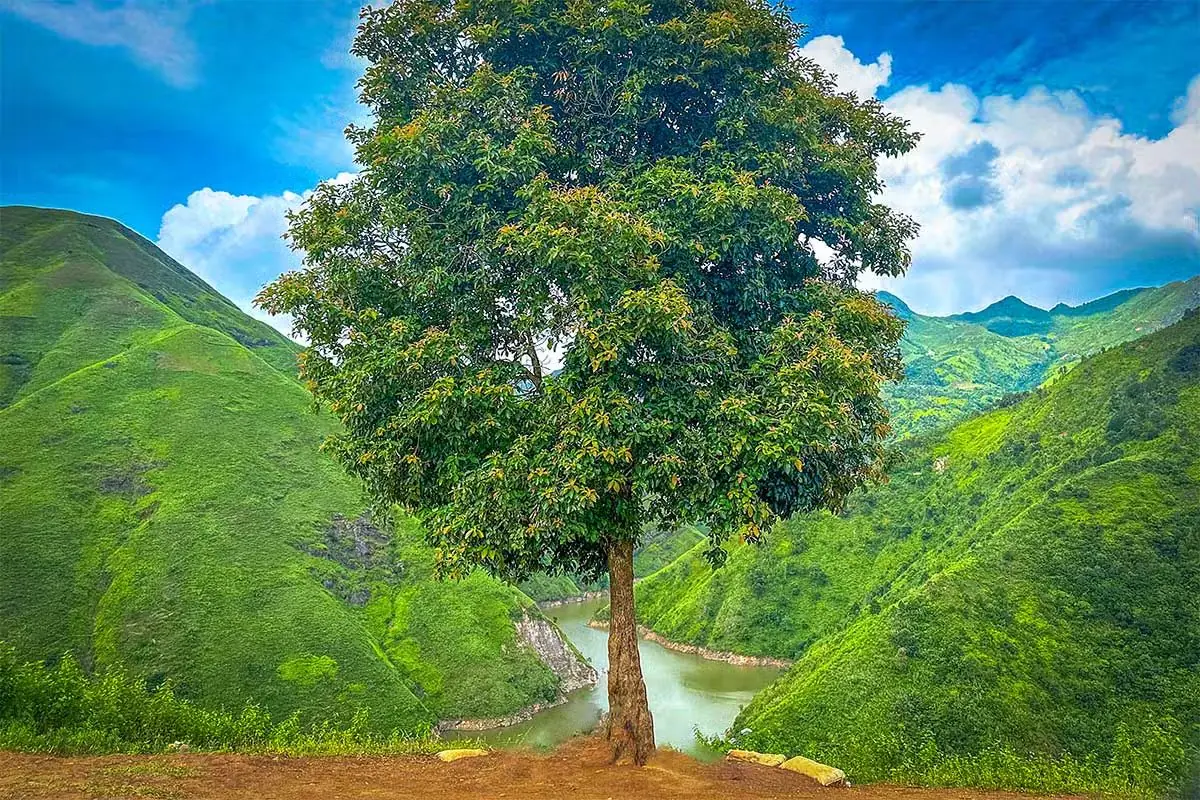
The Ta Xua Lonely Tree is a solitary táo mèo tree, a type of mountain hawthorn, standing on an open hillside.
Behind it are layers of mountains and valleys.
The location commonly marked on maps is along the same general sightseeing direction as Dolphin Rock, approximately 16 km from central Ta Xua.
Because other trees and viewpoints around Ta Xua may have similar names, check the exact map location before setting out.
If you are already visiting Dolphin Rock, adding the Lonely Tree is reasonable.
However, if the road is in poor condition or daylight is running out, skipping it will not significantly affect your trip.
For a short visit, there is no need to fit every grassland, rock formation, tea-growing area, and café into one afternoon.
Where should you stay in Ta Xua?
When choosing accommodation in Ta Xua, start with its location rather than the room photographs.
A bungalow overlooking a valley may look excellent online, but the access road could be difficult, restaurants may be far away, or reaching the room may involve climbing many steps.
That might be fine for young travelers who enjoy exploring, but it matters more to families and anyone carrying large luggage.
There are three main accommodation areas worth considering.
Central Ta Xua
The most convenient area for first-time visitors
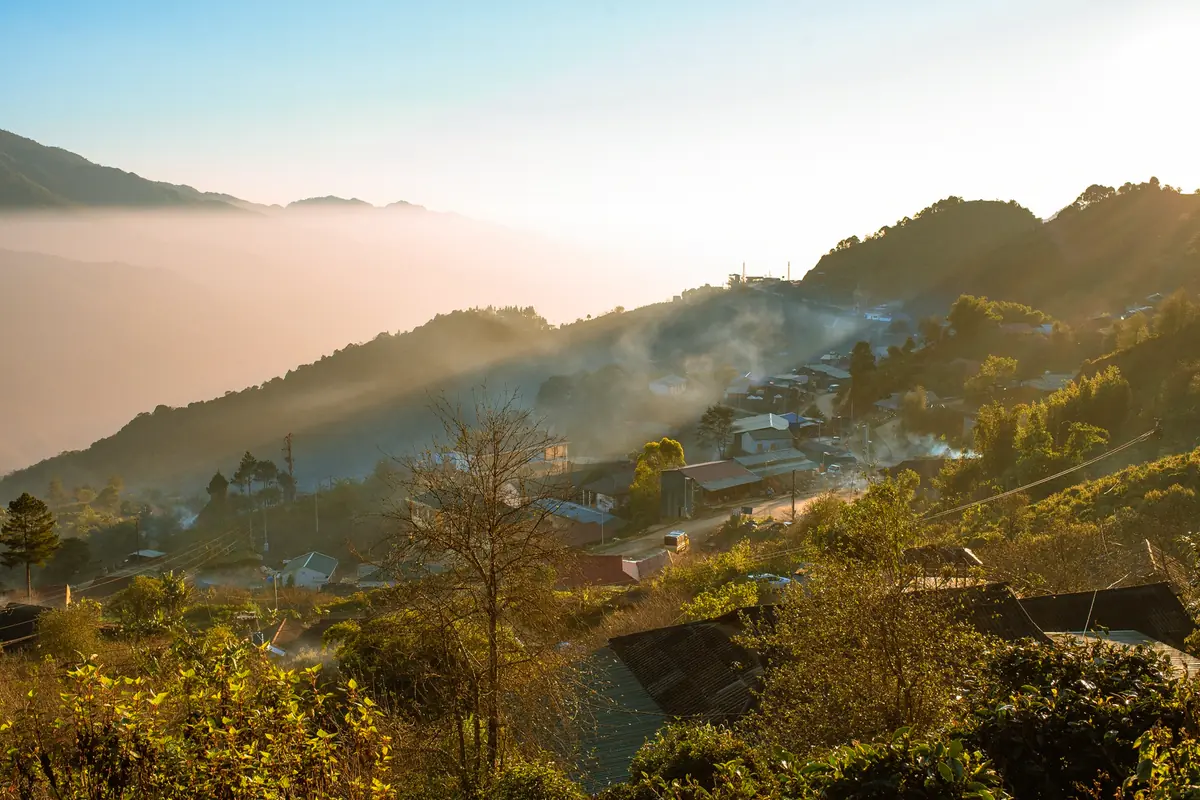
The central area around the main Ta Xua junction and Provincial Road 112 is convenient for bus travelers.
It is generally easier to find bus drop-off locations, restaurants, and motorbike rentals.
You are also well positioned for trips toward the Dinosaur Spine or the Dolphin Rock route.
One property to consider is Mua Homestay Ta Xua, located along Provincial Road 112.
Accommodation prices at Mua Homestay in 2026 range from approximately VND 250,000 to VND 600,000 per guest per night, depending on room category and timing.
The property offers shared accommodation and certain private-room options overlooking the valley.
If you are traveling as a couple and do not want a shared sleeping space, specifically ask for a private room with an en-suite bathroom.
Do not assume the lowest advertised price refers to a private room.
Central Ta Xua is the best option for people who want to keep costs manageable, move around easily, and do not necessarily need a direct cloud view from their bed.
Staying at Dinh Gio
Ideal for enjoying the mountain views from your homestay
Dinh Gio has homestays and cafés located at elevated positions, some with balconies facing directly into the valleys.
Properties worth looking into include Nha Cua An Homestay & Coffee and Thac May Homestay.
At Thac May, VIP rooms cost approximately VND 1,300,000-1,700,000 per room per night in 2026.
An additional-guest charge from the third person is VND 200,000 per person.
These rates apply to that particular property, not to every homestay in Dinh Gio.
Check the exact room, weekend price, maximum occupancy, and additional charges before paying a deposit.
The biggest advantage of Dinh Gio is the possibility of checking the cloud conditions from your balcony or a nearby café early in the morning.
You do not have to travel immediately to the Dinosaur Spine.
The disadvantage is that some properties are built on steep terrain and involve stairs or a walk from the parking area.
Ask whether staff can assist with luggage.
Quieter accommodation
Better for a mountain retreat
Properties farther from the center may appeal to travelers who want to spend more time relaxing at their accommodation.
Ta Xua Ecolodge is one option in this category, offering bungalow-style accommodation, dining facilities, and mountain views.
Its Ban Che and Ban May room categories start from VND 1,575,000 per night in 2026.
Confirm the rate for your exact dates when you book.
Choose this type of accommodation if you plan to enjoy the scenery, have meals at the property, and avoid frequent transfers between attractions.
Five questions to ask before booking a homestay
Do not simply message a property asking whether it has a room with a cloud view.
Ask these questions instead:
- Which floor is the room on, and does it face the valley or an internal courtyard?
- Does the room have hot water, thick blankets, an electric mattress warmer, or suitable winter heating?
- Can the bus drop you at the entrance, or will you need another transfer? Where can a private car park?
- Does the quoted price include breakfast, weekend surcharges, taxes, and other fees?
- What are the cancellation, date-change, and deposit refund policies if severe weather affects the access roads?
If your night bus arrives at 4:00 AM on Saturday, also ask about early check-in or a place to rest.
Regular check-in at some properties is around 2:00 PM.
Arriving early does not automatically entitle you to a free room.
During the cloud-hunting season, consider booking two to three weeks in advance for popular weekends.
If you specifically want a private room with an attractive balcony, booking earlier gives you more choice.
What should you eat in Ta Xua, and where?
Ta Xua does not have a large selection of restaurants operating late into the night.
Arrange dinner near your accommodation rather than waiting until after dark to start looking for somewhere to eat.
Around central Ta Xua, many homestays can prepare meals for guests on request.
Mua Homestay is one property with dining facilities, offering regional dishes such as grilled local pork, bamboo-tube sticky rice, and hotpot or grilled meals depending on the menu.
For a group meal, contact the property in advance to confirm the portion size, required reservation time, and the price of individual dishes in 2026.
A shared meal intended for four to six people should not be treated as a standard two-person order without checking.
If you are staying near Dinh Gio, Nha Cua An Homestay & Coffee is an option for drinks and lighter food.
Drinks there start from VND 30,000.
For breakfast, a hot bowl of noodles or a meal arranged by your homestay may be more convenient than driving a long distance to find a restaurant, especially if you need to check out and catch a bus to Hanoi.
Ta Xua is also known for Shan Tuyet tea, a variety associated with the mountainous regions of northern Vietnam.
Ask local sellers or your accommodation host about the origin of the tea and how to prepare it.
There is no need to buy a package simply because the label claims it comes from ancient tea trees.
Ta Xua 2-day, 1-night itinerary from Hanoi
For a first visit, the following itinerary focuses on three priorities: arriving while it is still light, getting a proper night's sleep, and keeping the second morning free for cloud hunting.
Day 1: Hanoi - Ta Xua - Dinh Gio
- 6:30-7:00 AM
Depart Hanoi by bus
Choose a morning service going directly to Ta Xua.
Bring a jacket, drinking water, and a few snacks for the journey.
- 12:30-1:30 PM
Arrive in Ta Xua, have lunch, and leave your luggage
If the room is not ready, ask the homestay to store your bags.
There is no reason to carry a suitcase around sightseeing spots.
- 2:00 PM
Check in and rest
Check that the hot water, bedding, lighting, and electrical sockets are working.
Find out how to reach the parking area from your room.
Ask your host about the next morning's weather and the best way to get to the Dinosaur Spine.
- 3:00-4:30 PM
Explore Dinh Gio
From central Ta Xua, head to the Dinh Gio area and choose Nha Cua An or another café with a valley-facing balcony.
Enjoy the scenery and take photographs while the light is still good.
There is no need for a long excursion on your first afternoon.
- 5:00-6:00 PM
Watch the sunset and return to your accommodation
As daylight fades, stay close to the main roads and return to your homestay.
This is not the time to experiment with unfamiliar dirt tracks.
- 6:30-8:00 PM
Dinner
Eat at your homestay or a nearby restaurant arranged in advance.
Prepare warm clothes, suitable shoes, and anything else you need for the following morning.
If you have booked a local driver, reconfirm the pickup time.
- 9:30-10:00 PM
Rest
You will need to get up early.
Staying awake until late at night and then riding mountain roads while exhausted is not a good combination.
Day 2: Dinosaur Spine - Ta Xua - Hanoi
- 5:30-6:00 AM
Wake up and check the weather
Look outside your room or from the balcony.
If visibility is poor, ask your host about conditions around Hang Dong before setting off.
- 6:00-6:45 AM
Travel to the Dinosaur Spine
Travel time depends on your accommodation and the condition of the road.
If it is still dark or fog is obscuring the road, do not increase your speed just to catch sunrise.
- 6:45-8:30 AM
Cloud hunting, photography, and walking
Choose a safe viewing position.
Even if the clouds do not appear, you can still enjoy the surrounding mountains and the winding ridge.
There is no need to walk the entire trail.
Leave enough time to return without rushing.
- 9:00-10:00 AM
Breakfast and a short rest
Return toward the center or your accommodation.
Have a warm drink and change out of damp clothing if necessary.
- 10:30-11:30 AM
Pack and check out
Minh Chau Limousine runs return departures from Ta Xua to Hanoi around 12:30 PM, 2:00 PM, and 3:00 PM, depending on vehicle type and travel date.
Book your return journey before heading into the mountains.
- 12:30-3:00 PM
Depart for Hanoi on your booked service
If taking a 12:30 PM departure, have an early lunch or prepare something suitable to eat on the way.
An afternoon departure gives you more time in Ta Xua but may mean arriving back in Hanoi in the evening.
How can you add Dolphin Rock and the Lonely Tree?
You can replace the first afternoon at Dinh Gio with the Dolphin Rock and Lonely Tree route, provided you arrive in Ta Xua early enough and have a driver familiar with the roads.
Start around 2:00 PM, visit both locations, and return before dark.
Do not try to fit Dolphin Rock, the Lonely Tree, the grasslands, and the Dinosaur Spine into the same afternoon.
For a two-day trip, the best scenery is not necessarily at the farthest viewpoint.
A beautiful morning of clouds near your homestay may be more memorable than three photography stops hidden in fog.
Should you spend 2 days or 3 days in Ta Xua?
Two days and one night are enough for a first weekend trip, but three days and two nights offer a clear advantage if cloud hunting is your main goal.
Choose 2 days and 1 night if you are traveling from Hanoi, only have Saturday and Sunday available, and mainly want to experience the Dinosaur Spine and one night in the mountains.
This itinerary is compact, requires less spending on accommodation, and does not usually require time off work.
Its weakness is that you only have one main morning for cloud hunting.
If it rains or conditions are unfavorable, there is little opportunity to try again.
Choose 3 days and 2 nights if you want to improve your chances of seeing a cloud sea, relax at your homestay, and avoid a rushed schedule.
With two nights, you can spend one morning at Dinh Gio or a viewpoint close to your accommodation and the second morning at the Dinosaur Spine.
You also have more time for Dolphin Rock and the Lonely Tree without forcing them into the end of a long travel day.
International travelers who are unfamiliar with northern Vietnam's mountain transportation may find three days and two nights more comfortable.
The extra time reduces pressure to make quick decisions when the weather changes.
A same-day return trip from Hanoi is only worth considering if you have private transportation and cloud hunting is not a priority.
With several hundred kilometers of travel in both directions, it is not the way I would recommend experiencing Ta Xua for the first time.
How much does a 2-day, 1-night trip to Ta Xua cost?
Your budget depends mainly on transportation and accommodation.
The following figures are 2026 prices for each item, not an all-inclusive travel package. Prices can change by date, so check again before you book.
| Expense | Indicative 2026 price and provider |
|---|---|
| Hanoi-Ta Xua bus | Minh Chau Limousine: approximately VND 320,000-350,000 per person, one way, depending on vehicle type |
| Alternative bus operators | Hien Huu: around VND 270,000-320,000 per person, one way; Tuan Thuy: around VND 400,000 per person, one way |
| Budget accommodation | Mua Homestay: approximately VND 250,000-600,000 per guest per night |
| Private room with mountain views | Thac May Homestay: VIP rooms around VND 1,300,000-1,700,000 per room per night |
| Mountain-retreat accommodation | Ta Xua Ecolodge: Ban Che and Ban May rooms from VND 1,575,000 per room per night |
| Coffee and drinks | Nha Cua An Homestay & Coffee: drinks from VND 30,000 |
For example, a return journey on Minh Chau Limousine at VND 320,000 each way would cost approximately VND 640,000 per person.
Add one night at Mua Homestay using the indicative price range of VND 250,000-600,000 per guest.
Transportation and accommodation would then total approximately VND 890,000-1,240,000 per person.
This estimate does not include meals outside the room package, transportation between attractions, any applicable entrance or parking fees, personal spending, or unexpected expenses.
For two people sharing a private room priced per room rather than per guest, accommodation may work out more economically than traveling alone.
However, do not assume a double-room rate automatically includes two breakfasts or transfers from the bus stop.
You also do not need the most expensive room to enjoy the clouds.
For a one-night trip, conveniently located accommodation with warm bedding and a nearby viewpoint may offer better value than a luxury room far from the main road.
What to prepare before visiting Ta Xua
Ta Xua is a mountain destination, and preparation matters more here than on a typical city weekend.
Clothing and footwear
Pack a windproof jacket, long trousers, socks, and shoes with good grip.
In winter, add thermal layers, a hat, and gloves.
Smooth-soled sneakers or sandals are not suitable for walking down the Dinosaur Spine after rain.
You do not need equipment for a multi-day mountain expedition, but you should not attempt steep dirt trails in shoes chosen purely for photographs.
Personal essentials
Bring a power bank, a phone with offline maps, your usual personal medication, and lightweight rain protection.
Cash is useful for parking, small food stalls, and places where internet connections may be unreliable.
You do not need to carry a large amount, but relying entirely on electronic payments is not ideal.
Weather and road conditions
Two days before your trip, check the forecast for rain, wind, and fog around Ta Xua.
Before departure, contact your homestay about road conditions along Provincial Road 112 and the attractions you plan to visit.
This road has experienced landslides during periods of heavy rain.
If official warnings or traffic restrictions are in place, follow instructions from the authorities and local road managers.
Do not enter areas marked with landslide warnings, stop directly below unstable slopes for photographs, or attempt to cross sections of road undergoing repairs.
Accommodation and transport bookings
Keep your booking details, host's phone number, pickup information, and bus drop-off address available offline.
International visitors should ask in advance whether their accommodation can assist in English, what payment methods are accepted, and how local transportation works.
English-language services are less consistent in Ta Xua than in larger tourist destinations.
Common mistakes first-time visitors make in Ta Xua
The first mistake is planning the entire trip around pictures of cloud seas on social media.
Those photographs were taken under favorable weather conditions. They do not represent a view that appears every morning.
The second mistake is booking an isolated room simply because it looks inexpensive or has a spectacular view.
You may arrive to discover that transportation costs more than expected, the property involves carrying luggage down a steep path, or the nearest dinner option is several kilometers away.
The third mistake is spending your intended cloud-hunting morning traveling from Hanoi.
By the time you reach the mountains, the most favorable viewing hours may already have passed.
The fourth mistake is attempting every location on a social media checklist.
Dolphin Rock, the Lonely Tree, the Dinosaur Spine, and the cafés are spread across different mountain roads.
Moving between them takes more time than a quick look at the map suggests.
Finally, do not underestimate the importance of rest.
An overnight bus, very little sleep, and a motorbike journey through the mountains before sunrise can leave you more tired than expected.
Ta Xua is at its best when you give yourself time to watch the mountains and wait for the clouds, not when you manage to tick off the greatest number of photo spots.
If you are choosing between a night bus for more cloud-hunting time and a morning bus for a more comfortable arrival, take the morning bus, spend one night in central Ta Xua or Dinh Gio, and visit the Dinosaur Spine the following morning. It avoids unnecessary travel in darkness, makes the itinerary easier to manage, and still gives you the experience that makes Ta Xua worth visiting.
FAQ
Where is Ta Xua, and which province is it in?
Ta Xua is in Son La Province, in the area formerly known as Bac Yen District. Since July 1, 2025, the new Ta Xua Commune has included the former communes of Ta Xua, Hang Dong, and Lang Cheu. The popular cloud-hunting area covers central Ta Xua, Dinh Gio, and the Dinosaur Spine in Hang Dong.
How far is Ta Xua from Hanoi, and how long does it take to get there?
Ta Xua is approximately 200-240 km from Hanoi, depending on the starting point and route. The journey generally takes five to seven hours by bus or private car, potentially longer during heavy rain, dense fog, or slow traffic on mountain roads.
What is the best month to visit Ta Xua for cloud hunting?
November to March is the most recommended period, particularly November through February. The broader cloud-hunting season can extend from October to April. Even during the best months, check the weather forecast and local visibility before traveling.
What time is best for cloud hunting, and do you have to visit the Dinosaur Spine?
Approximately 5:30-8:00 AM is generally the most favorable period. You do not have to visit the Dinosaur Spine to see the clouds. Dinh Gio and homestays overlooking the valleys can also provide excellent viewing opportunities. The Dinosaur Spine has impressive scenery, but some paths are narrow and exposed, so choose a viewing position suitable for your fitness and the conditions.
How many days should you spend in Ta Xua, and do you need a motorbike?
Two days and one night are enough for a weekend trip from Hanoi. Three days and two nights give you more opportunities to see the clouds and visit Dolphin Rock and the Lonely Tree. A motorbike is not essential. Travelers unfamiliar with mountain roads can take a bus to Ta Xua and arrange sightseeing transportation with a local driver.