Why stay near My Khe Beach on your first trip to Da Nang?
Staying near My Khe Beach makes sense if you want to swim in the morning, return to your hotel for a midday break, and explore the city later. If your trip is more about food, museums, or sightseeing during the rainy season, the Han River area may be a better base.
By Da Lat LoversPublished Updated
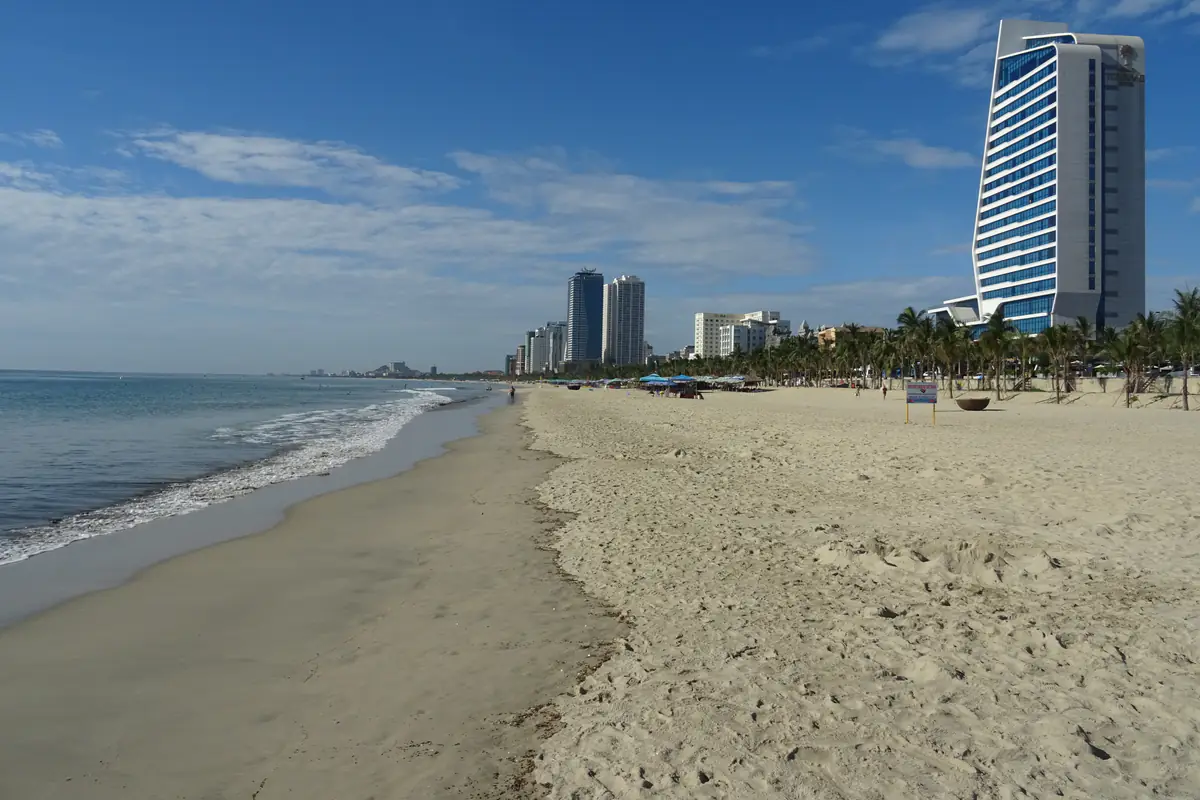
My Khe Beach and the hotels lining the coast.
Three days and two nights in Da Nang are enough to enjoy the beach, visit the Son Tra Peninsula, walk along the Han River, and spend an afternoon in Hoi An. Add the Marble Mountains, Ba Na Hills, and several food stops, and the schedule gets much tighter. For a first trip, the simplest approach is to choose a convenient hotel area, group attractions by location, and leave at least one part of the day free from long transfers.
How many days do you need in Da Nang?
Three days and two nights are enough for a first look at Da Nang. For real time to relax by the sea, go for four days and three nights.
Da Nang's attractions are spread across different parts of the city. My Khe Beach is on the eastern coast, Son Tra is to the north, the Marble Mountains are to the south, and Hoi An is about 30 km from the city center. Squeeze everything into a short trip and you end up spending more time in cars than at the places you came to see.
Here is a practical way to choose the length of your stay.
| Trip length | What to prioritize | What to leave out |
|---|---|---|
| 2 days, 1 night | My Khe Beach, Han River, local food | Hoi An, Ba Na Hills |
| 3 days, 2 nights | My Khe, Son Tra, Han River, Hoi An | Ba Na Hills or smaller attractions |
| 4 days, 3 nights | Main Da Nang sights, Hoi An, beach time | No need to squeeze in Hue |
| 5 days, 4 nights | Da Nang, Hoi An, plus Ba Na Hills or Hue | Choose just one major day trip |
There is a big difference between a three-day trip that starts with an 8 a.m. arrival and one that starts at 5 p.m. Both are advertised as three days, but the actual sightseeing time is quite different. When booking flights, look at arrival and departure times rather than counting hotel nights alone.
For a first visit, arriving before noon and departing in the afternoon or later gives you more time to settle in, have lunch, and enjoy the beach on your first day.
Slower travelers, and anyone with young children or older relatives, are better off with four days and three nights. That way one day can change because of rain, tiredness, or a late breakfast without disrupting the entire trip.
When is the best time to visit Da Nang?
March to May: a good balance for first-time visitors
These are some of the best months for a trip that mixes swimming, city walks, and outdoor sightseeing. Da Nang has more sunny days and more favorable conditions than during the rainy season.
Mornings are good for visiting Son Tra or the Marble Mountains. In the afternoon, you can head to the beach or find a riverside café.
March and early April are more comfortable for walking than the hottest summer months. The sea still won't be calm every day, though: wind, waves, and swimming conditions can change quickly, so check the situation at the beach before entering the water.
June to August: best for beach holidays, but hot
Summer is a busy period for family holidays in Da Nang, and the beach is the main attraction. You can go down to the sand early in the morning, return to your hotel for breakfast, rest during the hottest hours, and go out again in the late afternoon.
The catch is the midday heat. Climbing the Marble Mountains between 11 a.m. and 2 p.m. is hard going, especially for young children or anyone unaccustomed to walking in strong sunshine.
During summer, it helps to:
- Book hotels and flights early for weekends and school holidays.
- Visit outdoor attractions before 10 a.m. or after 3 p.m.
- Keep roughly 11:30 a.m. to 2:30 p.m. for lunch and rest.
- Check the local events calendar, as major festivals can make hotels and riverside areas busier than usual.
September to December: focus more on the city
These months fall within Da Nang's rainy season, when heavy rain, storms, and rough seas become greater concerns. October and November deserve particular attention: prolonged rainfall can affect both Da Nang and Hoi An, including access to low-lying areas.
You can still enjoy the city, but booking a trip during this period solely for swimming is not a good idea.
A hotel with comfortable rooms, indoor facilities, or a covered pool may be more useful than one chosen only because it faces the beach.
On rainy days, consider the Da Nang Museum of Cham Sculpture, other museums, restaurants, or cafés. During severe weather warnings, postpone outdoor excursions and longer trips rather than trying to follow the original itinerary.
January and February: good for walking and food
Weather can be cooler, cloudier, and occasionally wet. Walking along the coast, eating local dishes, visiting museums, and spending time at your hotel can still make for an enjoyable visit.
For a sunny beach holiday with a swim every day, April to August is the better bet.
Where to stay in Da Nang: My Khe Beach or the Han River?
Your choice of neighborhood will probably affect your trip more than choosing between a three-star and a four-star hotel. Both areas have plenty of accommodation, restaurants, and cafés, but they offer different daily routines.
My Khe Beach: best if swimming is a priority
Along Vo Nguyen Giap Street, Vo Van Kiet Street, and the smaller roads behind the beachfront, you will find hotels, serviced apartments, restaurants, and coffee shops.
The biggest advantage is being able to walk to the beach in the morning and return to your hotel for a shower, a change of clothes, and breakfast. Afternoons work the same way, with no need to book two separate car rides just to spend an hour by the sea.
Hotels around East Sea Park, Ha Bong Street, and the roads near Vo Nguyen Giap are worth checking, but always look at the hotel's actual location on a map. Some properties advertise themselves as being near My Khe Beach even though the walk involves crossing a busy road or going several blocks out of the way.
An ocean-view room isn't essential near My Khe. A room a few streets inland may cost less while still being within easy walking distance of the beach.
Before booking, check the actual walking route to a lifeguarded beach area, recent comments about street noise, and whether any construction is taking place nearby.
My An and An Thuong: good for cafés and international food
The streets around An Thuong, Tran Bach Dang, and Ngo Thi Si have plenty of restaurants, cafés, convenience stores, and services aimed at international visitors.
It's a practical area for late breakfasts, café stops, walking to the beach, and picking a dinner spot without crossing the city. Long-stay visitors may also appreciate the variety of international food.
Not every hotel in An Thuong is directly beside the beach, though, and some streets can be lively at night. Families with young children should check recent reviews for noise before making a reservation.
Han River and Hai Chau: best for exploring the city
Hotels around Bach Dang, Tran Phu, Thai Phien, and the surrounding streets in Hai Chau suit travelers who enjoy walking around the city and eating out in the evening.
Han Market, Dragon Bridge, local restaurants, and museums are all close by. From some hotels, the riverfront is just a few minutes' walk, so you won't need to book a ride every time you want to see the bridges or take an evening walk.
There's no beach outside the door, though. To swim at My Khe, you need to cross the river and continue toward the coast.
Hai Chau is particularly convenient for rainy-season trips, business travelers who want to do some sightseeing, or visitors who do not plan to swim every day.
Non Nuoc Beach: better for resort holidays and families
Farther south, around Non Nuoc and Hoa Hai, there are several large beachfront resorts with pools, restaurants, and private facilities.
It makes sense when most of your holiday will be spent at the resort. Families with children may appreciate larger rooms, children's pools, and dining options within the property.
The trade-off is the extra travel time whenever you want to eat in central Da Nang, visit Han Market, or watch the Dragon Bridge show.
First-time visitors who like finding restaurants on their own will be better based at My Khe or along the Han River.
Quick comparison: where should you stay?
| Your priority | Recommended area |
|---|---|
| First visit with regular beach time | My Khe Beach |
| Cafés and international dining | My An - An Thuong |
| Local food and evening walks | Hai Chau - Han River |
| Resort holiday with young children | Non Nuoc |
| Visiting during the rainy season | Hai Chau |
| Staying in one hotel while visiting Hoi An | My Khe or My An |
For a three-day, two-night trip, changing hotels is rarely worthwhile: packing, checking out, storing luggage, traveling to the next property, and checking in again can easily consume much of a day.
How to get to Da Nang and reach your hotel
Arriving by plane
Da Nang International Airport is relatively close to the city center and a convenient arrival point for travelers flying from Hanoi, Ho Chi Minh City, or international destinations with direct or connecting flights.
The airport has two passenger terminals:
- Terminal 1 handles domestic flights.
- Terminal 2 handles international flights.
After collecting your luggage, you can book a ride-hailing car or use a taxi at the designated pickup area.
Two people with suitcases will find a car easier than arranging public transport. Fares vary depending on distance, demand, time of day, and additional charges. Check the final price shown in the application before confirming the ride.
For international visitors, Grab is a practical way to enter your hotel address and see the estimated price without needing to explain the destination in Vietnamese.
Airport bus to My Khe Beach
DanangBus Route 06 connects Da Nang Airport with Vietnam-Korea University, passing Nguyen Van Linh Street, Dragon Bridge, Vo Van Kiet Street, Vo Nguyen Giap Street, and Truong Sa Street.
The 2026 route information includes:
- Regular fare: VND 15,000-22,000 per journey, depending on distance.
- First departure from the airport stop: 5:45 a.m.
- Last departure from the airport stop: 7:25 p.m.
- Approximate frequency: every 30-60 minutes.
The route works well for solo travelers with light luggage staying near one of the stops.
Arriving by train
Da Nang Railway Station is in the central urban area, and from there you can book a car to Hai Chau or the beach.
The train makes sense for travelers already moving along Vietnam's North-South Railway who have time to enjoy the journey.
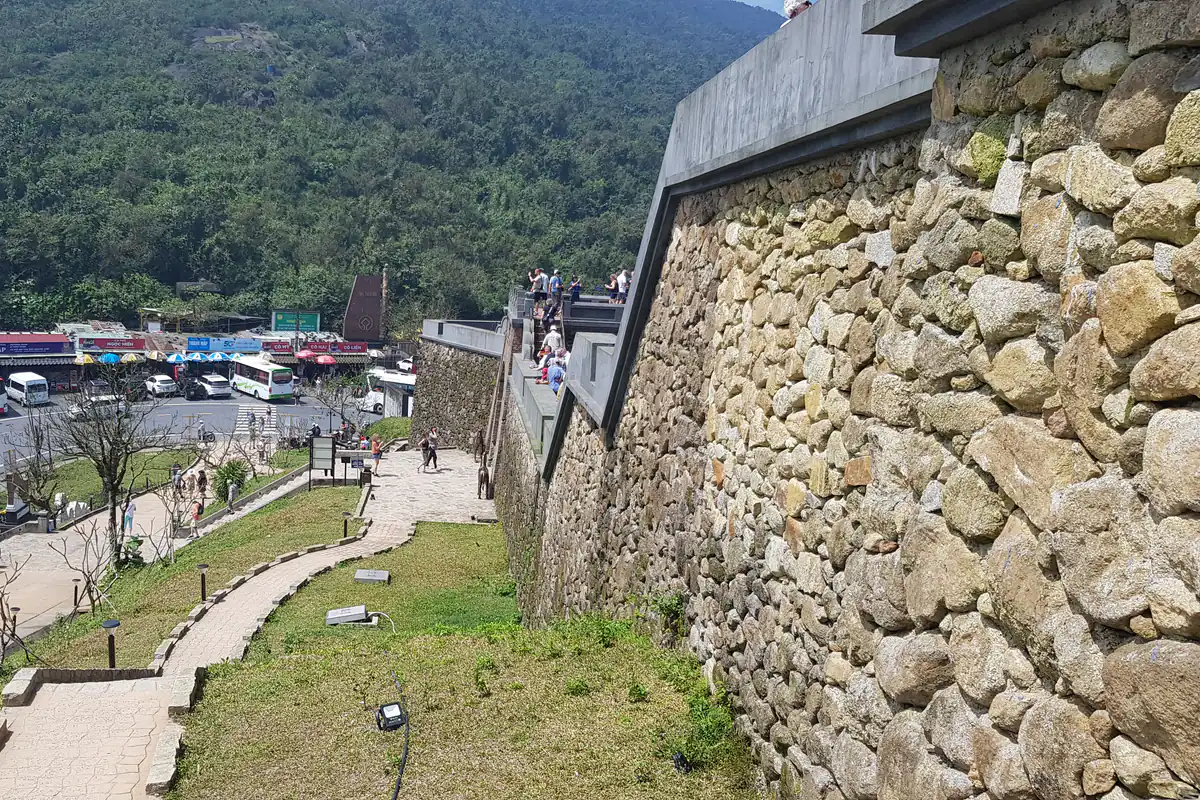
The Hue-Da Nang train deserves its own planning because of the route over the Hai Van Pass, the departure schedule, and the scenery. We cover that ride in a separate guide, so read it before booking.
Arriving by long-distance bus
Da Nang Central Bus Station is on Ton Duc Thang Street, west of the older city center.
Check the exact drop-off point when booking. Not every long-distance bus uses the main station; some operators drop passengers at their own offices or designated roadside locations.
First-timers in Da Nang are better off with a service that has a clearly stated arrival address, plus a plan for getting on to the hotel.
The best places to visit in Da Nang for first-timers
Loading map...
- Da Nang International Airport: T1 domestic, T2 international
- Da Nang Railway Station: central urban area
- Da Nang Central Bus Station: Ton Duc Thang Street
- My Khe Beach: along Vo Nguyen Giap Street
- Linh Ung Pagoda (Bai But): Son Tra Peninsula
- Marble Mountains: entrance near Huyen Tran Cong Chua Street, 7 a.m.-5 p.m.
- Museum of Cham Sculpture: 2 September 2 Street
- Dragon Bridge: fire show around 9 p.m. Friday to Sunday
- Han Market: Hai Chau
- Banh Xeo Ba Duong: K280/23 Hoang Dieu
- Japanese Covered Bridge, Hoi An: about 30 km from central Da Nang
My Khe Beach: allow at least one beach session
My Khe Beach stretches along the eastern side of Da Nang, beside Vo Nguyen Giap Street. With no admission ticket for the public beach, it is one of the easiest places to include in your itinerary.
Early morning and late afternoon are the most practical times to visit, provided sea conditions are suitable and lifeguards permit swimming.
In the morning, you can watch the sunrise, walk along the sand, exercise, or swim within the supervised area. In the late afternoon, allow an hour or two to sit on the sand, enjoy the water, and return to your hotel before dinner.
The beach may look quieter at midday, but strong sunshine and heat can leave you tired quickly, especially after a morning of sightseeing.
Son Tra Peninsula and Linh Ung Pagoda
From My Khe, travel north along the coastal road toward the Son Tra Peninsula.
One of the most popular stops is Linh Ung Pagoda at Bai But, where a large Lady Buddha statue overlooks the sea.
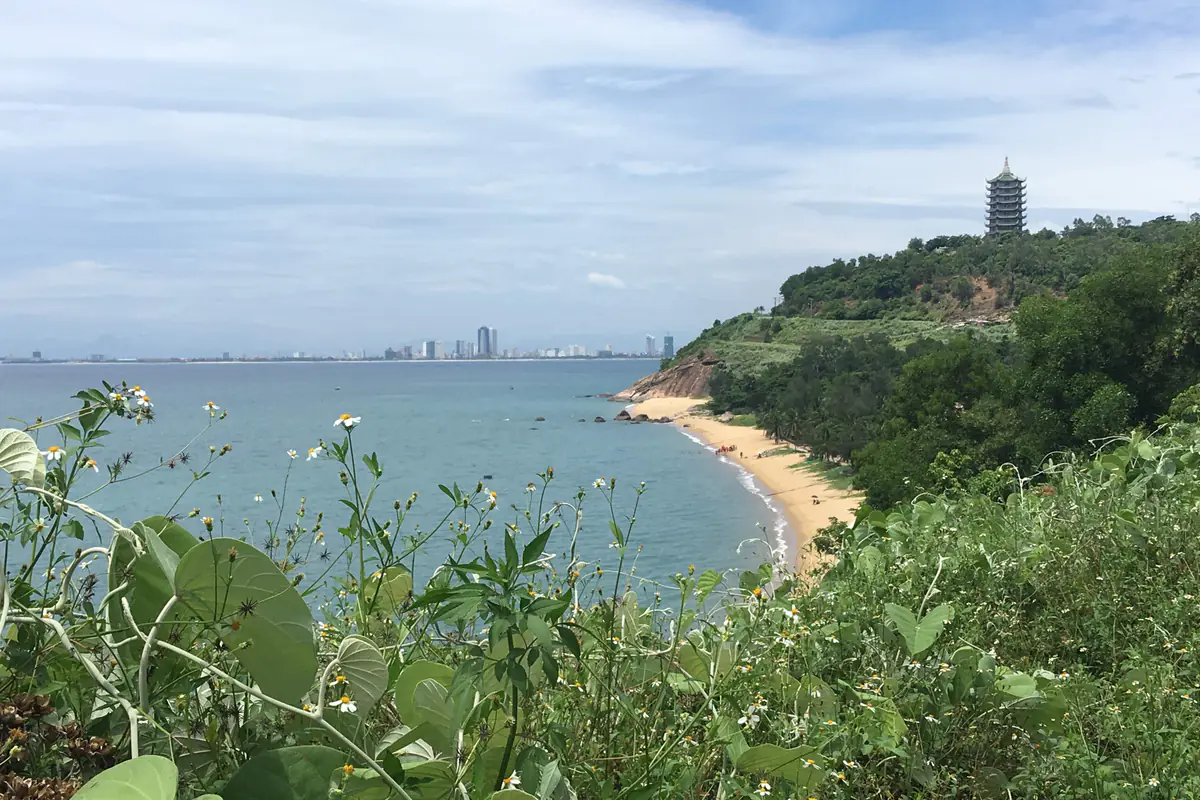
Allow approximately one to two hours to explore the grounds, admire the views, and take photographs.
A morning visit around 7:30-9:30 a.m. is a sensible choice before the weather becomes too hot. Dress respectfully because the pagoda is an active place of worship.
The pagoda and the views over the city don't require driving deep into remote mountain roads.
Some roads on Son Tra are steep and winding, and access can be affected by weather. If you are unfamiliar with riding a motorbike on mountain roads, use a car or a vehicle with an experienced driver.
Marble Mountains: beautiful, but expect stairs
The Marble Mountains are south of central Da Nang, along the route toward Hoi An.
The complex consists of five mountains. Most first-time visitors focus on Thuy Son Mountain, its pagodas, caves, and viewpoints.
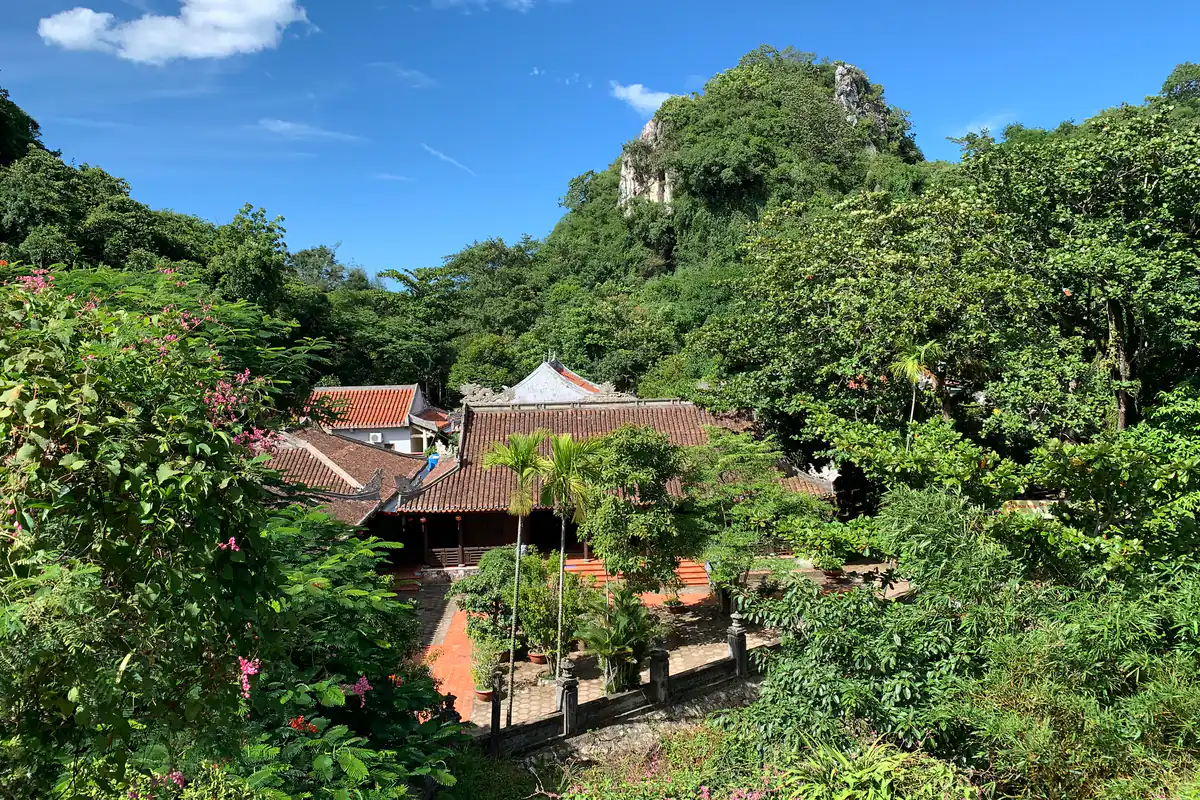
The main visitor entrance is near Huyen Tran Cong Chua Street. An elevator helps visitors ascend part of the mountain, but there are still many steps and some potentially slippery stone surfaces.
Ticket prices for 2026:
| Admission or service | Price |
|---|---|
| Thuy Son Mountain - adults | VND 40,000 |
| Thuy Son Mountain - students | VND 10,000 |
| Thuy Son Mountain - children under 6 | Free |
| Am Phu Cave - adults | VND 20,000 |
| Am Phu Cave - students | VND 7,000 |
| Elevator - one way | VND 15,000 |
| Elevator - return | VND 30,000 |
Opening hours: 7 a.m.-5 p.m.
Aim to arrive between 7 and 9:30 a.m. Wear shoes with a reliable grip, bring water, and allow around 1.5-2.5 hours depending on how many caves you want to explore.
The elevator doesn't remove all the stairs, so anyone traveling with a person who has mobility difficulties or with a very young child may want to skip the steeper caves.
Da Nang Museum of Cham Sculpture: good for hot or rainy weather
The museum is located at 2 September 2 Street, close to Dragon Bridge.
It houses sculptures and artifacts associated with the historical Champa culture.
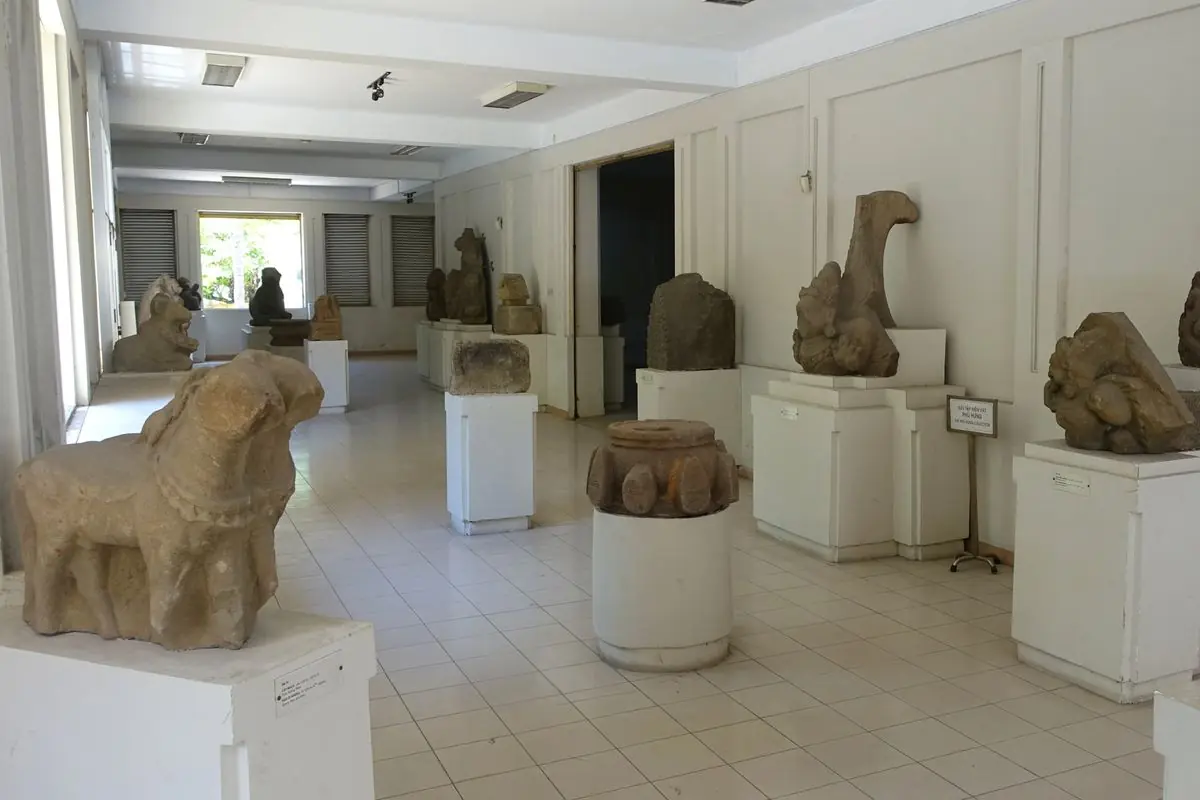
It's a worthwhile stop for anyone who wants some of central Vietnam's history alongside the scenery.
Hours and tickets for 2026:
- Opening hours: 7:30 a.m.-5 p.m.
- Standard admission for Vietnamese and international visitors: VND 60,000.
- Eligible groups, including certain students and Da Nang permanent residents, may qualify for a VND 20,000 ticket.
Allow about 60-90 minutes for a first visit. The museum can fit into a late morning or early afternoon slot when the heat makes outdoor walking uncomfortable.
Dragon Bridge and Bach Dang Street: save these for the evening
Dragon Bridge is close to the city center and connects both sides of the Han River.
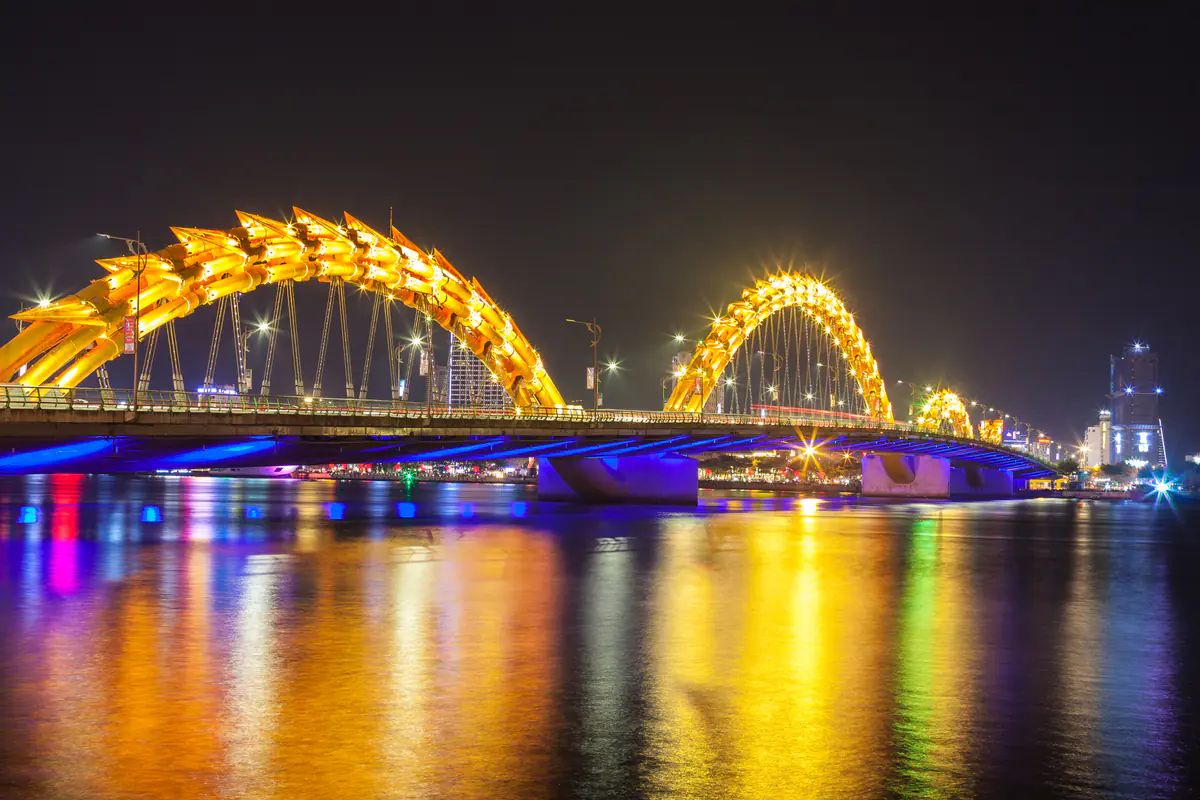
The bridge performs its fire-and-water show at approximately 9 p.m. on Fridays, Saturdays, and Sundays. The schedule may change during holidays or major events.
On busy evenings, arrive about 20-30 minutes before the show. With children, pick a spot with an easy way out instead of squeezing into the crowd right beside the dragon's head; some positions also get wet during the water-spraying part of the show.
Spots along the river still give a good view and can be more comfortable than standing right beneath the dragon. Afterward, walk along Bach Dang Street to see the illuminated riverfront and other bridges.
On weeknights the bridge is still worth seeing lit up, but don't count on a fire show.
Da Nang 3 days 2 nights itinerary: a simple first-timer's plan
This itinerary works best if you arrive before noon on the first day and depart in the afternoon or later on the final day. Stay in the same hotel near My Khe Beach for both nights.
Day 1: Arrival - My Khe Beach - Han River
- 11 a.m.-1 p.m.
Arrive, lunch
Arrive in Da Nang, travel to your hotel, and leave your luggage or check in if your room is ready. Have lunch nearby.
- 1-3:30 p.m.
Rest
Rest at the hotel. There is no reason to rush straight to a distant attraction after a flight or a long journey.
- 4-6 p.m.
My Khe Beach
Walk to My Khe Beach. Check the supervised swimming area before entering the water. If swimming conditions are unsuitable, enjoy a walk or relax on the shore where it is safe.
- 6:30-8 p.m.
Dinner
Have dinner.
- 8-9:30 p.m.
Han River, Dragon Bridge
Head to the Han River, walk along Bach Dang Street, and see Dragon Bridge.
On a Friday, Saturday, or Sunday, time the evening around the fire-and-water show.
That is enough for the first day. You will have enjoyed the beach and seen central Da Nang without spending the entire afternoon moving between attractions.
Day 2: Son Tra in the morning - Hoi An in the afternoon
- 7-9:30 a.m.
Son Tra
Have breakfast, visit Linh Ung Pagoda at Bai But, and enjoy the views from Son Tra.
- 10 a.m.-1:30 p.m.
Lunch and rest
Return toward the city, have lunch, and rest at your hotel.
- 2:30-3:30 p.m.
Leave for Hoi An
Leave for Hoi An by car or another arranged vehicle.
- 4-6 p.m.
Old town
Wander the ancient town on foot: the Japanese Covered Bridge, Tran Phu Street, Nguyen Thai Hoc Street, and the Thu Bon River area are all close together.
- 6-8 p.m.
Dinner, lanterns
Have dinner and enjoy the lantern-lit streets.
- Around 8:30 p.m.
Back to Da Nang
Return to Da Nang, depending on traffic and your pickup location.
The plan gives you a taste of both Da Nang and Hoi An on a short trip.
The limitation is that you will have only a few hours in Hoi An, mostly for the old town in the late afternoon and evening. Several old houses, museums, and craft villages need another day.
Day 3: Marble Mountains or another beach morning
If your return flight departs after 2 p.m., you may have time to visit the Marble Mountains between approximately 7 and 9:30 a.m. Afterward, return to your hotel, collect your luggage, have lunch, and head to the airport.
If you are flying before noon, skip the Marble Mountains and settle for a relaxed breakfast, a short beach walk, and checking out on time.
Avoid squeezing in a distant attraction on departure day unless you have calculated the journey, airport procedures, and a reasonable time buffer.
This three-day itinerary does not include Ba Na Hills. Anyone set on the Golden Bridge should swap the Hoi An day for Ba Na Hills instead of trying to visit both in one day.
Da Nang 4 days 3 nights itinerary: a more relaxed plan
Four days and three nights let you see the main attractions without sacrificing every afternoon to sightseeing.
Day 1: Arrive, check in, and enjoy the beach
Keep your first day simple: travel to the hotel, have lunch, rest, head to My Khe in the late afternoon, and visit the Han River in the evening. There is no need to add the Marble Mountains immediately after arriving.
Day 2: Son Tra - Cham Museum - local food
7:30-10 a.m.: Visit Linh Ung Pagoda on Son Tra.
10:30-11:30 a.m.: Explore the Da Nang Museum of Cham Sculpture.
Noon-2:30 p.m.: Have lunch and rest at your hotel.
3:30-5:30 p.m.: Enjoy the beach or spend time in a café.
Evening: Try local dishes such as banh xeo, mi Quang, or bun cha ca in central Da Nang.
This day includes two main attractions and still leaves enough time for a proper lunch and a relaxed afternoon.
Day 3: Marble Mountains - Hoi An
Both destinations lie south of central Da Nang, so they can work well together.
7-9:30 a.m.: Visit the Marble Mountains before the hottest part of the day.
10 a.m.-noon: Continue toward Hoi An and have lunch.
Noon-3 p.m.: Take a break in a café, visit a suitable indoor attraction, or rest at your accommodation if you have decided to stay overnight in Hoi An.
3:30-6 p.m.: Walk around the old town.
6-8 p.m.: Have dinner and explore the riverside streets after dark.
Return to Da Nang with your previously arranged transport, or spend the night in Hoi An for a slower pace.
Day 3 is the busiest of the itinerary, so families with young children may be more comfortable skipping the Marble Mountains and going straight to Hoi An in the afternoon.
Day 4: Free morning and departure
Use your final morning to relax, have breakfast, or buy a few souvenirs. Guests near My Khe can take a short walk along the beach; in Hai Chau, Han Market or a café near the hotel fills the time nicely.
Before leaving, check your documents, electronics, luggage, and airport transfer time.
Four days and three nights don't leave room for a day trip to Hue. Hue has enough imperial sites, tombs, temples, and historic places to deserve a few days of its own, so read our Hue guide before deciding to add it.
Should you combine Da Nang and Hoi An?
Yes, particularly if this is your first visit and you have at least three days.
Hoi An is roughly 30 km from central Da Nang, about 40-60 minutes by car when traffic is light.
While Da Nang is known for its long coastline, modern bridges, and beachfront hotels, Hoi An is known for its preserved old town, tiled-roof buildings, assembly halls, the Japanese Covered Bridge, and pedestrian-friendly streets.
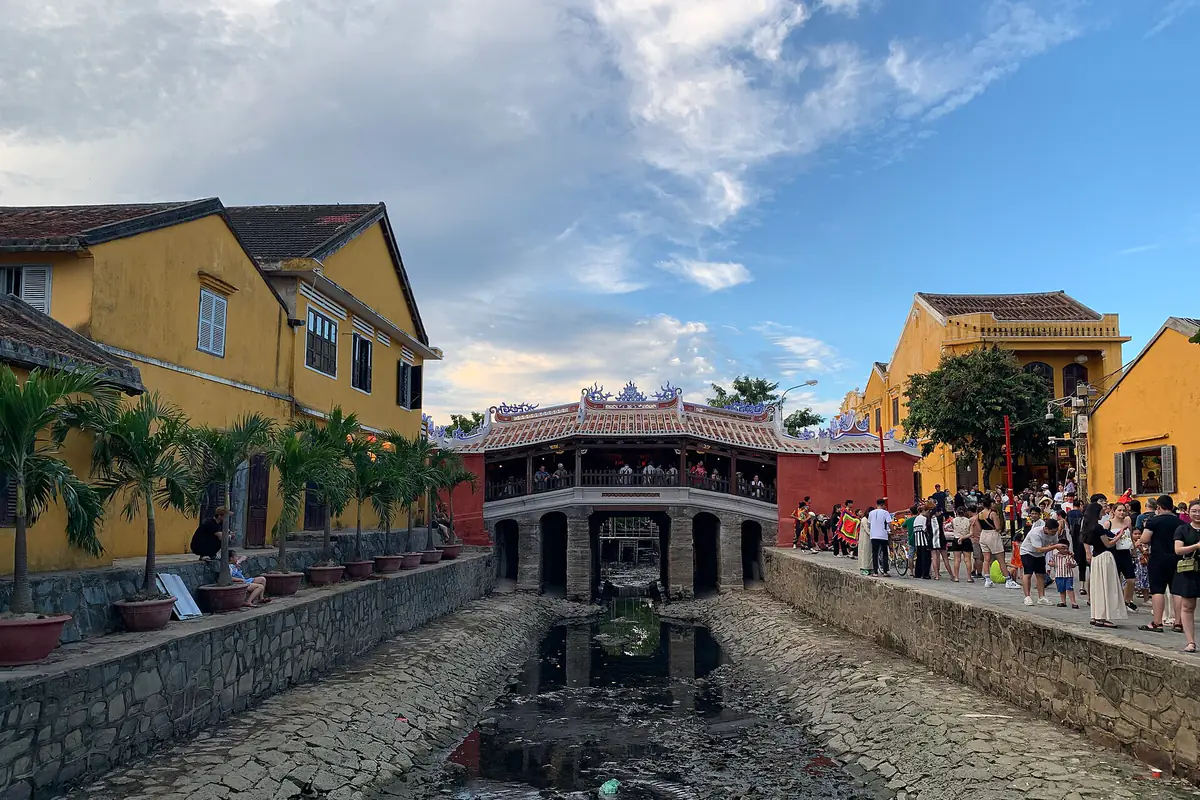
The best way to combine them depends on your trip length.
- 3 days, 2 nights: Spend an afternoon and evening in Hoi An while sleeping both nights in Da Nang.
- 4 days, 3 nights: Give Hoi An most of one day, potentially combining it with the Marble Mountains.
- 5 days or longer: Consider spending one night in Hoi An so you can explore early in the morning before the streets become crowded.
Hoi An Ancient Town ticket prices in 2026
The old town sells two ticket types with different sightseeing benefits.
| Ticket | Main inclusions |
|---|---|
| VND 80,000 | General heritage scenery, the Japanese Covered Bridge or Quan Cong Temple, and two selected cultural sites |
| VND 120,000 | General heritage scenery, the Japanese Covered Bridge or Quan Cong Temple, museums, and three selected cultural sites |
Buy the appropriate ticket at an official sales point and ask staff about its coverage, especially if you plan to enter several heritage buildings.
What time should you visit Hoi An?
Arriving around 3:30-4 p.m. works well for a one-afternoon visit. You can walk through the historic streets as the temperature becomes more comfortable, find a place for dinner, and stay until the lanterns are lit.
Hoi An tends to get busier in the evening, particularly on weekends and public holidays. Families with young children may prefer an early dinner and a confirmed pickup point for the return trip.
Cars can't reach every street in the pedestrian zone, so ask your driver where you will be dropped off, where you will be collected, and how far you need to walk.
During the rainy season, particularly in October and November, monitor flood warnings carefully. Do not insist on visiting the old town when there are dangerous weather or flooding alerts.
Should you add Ba Na Hills and the Golden Bridge?
Ba Na Hills is a good choice if you enjoy theme parks, cable cars, European-inspired architecture, and taking photographs at the Golden Bridge.
It is not a quick stop on the way to Hoi An, though: the journey, cable car rides, sightseeing, meals, and time inside the resort complex take up most of a day.
For a three-day, two-night trip, choose either Ba Na Hills or Hoi An rather than trying to fit both into an already busy itinerary.
With four days and three nights, you can add Ba Na Hills by removing another attraction or reducing beach time.
Ticket prices may change depending on the season, visitor category, package inclusions, and promotions. We cover cable car hours, ticket options, and the Golden Bridge in detail in our Ba Na Hills guide, so read it before booking.
What to eat in Da Nang: choose restaurants along your route
Da Nang has plenty of local dishes worth trying, though spending half a day crossing the city for a restaurant that happens to be popular on social media rarely pays off.
Decide what you want to eat first, then find a suitable restaurant near your planned attractions.
Mi Quang
Good for breakfast or lunch
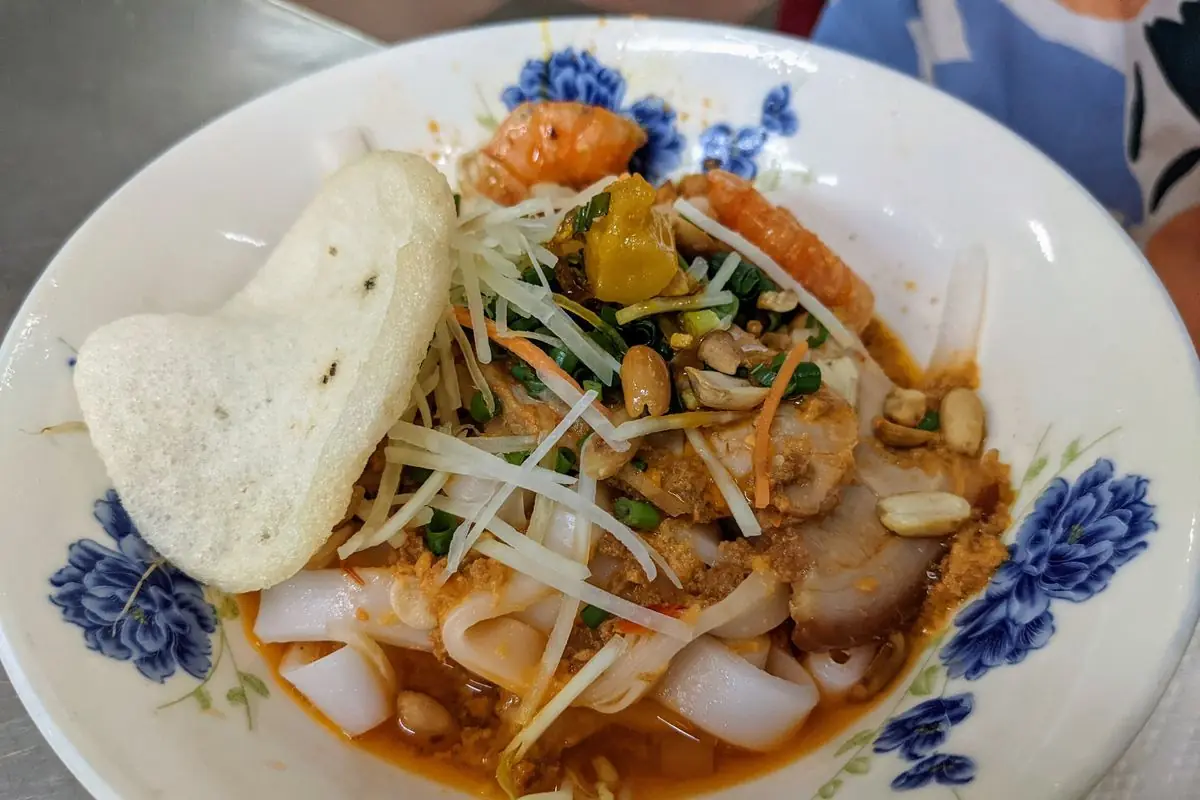
Mi Quang is a regional noodle dish made with broad rice noodles, a relatively small amount of broth, herbs, rice crackers, and different toppings depending on the restaurant. It works well for breakfast or lunch.
You can find mi Quang restaurants around Hai Chau, the city center, and many other neighborhoods. Ask which topping is included before ordering. Options may include shrimp and pork, chicken, fish, or other ingredients.
Banh Xeo Ba Duong
K280/23 Hoang Dieu, Hai Chau
This well-known restaurant is located at K280/23 Hoang Dieu in Hai Chau.
Central Vietnamese banh xeo are relatively small, crispy savory pancakes served with herbs, rice paper, and dipping sauce. You can also order nem lui, grilled meat skewers, or other accompanying dishes.
Prices in 2026 were approximately:
- Banh xeo: VND 90,000 per portion.
- Nem lui: VND 6,000 per skewer.
Prices and portion sizes may change, so check the restaurant's menu before ordering.
The restaurant is down an alley, and arriving by car may mean getting out on the main road and walking the rest.
It can be busy at normal meal times. Families with young children may find it easier to arrive before the lunchtime or dinner rush.
Bun cha ca
Fish cake noodle soup for cool mornings
Bun cha ca is a noodle soup with fish cakes and a broth prepared in the central Vietnamese style. A hot bowl makes a good breakfast, especially on a cooler or rainy morning.
Unfamiliar with fermented fish sauces, or not keen on spicy food? Ask about the ingredients and add seasonings gradually.
Seafood
Confirm the unit price before ordering
For seafood, you can look for restaurants along the coastal neighborhoods or streets with clusters of local dining spots.
A sign advertising low prices doesn't tell the whole story, since seafood may be charged by weight, by individual item, or by serving.
Before ordering, confirm the unit price, weight, preparation method, and any additional cooking charges. For dishes without a clearly displayed price, ask for the total before agreeing.
If someone in your group has a seafood allergy, ask carefully about ingredients, broths, sauces, and shared cooking equipment.
How much does a self-guided Da Nang trip cost?
Your total budget depends mainly on flights, accommodation, transport, and whether you include expensive attractions. Working out each category separately gives a truer figure than one fixed budget for every traveler.
Flights and accommodation
These are often the largest expenses. Airfares depend on the airline, route, travel date, booking time, and baggage allowance, and hotel prices vary between weekdays, weekends, public holidays, and the summer peak season.
When comparing rooms, check whether the displayed price includes taxes, service fees, and breakfast. A cheaper hotel far from the beach, restaurants, and main attractions may end up costing more in daily transport.
Attraction tickets
For a simple itinerary, sightseeing admission costs are fairly easy to estimate. Here is an example for one adult purchasing the following tickets.
| Attraction or service | 2026 price |
|---|---|
| Da Nang Museum of Cham Sculpture | VND 60,000 |
| Thuy Son Mountain | VND 40,000 |
| Am Phu Cave | VND 20,000 |
| Marble Mountains elevator, return | VND 30,000 |
| Hoi An VND 80,000 ticket | VND 80,000 |
| Example total | VND 230,000 |
That's just one combination of attractions, not a mandatory charge for every visitor. You can skip Am Phu Cave, avoid using the elevator, choose another Hoi An ticket, or visit additional museums.
All ticket prices in this guide are 2026 prices. Actual prices on your travel dates may be different.
Local transport
Set aside a separate allowance for:
- Transfers between the airport or railway station and your hotel.
- Trips between My Khe, Son Tra, Hai Chau, and the Marble Mountains.
- A return journey to Hoi An.
- Parking fees if you are driving yourself.
Renting a motorbike for the whole trip looks cheaper, but couples, families, and anyone spending long stretches at the hotel may find booking cars for individual journeys easier.
Food
You can plan one main meal for a local specialty, another near your hotel, and leave one flexible depending on your sightseeing schedule.
Seafood, upscale restaurants, and resort dining can increase the total budget considerably.
When traveling with children, comfortable seating, toilets, and suitable food matter more than a restaurant's fame.
Is it safe to swim at Da Nang beaches?
Da Nang has public beaches with organized lifeguard services, but not every stretch of the coastline is suitable for swimming.
Enter the sea only in areas where swimming is permitted by the lifeguard team at that time.
When you reach the beach, follow these steps:
- Identify the lifeguard station, safety notices, and designated swimming area.
- Observe the waves, wind, and warnings. Do not assume you understand the meaning of a particular flag without checking the local instructions.
- Enter the water only when the area is supervised and swimming is permitted.
- Stay within the designated zone. Never swim after drinking alcohol or during thunderstorms and strong winds.
- Bring children out of the water immediately when lifeguards instruct visitors to leave.
In the low season, from October 1, 2026, through March 14, 2027, lifeguards work these shifts:
- Morning peak coverage: 5-7:30 a.m.
- Afternoon peak coverage: 3-6:30 p.m.
- Additional lower-intensity daytime shifts between 7:30 a.m. and 3 p.m.
A published lifeguard schedule does not guarantee that the sea is suitable for swimming every day, so follow the warnings and instructions displayed at the beach when you arrive.
Young children should wear properly fitted life jackets and stay within immediate reach of an adult when in the water. Do not leave a child playing at the water's edge while supervising only from a chair farther up the beach.
If you see someone in difficulty, alert lifeguards immediately rather than entering dangerous water without rescue training.
Save the Da Nang beach rescue number before you go: 0236 2218 878.
Visiting Da Nang with young children
With young children along, regular mealtimes and rest periods matter more than completing every sightseeing stop. A schedule built for a group of young adults won't suit a family with a child under six, and faster taxis won't make it work.
Choosing a hotel
A hotel near the beach or a resort with age-appropriate swimming facilities is a sensible choice.
Before booking, check:
- Whether there are lifts and accessible routes for strollers.
- Whether the room has enough beds or a cot if needed.
- Whether children's swimming facilities are separate, supervised, and clearly regulated.
- Whether suitable restaurants, convenience stores, and other services are nearby.
- Whether the hotel can help arrange a car with an appropriate child safety seat.
A swimming pool that looks attractive in photographs is no reason to book on its own. Ask directly about water depth, children's facilities, supervision, and operating hours.
Choosing attractions
My Khe Beach is suitable for playing on the sand, walking, and swimming in approved areas when conditions allow.
Son Tra works well as a short morning excursion. Saving on transport is a poor reason to take a young child along mountain roads on a motorbike.
The Marble Mountains involve stone steps and paths that are inconvenient for strollers, so families with a very young child, or one who must be carried much of the way, can easily skip them.
The Cham Sculpture Museum offers an indoor alternative, although very young children may lose interest quickly. Keep the visit relatively short.
Hoi An involves considerable walking, especially inside the ancient town; a compact stroller and a confirmed car pickup location can make the evening easier.
A family-friendly 4-day itinerary
A practical schedule is:
Day 1: Check in, rest, and visit the beach in the late afternoon.
Day 2: Visit Son Tra in the morning, rest after lunch, and spend the afternoon at the hotel pool or beach.
Day 3: Visit Hoi An in the afternoon, have an early dinner, and return to Da Nang.
Day 4: Have breakfast, enjoy an easy activity near the hotel, and travel to the airport.
This plan deliberately leaves out the Marble Mountains and other attractions that require extensive walking. Children still have time to play, and adults aren't rushing everyone from place to place.
What should international visitors know before traveling to Da Nang?
For international travelers, the basic planning decisions are much the same as for domestic visitors: accommodation, transport, sightseeing, and weather.
Where to stay
My Khe and An Thuong are practical bases close to the beach, restaurants, and tourism services. Hai Chau is better for local markets, museums, and evening walks along the river.
A nice-looking room far from the center can turn into a daily transport problem, so work out how you will get around before booking.
Getting around
Ride-hailing applications make it easier to check prices and confirm destinations before getting into a vehicle.
These English names are commonly used on maps and travel services:
| Vietnamese name | Common English name |
|---|---|
| Biển Mỹ Khê | My Khe Beach |
| Ngũ Hành Sơn | Marble Mountains |
| Bảo tàng Điêu khắc Chăm | Da Nang Museum of Cham Sculpture |
| Chùa Linh Ứng Sơn Trà | Linh Ung Pagoda / Lady Buddha |
| Cầu Rồng | Dragon Bridge |
| Phố cổ Hội An | Hoi An Ancient Town |
Some attractions share similar names, particularly Linh Ung pagodas, so check that you have selected the correct map location before starting your journey.
Cash and payments
Cash remains convenient at some local restaurants, markets, and smaller service providers, so keep a reasonable amount of Vietnamese dong in smaller denominations for everyday purchases. A large wad of cash isn't necessary while sightseeing.
At hotels, larger restaurants, and major attractions, check accepted payment methods before making a purchase.
Passports and entry requirements
International visitors must check visa exemptions or visa requirements according to their nationality, passport type, and intended length of stay.
How long you can legally stay in Vietnam is a question for Vietnam's immigration authorities, not a travel blog, so check their current information before booking your trip. Travelers visiting multiple destinations in Vietnam should also make sure their dates and documents meet the applicable requirements for the entire journey.
Common mistakes to avoid on a first Da Nang trip
The first mistake is putting too many attractions into one day.
Son Tra, the Marble Mountains, Hoi An, and Ba Na Hills are not in the same neighborhood. Ticking off a long checklist in one day isn't the same as enjoying Da Nang.
The second mistake is choosing a hotel based only on photographs.
An advertised "ocean-view" room may not have a wide sea view or a convenient walking route to the beach. Recent reviews, room orientation, and the exact location are more useful than promotional pictures alone.
The third mistake is sightseeing all morning and planning to swim at midday.
During summer, midday heat can be tiring and uncomfortable. Early morning and late afternoon are better for the beach, as long as conditions are safe.
The fourth mistake is forgetting to arrange transport back from Hoi An.
Staying in the old town after dark, especially with children, means deciding how you will get back to Da Nang before you start exploring.
The fifth mistake is having no rainy-day alternative.
A trip in October or November should include at least one flexible period that can be used for a museum, restaurant, café, or hotel rest day.
The final mistake is treating rest as wasted time.
You have already paid for the hotel and come all the way to the beach, so time spent enjoying them counts as much as sightseeing.
Da Nang travel checklist before you leave
Before departure, check the following:
- Flight or train tickets, including arrival and departure times.
- Exact hotel address and check-in/check-out times.
- Weather forecast for your travel dates.
- Sea conditions and current lifeguard warnings.
- Attraction tickets that need advance booking.
- Transport arrangements for Hoi An and the return journey.
- Identification and visa documents, where applicable.
- Comfortable walking shoes, sunscreen, a hat, swimwear, and a lightweight raincoat.
- Personal medication, children's supplies, and emergency contact information.
There's no need to print out a complicated daily itinerary: for most independent travelers, a note on your phone containing the hotel address, main attractions, departure time, and essential contact numbers will be enough.
Final thoughts: which Da Nang itinerary should you choose?
For a first visit of three days and two nights, stay near My Khe Beach, reserve one beach session, visit Son Tra, and spend an afternoon and evening in Hoi An. With four days and three nights, add the Marble Mountains, a museum, and more time to relax; families with young children should cut back on walking and choose shorter excursions with plenty of breaks.
FAQ
Is it better to stay at My Khe Beach or near the Han River in Da Nang?
Stay near My Khe Beach if you want to swim regularly, walk along the coast, and return to your hotel between sightseeing activities. Choose the Han River area if you prefer central restaurants, museums, markets, and evening walks. Families who mainly want a resort holiday can also consider Non Nuoc Beach.
What should I include in a 3-day Da Nang itinerary?
Prioritize My Khe Beach, Linh Ung Pagoda on Son Tra, Dragon Bridge, and an afternoon or evening in Hoi An. You can add the Marble Mountains if your departure is late enough and your group is comfortable walking and climbing stairs. It is better not to squeeze Ba Na Hills into the same short itinerary.
Should I spend one night in Hoi An during a 4-day Da Nang trip?
Not necessarily. If your main priority is the beach, you can stay all three nights in Da Nang and visit Hoi An as a day trip. Spending one night in Hoi An makes more sense if you want to explore early in the morning, enjoy a relaxed dinner, and avoid returning to Da Nang late at night.
Is My Khe Beach safe for children?
Children can enjoy the beach and swim when weather, wave conditions, and lifeguard instructions indicate that swimming is safe. They should wear suitable life jackets, remain within immediate reach of an adult, and stay inside the supervised swimming zone. During rough seas or swimming bans, choose safe activities on shore or return to your hotel.
Can foreign visitors explore Da Nang independently in three days?
Yes. A simple plan is to enjoy the beach and Han River on day one, visit Son Tra and Hoi An on day two, and see the Marble Mountains on the final morning if your flight time allows. Staying around My Khe or An Thuong, using ride-hailing cars or vehicles with drivers, and checking entry requirements before departure will make the trip easier.