Da Lat glamping: Tuyen Lam Lake, Cau Dat or the foot of Langbiang?
Tuyen Lam Lake, 15 to 30 minutes from the center, is the easy choice if you have no car and want town within reach. Cau Dat and Tram Hanh suit you better if you want to sleep near the valleys and wake up to the view. When comparing prices, check how many guests the rate covers, the bathroom and which meals are included; dated examples are below. Pitch your own tent only at a campsite where the operator permits overnight camping, and pack for dry-season nights that can drop below 50°F even in town.
By Da Lat LoversPublished Updated How we review
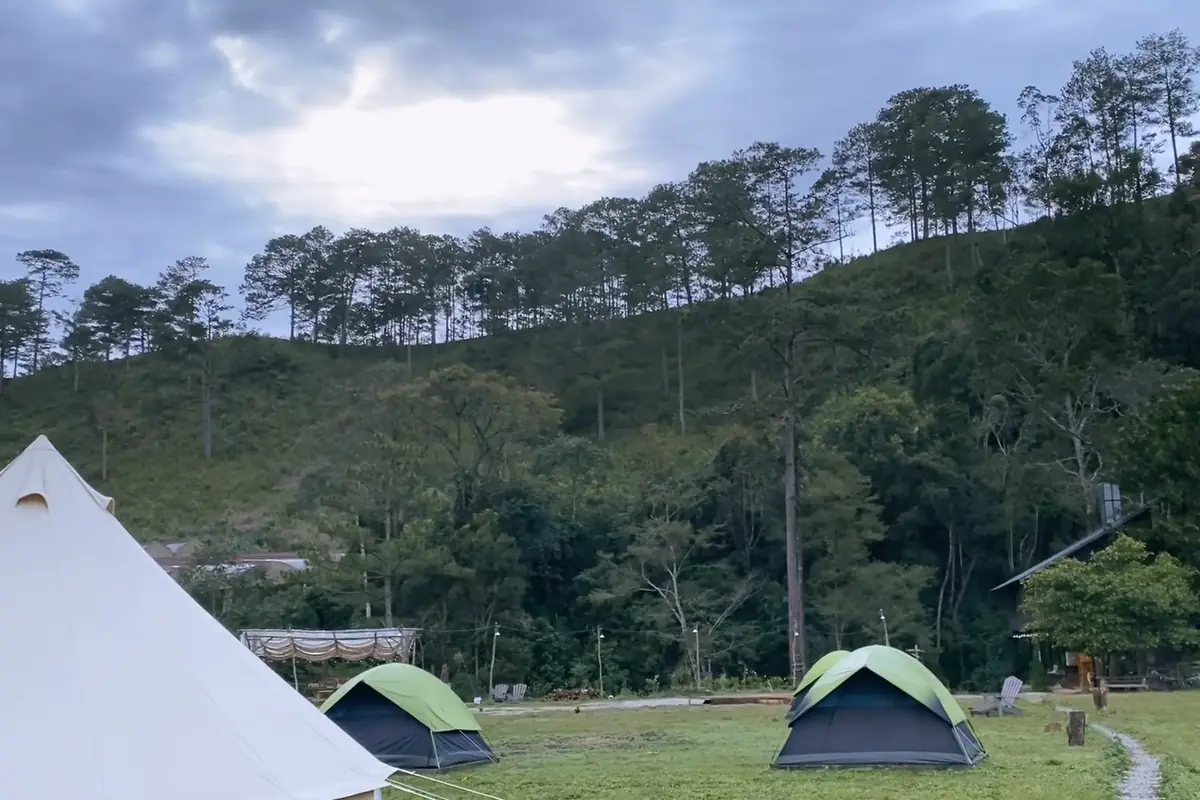
A bell tent and dome tents on the lawn of a campsite below a pine hill in Da Lat, on a December morning in 2020. Photo: rintr_ / CC BY 3.0
Da Lat glamping: which area suits your trip?
Most camps around Da Lat fall into three areas, each with its own scenery and its own drive. Times below are from Xuan Huong Lake in the center, by car, in daylight and on dry roads. One difference from glamping near Ho Chi Minh City: here the question to ask is about heating and blankets, not air conditioning.
| Area | Drive | Scenery and clouds | Example prices, what’s included | Best for |
|---|---|---|---|---|
| Tuyen Lam Lake | 15-30 min | Pine forest and open water; on calm mornings, mist can sit on the lake | One lakeside camp: 995,000 VND (about $39) per person on the operator’s site, undated; ask what the package covers | First-time campers, no car, want town within reach |
| Cau Dat, Tram Hanh, Xuan Tho | 25-50 min depending on the camp | Tea hills and eastern valleys; clouds depend on the night before | Three example camps: about 450,000-2.7 million VND ($17-105) per two-person tent; some cheaper tents list no private bathroom, others exclude meals | Cloud hunters who would rather not drive before dawn |
| Langbiang, Dankia - Suoi Vang, Da Sar | 30-45 min | Dankia Lake, grassy hills below Langbiang Mountain (summit hiking trail: confirm whether it is open before planning); coffee farms at Da Sar | Tourist-park campground: 120,000 VND (about $5) per adult, unclear whether tent or entry is included; streamside farm tents: previously seen at 1.1-1.3 million VND ($43-50) with breakfast; get a quote for your dates | Groups with their own tent, families who want space |
The camps named in this guide are examples, not a ranking, and being named here does not mean a camp is licensed. Before paying a deposit, ask whether it holds a business license and whose land the tents are on (the rules section explains why).
Ta Nung (about 15-17 km over the Ta Nung pass) and Mang Lin (about 12 km) also have pine hills above the valleys. If you book a camp in either place, ask for the exact address, the access road and pickup arrangements before you pay a deposit.
Tuyen Lam Lake: close to town, pines and water
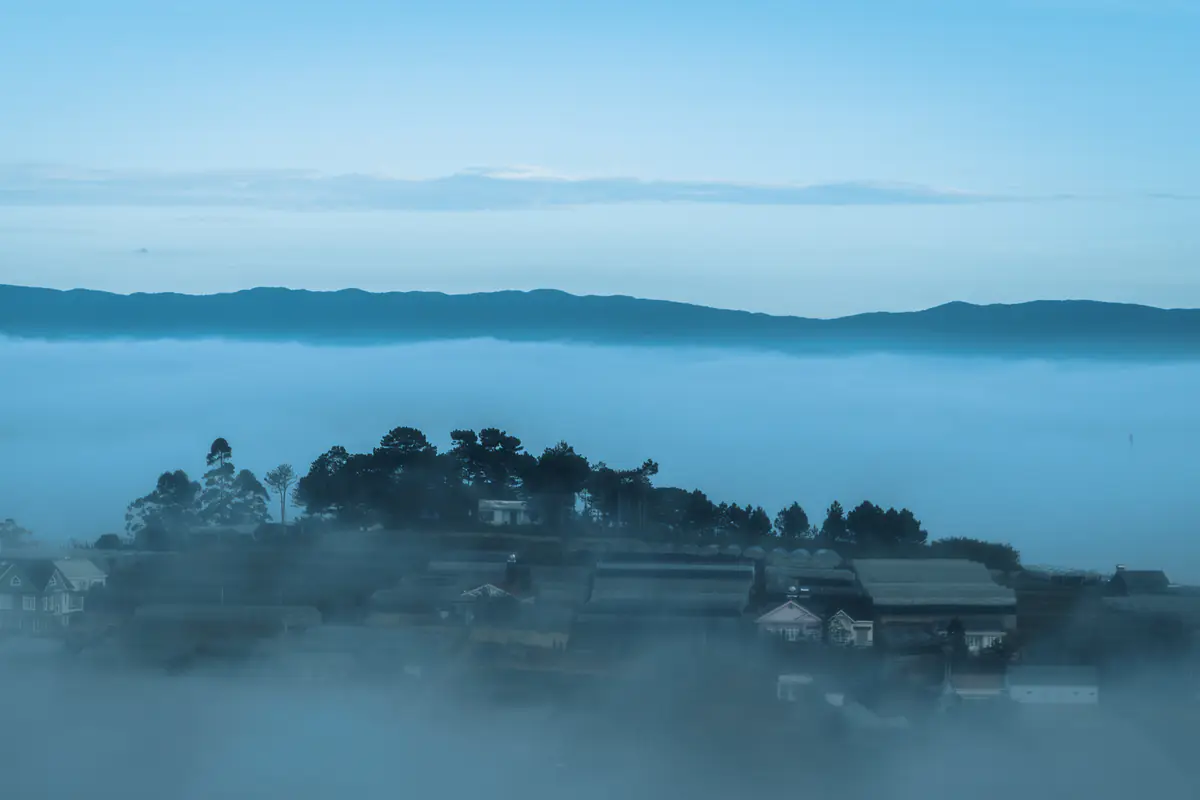
Tuyen Lam is the large lake south of the city, ringed by pine forest, with paved roads and Grab cars easier to find than farther out. It is the simplest pick if you have never slept in a tent, are traveling without a car, or want to eat at the night market and still get back to camp. Expect flat water and, on still mornings, possibly a thin mist over the lake. For the thick “sea of clouds” in the valleys, you usually have to head to Cau Dat.
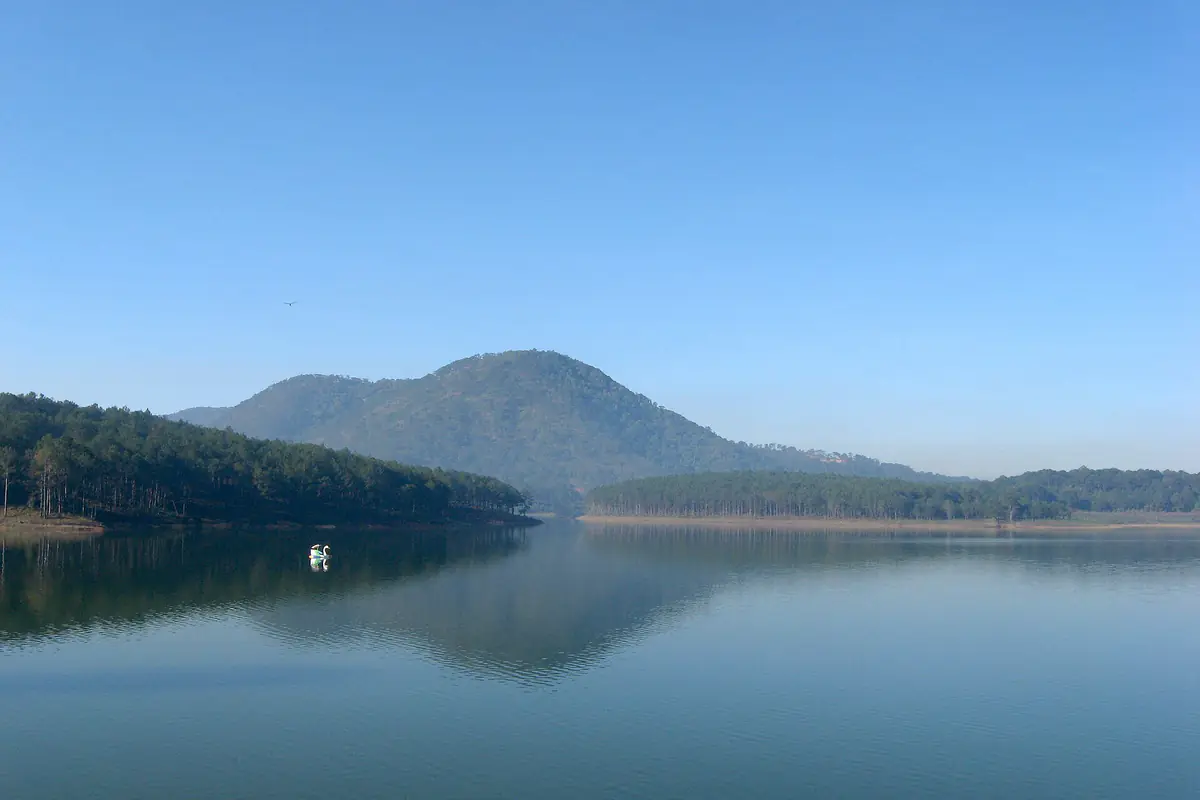
One example is REO Campsite on Hoa Hong road by the lake, which runs sunrise paddleboard outings, barbecues and overnight camping. The operator’s site (updated August 29, 2026) lists the glamping package at 995,000 VND per person but does not say when that price applies or what it includes. Before you pay, ask whether dinner, breakfast, the paddleboard trip and a private bathroom are covered, and whether the camp holds a business license.
The pine forest around the lake is divided into numbered subzones, each managed by a forest owner, and tents put up in the forest without the owner’s permission can be ordered out. Book a camp with a street address and an operator, and don’t set up your own tent in an empty patch of lakeside pines.
Cau Dat, Tram Hanh, Xuan Tho: camps with valley views
East of the city, along the road through Trai Mat toward the Cau Dat tea hills, is where most camps sell themselves on clouds. The nearer ones around Tuy Son and Xuan Tho are about 25-30 minutes away. Those beside the Cau Dat tea hills and Tram Hanh take around 45-50 minutes, on hill roads with long unlit stretches. Sleeping out here saves you that drive at 4am, and keeps you clear of the weekend line of cars heading to the tea hills before sunrise. Ask which way the tents face, and whether you can see the valley from yours or need to walk to a viewpoint.

Cloud cover changes from one morning to the next. Valley clouds usually need a clear, humid, still night; on a morning without them you may still see the tea hills if visibility allows, and the sunrise depends on the weather. Our Da Lat cloud forecast shows the signals a day or two ahead, but don’t choose a camp because of the cloud photos on its page. Which months tend to work and what time it gets light are covered in the Da Lat cloud hunting guide.
Prices and what they include
Prices below are from Booking.com on October 27, 2026, for two adults in one tent, in no particular order. Cloud9 and May Glamping showed taxes and fees as included; for Tram May, check the tax line at checkout.
- Cloud9 & Cloud View Glamping (Tram Hanh): basic tent with breakfast about 1.06-1.21 million VND ($41-47); with dinner as well, about 2.11 million ($82); tents with a private bathroom 2.1-2.7 million ($81-105). Heating is listed.
- Tram May Glamping (near wind turbine no. 10 on the Cau Dat tea hills): 8 m² tent about 1.18 million VND ($46), no private bathroom listed, breakfast 100,000 VND extra (ask whether per person or per tent); tent with a private bathroom about 2.05 million ($80). No heater is mentioned.
- May Glamping (Tuy Son, Xuan Tho): 20 m² tent with a private bathroom about 451,000 VND ($17), tent with two double beds about 924,000 ($36). Dinner is listed at 350,000 VND ($14) extra; ask whether that is per person or for the whole group before you book. The listing doesn’t say breakfast is included.
A Booking.com listing is not a license, and the Cau Dat tea hills have had camps operating without one. Before paying a deposit, ask the camp about its business license and where you would shelter in a heavy storm.
Cancellation terms vary by rate and booking channel. At Cloud9, the cheapest rate for the same tent was prepaid, could not be changed, and was free to cancel only until November 9 for the night of November 11; the pay-at-property rate cost a little more. On October 27, all three had a rate with free cancellation up to one or two days before the stay. If you book through Zalo or a camp’s Facebook page, the camp sets its own terms, so ask for them in writing.
If you are traveling with older relatives or feel the cold, consider one of the homestays on the edge of town that face the valley. Whether you choose a tent or a room, if warmth and quiet matter most, ask about insulation, heating and how far you will be from shared areas.
Langbiang, Dankia - Suoi Vang, Da Sar: lake, grassland and farms
North of the city, 12-20 km out, Langbiang Mountain rises above Dankia - Suoi Vang Lake. The landscape is wide open: water, grassy hills, pines and vegetable fields. Some mornings bring mist or low cloud over the lake; as everywhere else, that depends on the night before.
The hiking trail to the summit has been suspended since October 31, 2024; confirm whether it is open before you plan around it. Only book an “overnight camping on Langbiang peak” package sold on social media if Bidoup - Nui Ba National Park, which manages the mountain, has confirmed the route and the campsite. Both options below are at the foot of the mountain or farther out toward Da Sar.
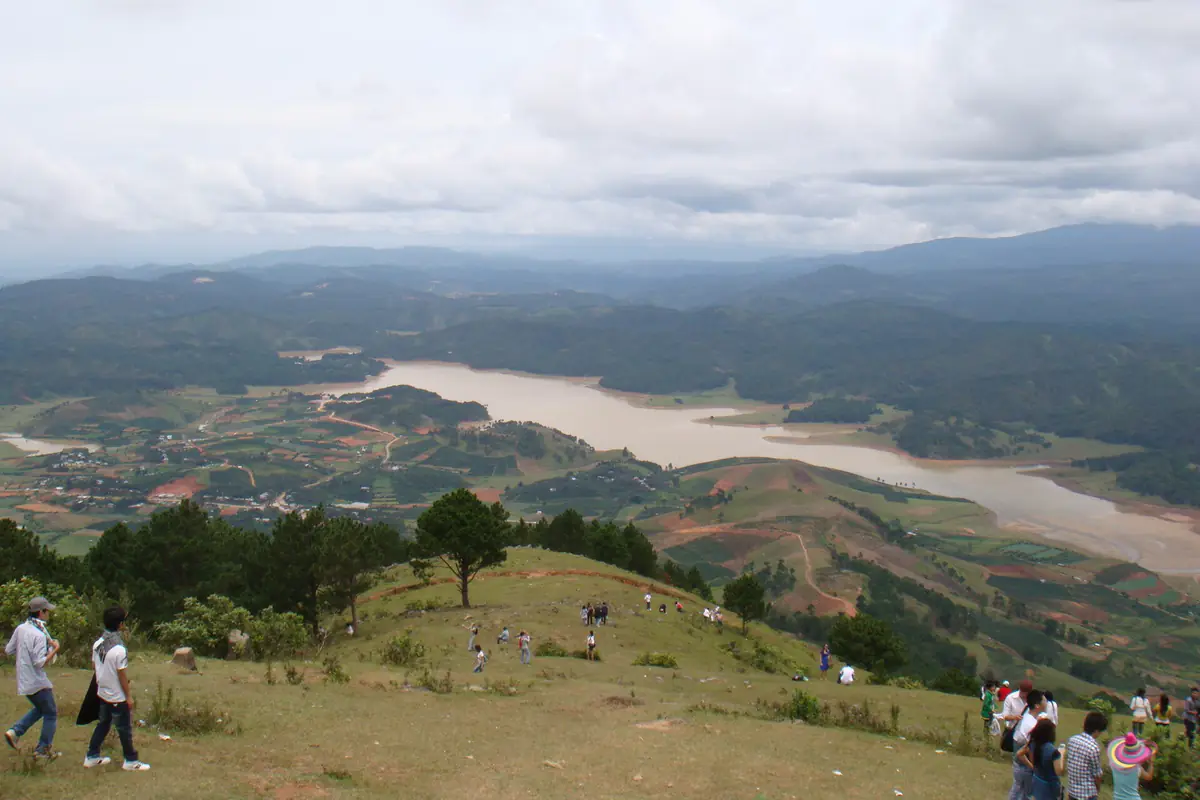
Golden Valley campground
The Golden Valley (Thung Lung Vang) tourist park around Dankia - Suoi Vang Lake lists overnight camping at 120,000 VND per adult, next to a 70,000 VND entry ticket (checked October 27, 2026; the price list is undated). It does not say whether that covers entry or a rented tent, or whether you need to bring your own, so ask, along with where the toilets are and where fires are allowed.
Twin Beans Farm at Da Sar
The farm is on road 27C toward Nha Trang and says it is about 20 km, or 30-45 minutes, from the center. Its glamping tents sleep up to four, each with a private toilet and hot shower behind it. The tents sit right by a stream, so if you are going in the rainy season or with children, ask where your tent is and what the plan is if a weather warning is issued.
- Price and what’s included: on October 27, 2026, a tent for one or two people cost 1.1 million VND ($43) a night Sunday to Thursday and 1.3 million ($50) on Friday and Saturday nights. Prices may have changed, so check your dates at the booking step. A third or fourth guest costs 300,000 VND ($12) per adult or 200,000 VND ($8) per child aged 4-12. The farm’s stay page lists breakfast as included; lunch and dinner must be ordered at least a day ahead. Its activities page describes a campfire around 7-8pm, free for guests and weather permitting, so confirm that it comes with the package you choose.
- Changes, cancellation and what to ask: date changes are free with 14 days’ notice; with at least 7 days’ notice, they cost 25% of the total booking amount. Cancel 14 or more days ahead for a 95% refund, 7 or more days ahead for 50%, and nothing after that; over holidays such as Lunar New Year, those cutoffs become 30 and 15 days. In a natural disaster or epidemic, the farm holds the booking for six months. No heater is listed, so ask whether the tent has one and how many blankets you get.
Camping rules: where can you pitch a tent, and who says yes?
For forest land, Decree 146/2026 has applied since June 25, 2026: organizing sightseeing or tourism in a forest without the forest owner’s permission carries a fine of 4-6 million VND, and organizing tourism services or business there without permission 6-10 million. The decree does not mention camping specifically. Who can say yes:
- At a camp: the operator. Ask whether it holds a business license and whose land the tents stand on.
- In forest or on a mountain: the forest owner or managing body, such as Bidoup - Nui Ba National Park for Langbiang. Villagers living nearby cannot give permission.
- With your own tent: only on a site whose operator takes campers, such as a tourist park’s camping area. If you can’t tell who manages the land, don’t pitch there; if there’s a no-camping sign, move on.
How cold are nights from November to February?
At the city’s weather station, the long-term average low is 14.6°C (58°F) in November, 13.2°C (56°F) in December, 11.7°C (53°F) in January and 11.9°C (53°F) in February. Cold snaps can push it below 10°C (50°F); the station read 7.8°C (46°F) on the morning of January 9, 2026. Camps on open hills or in valleys can be colder than town, especially on clear nights.
- A thermal base layer, a fleece or sweater and a windproof jacket; a beanie, gloves and thick socks.
- A dry set of clothes kept only for sleeping. What you wore all day is usually damp from the mist, and much colder to sleep in.
- Own tent: a sleeping bag rated below that night’s forecast low for Da Lat (camps can be colder), a sleeping pad and a tent with a rain fly.
- Glamping: ask whether there is an electric heater, how many blankets, whether the mattress is raised off the floor and whether power stays on all night.
- Never use a charcoal stove, charcoal burner or gas heater inside a tent, even with the door open. Carbon monoxide has no color or smell, can still build up and can poison you.
Rainy or dry season: is November too early?
Da Lat’s rainy season usually runs May to October and tapers off through November. On long-term averages, October has about 20 rainy days, November about 11 or 12, December about 6, and January and February only 2 or 3.
- November: still green and humid, and heavy rain is still possible. If your tent is right by a stream or at the foot of a cut slope, ask where the camp moves guests when a heavy-rain warning is issued. In mid-November 2025, landslides after heavy rain closed the Prenn pass and road 27C, the road to Da Sar, for a time; in the rainy season, ask the camp about road conditions before you set out.
- December to February: dry, with more clear nights and easier dirt tracks into camps. In exchange you get the coldest nights and, often, more wind. The Flower Festival in late December and Lunar New Year bring crowds, so book early and ask about surcharges.
- A few days before: check Vietnam’s national weather service. If there are warnings for heavy rain or landslides, or a pass is closed, move your dates under the terms you agreed with the camp rather than pushing on.
Safety: lakes, slopes, campfires and fog on the road
Tuyen Lam and Dankia lakes
- These are reservoirs, and the bottom can drop away suddenly. Wear a fitted life jacket for paddleboarding, kayaking or swimming, even if you swim well.
- Only go in where the camp allows it and someone is watching. Join sunrise mist paddles with the camp’s guide. If the fog is thick enough to hide the shore, postpone the paddle, even with a guide: it is easy to lose your bearings, and nobody on shore can see you. Only go out once the camp confirms conditions are safe.
- Children go in only with a life jacket on and an adult right beside them. No swimming after drinking or after dark.
Slopes and drop-offs
Many tents sit on hillsides or near cut slopes. Ask how far your tent is from the edge and whether the path to the toilets is lit. Carry a flashlight, stick to the paths, and don’t stand at the edge for cloud photos while it’s still dark. Clay slopes get very slippery after rain.
Campfires
The dry season is also pine-forest fire season. Light fires only in the camp’s fire pit with someone watching, and put them out completely with water before bed. No fires and no cigarette butts in the forest.
Night driving and fog
Aim to reach camp before dark; from November to January it gets dark from about 5:30pm. The roads to Cau Dat, Tram Hanh and Da Sar have long unlit stretches, and fog can be thick from evening to morning. In fog: slow down, use low beams and fog lights if you have them, leave a long gap and don’t overtake on bends. If you aren’t used to mountain roads, don’t ride a rented motorbike out at night; book a car with a driver or ask whether the camp offers pickup. If you drank at the barbecue, don’t drive.
Before you pay a deposit: what to ask
Many camps take bookings through Zalo or Facebook Messenger and ask for a deposit. Ask these questions and try to get the answers in writing:
- Date changes and refunds: how much notice to change dates, whether the fee is based on the deposit or the total, what share comes back, and how long you have to use a new date.
- Weather warnings: if heavy rain, a storm or a pass closure is announced, can you move the date or get the deposit back; and what happens if rain wipes out the campfire or barbecue once you’re there. Ask where you would shelter in a storm at night.
- Toilets: private or shared, hot water or not, how far from the tent, and whether the path is lit.
- Heating and power: electric heater or not, how many blankets, power all night, a socket in the tent.
- Food: which meals are included, whether extra meals are charged per person or per group and how far ahead to order them, until what time dinner is served, whether you can bring food and drinks, and vegetarian or kids’ options. Remote camps may be out of range for food delivery.
- Price: per person or per tent, how children are charged, and the surcharge for Saturday nights, the Flower Festival and Lunar New Year.
- Access and paperwork: exact address, whether a car can reach the camp when it rains, and whether the camp holds a business license.
FAQ
Can I get to a Da Lat glamping site without a car?
Camps around Tuyen Lam Lake are close to town and easier to reach by Grab. Camps at Cau Dat, Tram Hanh, Da Sar or around Dankia Lake are farther out and a ride back may be hard to find, so ask whether the camp offers pickup, or book a car with a driver and agree on the return time in advance.
Is glamping in Da Lat worth it in the rainy season?
It can be, if you accept wet paths and a canceled campfire. Pick a tent with a private bathroom and a solid shelter nearby, check the forecast two or three days ahead, and book a rate or get written terms that let you change dates if heavy rain or a landslide warning is issued.
Is Da Lat glamping suitable for young children?
Choose a tent with its own bathroom or one close by, a heater or plenty of thick blankets, and a spot away from slopes and the lakeshore. If the tent is beside a stream, ask the camp what happens when heavy rain is forecast. Pack an extra warm set for the night and a flashlight. Near the lake, children only go in the water wearing a life jacket with an adult right beside them.