Da Lat homestays in 2026: types, neighborhoods, real prices and what to ask your host
Da Lat homestays range from a spare room in a family home to a wooden villa in the pines. Using Vietnamese news reports and the law (checked September 25, 2026), we explain the types, areas, sourced prices, safety checks, booking scams and what to ask before you pay a deposit.
By Da Lat LoversPublished Updated How we reviewĐọc bản tiếng Việt
What counts as a homestay in Da Lat
Scroll through any Vietnamese travel group and Da Lat homestays seem to be everywhere: wooden cabins on pine hills, retro-styled townhouses in narrow alleys, tents in vegetable gardens, shipping containers overlooking valleys of greenhouses. In Vietnam, “homestay” has become shorthand for almost any place to stay that is not a hotel, so the first step is knowing what you are actually renting.
Legally, a homestay is a “home with rooms for tourists to rent,” one of eight types of tourist accommodation listed in Article 48 of the 2017 Law on Tourism (in Vietnamese), with its own national standard, TCVN 7800:2017. Unlike hotels, homestays are never star-rated: under Article 50, one-to-five-star classification applies only to hotels, holiday villas, serviced apartments and cruise boats. So ignore any listing that calls itself a “three-star homestay” and look at recent guest reviews and safety basics instead.
There is no shortage of supply. According to VnExpress International (November 23, 2023), Da Lat had about 2,400 accommodation facilities with over 31,000 rooms, up 16% and 23% from 2020, with homestays and holiday villas among the fastest-growing types. The same report described investors selling leases at a steep loss; one local investor estimated that around 40% of homestays outside the center were up for sale or had shut down.
For travelers, that cuts both ways. Weekday rooms are easy to find, but many Da Lat homestays were set up on a trend, copy each other’s design and change hands often. A place that looked great in last year’s photos may have a different operator today, which is why the most recent reviews matter more than the overall score.
This guide covers homestays only. If you are weighing a hotel instead, see our guide to cheap hotels in Da Lat city center. For the big picture of the trip, start with our Da Lat travel guide and its where-to-stay section.
Five types of Da Lat homestays and who they suit
Da Lat homestays all carry the same label, but the experience differs enormously. We group them by how you actually live in them: with the family, in a whole house, on a hill, on a farm or under canvas.
1. A room in the host’s home
You rent one or two rooms in a house where the owner’s family lives. The host is right there to recommend street food or explain the bus to the airport, and some will invite you for tea in the evening. The trade-off is shared space and house rules. This is the classic homestay and suits solo travelers, couples and anyone who wants to meet local people.
2. A whole townhouse in the city
The most common choice for families and groups of friends. One example reported by Lam Dong Newspaper (August 28, 2026, in Vietnamese) is a four-bedroom house on Hung Vuong Street in Lam Vien - Da Lat Ward that sleeps up to 12, with a living room, kitchen, laundry room and barbecue yard. Renting the whole place means you can cook, stay up late without disturbing anyone and split the cost per head.
3. Villas and wooden cabins on pine hills
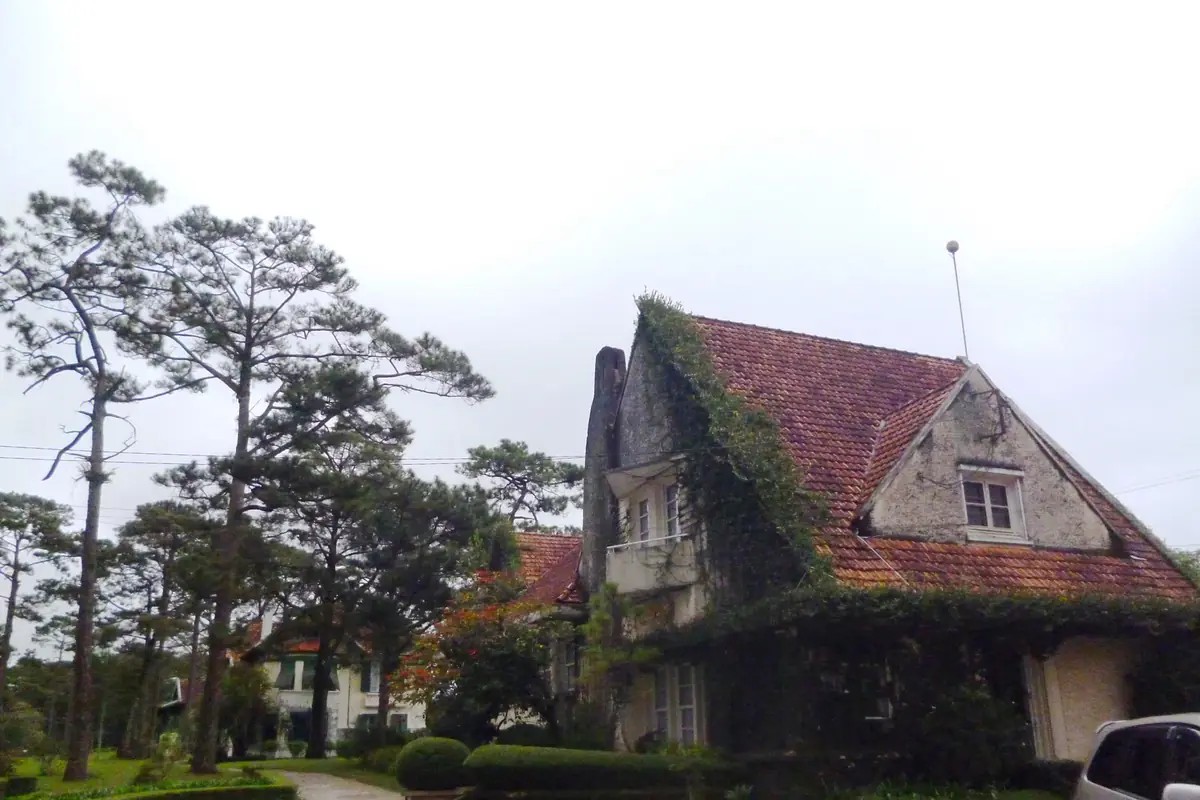
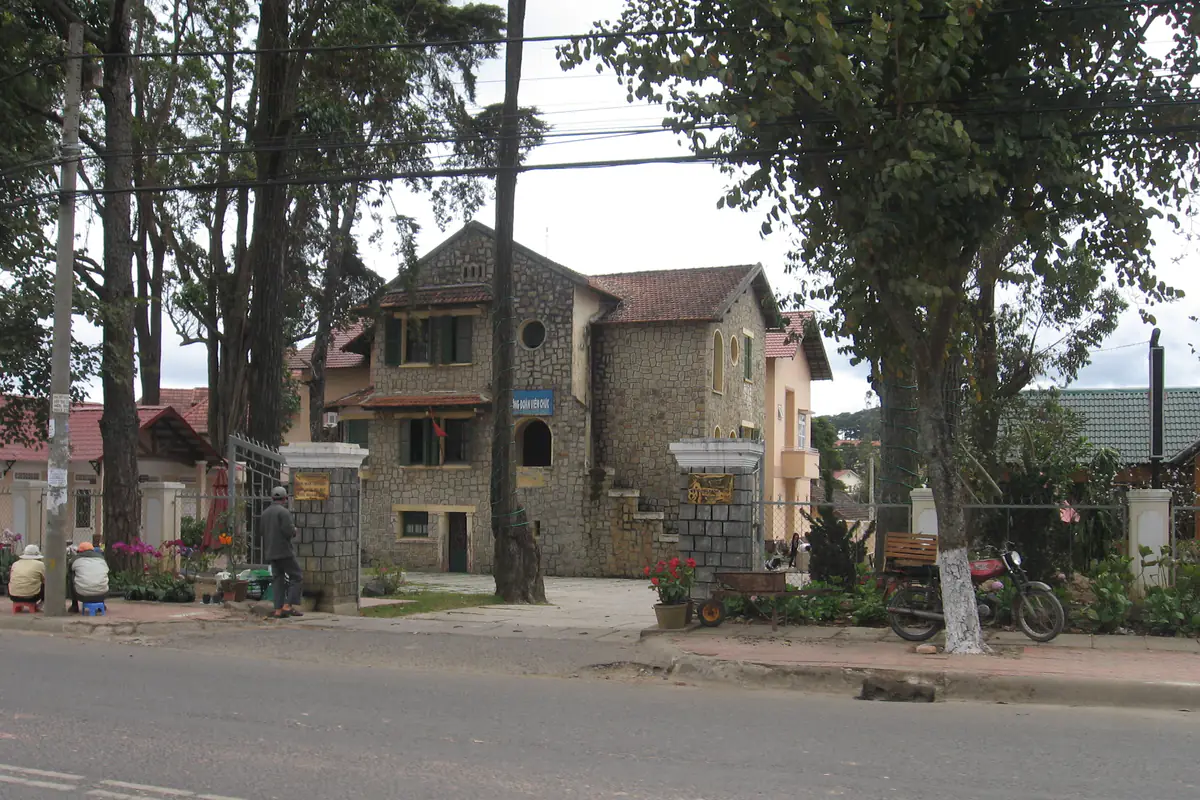
These are the Da Lat homestays you see on Instagram: a balcony facing the pines and mist drifting past at breakfast. The catch is access. Lanes are often steep, narrow and unlit, so you will need a confident motorbike rider or a ride-hailing car to go out for dinner. For this type, the landslide questions later in this guide are not optional.
4. Farm stays and garden houses on the outskirts
These sit among vegetable plots, flower farms or coffee gardens, typically 7-25 km from the center. Thanh Nien (April 13, 2026, in Vietnamese) featured one in Tuy Son hamlet, Xuan Truong - Da Lat Ward: more than 700 m² with a three-bedroom wooden house and three Mongolian-style yurts, taking groups of up to 20. A guest estimated it was about 10 km from the city center. Farm stays suit families with children and anyone who wants to watch clouds roll in without an early drive.

5. Containers, bungalows and glamping
The newest and riskiest category. In 2023, SGGP (November 13, 2023, in Vietnamese) described glamping sites with proper beds and mattresses but flimsy structures on hillsides, and reported that officials broke up an unlicensed 23-tent campsite inside the Tuyen Lam Lake tourist area. Since June 25, 2026, organizing tours inside a forest without the forest owner’s permission can be fined VND4-6 million (Nguoi Dua Tin, May 9, 2026, in Vietnamese). If you want a tent, pick a site with a clear street address, outside the forest, with a permanent bathroom.
| Type | Best for | Strengths | Ask about |
|---|---|---|---|
| Room in the host’s home | 1-2 people | Lower cost, a local to guide you | Shared or private bathroom, curfew |
| Whole townhouse | Groups of 4-12, families | Kitchen, near markets and restaurants | Car parking, noise, extra-guest fees |
| Villa or cabin on a hill | Friends, couples | Views, quiet | Steep access, slopes, heating at night |
| Farm stay | Families with kids, big groups | Space, sunrise clouds on site | Distance, dinner options, phone signal |
| Container or glamping | Experience seekers | Novelty, wide price range | Structure, wind and rain, land permits |
Where to stay: the five new wards and the outskirts
Since July 1, 2025, the former Da Lat city has been reorganized into five wards whose official names end in “- Đà Lạt”, for example phường Xuân Hương - Đà Lạt. Many listings still use the old numbered wards (Ward 3, Ward 10 and so on), so the table below lets you match them up when comparing Da Lat homestays. The pros and cons are our own view for homestay guests, not an official ranking.
| New ward | Formed from | Good if you | Watch out for |
|---|---|---|---|
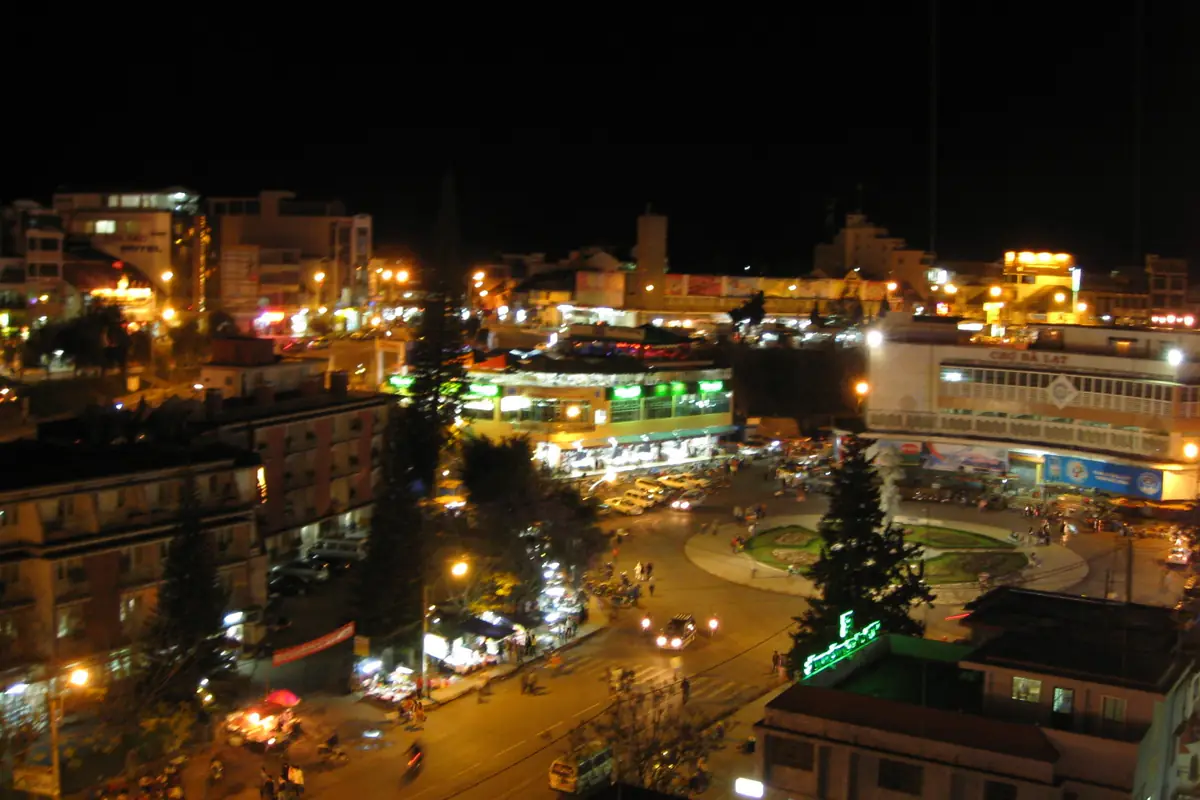
| Xuan Huong - Da Lat | Wards 1, 2, 3, 4 and 10 | Are a first-timer without a vehicle and want to walk to Xuan Huong Lake and the market | Noise and weekend prices; the eastern hills (old Ward 10) have many houses on slopes |
| Lam Vien - Da Lat | Wards 8, 9 and 12 | Want somewhere quieter but still close in, around Hung Vuong Street | Steep alleys; check car access |
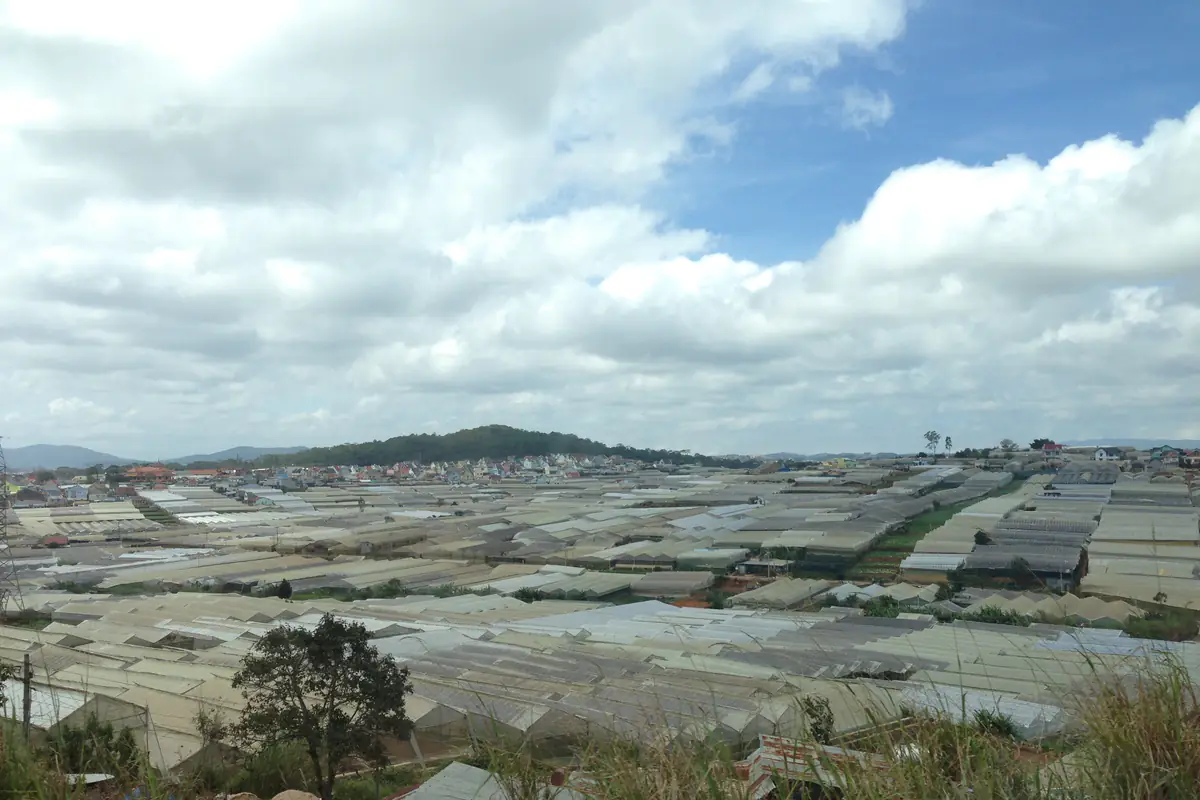
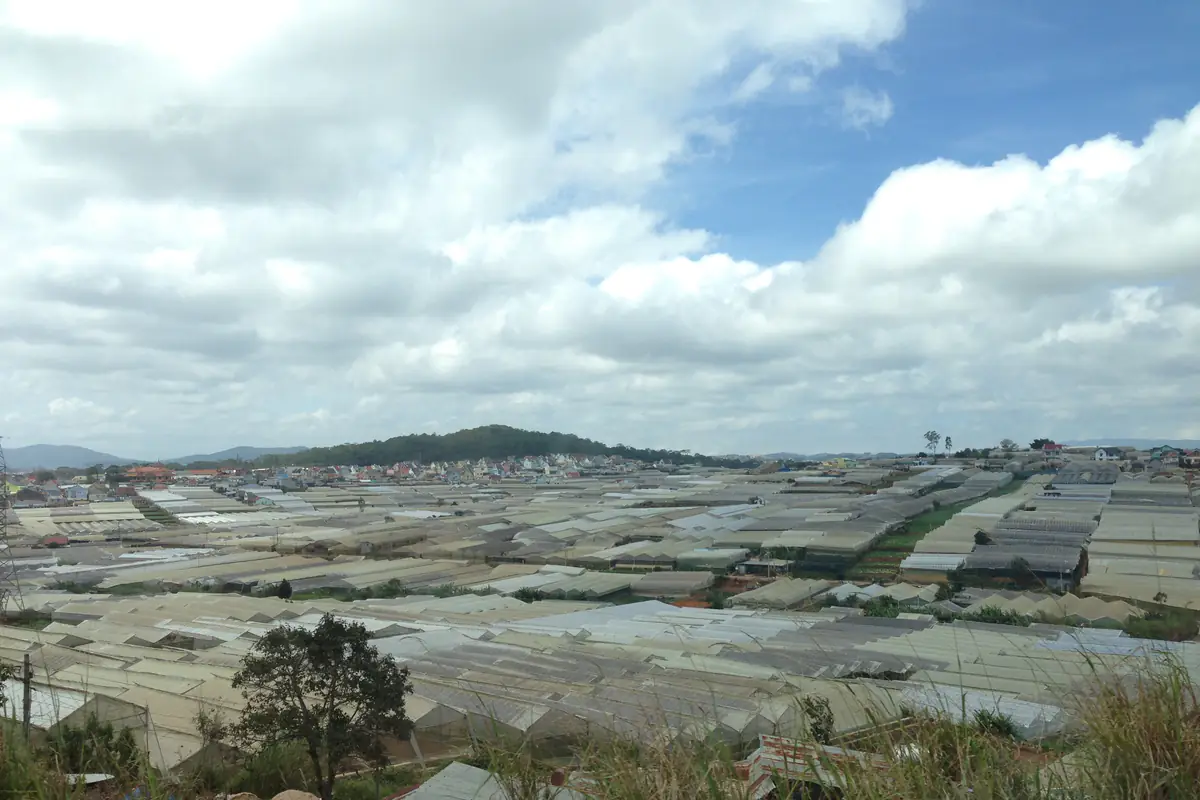
| Cam Ly - Da Lat | Wards 5 and 6, Ta Nung commune | Like views over greenhouse valleys and trips toward Ta Nung | Few places to eat at night on the fringes |
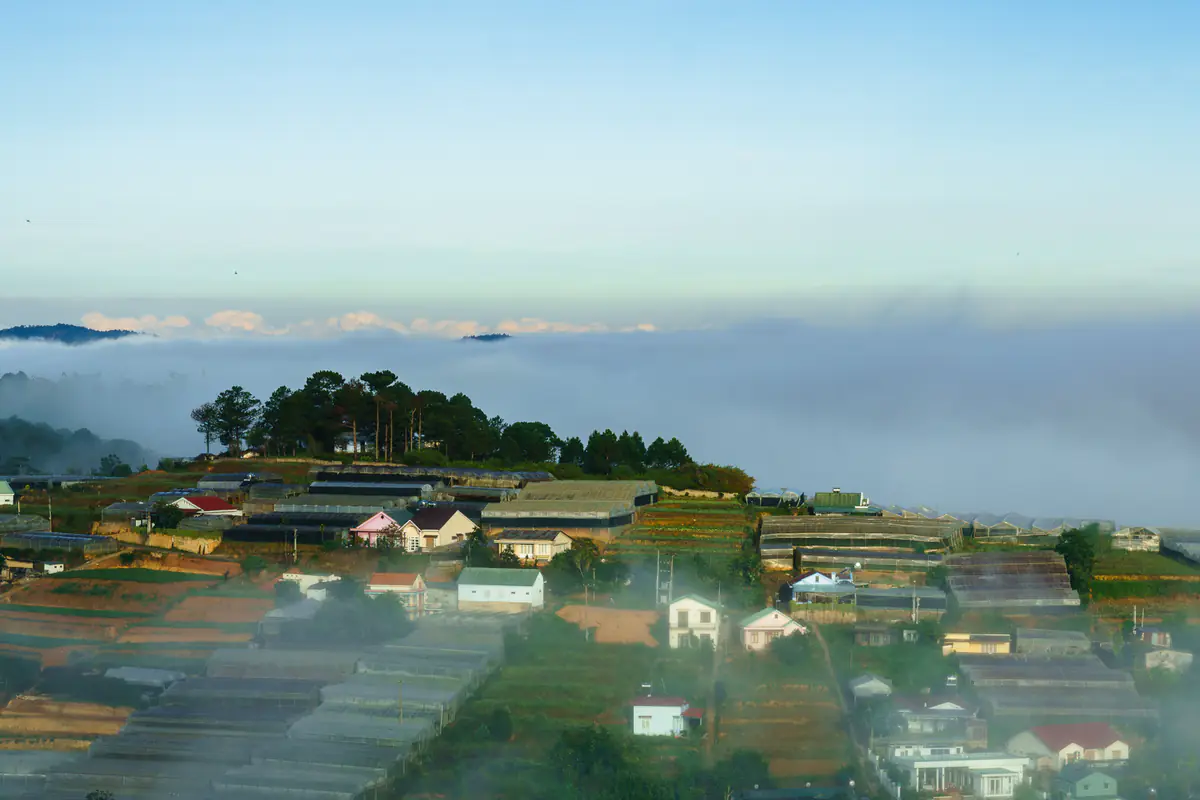
| Xuan Truong - Da Lat | Ward 11, Xuan Tho, Xuan Truong and Tram Hanh communes | Want sunrise clouds, the Cau Dat tea hills and roomy farm stays | 10-25 km from the center; you need your own transport |
| Lang Biang - Da Lat | Ward 7, Lac Duong town, Lat commune | Want to be near Langbiang Mountain in a quiet garden house | About 7 km from the center (Dan Tri, February 2026); colder nights |
One practical tip: if a host says “five minutes to the market,” ask whether that means on foot or by motorbike, then paste the address into a map app to see the distance and the gradient for yourself. If you plan to see a lot, compare the location with the clusters in our guide to places to visit in Da Lat.
What Da Lat homestays cost: benchmarks with sources
There is no official price list for Da Lat homestays, and rates on booking platforms change daily. We only quote figures that Vietnamese media have reported with a date. For individual rooms, compare the same dates on two or three platforms.
| Benchmark | Figure | Source, date |
|---|---|---|
| Whole house, 4 bedrooms, up to 12 guests | VND2-3 million a night; about 10% more on holidays | Lam Dong Newspaper, August 28, 2026 |
| Occupancy of non-hotel lodging over Tet 2026 | About 65-75% | Dan Tri, February 21, 2026 |
| Tet room rates versus normal days | Up to three times higher at some places | Dan Tri, February 21, 2026 |
| “Bait” price on a fake Facebook page | VND1.2 million a night for a pine-view room for four over a holiday | Cong An Nhan Dan, May 11, 2026 |
How to read this: for a group of 10-12, a VND2-3 million house works out to roughly VND200,000-300,000 per person per night (our arithmetic), usually the best value in town. At the other end, a pine-view room that looks suspiciously cheap on a holiday weekend deserves extra checks, because that exact kind of offer was used as bait in the scam described below.
Timing matters as much as price. Over Tet 2026, Dan Tri (in Vietnamese) quoted a homestay owner in Lang Biang - Da Lat Ward, about 7 km from the center, who said every room was booked before the holiday began. For a full trip budget (buses, flights, motorbike rental, food), see our Da Lat travel tips.
Extra charges to ask about in advance
Legal and safety checks most guests skip
What a legitimate homestay needs
Under Article 49 of the Law on Tourism (in Vietnamese), anyone running tourist accommodation must have a business registration; meet requirements on security and public order, fire safety, environmental protection and food hygiene; and meet minimum standards for facilities and services. As a guest you do not need to see paperwork, but a serious operator will have a registered business name, can issue an invoice and will answer questions without fuss.
Foreign guests should also know that accommodation providers are responsible for declaring your temporary residence to the police, under Article 33 of Law No. 47/2014/QH13 (see also Viet Nam News, November 13, 2025). Expect your host to ask for your passport at check-in. A host who never asks for any ID is not being relaxed; it is a sign the business is not properly run.
Fire safety: five things to check on arrival
Ward police do carry out fire safety inspections. In April 2026, for example, the police of Cam Ly - Da Lat Ward (in Vietnamese) set up teams to inspect hotels, guesthouses and other lodging during the dry season. Inspectors cannot visit all Da Lat homestays all the time, though, so take a quick look yourself.
- There is a fire extinguisher in the hallway or kitchen, and it is in date.
- You know the second way out of a multi-story house; windows and balconies are not permanently barred.
- Electric heaters sit away from curtains and blankets; nobody burns charcoal in a closed bedroom.
- The campfire or barbecue area is well away from wooden walls and tents, with water or an extinguisher nearby.
- You have saved the host’s number plus 114 (fire) and 112 (general emergency).
Landslides: what to ask about houses on slopes
This is the risk specific to Da Lat homestays. At around 3 a.m. on June 29, 2023, a retaining slope about 30 meters high collapsed in an alley between Yen The and Hoang Hoa Tham streets (then Ward 10, now Xuan Huong - Da Lat Ward), killing two people, injuring five and flattening a house (Nhan Dan, in Vietnamese).
On January 5, 2026, Lam Dong’s Department of Construction responded to reports by Nguoi Dua Tin (in Vietnamese) about homestays, cafes and restaurants in Da Lat built as temporary steel-frame structures with sheet-metal roofs, thin walls and poor foundations on hillsides. The department said it would advise local authorities to set up teams to review all such buildings, especially on steep slopes at risk of landslides.
A provincial research project has identified 347 landslide-risk sites, including 23 of especially high risk in Da Lat’s wards and Dam Rong commune affecting about 1,341 households, and is building an online map so residents can check the risk by location (Lam Dong Newspaper, September 9, 2026, in Vietnamese). On September 15, 2026, the province proposed limiting excavation and construction on steep slopes (Vietnam+). A reader column in VnExpress International (November 2025) put it bluntly: houses have been built “directly against slopes.”
What we like
- A solid building with drains around it and a reinforced or grassed slope behind
- A host who can tell you how the house coped last rainy season
- Paved access that a car can drive right up to
Watch out for
- A temporary steel-and-sheet-metal structure at the foot or edge of freshly cut earth
- A dirt access track that turns slick in the rain
- A host who dodges the question and only sends flattering photos
Da Lat’s rainy season runs roughly from May to October (see Da Lat weather in October). If heavy rain is forecast for days, ask your host about moving you to a safer room or changing your dates instead of sticking it out beside a cut slope. As of September 23, 2026, Prenn Pass on the main road into the city was under a natural disaster emergency (Tuoi Tre News), so check road news before you travel.
Rescheduling when the passes close
During the floods of November 2025, many Da Lat homestays let guests change dates or refunded deposits when landslides hit the Mimosa and Prenn passes (CafeF, in Vietnamese). One homestay initially demanded a VND200,000 rescheduling fee, then apologized and offered free changes within three to six months (Kenh14, in Vietnamese). The lesson: ask about the natural-disaster policy before you pay, and keep the written reply. Our booking section in the travel tips covers the deposit story from the September 2, 2026 holiday.
How to choose and book without getting burned
Read photos and reviews like an insider
Listings that do not match reality are an old complaint about Da Lat homestays. Back in 2019, Viet Nam News told the story of a traveler who booked a room “surrounded by a pine forest” near Da Lat, only to find the romantic window in the photos sealed shut and the forest shot taken somewhere else. So:
- Prioritize photos taken by guests, in the review sections of booking platforms or Google Maps.
- Read reviews from the last three months, especially the two- and three-star ones, which tend to be honest about hot water, noise and damp.
- Search reviews for words like “damp,” “mold,” “cold,” “steep,” “hard to find” and “not like the photos.”
- See how the host replies to bad reviews: do they apologize and fix things, or argue with the guest?
Paying a deposit safely and spotting fake pages
During the 2026 summer season, Cong An Nhan Dan (May 11, 2026, in Vietnamese) reported that travelers lost anywhere from a few million to tens of millions of dong booking Da Lat homestays through social media. One group from Ho Chi Minh City found a page advertising a pine-view room for four at VND1.2 million a night, paid a 50% deposit of over VND2 million, and was then asked for more money to “verify the transaction.”
VTV (May 17, 2026, in Vietnamese) described the playbook: cloned pages with tens of thousands of followers, sometimes a blue check, paid ads and fake comments. After the deposit, the scammer claims you used the wrong transfer reference and asks you to pay again. In English, VietNamNet (May 5, 2025) relayed police advice to check when a page was created and never send deposits to personal accounts.
- Find the homestay on Google Maps first and use the phone number listed there, not the one in an ad or message.
- Ask for a video call and have the host film the room, the gate and the house number on request.
- Check that the name on the bank account matches the business or the host you verified.
- Pay only a partial deposit, and never send extra money to “verify,” “activate” or “refund an overpayment.”
- If you found the place on a booking platform, pay through the platform rather than by private transfer for a discount.
Red flags: stop and walk away
10 questions to ask your host before paying
We built this list from the cases reported in the Vietnamese press and from what guests at Da Lat homestays most often forget to check. Paste it into one message and ask everything at once, using a translation app if your host does not read English.
- What is the exact address, including the new ward name, and the Google Maps pin?
- Is the access road steep? Can a 7-seat car or a taxi reach the door, and where do we park?
- Is the house next to a cut slope or the edge of a hill? How did it do in last year’s rainy season?
- Is hot water from an electric heater or solar panels, and is there enough for the whole group in the evening?
- Do rooms have heaters, thick blankets and a dehumidifier?
- What does the price include, and what are the fees for extra guests, children, barbecue and campfire wood?
- How much is the deposit, whose name is on the bank account, and can you issue an invoice?
- What is the cancellation and date-change policy, including if a pass closes or a flight is canceled?
- What are check-in and check-out times, and are there quiet hours or rules on music and karaoke?
- Does the host or a caretaker live nearby, and which number do we call at night?
Homestay etiquette in Da Lat
Many Da Lat homestays are someone’s actual home, not a hotel with housekeeping. Viet Nam News recounted a story shared from Da Lat and Ha Long of a group that left trash everywhere, used bath towels as cleaning rags and burned a pan, then posted a one-star review after being asked for compensation; they later apologized once the story spread online.
- Bag your trash and wash up after cooking; you need not leave it spotless, but do not leave a mess.
- Keep it quiet after 10 p.m., especially in alleys with neighbors.
- Do not bring extra overnight guests without telling the host, or pets if they are not allowed.
- Do not smoke in wooden houses or light fires outside the designated area.
- Tell the host right away if you break something, and cancel early so they can rebook.
- Review fairly: praise what was good, be specific about what was not, and never use a review as revenge.
A small gesture goes a long way. Taking your shoes off at the door where the family does, greeting older relatives and asking before using the kitchen are simple courtesies that hosts at Da Lat homestays tend to appreciate (common courtesy, not a rule).
When a homestay makes sense, and when it does not
Da Lat homestays work best if you are a group of four or more, staying at least two nights, happy to cook, with your own transport and a taste for quiet. They make less sense if you are traveling alone over a holiday, have no vehicle, are only staying one night before an early departure, or need a 24-hour front desk. In those cases a central hotel is usually easier; see cheap hotels in Da Lat city center.
For an example of how we review one of the Da Lat homestays individually (quick facts, what we like, what to watch out for), read our Berry Valley Homestay review. We do not accept payment for positive coverage, and this guide does not rank any homestay.
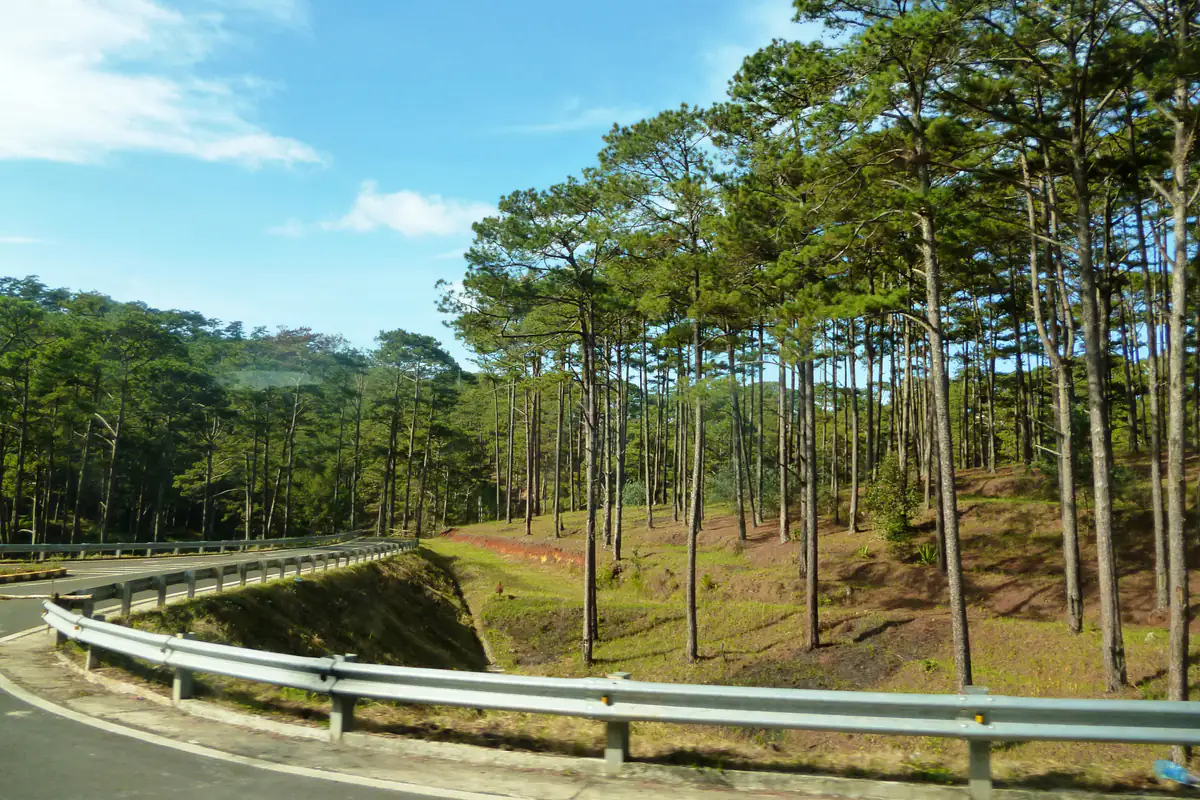
In short, the best of the Da Lat homestays is not necessarily the one with the prettiest photos. It is the one with a clear address, a host who answers straight about safety and cancellations, steady recent reviews and a price in line with the neighborhood. Check those boxes, and the rest is morning mist and a pot of hot tea.
FAQ
How much does a whole-house homestay in Da Lat cost?
Lam Dong Newspaper (August 28, 2026) reported VND2-3 million a night for a four-bedroom house sleeping up to 12 in Lam Vien - Da Lat Ward, about 10% more on holidays. Actual prices depend on location, size and season, so compare two or three platforms.
Which area is best for Da Lat homestays?
First-timers without a vehicle do best in Xuan Huong - Da Lat or Lam Vien - Da Lat wards, near Xuan Huong Lake and the market. For sunrise clouds and space, look at Xuan Truong - Da Lat or Lang Biang - Da Lat, but plan on your own transport.
Are homestays on Da Lat’s hillsides safe in the rainy season?
Ask whether the house sits next to a cut slope, how it coped last rainy season, and for photos of the access road and the back of the house. Avoid temporary steel-and-sheet-metal structures at the foot of freshly excavated slopes; Lam Dong’s construction department ordered reviews of such buildings in January 2026.
Is it safe to book a Da Lat homestay through Facebook?
It carries risk. Cong An Nhan Dan (May 11, 2026) reported travelers losing millions of dong to fake pages. Get the phone number from Google Maps, video call to see the room, check the name on the bank account, pay only a partial deposit and never send extra money to “verify” a booking.
Do foreigners need a passport to check in to a homestay?
Yes. Accommodation providers must declare foreign guests’ temporary residence to the police under Article 33 of Law No. 47/2014/QH13, so your host will ask for your passport at check-in.
Do Da Lat homestays have star ratings?
No. Under Article 50 of the 2017 Law on Tourism, one-to-five-star ratings apply only to hotels, holiday villas, serviced apartments and cruise boats. Homestays follow the national standard TCVN 7800:2017, so judge them by recent guest reviews and safety basics.
Sources
Facts in this article were checked against the sources below, accessed on Sep 25, 2026. Prices and opening hours change, so please double-check before you go.
- VnExpress International: Investors selling Da Lat homestays at losses (Nov 23, 2023)
- VnExpress International: Da Lat mountains are failing (reader column, Nov 27, 2025)
- VietNamNet Global: Vietnam police warn of hotel booking scams targeting travelers online (May 5, 2025)
- Viet Nam News: Building a respectful homestay culture (Aug 25, 2019)
- Viet Nam News: How do foreign travellers declare their temporary residence in Viet Nam? (Nov 13, 2025)
- Tuoi Tre News: Lam Dong declares emergency over landslides on Prenn Pass (Sep 23, 2026)
- Law No. 47/2014/QH13 on entry, exit, transit and residence of foreigners in Vietnam, Article 33 (LuatVietnam English text)
- Lam Dong Newspaper: Welcoming visitors for the September 2 holiday (Aug 28, 2026, in Vietnamese)
- Lam Dong Newspaper: Building landslide risk maps and early warnings (Sep 9, 2026, in Vietnamese)
- Vietnam+: Lam Dong proposes limiting excavation and construction on slopes (Sep 15, 2026, in Vietnamese)
- VTV: Warning on fake pages of hotels, resorts and homestays (May 17, 2026, in Vietnamese)
- Cong An Nhan Dan: Travelers fall for online booking traps in peak season (May 11, 2026, in Vietnamese)
- Lam Dong Provincial Police: Cam Ly - Da Lat Ward fire safety inspections (Apr 14, 2026, in Vietnamese)
- Thanh Nien: A Da Lat homestay where the clouds come to you (Apr 13, 2026, in Vietnamese)
- Dan Tri: Da Lat lodging sells out over Tet 2026 (Feb 21, 2026, in Vietnamese)
- Nguoi Dua Tin: Lam Dong construction department on homestays and cafes built on hillsides (Jan 5, 2026, in Vietnamese)
- Nguoi Dua Tin: Fines for unauthorized tourism in forests from June 25, 2026 (May 9, 2026, in Vietnamese)
- Kenh14: Da Lat homestay apologizes over rescheduling fee during landslides (Nov 22, 2025, in Vietnamese)
- CafeF: Da Lat homestays refund deposits for stranded travelers (Nov 21, 2025, in Vietnamese)
- SGGP: Da Lat tightens management of camping (Nov 13, 2023, in Vietnamese)
- Nhan Dan: The serious slope collapse and landslide in Da Lat (Jun 29, 2023, in Vietnamese)
- Law on Tourism 2017, Article 48: Types of tourist accommodation (in Vietnamese)
- Law on Tourism 2017, Article 49: Conditions for tourist accommodation businesses (in Vietnamese)
- Law on Tourism 2017, Article 50: Classification of tourist accommodation (in Vietnamese)
- TCVN 7800:2017 Homes with rooms for tourists to rent (national standard)