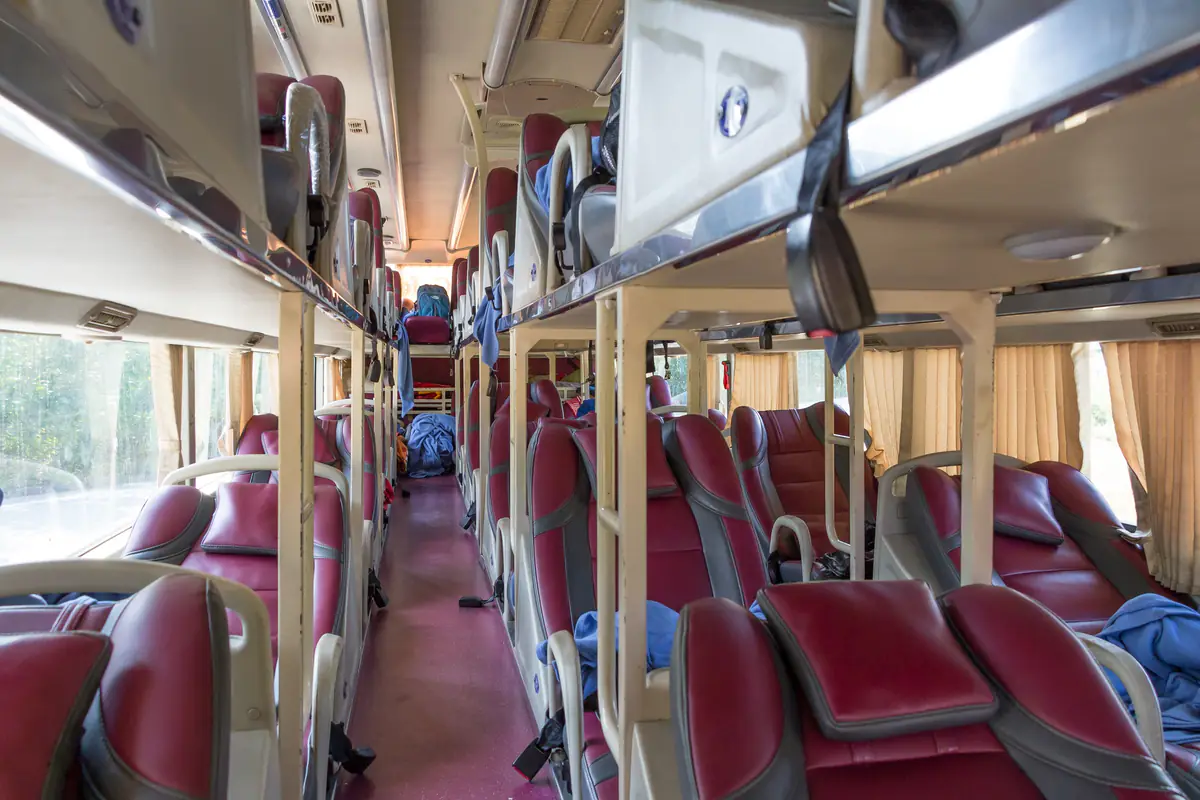
Vietnam train travel: timetables, fares and stops from Hanoi to Saigon
The railway between Hanoi and Saigon stretches 1,726 km, with a complete journey taking approximately 33-38 hours. You can travel the entire route on a Reunification Express train or break it into shorter trips to explore Hue, Da Nang, Nha Trang, and other cities along the way.
By Da Lat LoversPublished Updated

The SE3 train leaves Hanoi Railway Station at 7:20 PM, reaches Hue at around 7:50 AM the following morning, and continues toward Da Nang before noon. It is a good choice if you want to see central Vietnam through a train window without spending the entire journey sitting upright. If your only goal is to reach Ho Chi Minh City quickly, however, flying makes more sense: even the fastest Reunification Express takes over 32 hours.
Where does Vietnam's North-South train run?
Vietnam's North-South Railway, commonly called the Reunification Railway, connects Hanoi Railway Station with Saigon Railway Station over a distance of 1,726 km.
The route crosses the Red River Delta, north-central Vietnam, the central coast, and the southeastern region before reaching Ho Chi Minh City.
This is a conventional metre-gauge railway, not a high-speed line. Much of the route is single-track, so trains must follow scheduled passing arrangements, stop at stations, and observe speed restrictions on particular sections.
Even when the train reaches higher speeds on open sections, crossing the country still takes more than a day.
The main stations visitors should know are:
| Railway station | Main destinations |
|---|---|
| Hanoi | Hanoi and northern Vietnam |
| Ninh Binh | Trang An, Tam Coc, Hang Mua |
| Vinh | Vinh City and Cua Lo Beach |
| Dong Hoi | Dong Hoi and Phong Nha |
| Hue | Imperial City, royal tombs, Perfume River |
| Da Nang | Da Nang and Hoi An |
| Dieu Tri | Quy Nhon |
| Tuy Hoa | Tuy Hoa and Phu Yen beaches |
| Nha Trang | Nha Trang and nearby islands |
| Thap Cham | Phan Rang and Ninh Chu |
| Binh Thuan | Phan Thiet and Mui Ne area |
| Saigon | Ho Chi Minh City |
Not every train stops at every station.
Faster services usually skip some smaller stations, while trains making more stops generally take longer to complete the journey.
Loading map...
- Hanoi Railway Station: Le Duan Street, start of the line
- Ninh Binh Railway Station: for Trang An, Tam Coc, Hang Mua
- Vinh Railway Station: Vinh City and Cua Lo Beach
- Dong Hoi Railway Station: continue by road to Phong Nha
- Hue Railway Station: close to the city center
- Da Nang Railway Station: 202 Hai Phong Street, car to Hoi An
- Tuy Hoa Railway Station: Tuy Hoa and Phu Yen beaches
- Nha Trang Railway Station: 17 Thai Nguyen Street
- Thap Cham Railway Station: Phan Rang and Ninh Chu
- Binh Thuan Railway Station: Phan Thiet and Mui Ne area
- Saigon Railway Station: 1 Nguyen Thong Street, end of the line
Hoi An does not have a Reunification Express station in its Ancient Town. Most travelers get off at Da Nang and continue by car.
How long does the North-South train take?
The journey from Hanoi to Saigon takes approximately 32 hours 45 minutes to 38 hours 26 minutes, depending on the service.
The northbound journey takes roughly the same amount of time.
For example, if you board the SE1 in Hanoi on Friday evening, you will reach Saigon on Sunday morning.
That means spending two nights on the train.
Hanoi to Saigon train schedule
| Train | Departure from Hanoi | Arrival in Saigon | Journey time |
|---|---|---|---|
| SE7 | 6:00 AM | 5:00 PM the next day | 35 hours |
| SE5 | 8:00 AM | 6:20 PM the next day | 34 hours 20 minutes |
| SE9 | 1:00 PM | 3:26 AM two days later | 38 hours 26 minutes |
| SE3 | 7:20 PM | 5:30 AM two days later | 34 hours 10 minutes |
| SE1 | 9:45 PM | 6:30 AM two days later | 32 hours 45 minutes |
Timetables may change because of operational adjustments, engineering work, or weather conditions. Always confirm the schedule for your travel date before buying a ticket.
The choice becomes fairly straightforward once you consider the arrival time.
SE1: A good option if you want to complete the journey as quickly as possible. It departs Hanoi late in the evening and reaches Saigon in the morning, which is more convenient for checking into your accommodation or continuing with your plans.
SE3: A reasonable choice for travelers who want an overnight departure from Hanoi and daylight views of central Vietnam. It takes slightly longer than SE1.
SE5 and SE7: Both leave Hanoi during the day. You can watch the countryside almost immediately after departure, but you will spend more waking hours on the train.
SE9: This service takes longer and reaches Saigon very early in the morning. It may suit travelers prioritizing certain fares or onward connections, but it would not be my first choice for a family with young children.
Why does the train take so long?
The 1,726 km distance is only part of the explanation.
You cannot calculate the journey time simply by dividing the distance by the train's maximum speed.
Trains slow down through curves, station approaches, and sections with operating restrictions. They also stop to collect and drop off passengers.
Because much of the railway has only one track, services traveling in opposite directions must be coordinated carefully.
Some sections through central Vietnam are more complicated than the relatively flat stretches across the northern and southern plains.
The overall average speed works out at roughly 45-53 km/h, depending on the service.
That does not mean the train travels at this speed all the time. The average includes station stops and slower sections.
Which Reunification Express train should you choose?
SE1, SE3, and SE5 are train service numbers, not ticket classes.
The same train may contain several types of seats and sleeper cabins.
Southbound trains from Hanoi generally use odd-numbered services, while corresponding northbound trains use even numbers, such as SE2, SE4, and SE6.
For a first-time passenger, there are three practical ways to choose.
Traveling directly from Hanoi to Saigon
Start by comparing SE1 and SE3, preferably with a sleeper berth.
SE1 is useful when you want the shortest journey.
SE3 is worth considering if the daylight sections around Hue and Da Nang are important to you.
Do not spend too much time chasing the absolute cheapest ticket when a small saving means arriving at a particularly inconvenient hour.
Traveling mainly for the scenery
Choose a service that passes through the most interesting landscapes during daylight.
The railway between Hue and Da Nang is a particularly good example.
SE3 leaves Hue at approximately 7:55 AM and arrives in Da Nang around 10:43 AM.
SE1 passes through this section later, also during daylight.
SE5 and SE7, by comparison, travel through the Hue-Da Nang section during the evening or nighttime, making them less attractive for sightseeing.

Remember that daylight hours change throughout the year, and the weather may affect visibility.
A daytime journey does not guarantee clear skies or uninterrupted coastal views.
Visiting several cities along the route
There is no need to stay on the same train for the entire journey.
You could travel from Hanoi to Hue on SE3, spend two nights in Hue, and then buy another ticket from Hue to Da Nang.
After that, choose a suitable departure for Nha Trang.
This is much more comfortable than spending over 30 consecutive hours on board simply to say you completed the route in one trip.
The disadvantage is that several separate tickets may cost more than a single through ticket.
You also need to include hotel expenses during your stops.
Which seat or sleeper cabin is best?
On Vietnam's North-South Railway, choosing the right class of accommodation matters more than choosing a particular carriage number.
The arrangement of carriages can change according to the service and travel date.
Carriage 5 on one train will not necessarily have the same configuration as Carriage 5 on another.
Choose your seat or sleeper category first, then look at its position within the carriage.
Air-conditioned soft seat
What we like
- A soft seat is the economical choice for short and medium-distance journeys.
- These seats have backrests, air conditioning, and may offer some recline, depending on the carriage.
- For a journey lasting four to six hours, a soft seat is generally reasonable.
Watch out for
- Once the trip reaches seven or eight hours, particularly overnight, sitting continuously becomes less pleasant.
- You may struggle to sleep, and you will remain close to other passengers throughout the journey.
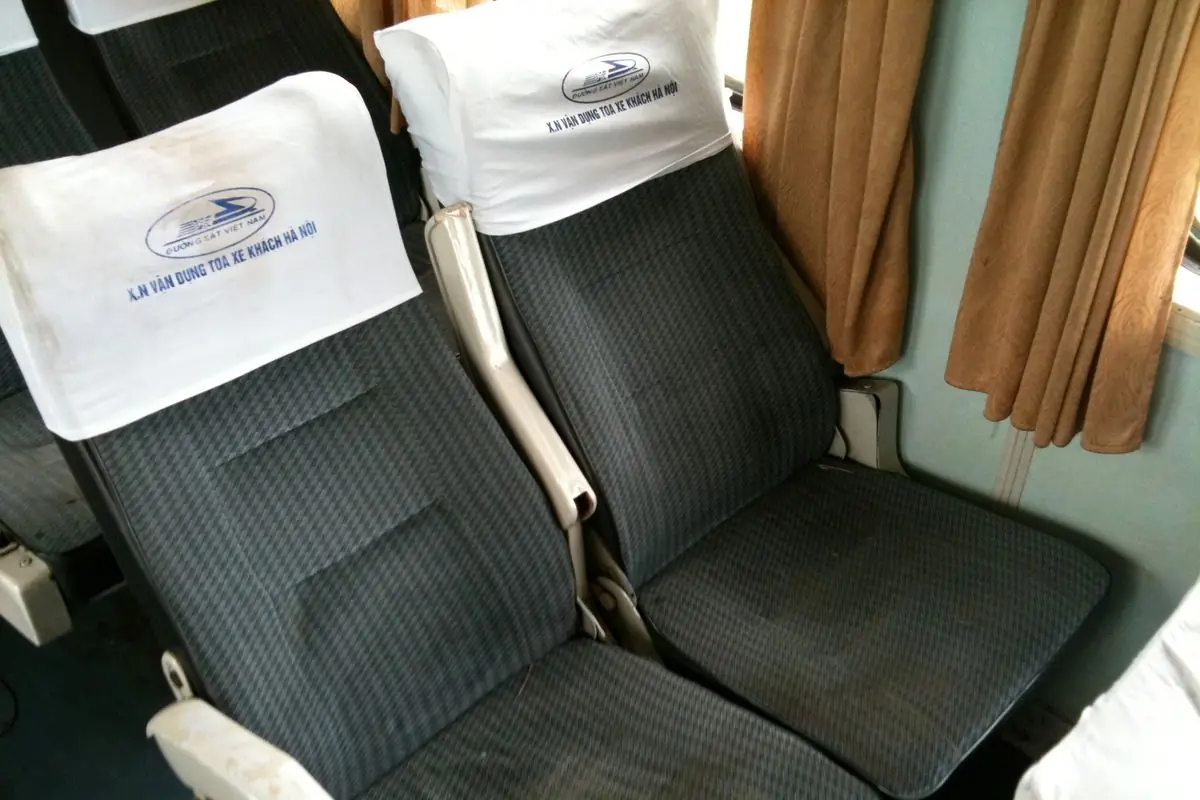
Traveling all the way from Hanoi to Saigon in a soft seat is possible, but it makes sense mainly when saving money matters more than comfort.
Air-conditioned 6-berth sleeper
A 6-berth compartment contains six beds arranged in three tiers on either side.
It is often the best compromise between price and comfort.
- Lower berth: Easy to get in and out of, making it convenient for older travelers and anyone who does not want to climb.
- Middle berth: Often cheaper than the lower berth and suitable for passengers comfortable climbing up to their bed.
- Upper berth: Usually the least expensive, but headroom is limited. Sitting upright may be difficult, and climbing down several times during the night can become inconvenient.
If you are traveling alone and want to sleep reasonably well without spending too much, look for a lower or middle berth in a 6-berth compartment.
The upper berth can save money, but it is not particularly comfortable for everyone, especially over two nights.
Air-conditioned 4-berth sleeper
A 4-berth compartment contains two lower beds and two upper beds.
What we like
- Each passenger generally has more personal space than in a 6-berth compartment.
- There are fewer people sharing the room and less competition for luggage space.
Watch out for
- Keep in mind that a 4-berth compartment is not automatically private. If you book only one or two berths, the remaining beds may be sold to other passengers.
Families with children, couples, and groups of four should consider this option first.
For older passengers, paying extra for a lower berth is sensible because it avoids climbing.
People who sleep lightly may also prefer a 4-berth compartment, although you will still hear the train moving.
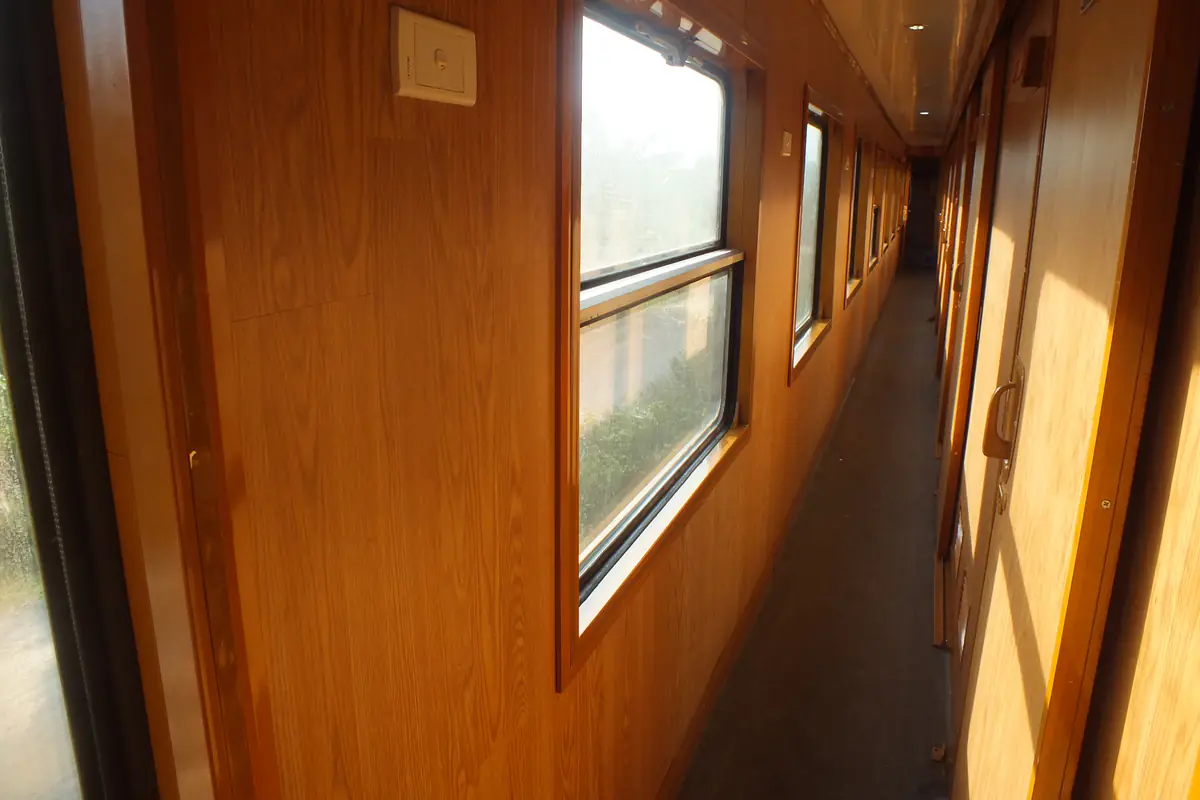
Some services also offer 2-berth cabins or special premium accommodation.
These are not available on every train and usually cost considerably more.
Where should you sit or sleep within the carriage?
For the same category of accommodation, a compartment closer to the middle of the carriage is often preferable to one beside the toilets or connecting doors.
There may be less foot traffic and fewer interruptions.
However, no position guarantees complete silence or freedom from vibration.
If you want to watch the scenery, choose a window seat where possible.
For sleeper compartments, the view depends on the berth position and window arrangement.
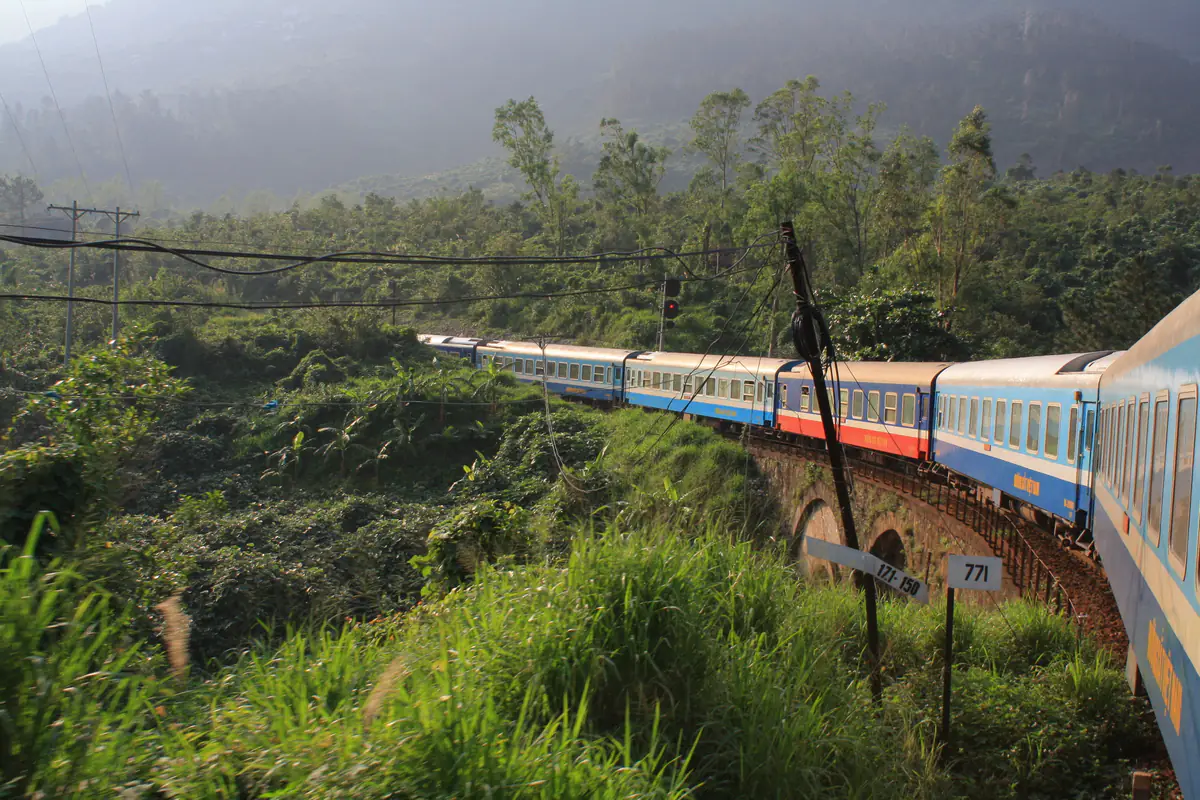
If the Hai Van Pass is your main priority, choose a daytime train before worrying about which side of the carriage to book.
The railway curves around the mountains, so the viewing angle changes as the journey progresses.
How much does the North-South train cost in 2026?
There is no single fixed fare for the entire year.
Even for the same Hanoi-Saigon journey, prices vary according to the train, departure date, accommodation category, berth position, booking time, and promotional offers.
These are the 2026 one-way fares from Hanoi to Saigon for each ticket category.
| Ticket category | One-way fare in 2026 |
|---|---|
| Air-conditioned soft seat (SE5, SE7) | VND 1,344,000 |
| Air-conditioned soft seat on SE1 | VND 1,401,000 |
| 6-berth sleeper | From VND 1,341,000 |
| 4-berth sleeper | From VND 1,854,000 |
The difference between a 6-berth and 4-berth sleeper can exceed VND 500,000 for the complete route.
That difference is worth considering when you will spend two nights sleeping on the train.
For a journey lasting only four or five hours, however, paying substantially more for a 4-berth sleeper may not be necessary.
Should you book as early as possible?
For a long journey with a confirmed travel date, advance booking is sensible.
This is especially important during summer, Tet (Vietnamese Lunar New Year), and other major holidays.
Lower berths in 4-berth compartments are worth looking for early.
Vietnam Railways has introduced flexible ticket pricing programs during 2026.
Some trains and departures may offer promotional fares depending on availability, but discounted prices are not guaranteed.
A practical approach is to check three nearby departure dates while comparing the same train class.
For example, if you want to travel from Hanoi to Da Nang on Friday, check Thursday and Saturday as well.
Changing your departure date may save more money than moving from a 4-berth to a 6-berth compartment.
You should also calculate the total cost of the journey.
A train ticket that saves VND 150,000 but arrives at 3:00 AM may not be a bargain if you need to pay for an extra hotel night or private transfer.
Where should you book North-South train tickets?
For most travelers, the simplest option is to use Vietnam Railways' official online booking system.
Enter your departure station, destination, and intended travel date.
The official booking platforms include dsvn.vn and vetau.com.vn.
Tickets can also be purchased at railway stations and through sales channels recognized by Vietnam Railways.
How to book a train ticket online
- Step 1
Choose the correct stations
For Hanoi to Ho Chi Minh City, select Hanoi as your departure station and Saigon as your destination.
Do not confuse Saigon Railway Station with other stations in southeastern Vietnam.
If your actual destination is Nha Trang or Quy Nhon, look for the appropriate station rather than automatically purchasing a ticket for the entire route.
- Step 2
Select your departure date
The booking system will show services currently available for sale.
Check the arrival date carefully, particularly when the journey crosses midnight.
- Step 3
Compare train services
Look at SE1, SE3, and any other trains with available tickets.
The fastest train does not always have the most convenient arrival time.
- Step 4
Choose your seat or sleeper berth
Review the carriage diagram and check whether you are selecting a 4-berth compartment, 6-berth compartment, lower berth, middle berth, or upper berth.
If you are traveling as a group, try to book nearby berths at the same time.
Do not rely on being able to exchange beds with other passengers after boarding.
- Step 5
Enter passenger details
Your name and identification details must be correct.
International visitors should use their passport information as required by the booking system.
- Step 6
Pay and save your ticket
Keep your electronic ticket, booking reference, or QR code available together with your identification.
After payment, double-check the departure date, train number, carriage number, berth number, and both stations.
How should foreign visitors book tickets?
International travelers can use official railway channels or booking platforms that support their preferred payment method.
The important thing is to compare more than the advertised ticket price.
Third-party booking websites may include service fees or have their own customer support and refund procedures.
Check the final amount and the conditions for changing or canceling a ticket before paying.
For a multi-stop journey, use consistent passport details across your bookings.
Keep copies of your tickets on your phone and in your email so that you can still access them when mobile data is unreliable.
Can you change or refund a train ticket online?
Not every ticket sold through every booking channel necessarily follows the same process.
Read the exchange and refund terms displayed for your particular booking before completing payment.
Which stations are worth stopping at on a Vietnam rail journey?
Traveling across Vietnam by train does not mean you need to stop in every city.
In practice, choosing four or five worthwhile destinations is more enjoyable than repeatedly getting off the train, staying one night, and immediately moving on.
For a first trip, Hanoi - Ninh Binh - Hue - Da Nang - Nha Trang - Saigon is a straightforward route.
Hanoi and Ninh Binh
Hanoi station on Le Duan Street, Ninh Binh about 2 hours away
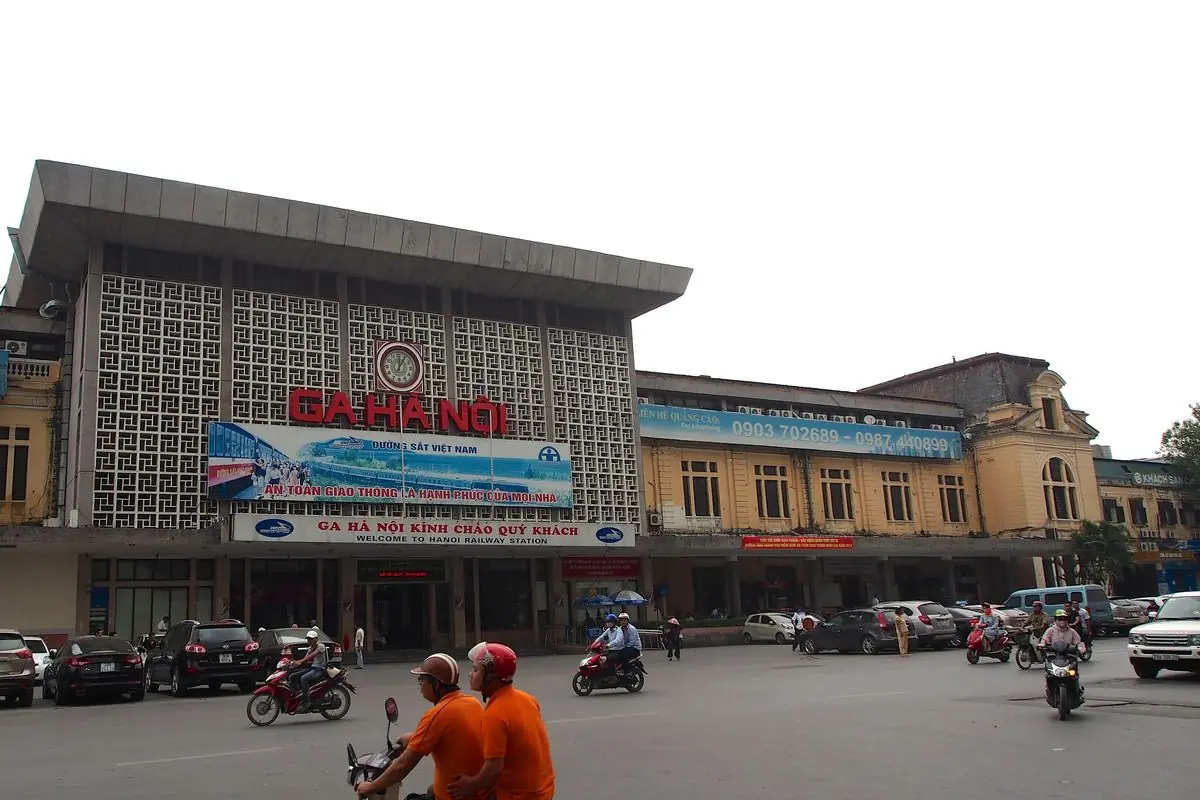
Hanoi is the northern starting point of the railway and a convenient place to organize tickets and supplies before departure.
Hanoi Railway Station is on Le Duan Street.
From many central hotels, a short taxi journey to the station is easier than arranging several transfers.
Ninh Binh is a worthwhile early stop.
The train from Hanoi to Ninh Binh takes approximately two hours, depending on the service.
From Ninh Binh Railway Station, you can continue to Tam Coc or Trang An and stay for one or two nights.
However, Ninh Binh is not essential for every itinerary.
If you only have ten days to travel through Vietnam, it may be better to prioritize Hue, Da Nang, and Nha Trang rather than trying to stop everywhere.
Dong Hoi and Phong Nha
Get off at Dong Hoi, then go by road to Phong Nha
Dong Hoi Railway Station is the main rail access point for visitors exploring Dong Hoi and Phong Nha.
You will still need road transport from the station to the Phong Nha area.
This is not a destination where you can step off the train and walk directly into the caves.
Allow at least two nights if cave exploration is a significant part of your trip.
If your main goal is to enjoy train travel and visit the larger cities, you can skip this stop to reduce hotel changes.
Hue
Station close to the center, plan two nights

Hue is one of the most rewarding stops on the North-South Railway.
Its railway station is relatively close to the city center, making it convenient to reach the Perfume River area and the Imperial City by taxi or ride-hailing service.
Two nights give you time to visit the Imperial City, at least one royal tomb, and several restaurants without rushing.
Taking an overnight train from Hanoi is also a practical way to preserve sightseeing time.
You leave Hanoi in the evening, sleep during the journey, and arrive ready to explore the following day.
However, after a poor night's sleep, avoid planning a full schedule of distant royal tombs immediately after arrival.
Da Nang
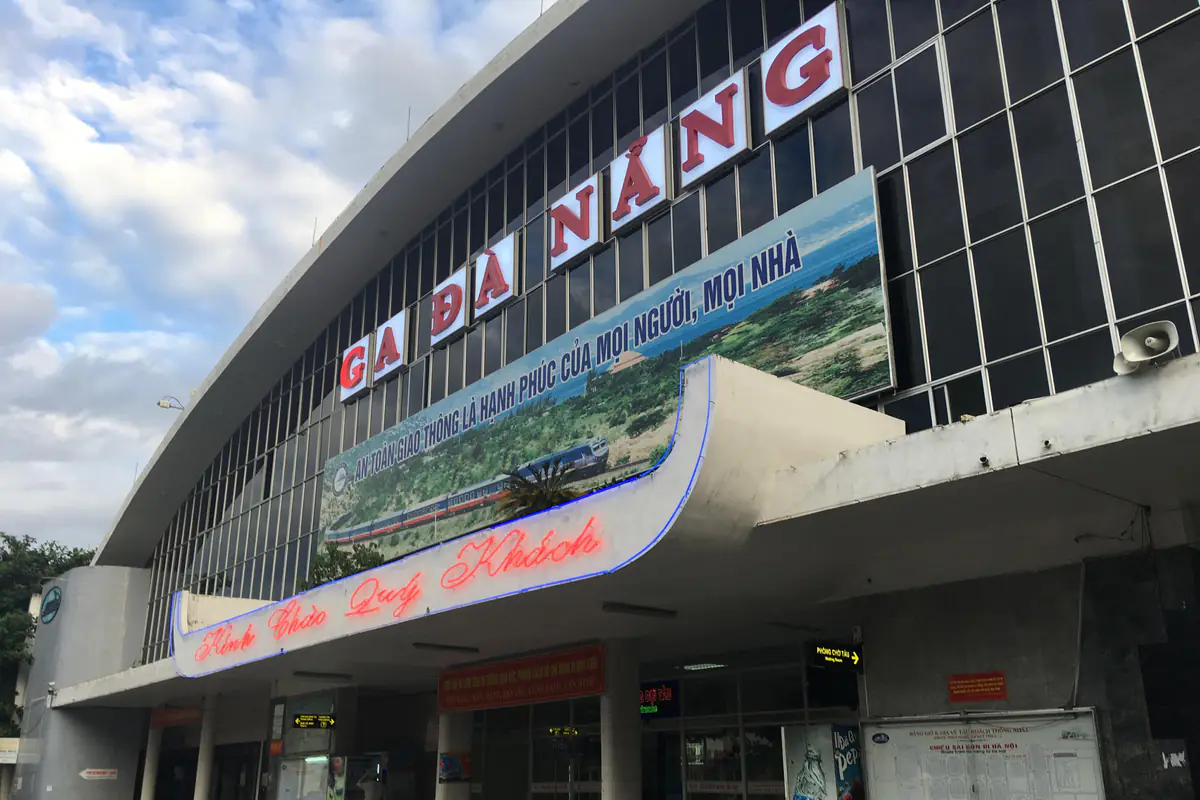
202 Hai Phong Street, continue by car to Hoi An
The Hue-Da Nang railway passes through the Hai Van Pass area, where the tracks follow mountain slopes and sections of coastline.
This is one of the strongest reasons to choose a train instead of simply flying between Vietnamese cities.
During daylight, you can see stretches of railway curving around the mountains, coastal bays, and settlements below.
The actual view depends on the weather, train schedule, and where you are sitting.
Da Nang Railway Station is located at 202 Hai Phong Street.
It is convenient for continuing into central Da Nang.
For Hoi An, you will need onward transport by road. The Reunification Express does not run directly into Hoi An Ancient Town.
A sensible plan is to spend two nights in Da Nang or split your accommodation between Da Nang and Hoi An.
Dieu Tri and Quy Nhon
Get off at Dieu Tri, then drive into Quy Nhon
This stop is worth considering if you enjoy beaches and prefer a coastal city that can feel less crowded than some of Vietnam's major tourist centers.
Dieu Tri Railway Station is outside Quy Nhon's main beach area.
You will need to continue into the city by car or another suitable road transfer.
One night in Quy Nhon can feel rushed when you have just arrived by train and already need to prepare for the next departure.
Two nights are more practical for eating, swimming, and sightseeing.
You can also skip Quy Nhon when you have already chosen Nha Trang as your main beach stop farther south.
Nha Trang
17 Thai Nguyen Street, plan two or three nights

Nha Trang Railway Station is located at 17 Thai Nguyen Street, fairly close to the city center.
It is a convenient place to take a break after several long train journeys.
Spend two or three nights here if you want time for the beach, boat trips, or simply resting before continuing toward Ho Chi Minh City.
Another advantage is that Nha Trang has additional rail connections with Saigon beyond the services running the entire North-South route.
Saigon
1 Nguyen Thong Street, Ho Chi Minh City
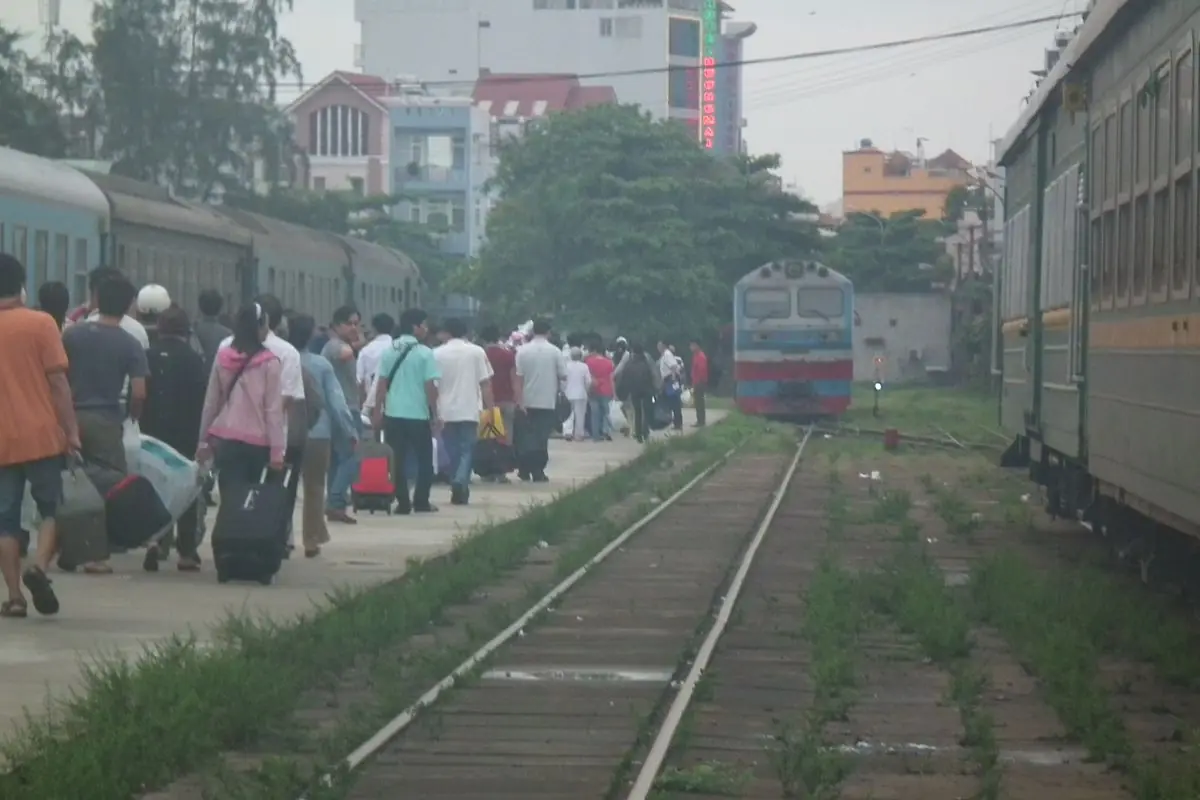
Saigon Railway Station is located at 1 Nguyen Thong Street, Ho Chi Minh City.
It is not directly beside Nguyen Hue Walking Street or Ben Thanh Market, but reaching the central districts by taxi or ride-hailing service is relatively straightforward.
If your train arrives in the morning, ask your hotel whether you can leave your luggage before check-in.
You can then have breakfast or explore the city while waiting for your room.
Do not assume that an early train arrival means your accommodation will be ready immediately.
Suggested 10-14 day Vietnam train itineraries
You do not need an entire month to explore Vietnam by railway.
However, the shorter the trip, the more selective you should be about where to stop.
10-day itinerary: Hanoi - Hue - Da Nang - Nha Trang - Saigon
- Day 1
Hanoi
Explore Hanoi and board an overnight train
- Day 2
Hue
Arrive in Hue, rest, and explore the center
- Day 3
Hue
Visit the Imperial City and royal tombs
- Day 4
Hue to Da Nang
Take the train from Hue to Da Nang
- Day 5
Da Nang or Hoi An
Explore Da Nang or Hoi An
- Day 6
Da Nang to Nha Trang
Continue toward Nha Trang by train
- Day 7
Nha Trang
Relax at the beach in Nha Trang
- Day 8
Nha Trang to Saigon
Travel to Saigon by train
- Day 9
Ho Chi Minh City
Explore Ho Chi Minh City
- Day 10
Ho Chi Minh City
Finish the trip
This is an itinerary framework, not a confirmed set of connections for a particular travel date.
Some journeys may take place overnight or continue into the following day.
You may need to adjust sightseeing plans according to actual departure and arrival times.
With only ten days, skip Ninh Binh and Quy Nhon rather than trying to include both.
You should also leave some flexibility before an international flight or other important commitment.
Long-distance trains can experience delays due to operating conditions or weather.
14-day itinerary: a more relaxed railway journey
With two weeks, you have more room to enjoy the journey.
- Days 1-2: Hanoi.
- Days 3-4: Ninh Binh.
- Days 5-6: Hue.
- Days 7-8: Da Nang and Hoi An.
- Days 9-10: Quy Nhon or Nha Trang.
- Days 11-12: Nha Trang or additional time at your chosen coastal destination.
- Days 13-14: Ho Chi Minh City.
You can choose either Quy Nhon or Nha Trang as your main beach destination.
There is no need to stay in both cities unless you particularly enjoy coastal travel.
For international visitors coming to Vietnam for the first time, this route provides a good variety of northern, central, and southern experiences without requiring a hotel change every day.
Can you buy one ticket and get on and off along the way?
A normal North-South railway ticket does not work like an unlimited hop-on, hop-off travel pass.
Your ticket is issued for a particular train, departure date, origin, and destination.
You cannot simply leave the train in Hue, spend two days there, and use the same Hanoi-Saigon ticket to board another train.
If you want to stop for several days, buy separate tickets for each leg.
For example:
Hanoi - Hue, Hue - Da Nang, Da Nang - Nha Trang, and Nha Trang - Saigon.
This also allows you to choose a different train schedule for each section, including daylight departures for scenic routes.
Is the train worth taking instead of flying?
That depends on what you want from the journey.
If your only goal is to get from Hanoi to Ho Chi Minh City, flying is usually much more practical in terms of time.
A nonstop flight takes around two hours, excluding airport transfers, check-in procedures, and baggage collection.
Even after allowing for these extra steps, flying is significantly faster than taking the train.
The train has other advantages.
You depart from a railway station in the city, avoid airport-style security procedures, and can sleep in a proper berth during overnight travel.
| Factor | North-South train | Plane |
|---|---|---|
| Hanoi-Ho Chi Minh City travel time | Approximately 33-38 hours | Around 2 hours in the air |
| Departure and arrival points | City railway stations | Airports |
| Sleeping during the journey | Sleeper berths available | Mostly upright seating |
| Views of Vietnam | Extensive countryside and coastal scenery | Limited |
| Visiting multiple cities | Separate tickets for each leg | Multiple flights required |
| Luggage | Subject to railway allowances | Depends on airline and fare |
| Best suited to | Slow travel and sightseeing | Fast travel and business trips |
When taking the train makes sense
You have at least a week available, want to visit several cities, or enjoy the journey as much as the destinations.
Families who prefer not to take long-distance road journeys may also consider sleeper trains.
Overnight rail journeys between cities can sometimes save the cost of one hotel night.
When flying is the better choice
You have only three or four days and need to travel directly between Hanoi and Ho Chi Minh City.
Flying may also be more suitable for people with strict schedules, young children who struggle to sleep on transport, or travelers who feel unwell during long journeys.
A 4-berth sleeper ticket during a busy holiday period is not necessarily cheaper than a flight.
Compare the actual total cost, including luggage and transfers between your accommodation and the station or airport.
One practical compromise is to take the train for the scenic sections and fly for long sections that are less important to your trip.
For example, you could travel by train from Hanoi to Hue, continue to Da Nang, and then fly home.
There is no particular advantage in covering all 1,726 km by rail if the part you most want to experience is the central coast.
What facilities are available on the Reunification Express?
Facilities depend on the train and carriage type.
Most long-distance passenger carriages have air conditioning, toilets, and luggage storage areas.
Sleeper compartments generally provide mattresses, bedding, and lighting.
The location and availability of power outlets vary between carriage designs.
Food and drinks
Long-distance services generally offer some form of meal, drink, or snack service.
Ask the train staff about available food and prices once you are on board.
Do not assume that every ticket includes meals.
For a journey lasting more than 30 hours, bring some additional drinking water, bread, fruit, or snacks that are easy to store.
There is no need to bring large quantities of hot food.
Space in sleeper compartments is limited, and strongly scented food can make the shared cabin uncomfortable for other passengers.
Toilets and washing facilities
Toilets are usually positioned toward the ends of passenger carriages.
Cleanliness varies depending on when you use them and how busy the service is.
Bring tissues, wet wipes, and a small bottle of hand sanitizer.
If you are spending two nights in a sleeper cabin, pack a toothbrush, toothpaste, comfortable spare clothes, and a small bag for items you will need regularly.
Is there Wi-Fi on the Reunification Express?
Do not plan a long train journey around the assumption that free Wi-Fi will be available and reliable.
Internet access on the North-South Railway is not guaranteed throughout the route.
Mobile reception may weaken or disappear temporarily in tunnels, mountainous areas, and remote sections.
Bring a Vietnamese SIM or eSIM with mobile data and download maps, tickets, documents, and entertainment before departure.
If you need to attend video meetings or work continuously online, do not rely on a long-distance train without a backup plan.
Are there power outlets on the train?
Many soft-seat and sleeper carriages have power outlets, but their locations and numbers vary.
Charge your devices before boarding and bring a suitable power bank.
Avoid leaving charging cables across walkways or in positions where they may create a safety hazard.
Is there a luggage limit on Vietnam's trains?
Yes.
Passengers with eligible tickets may carry up to 20 kg of hand luggage free of charge, subject to the applicable conditions.
Hand luggage may be up to 0.8 m long and 0.5 m wide, with a volume of no more than 0.16 m3.
Items exceeding the permitted weight or dimensions may need to be transported separately and may incur additional charges.
Do not assume that traveling by train means you can bring an unlimited number of suitcases.
Should you bring a suitcase or backpack?
A medium-sized suitcase is easy to wheel through a station, but lifting it into a storage area or carrying it through narrow carriage corridors can be inconvenient.
A backpack is often more practical if you plan to get off at several cities.
For a two-week trip across Vietnam, one medium-sized suitcase or backpack plus a small personal bag is usually enough.
You can use laundry services at hotels rather than packing clean clothes for every day of the journey.
Keep passports, money, phones, and other valuables in a separate bag that stays with you.
Avoid leaving these items inside a large suitcase stored away from your seat.
Can you take a motorbike on the train?
A motorbike is not treated as ordinary hand luggage.
Transporting one requires a separate service and must follow the railway operator's requirements.
Availability depends on the route, timing, and whether the operator can accept the vehicle.
Contact the relevant station before bringing your motorbike.
Ask about paperwork, transport charges, vehicle preparation, and the expected collection date.
Do not assume the motorbike will arrive on the same train as you.
What should you prepare before boarding?
A long railway journey becomes much easier when you organize a few small things in advance.
Arrive at the station early
For Hanoi or Saigon Railway Station, aim to arrive approximately 30-45 minutes before departure.
Allow more time if you have substantial luggage or are unfamiliar with the station.
Check the departure boards for your train and boarding area.
The train number printed on your ticket is more useful than relying only on general announcements.
Hanoi Railway Station is on Le Duan Street.
Saigon Railway Station is at 1 Nguyen Thong Street.
When ordering a taxi or ride-hailing service, choose the correct station entrance or designated drop-off point.
Wear comfortable clothes
Air-conditioned carriages can feel colder than expected, particularly at night.
A light jacket, long trousers, and socks are useful.
Easy-to-remove footwear can be more practical than lace-up shoes when climbing into a berth or walking to the toilet.
You do not need heavy winter clothing, though, because platforms and station areas may be hot or humid.
Prepare for noise and movement
A sleeper train is not as quiet as a hotel room.
You will hear the wheels, movement between track sections, doors opening, and passengers walking through the carriage.
During station stops, there may be announcements or conversations outside.
Earplugs and an eye mask are inexpensive items that can make sleeping easier.
If you are prone to motion sickness, eat a moderate meal before boarding, avoid looking at your phone continuously when feeling dizzy, and ask a pharmacist or doctor about appropriate medication when necessary.
Be careful during station stops
Check the weather before traveling
The railway passes through regions that can experience heavy rain and tropical storms, particularly in central Vietnam.
Traveling during the rainy season does not automatically mean your train will be affected.
However, when severe weather is forecast or timetable changes are announced, check information from the railway operator.
If you have an international flight after your train journey, avoid arranging the connection too tightly.
Leaving a generous buffer is safer than having to rush between transport services.
Common mistakes first-time train travelers make
Choosing a ticket based only on price. A cheaper train arriving at 3:00 AM may create additional accommodation or transport costs.
Booking a soft seat for a two-night journey. You can save money, but comfort is a major compromise. For long journeys, a 6-berth sleeper is often worth considering.
Assuming you can use the same ticket after stopping for several days. If you want to stay in Hue or Da Nang, plan separate tickets for each section.
Selecting the wrong station. Quy Nhon travelers need to consider Dieu Tri, while Hoi An is commonly accessed through Da Nang Railway Station.
Packing too much. Luggage space in sleeper compartments is limited. A manageable bag is far more useful when you have several train journeys ahead.
Booking connections too closely together. Long-distance trains can run late. Allow enough time when changing trains or connecting to a flight.
Assuming all SE trains have identical facilities. Sleeper arrangements, electrical outlets, and carriage conditions can differ. Check the actual service and seating diagram before paying.
Which North-South train travel option is right for you?
If you are traveling between Hanoi and Saigon mainly for work or to visit family, flying will usually be the faster choice.
The train makes more sense when you are not in a hurry and want space to lie down during the journey.
If you are visiting Vietnam and simply want to experience the Reunification Express, consider Hanoi-Hue or Hue-Da Nang before committing to the full route.
For a two-week journey across the country, book separate railway sections and spend more nights in the places you genuinely want to explore.
If you have decided to travel directly from Hanoi to Saigon, SE1 or SE3 with a 4-berth sleeper is a strong option when your budget allows. For a more economical journey, choose a 6-berth sleeper instead of sitting upright for more than 30 hours.
Open the Vietnam Railways booking website, enter Hanoi and Saigon as your stations, and compare SE1 and SE3 for your travel date. Check the arrival time and total ticket price before confirming your berth.
FAQ
How long does the train from Hanoi to Ho Chi Minh City take?
The journey takes approximately 32 hours 45 minutes to 38 hours 26 minutes. SE1 is among the fastest services, while SE9 takes longer. With an evening departure, you generally arrive on the third calendar day after spending two nights on the train.
What is the best seat or sleeper cabin on the Reunification Express?
For journeys under six hours, an air-conditioned soft seat is usually sufficient. For overnight trips, choose a 6-berth or 4-berth sleeper. Lower berths are particularly convenient for older travelers and families with children. For a quieter location, consider a compartment toward the middle of the carriage rather than one beside the toilets.
Does the Reunification Express have Wi-Fi and power outlets?
You should not assume reliable Wi-Fi will be available. A Vietnamese SIM or eSIM with mobile data is more practical, although reception can still be interrupted. Many carriages have electrical outlets, but their number and position vary. Bringing a power bank is recommended.
How much luggage can you bring on a train in Vietnam?
The free hand-luggage allowance is 20 kg for eligible passengers, subject to the operator's conditions. Oversized or overweight items may require separate transport arrangements and additional charges. Check current railway regulations before traveling with large equipment, bicycles, or motorbikes.
Is taking the Reunification Express better than flying?
The train is worthwhile when you have enough time to enjoy the journey, want to see the countryside, or plan to visit several cities along the route. Flying is more practical when speed is the priority. For many visitors, combining scenic railway sections with a flight for longer distances provides a better balance of time, comfort, and cost.