Hanoi Train Street: check access before you go and know what to do if it's closed
Trains still run through Hanoi Train Street, but that doesn't mean visitors can freely enter the railway corridor or sit at cafés beside the tracks. You might get the view you came for, or find a barrier across the entrance and need another plan.
By Da Lat LoversPublished Updated
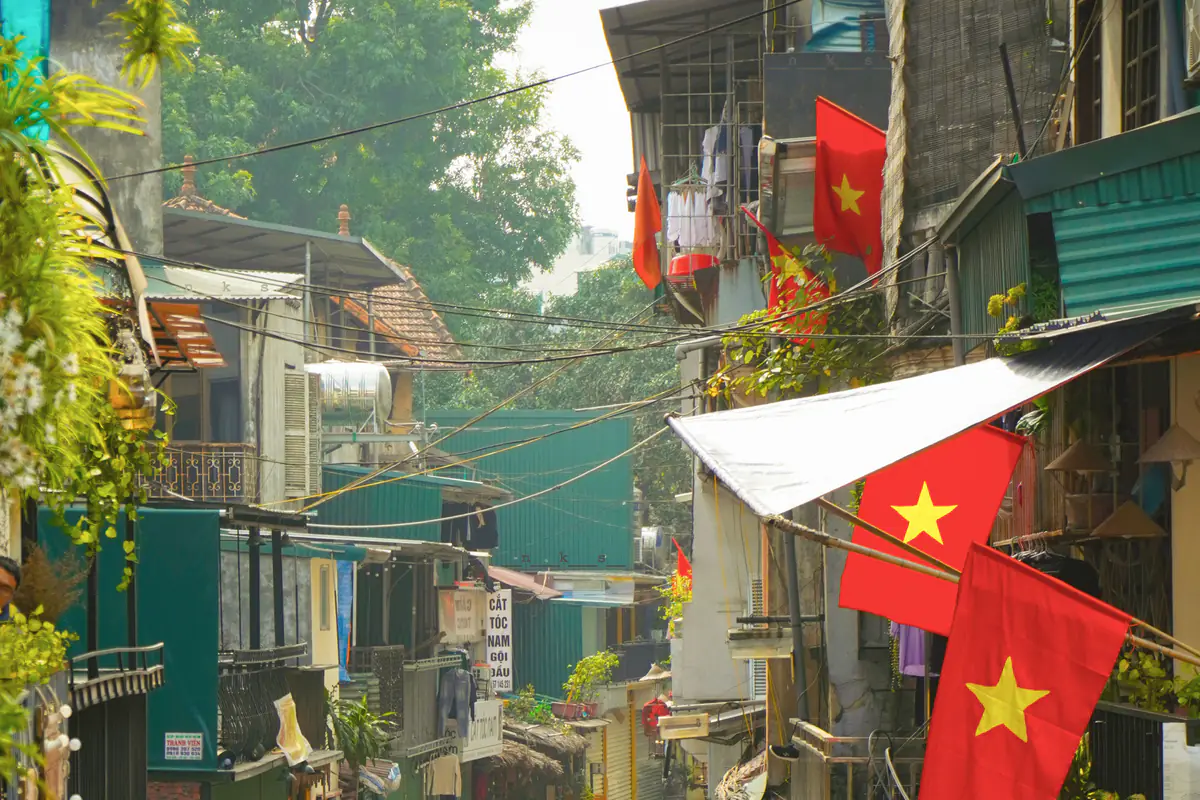
Railway tracks curve between closely spaced houses in Hanoi.
Hanoi Train Street is still an active railway, but tourists cannot assume they are allowed to enter the tracks or the surrounding railway safety corridor. The Tran Phu-Phung Hung section near the Old Quarter and the Kham Thien-Le Duan section are managed differently, and access can change during the day. Before entering, check the signs and ask the staff controlling the entrance. If you encounter a barrier, don't try to find a way through someone's house or a nearby alley.
Is Hanoi Train Street still open in 2026?
The answer depends on what you mean by "open."
Trains continue to operate on the railway, but tourist access to areas immediately beside the tracks is restricted and controlled.
Hanoi Train Street is not an ordinary tourist attraction with a ticket office, fixed opening hours, and designated sightseeing entrances. It consists of sections of an operating railway running through residential neighborhoods, where houses, shops, and cafés stand unusually close to the tracks.
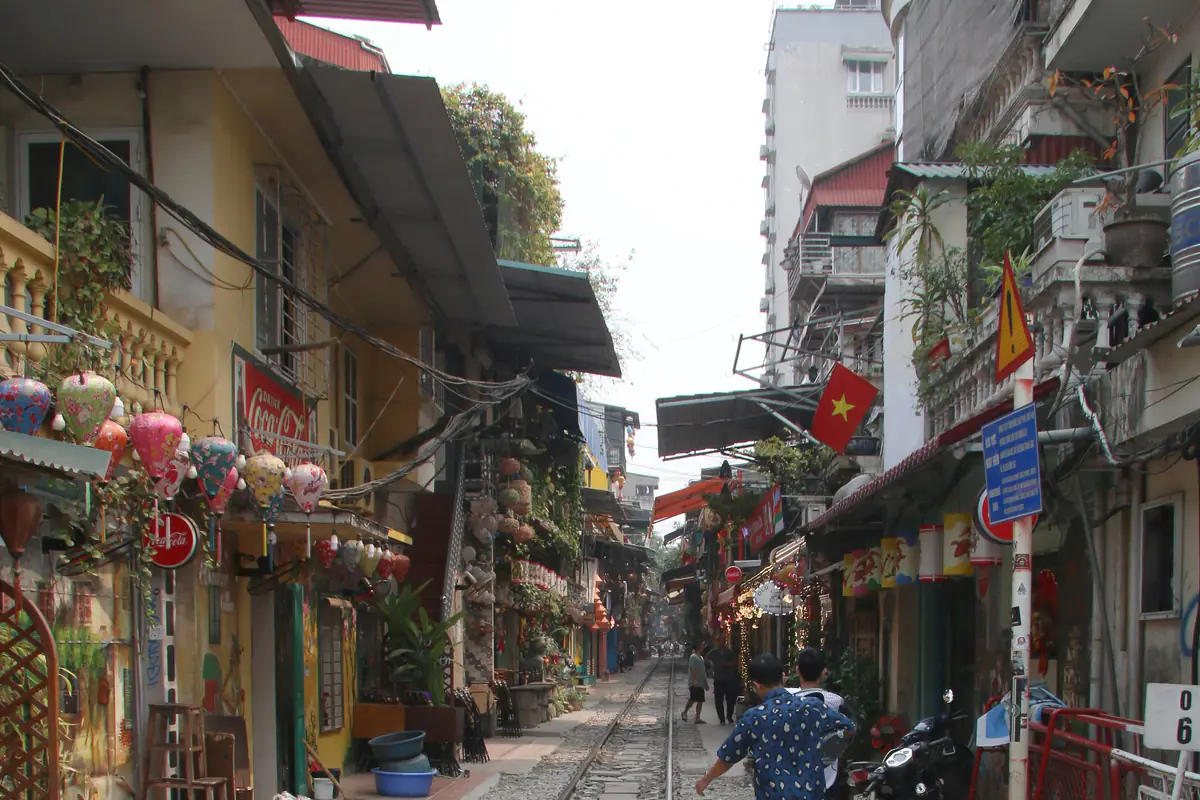
The railway became internationally famous because visitors could photograph trains passing between buildings, sometimes only a short distance from café tables and chairs.
That experience is also the reason authorities have repeatedly intervened.
When Google Maps shows a Train Street café as "Open now," that only means the business is operating, not that visitors are legally permitted to enter the railway corridor.
Restrictions can also differ between sections.
On March 8, 2026, there were barriers and security personnel around the Kham Thien-Le Duan section, while some access points around Tran Phu-Phung Hung were not blocked at that particular time.
That was one day, not a permanent reopening.
Here is a timeline of the main developments.
| Date | What happened |
|---|---|
| September 2022 | Hanoi authorities moved to close and address cafés violating railway safety corridor regulations. |
| March 2025 | Hanoi's Department of Tourism instructed travel businesses not to organize tours bringing visitors to Train Street cafés. |
| January 2026 | Hanoi proposed changes to railway operations through the city center. The proposal did not mean trains had already stopped running. |
| February 2026 | Authorities continued removing visitors from restricted railway areas around Kham Thien. |
| March 2026 | Different Train Street sections had different levels of entrance control. |
| August 2026 | A tourist filming near the tracks in Kham Thien had their phone struck by a locomotive. A related café business was subsequently fined. |
These developments make two things clear.
First, you should not assume Hanoi Train Street has fully reopened to tourists.
Second, the streets of Phung Hung, Tran Phu, and Le Duan are not closed to pedestrians as a whole.
The important distinction is where you are allowed to stand.
Where is Hanoi Train Street?
Searching for Hanoi Train Street, Hanoi Railway Street, or Hanoi Train Street Cafe often brings up several locations on Google Maps.
They are not all the same place.
There are three areas worth distinguishing before you leave your hotel.
Tran Phu-Phung Hung
The famous Train Street near the Old Quarter
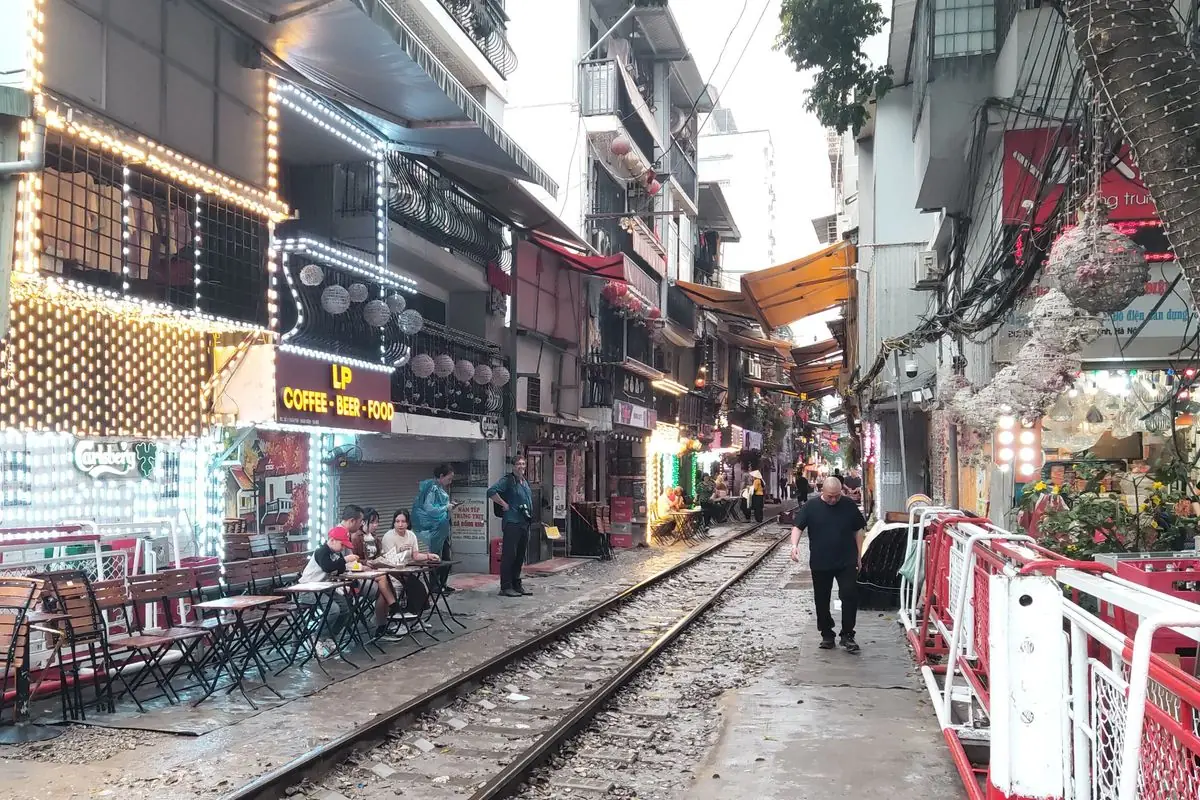
This is the section most people recognize from travel photographs.
The railway runs through a narrow residential corridor, with small houses, balconies, signs, hanging lights, and cafés on either side.
The area is around Tran Phu and Phung Hung streets, close to Hang Bong and Cua Dong.
From Hoan Kiem Lake, you can walk west along Hang Gai and Hang Bong, then continue toward Duong Thanh and Phung Hung.
Allow roughly 15-20 minutes, depending on where you start.
If your hotel is around Hang Bong, Duong Thanh, or Cua Dong, walking is generally easier than booking a car. The Old Quarter has narrow streets and a network of one-way roads, so driving a short distance can take longer than expected.
Once you arrive, remain on the public street and check the signs or instructions from the people controlling access.
An empty railway track is not an invitation to walk onto it.
Kham Thien-Le Duan
The southern Train Street section
Another cluster of Train Street cafés is located around Alley 224 Le Duan and the Kham Thien neighborhood.
This section is south of Hanoi Railway Station.
It is separate from the Tran Phu-Phung Hung section to the north, and there is no continuous authorized tourist walking route along the tracks connecting the two.
If your map takes you to Le Duan when you intended to visit the famous photo location near the Old Quarter, you may have selected the wrong pin.
The Kham Thien-Le Duan area has repeatedly been subject to barriers and access controls.
Even if a café appears to be serving customers, that does not necessarily mean restrictions have been lifted.
Long Bien Station
A different railway experience
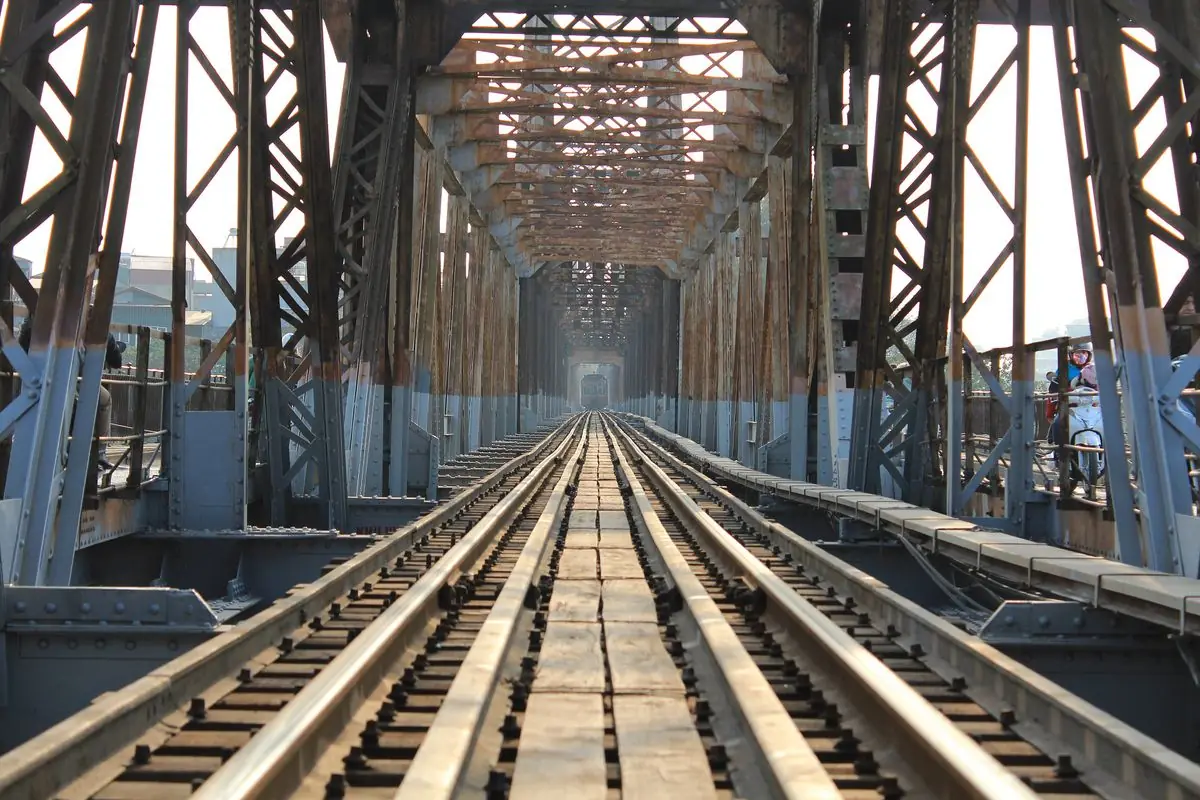
Long Bien Station is near Tran Nhat Duat Street and Gam Cau Street, close to the city-center end of Long Bien Bridge.
It is not the narrow café street featured in most viral videos.
However, the station has a railway-themed café called Hoa Xa Cafe, where visitors can enjoy the historic station atmosphere from an organized service area.
For someone who mainly wants a coffee and a chance to observe railway activity, this is a more practical alternative to searching for a way into a restricted Train Street section.
| Area | What to search on Google Maps | Best for |
|---|---|---|
| Tran Phu-Phung Hung | Hanoi Train Street, Tran Phu | Seeing the famous Train Street neighborhood |
| Kham Thien-Le Duan | Alley 224 Le Duan | Finding the southern Train Street section |
| Long Bien Station | Hoa Xa Cafe, Long Bien Station | Coffee, historic railway architecture, and watching railway activity from permitted areas |
| Hanoi Railway Station | 120 Le Duan | Checking train schedules, buying tickets, and taking a train |
What should you do if Hanoi Train Street is closed?
Don't spend another hour wandering around the neighborhood looking for a secret entrance.
There are a few practical steps to follow.
Step 1: understand what the barrier is restricting
A public railway crossing and a restricted entrance to the railway corridor serve different purposes.
At an authorized level crossing, people and vehicles may cross the railway when the signals and traffic arrangements permit it.
A barrier at a Train Street café entrance may be there to prevent unauthorized access to the railway safety corridor.
An open crossing does not mean visitors can turn onto the tracks, stop for photographs, or walk along the railway.
Stay on the public side until you know where access is permitted.
Step 2: ask the staff where visitors are allowed to stand
A straightforward question is enough:
"Is there a public area where visitors are allowed to watch the train?"
If staff direct you to a permitted viewing area outside the railway corridor, use that location.
If they tell you that there is no suitable viewing area or ask you to leave, move on.
There's no need to explain that you only want a quick photograph or that someone you know is already sitting inside a café.
Those details do not change the access rules.
Step 3: don't pay someone to take you through a side entrance
Visitors may sometimes encounter people offering to lead them into cafés through narrow alleys or private residential entrances.
You may be told that the entrance is only for customers, that a drink purchase is required, or that someone has arranged permission.
None of those claims should be treated as official authorization.
In March 2026, a business in the Kham Thien-Le Duan area was leading visitors through a private route while other railway access points were being controlled.
Step 4: change your plan to photograph the surrounding streets
If you're around Phung Hung, stay on the public streets and explore the railway arches, old brickwork, and surrounding buildings.
The railway passes above parts of this area, creating an architectural scene quite different from the narrow trackside cafés.
You can photograph the brick arches, storefronts, and neighborhood without entering the railway.
Morning or early afternoon can work well for street photography, depending on the light and weather.
Step 5: go to Long Bien Station instead
If your main goal was to sit down with a coffee while enjoying a railway setting, Hoa Xa Cafe at Long Bien Station is a useful alternative.
The café publishes its address, opening hours, and menu. It occupies a former railway waiting-room building, with organized customer areas separated from railway operations.
You must still follow station staff instructions and stay out of operational areas.
It's a different experience, but one that doesn't depend on finding a way past an entrance barrier.
Is Hanoi Train Street banned?
The word "banned" is used loosely in online discussions.
The restrictions concern unauthorized access, activities, and businesses within railway safety areas. They do not automatically prohibit tourists from walking on every nearby public street.
For visitors, the practical rules are straightforward.
Don't stand, sit, or take photographs on an active railway track. Even when no train is visible, the line remains an operational railway.
Don't place chairs, tables, bags, or photography equipment inside a restricted railway safety corridor. These are among the activities authorities have sought to address around Train Street cafés.
Don't cross barriers or enter areas where access is being controlled. An unattended side entrance does not necessarily mean the area is open.
Don't stop in the middle of a public railway crossing to film. Cross according to the signals and directions, rather than using the crossing as a photography location.
There's also a serious practical safety issue.
The body of a train extends beyond the two steel rails. Standing outside the rails does not automatically place you outside the train's clearance.
A phone, selfie stick, camera, or shoulder bag can also protrude into the space occupied by a passing train.
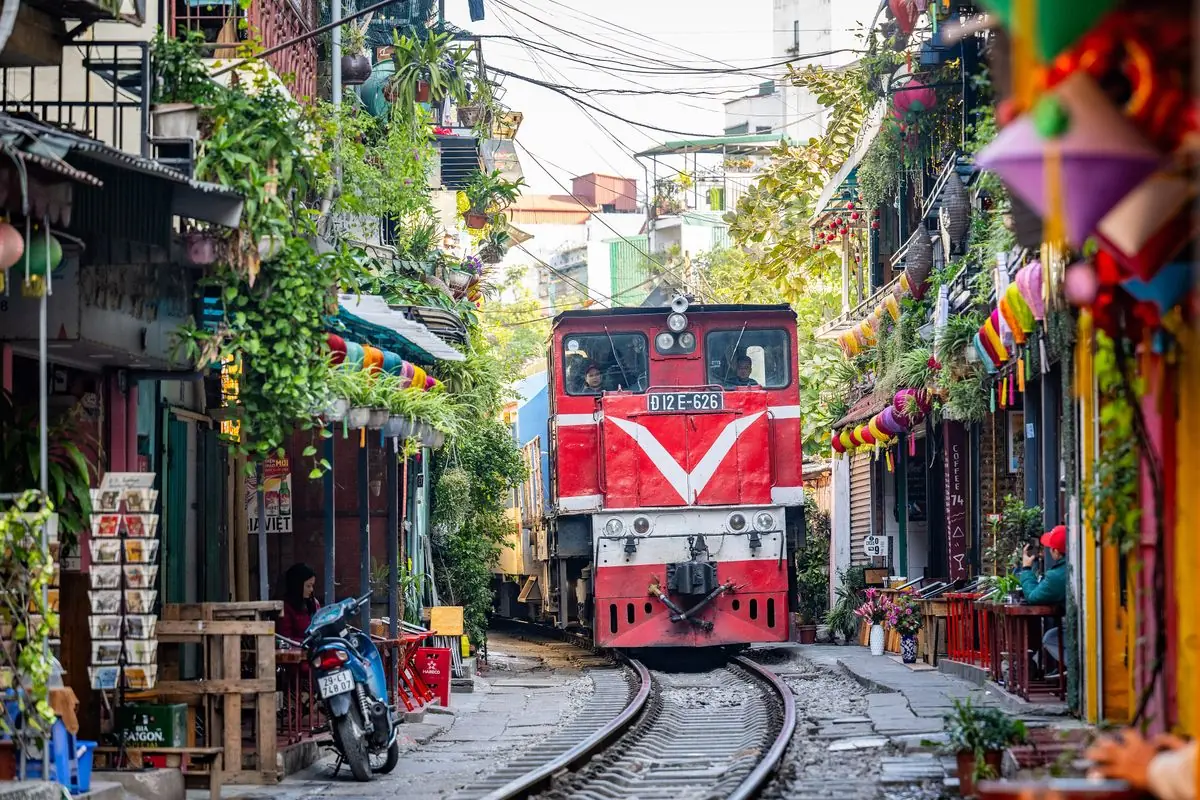
That incident is a useful reminder not to judge a safe distance by watching other tourists in social media videos.
What time do trains pass through Hanoi Train Street?
There is no single official tourist-facing timetable covering train movements past every Train Street café.
Many websites and cafés publish lists of train times, but those lists often fail to explain whether they apply to Tran Phu-Phung Hung or Kham Thien-Le Duan.
Some don't distinguish weekdays from weekends or show when the information was last updated.
A train's scheduled departure or arrival at a station is also not the same as its exact passing time at a particular café.
Why café timetables can be unreliable
Train movements can change because of delays, operating conditions, dispatching decisions, and timetable adjustments.
Passenger trains are not the only railway movements that can occur.
Railway operations in Hanoi also underwent important changes in 2026.
In early February, train movements across Long Bien Bridge were temporarily adjusted following structural damage to the bridge.
Repairs were completed, and trains were allowed to resume operations on February 9. Some services had their departure or arrival stations adjusted during the disruption.
This is why a timetable copied from a travel blog in 2024 or 2025 should not be treated as dependable for a visit in 2026.
Where can you check official train times?
For an actual train journey, use Vietnam Railways' timetable and ticketing system.
Enter your travel date, departure station, destination, and train service.
Make sure you check the specific station.
Hanoi Railway Station, Long Bien Station, and Gia Lam Station do not all serve the same routes or train services at every point in time.
Even if you know exactly when a train leaves Hanoi Railway Station, don't assume you can add a few minutes to calculate when it will reach a particular Train Street café.
A passenger timetable is intended for travel planning, not for guaranteeing a sightseeing moment from a trackside position.
What time should you visit Hanoi Train Street?
For exploring the surrounding public streets, these periods are convenient:
- 8:00-10:00 AM: A practical time for walking around the Old Quarter and photographing the architecture.
- 3:00-5:00 PM: Another good period for street photography in natural daylight.
- Evening: Better for enjoying the atmosphere of the surrounding neighborhoods than relying on a train time found online.
These are suggested visiting periods, not train-passing times.
If you plan to visit Hoa Xa Cafe, you can ask the business about expected railway activity that day.
The café being open does not mean a train will necessarily pass while you are there.
Where can you watch trains safely in Hanoi?
There are three worthwhile alternatives, depending on what you want from the experience.
Hoa Xa Cafe at Long Bien Station
Hoa Xa Cafe is the most straightforward choice if you want a railway-themed coffee stop with a clear address.
Practical information
- Name: Hoa Xa Cafe
- Location: Long Bien Station, Tran Nhat Duat Street, Hanoi
- Opening hours: 7:00 AM-11:00 PM daily
- Phone number: +84 904 505 039
Prices on the Long Bien Station branch menu in 2026:
| Drink | Price |
|---|---|
| Vietnamese black drip coffee, small | VND 30,000 |
| Vietnamese black drip coffee, large | VND 35,000 |
| Vietnamese coffee with condensed milk, small | VND 35,000 |
| Vietnamese coffee with condensed milk, large | VND 40,000 |
| Latte, small | VND 50,000 |
| Latte, large | VND 60,000 |
| Coconut Vietnamese drip coffee, small | VND 50,000 |
| Coconut Vietnamese drip coffee, large | VND 60,000 |
These are the café's current menu prices, and future prices may differ.
Hoa Xa Cafe opened in June 2023 in a former waiting-room building at Long Bien Station.
The interior has distinctive arched windows looking toward the station, Long Bien Bridge, and nearby railway structures.
The important difference is how the space is organized.
The customer-serving areas are separated from railway operations, with barriers and controlled access points.
Visitors generally don't need a train ticket simply to use a café area open to the public. However, access to platforms, waiting rooms, and operational sections remains subject to the station's rules and staff instructions.
If you'd like a table with a view toward the tracks, contact the café before visiting.
Don't assume a window seat will be available or that a train will pass at your preferred time.
The trade-off is straightforward: Hoa Xa Cafe doesn't offer the dramatic close-up view seen in viral videos from Tran Phu.
It is better for visitors who want a coffee, historic railway architecture, and a more organized setting, especially families.
Phung Hung railway arches and mural street
If you only have time for one stop near the Old Quarter, keep Phung Hung on your walking route.
The area is known for its old brick railway arches. Parts of the street feature murals depicting scenes from Hanoi's past.
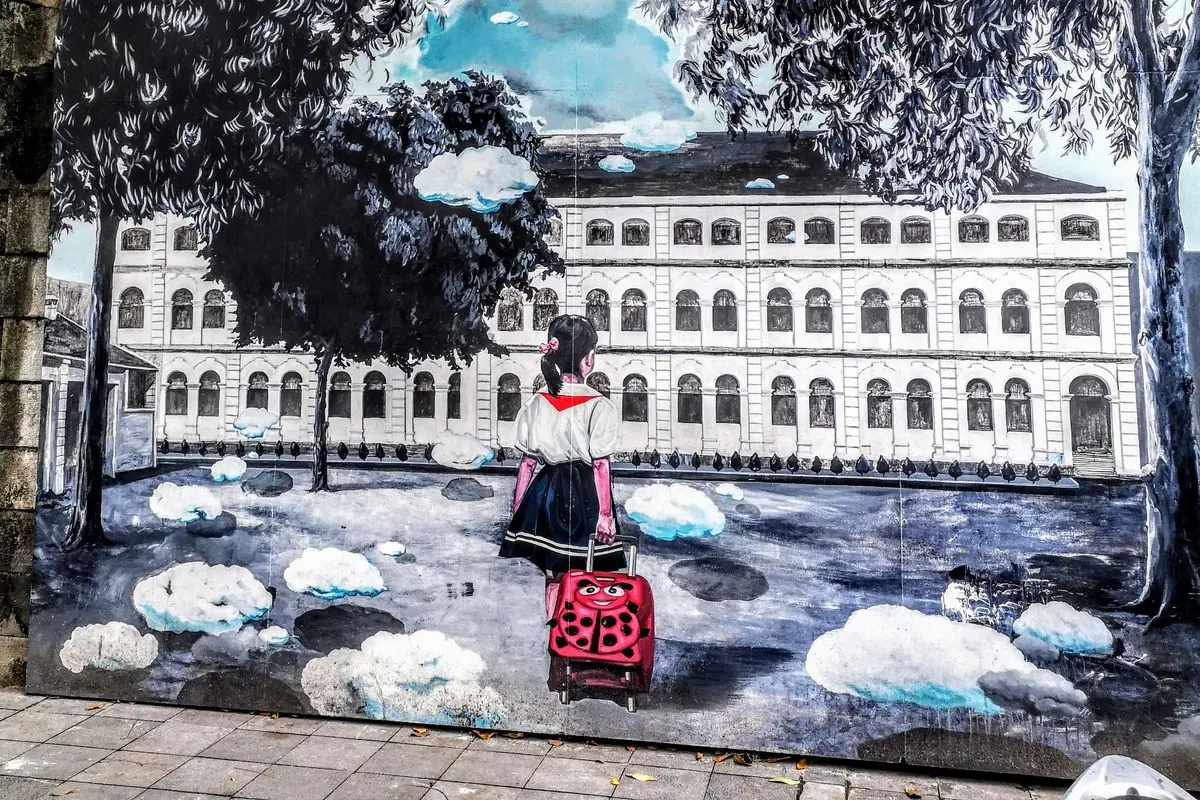
This is not the same as sitting at a café immediately beside the rails.
However, the railway infrastructure forms part of the surrounding streetscape, and you can appreciate much of the architecture from public areas.
Photograph the arches, shopfronts, textured walls, and old buildings.
Don't climb onto railway structures or look for an access route to the elevated tracks.
Also avoid standing in the road for long periods to frame your photographs. Motorbikes and cars still use the surrounding streets.
Phung Hung is particularly worthwhile for people interested in street photography, old architecture, or a walking tour of Hanoi's historic center.
It will be less satisfying if your only goal is to film a train passing beside a café table.
Take an actual train journey
If you want a real railway experience, consider booking a train rather than trying to turn an active track into a viewing platform.
The Hanoi-Hai Phong route is one option for travelers who have enough time to add another city to their itinerary.
Vietnam Railways operates services on this route, including Hoa Phuong Do-branded trains with different seating categories.
Ticket prices vary by date, service, seat type, and applicable promotions.
Check the actual fare through the railway booking system before deciding, rather than relying on old promotional prices.
One detail matters: the departure station may change when railway operations are adjusted.
Don't assume every Hai Phong-bound train leaves from Hanoi Railway Station at 120 Le Duan.
Your ticket will identify the correct departure station.
Once there, follow the signs and station staff instructions to reach the appropriate waiting and boarding areas.
Having a train ticket does not give passengers permission to walk freely around railway tracks, bridges, or operational sections of the station.
How to get to Hanoi Train Street from Hoan Kiem Lake
If you're staying in the Old Quarter, walking is usually the easiest way to reach the Tran Phu-Phung Hung area.
Start from the western side of Hoan Kiem Lake and follow Hang Gai toward Hang Bong.
Continue along Hang Bong, then turn toward Duong Thanh and Phung Hung.
As you get closer, you'll notice the neighborhood changing. The railway arches and older buildings become part of the streetscape.
Depending on your starting point, the walk generally takes around 15-20 minutes.
When you reach the area, stay on public streets and permitted walkways.
Don't follow the railway tracks to find another entrance.
If you're taking a ride-hailing car, choose a drop-off point on a nearby main street rather than asking the driver to stop inside a narrow alley beside the tracks.
Vehicles stopping close to railway crossings can obstruct traffic, particularly when crowds are gathering.
If you're staying near the Temple of Literature or the western side of central Hanoi, confirm which Train Street location you're visiting.
Tran Phu and Le Duan are on different sides of Hanoi Railway Station.
Walking along the railway to connect them is not an appropriate route.
Can you ride a motorbike to Hanoi Train Street?
You can use motorbikes on streets where they are permitted, but don't assume there will be a convenient parking area directly outside the Train Street entrance.
The Old Quarter has one-way streets, restricted stopping areas, and traffic arrangements that may change at busy times.
Find an authorized parking facility nearby and check the parking fee before leaving your motorbike.
If you're staying within walking distance, going on foot will generally save time.
For larger groups, agree on a meeting point on a nearby public street rather than gathering at a railway crossing or blocking the entrance to an alley.
Should you reserve a table at a Hanoi Train Street café?
Be cautious about making advance payments for a table when the main attraction is access to an area that may be restricted.
Promises such as "booking guarantees entry," "we have a private entrance," or "our staff will take you in" should not be understood as official permission to enter the railway corridor.
Photographs showing other tourists sitting beside the tracks don't establish that the location is authorized or safe.
You can ask a café about its menu, opening hours, and reservation conditions.
But those commercial arrangements must be kept separate from railway access rules.
If a business invites you into a location that authorities are actively restricting, declining is the better choice.
If you've already paid for a booking and arrive to find a barrier, contact the business from outside the restricted area to discuss rescheduling or a refund.
There's no reason to cross a barrier just because you've spent money.
This distinction is especially important for international visitors.
Someone who doesn't speak Vietnamese may mistake an invitation from café staff for official approval.
If you're showing foreign friends around Hanoi, explain beforehand that Train Street is a working railway, not a ticketed attraction where all cafés can guarantee access.
How to photograph trains without putting yourself at risk
The feature that made Hanoi Train Street famous is also the reason access is so tightly controlled: trains pass through unusually narrow urban spaces.
A line painted on the ground or a distance suggested by a café operator isn't a universal safety boundary.
Even if your feet are outside the steel rails, you may still be too close to the side of a locomotive or carriage.
Three common photography situations create particular problems.
The first is stretching your arm forward to fit more of the train into a photograph.
The second is turning your back toward the approaching train for a selfie.
The third is watching your phone screen so closely that you fail to notice people around you moving away.
At an authorized viewing area, keep your body and belongings entirely behind the barriers or within the boundaries indicated by staff.
Don't extend a selfie stick toward a moving train.
Don't push your camera, head, or hands through a fence to get a closer angle.
At a public railway crossing, stop when signals indicate that a train is approaching and remain behind the barrier until crossing is permitted.
Never attempt to cross simply because the train still looks far away.
Visiting with children
Parents should be particularly careful about where children wait and move around.
A railway environment combines crowds, sudden noises, vehicles, and unfamiliar barriers. A child may become distracted or startled when a train approaches.
For families with younger children, older visitors, or anyone with limited mobility, an organized café space or a permitted observation point outside the railway corridor is a more sensible choice.
Don't bring children to a table immediately beside the tracks on the assumption that an adult or café employee will warn everyone before a train arrives.
Is Hanoi Train Street worth visiting?
It can be, but not for every traveler.
The answer depends on what you want to see and how much time you have in Hanoi.
If it's your first time in Hanoi
The Phung Hung area can be a worthwhile stop during a walk around the Old Quarter.
Allow approximately 20-30 minutes to see the neighborhood and photograph the architecture from public spaces.
Don't make entering a café beside the tracks a condition for enjoying the visit.
If access is blocked, you can still continue your walking route without losing much time.
If you only have one day in Hanoi
Don't sacrifice major stops just to wait for a train.
Hoan Kiem Lake, the Old Quarter, and a proper local meal are easier to fit into a short itinerary.
Treat Train Street as an optional stop when you're already nearby.
If reaching it would require crossing the city and waiting for an uncertain train movement, skip it.
If you enjoy architecture and street photography
Phung Hung has something to offer beyond the famous Train Street images.
The old railway arches, brickwork, and surrounding residential buildings provide interesting compositions.
You can explore this area without walking onto the tracks.
If you want coffee and railway views
Choose Hoa Xa Cafe at Long Bien Station.
It has a published address, menu, and opening hours, along with a railway setting organized for customers.
The experience still won't guarantee that a train passes during your visit.
If you want a train to pass inches from your face
That's not an experience worth pursuing.
The viral photographs may look dramatic, but seeking the smallest possible distance from an operating train is not a reasonable sightseeing goal.
People uncomfortable with crowds, loud noises, or large moving vehicles may also prefer to skip the narrow Train Street café setting entirely.
Two easy Hanoi Train Street itineraries
You don't need to devote half a day to this attraction.
These two short plans work whether or not you get to see a train.
The times below are suggested sightseeing schedules, not railway timetables.
Itinerary A: walk from the Old Quarter without relying on café access
- 9:00 AM
Start at Hoan Kiem Lake
Start from the Hoan Kiem Lake area. Walk along Hang Gai and Hang Bong toward Phung Hung.
- 9:20 AM
See the Phung Hung arches
Arrive near Phung Hung. Look at the historic railway arches and the surrounding Train Street neighborhood from the public street.
- 9:35 AM
Ask the staff
If the entrance is being controlled, ask staff which areas visitors may use. If there is no suitable public viewing area, don't search for another way inside.
- 9:45 AM
Walk and take a break
Continue along Phung Hung and Duong Thanh. Take photographs of the architecture or stop for a drink outside the restricted railway corridor.
- 10:15 AM
Head back
Return toward the Old Quarter or continue to your next planned attraction.
This route works particularly well for first-time visitors, small groups, and travelers who enjoy walking.
There's no need for a café reservation or a confirmed train-passing time.
Itinerary B: visit Hoa Xa Cafe at Long Bien Station
- 3:00 PM
Head to Gam Cau
Travel toward the Gam Cau-Tran Nhat Duat area.
- 3:15 PM
Arrive at Hoa Xa Cafe
Arrive at Hoa Xa Cafe, inside Long Bien Station. Follow signs and staff instructions to the customer entrance.
- 3:25 PM
Find a table
Choose a table, order a drink, and take in the station architecture through the arched windows.
- 4:00 PM
Relax and take photos
Relax and take photographs from permitted customer areas. If a train passes during your visit, observe it from the designated location.
- 4:30 PM
Leave the café
Leave the café and continue exploring the public streets around the Old Quarter or the city-center end of Long Bien Bridge.
This plan suits couples, families, international visitors, and anyone interested in railway architecture.
The times are chosen for a convenient afternoon visit. They are not a promise that a train will appear at 3:15 or 4:00 PM.
What international visitors should know before going
Most international travelers search for this attraction using the names Hanoi Train Street, Hanoi Railway Street, or Train Street Cafe Hanoi.
Because several locations appear on maps, confirm which section you actually want to visit.
The famous narrow street near Tran Phu is not the same as the railway café area near Kham Thien, nor is it the same as Long Bien Station.
Before going, make sure everyone in your group understands three things.
Trains are still operating. Access to the tracks may be restricted. And a café accepting customers does not automatically mean the entrance is authorized.
A simple explanation is enough:
"Train Street is an active railway, and access can be restricted. We shouldn't cross barriers or enter the tracks. We can visit the public streets nearby or go to Hoa Xa Cafe at Long Bien Station."
Visitors unfamiliar with Vietnamese traffic should also avoid stopping in the middle of a busy railway crossing just to wait for a train.
If you're traveling with a group, agree on an alternative before leaving your accommodation.
It saves unnecessary discussion at the entrance, particularly when you have dinner reservations, other attractions, or an airport transfer scheduled later in the day.
What to check before visiting
Information about Hanoi Train Street becomes outdated quickly.
An entrance may be accessible at one time and controlled later following a safety operation or a change in railway activity.
Before your visit, confirm the exact location on your map, check recent official access information, and look for announcements about railway operations.
For a café inside a station, verify opening hours, the current menu, and customer access instructions directly with the business.
For an actual train trip, use Vietnam Railways' ticketing information for your travel date.
Don't assume a recently uploaded photograph proves that an entrance is open to all visitors.
Likewise, a five-star review or an "Open now" label on Google Maps does not override barriers, warning signs, or instructions from railway staff.
If you're visiting during a public holiday or a busy weekend, don't schedule your next activity so tightly that everything depends on seeing one particular train.
If an entrance is blocked when you arrive, follow the instructions and switch to another stop.
There is plenty more to see in the surrounding streets of Hanoi.
Start with the Tran Phu-Phung Hung area if you want to see the neighborhood that made Hanoi Train Street famous, but don't attempt to enter a restricted railway section. If you'd still like a railway-themed experience, try Hoa Xa Cafe at Long Bien Station, then explore the nearby Gam Cau streets.
FAQ
Is Hanoi Train Street still open in 2026?
The railway remains active, but tourist access to areas beside the tracks is restricted and controlled. Conditions differ between sections and may change, so Hanoi Train Street should not be treated as a permanently open attraction.
Is Hanoi Train Street completely closed to tourists?
Not all surrounding public streets are closed. Visitors can still walk through permitted public areas, but they must respect signs, barriers, and staff instructions. Entry into restricted railway areas is not permitted simply because a nearby café appears open.
What time does the train pass through Hanoi Train Street?
There is no single official timetable guaranteeing train movements past each café. Vietnam Railways publishes passenger train schedules for journeys between stations, but those times should not be treated as guaranteed passing times at a particular photography spot.
Where is Hanoi Train Street, and how far is it from Hoan Kiem Lake?
The best-known section is around Tran Phu and Phung Hung streets, approximately a 15-20-minute walk from Hoan Kiem Lake via Hang Gai, Hang Bong, and Duong Thanh. Another railway café section is located around Kham Thien-Le Duan, south of Hanoi Railway Station.
Where can I watch trains if Hanoi Train Street is closed?
Hoa Xa Cafe at Long Bien Station is an alternative with organized customer facilities and separated railway areas. You can also observe railway activity from a permitted public location, provided you remain behind barriers, follow signs, and never obstruct a crossing or enter the tracks.