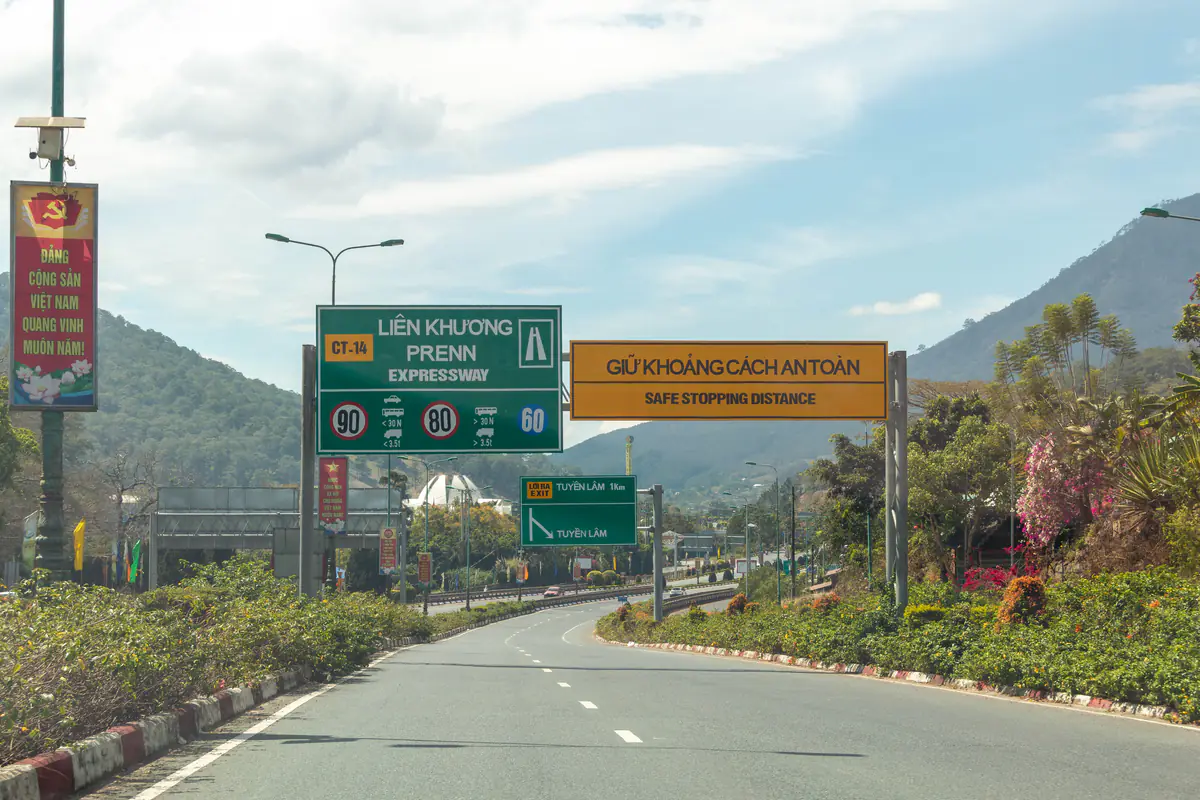
170 km from Da Lat to Mui Ne needs half a day on the road
A bus suits one or two travelers keeping costs down, provided the pickup and drop-off work for their hotels. A private car gives families and groups more control over stops and luggage, while still needing a generous travel window.
By Da Lat LoversPublished Updated
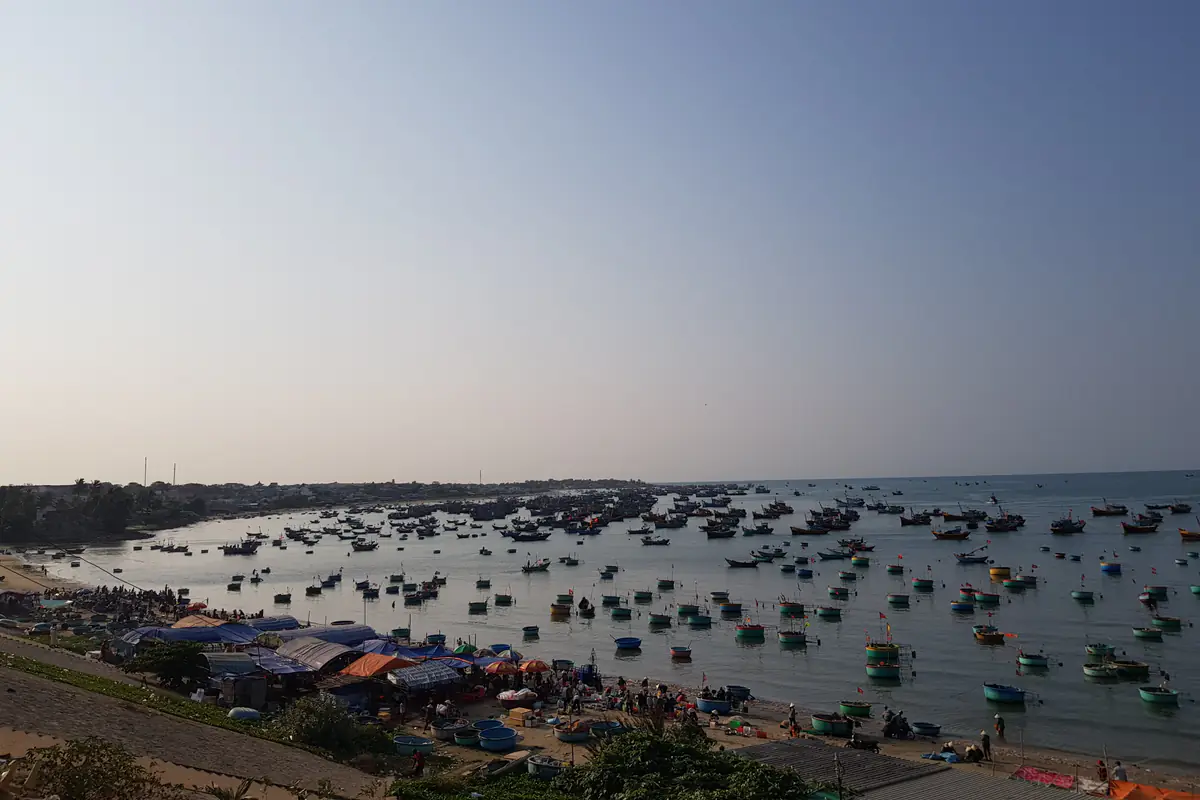
Fishing boats fill a sheltered stretch of the bay at Mui Ne fishing village.
Your first decision is whether this is a transfer or a day on the road. If you simply want to leave the highlands and reach the beach, choose a scheduled bus or a private car. If the stops and scenery are the point, book an easy-rider itinerary with a driver and give it the day. Treating both as interchangeable transport makes the arrival plan harder than it needs to be.
About 170 km, with a substantial travel window
An Phu Travel lists its Da Lat to Mui Ne (Mũi Né) route at about 170 km and five hours thirty minutes. Set aside at least half a day, plus the time needed to reach the pickup and your hotel at the other end. Your actual distance and elapsed time depend on the endpoints, passenger collection, road conditions, and the route the operator uses.
Mui Ne accommodation stretches across a broad coastal area. A hotel in the area commonly called Ham Tien, the fishing village, and a resort farther toward Hon Rom do not share one drop-off point. Send your hotel’s entrance pin, rather than only its name or “Mui Ne.” A rural Da Lat property may also be outside a bus company’s pickup area.
We would reserve most of a morning or afternoon for the journey and allow additional time at both ends. Avoid booking a paid dune excursion immediately after the advertised arrival. If you reach the coast early, lunch and check-in are easy to fill. If the bus runs late, an open afternoon is much easier to manage than another driver waiting for you.

Bus for a small budget, private car for useful flexibility
| Option | Best fit | Confirm before paying |
|---|---|---|
| Scheduled bus | One or two travelers with manageable luggage | Seat or berth, exact stops, vehicle changes |
| Limousine service | Travelers prioritizing their individual space | Actual layout, dimensions, luggage allowance |
| Private car with driver | Families or groups needing flexible breaks | Total fare, route, luggage capacity, waiting |
| Easy rider | Travelers interested in the journey itself | Driver, protective equipment, luggage, insurance |
“Limousine” is a marketing description used for different configurations. It does not necessarily mean a small van with upright seats. Ask to see the layout for your actual departure, especially if you are tall, get motion sickness, or cannot comfortably use a reclining berth. A photograph on a company’s homepage may show a different vehicle from the one assigned to your ticket.
For a group, divide the complete private-car quote by the number of people sharing it. Compare that with bus fares plus transport at both ends. The car earns its price when door pickup, luggage space, and breaks genuinely help. It does not remove traffic controls or guarantee a short journey simply because the driver can leave at your chosen time.
Ask specifically about the Highway 28B route
Highway 28B through Dai Ninh Pass is one corridor linking the Da Lat side with the Phan Thiet area. Road damage and temporary-road work reported in October 2026 mean that an old route diagram is not enough to plan a self-drive journey. A projected repair deadline is also not confirmation that every affected section is operating normally again.
Confirm the route with the operator
Ask which road your departure will use, whether repairs or a diversion affect it, and what that does to the arrival estimate. Follow official traffic controls. Do not use minor roads to bypass a closure.
A Da Lat to Mui Ne ticket alone does not establish that your vehicle will cross Dai Ninh Pass. Operators may alter their route according to conditions. If the answer remains unclear after heavy rain, keep your arrival plans flexible or change the travel date. We would not recommend a first mountain motorbike ride simply because a navigation app highlights the shortest line.
Booking and fare checks
Confirm the fare for your travel date, vehicle and exact drop-off. You can ask the operator’s ticket office or look for An Phu Travel (Da Lat) on Vexere, then confirm the service with the operator before paying. A platform price may include its own promotion and should not be treated as the operator’s fixed tariff. Choose your date first, then use the fare and departure time for that service to plan your budget and arrival.
Separate the time you must be ready, the pickup time, and the main vehicle’s departure time. In particular, the route label “5h30” describes the advertised journey duration; it does not tell you that the bus departs at 5:30 a.m. Save the actual ticket and confirmation offline. If a hotel books for you, request those details rather than relying on a spoken message at reception.
A private-car quote should identify both addresses, the vehicle, passenger count, luggage, road charges, and any waiting or sightseeing stops. Ask whether the quoted capacity still works with everyone’s suitcases. A family needing a child seat should request one before choosing the car. Do not assume an empty passenger seat means the requested restraint is available.
The precise stops matter more than a small discount
A company office address is not automatically the boarding location for every service. An Phu publishes 26 Pham Ngu Lao Street in Da Lat, but your ticket’s meeting instructions still decide where you go. For hotel collection, confirm the area covered, any supplement, and whether you need to walk to a main road. Narrow lanes and steep access can complicate door pickup.
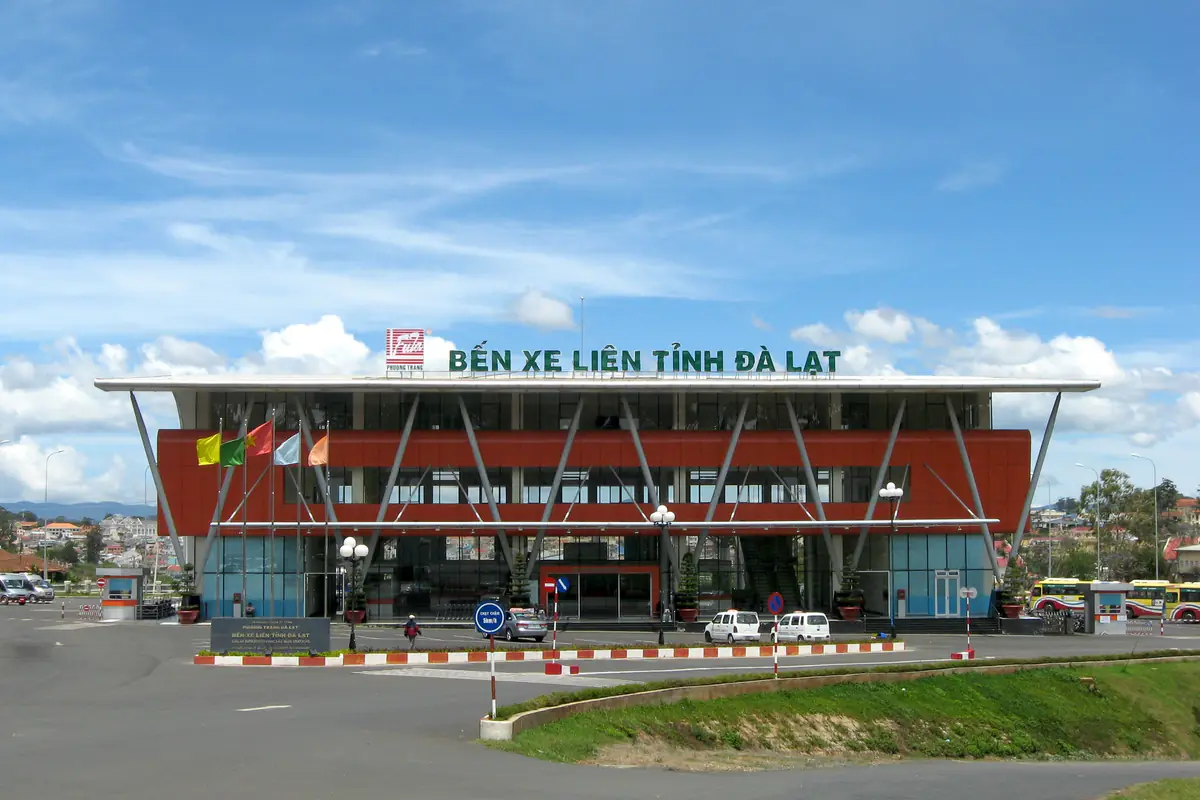
On the coast, establish whether the bus stops at an office, on the main road, or at your accommodation. A Phan Thiet ticket does not automatically include a transfer to a Mui Ne resort. Share a map pin and get a clear reply. If there is a final local ride, ask your accommodation how to arrange it and what cost to expect before you leave Da Lat.
Keep your passport, phone, and essentials with you, while larger bags go where the crew directs. Check that you have your own luggage before the bus leaves the drop-off. In a group, one person can coordinate the booking, but everyone should have the meeting point and their own ticket details in case you become separated.
A daytime departure leaves an easier arrival
We prefer traveling after a proper night’s sleep, with time for a light meal before departure. Leaving in the morning generally leaves more daylight to handle a local connection or an unexpected change of stop. Choose the exact time from the operator’s available services, rather than from an old travel article. A later bus can still work if your accommodation knows when to expect you.
Keep a light layer in your small bag for the highland start and air-conditioning, then put it away when you reach the coast. Carry drinking water and ask about rest stops. If you need motion-sickness advice, speak with a pharmacist or clinician about an appropriate option before travel. Avoid borrowing an unfamiliar medicine from another passenger as the bus departs.
Arrival day does not need a full sightseeing schedule. Check in or leave your luggage under the hotel’s policy, have a meal, and decide what energy remains. When choosing where to stay, the Mui Ne activities and neighborhoods are easier to plan around once the final drop-off is clear.
An easy-rider transfer is a different kind of day
Riding as a passenger with a driver is different from renting and operating a motorbike yourself. You still need to tolerate the weather and hours on the bike. Ask about the operator, driver experience, helmets and protective equipment, luggage arrangements, and insurance coverage. Large suitcases need an agreed solution, rather than an improvised stack on the back.
Specify the stops and whether meals or attraction fees cost extra. Passing through the countryside does not mean every advertised waterfall is open for entry. Weather or access restrictions may require a revised itinerary. We would choose a car when reaching the beach is the main objective, and reserve easy rider for travelers who actively want to spend their day traveling this way.
Allow similar breathing room in the reverse direction
Mui Ne to Da Lat needs its own availability and pickup check. Do not reverse the downhill timetable and assume it applies uphill. Send your coastal hotel pin and ask whether the service collects passengers along the resort strip. Keep a warm layer accessible for the highland arrival and give your Da Lat accommodation an approximate check-in time.
If connecting to a flight or another long-distance service, leave a generous buffer and ask about delays on the current route. On a short Vietnam itinerary, we prefer continuing in one direction to returning simply to hand back a rented motorbike. That also avoids assuming a rental company allows a one-way return when it has never agreed to one.
FAQ
How long is the bus journey?
The listed route reference is 5 hours 30 minutes over about 170 km. Hotel transfers, traffic and route changes can add time.
Does a Mui Ne ticket include hotel drop-off?
Not automatically. Send the exact hotel entrance pin and confirm any final transfer and extra charge before paying.