Your first Da Lat canyoning trip starts before the waterfall
Da Lat canyoning can be worth a day if you want an active adventure and choose an operator that clearly explains the route, support and insurance. But a beginner label is not enough if you cannot swim, feel uncomfortable in moving water or face unsuitable conditions.
By Da Lat LoversPublished Updated
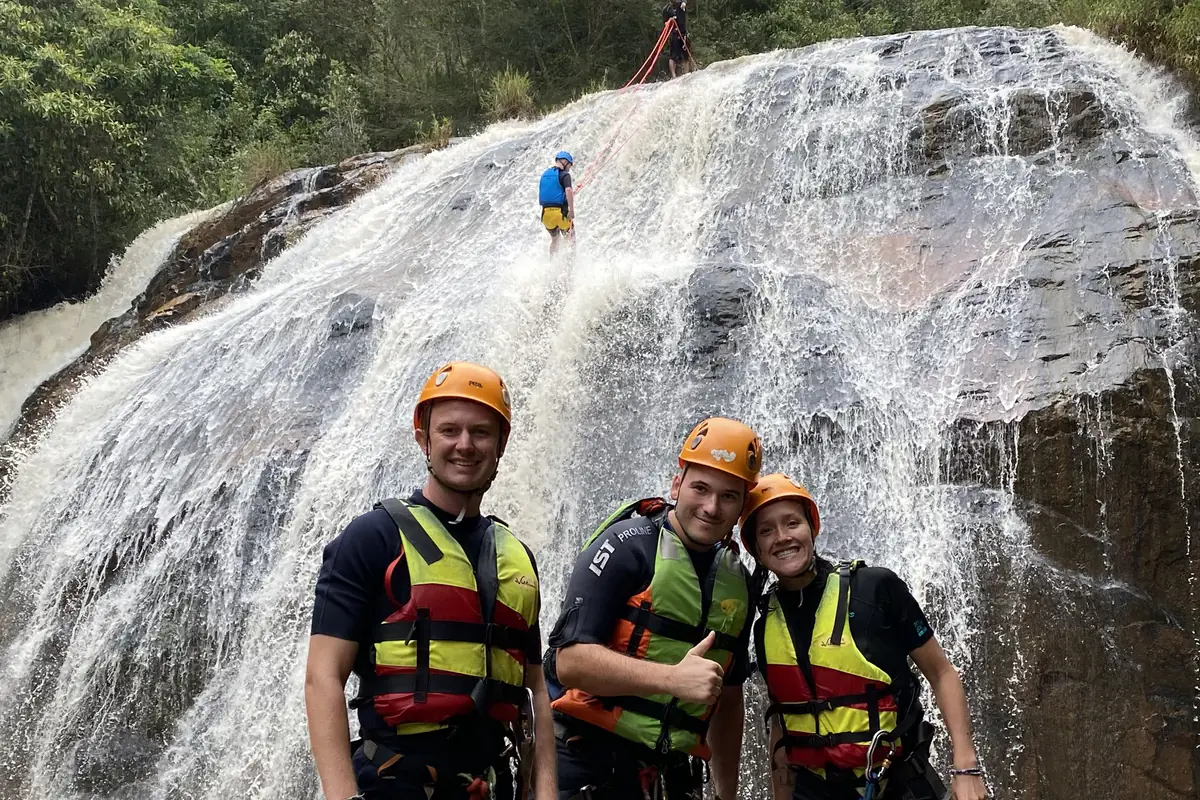
Participants in helmets, flotation vests and harnesses pause beside a waterfall.
A common first-timer mistake is booking the cheapest canyoning photo on a hostel noticeboard and asking about swimming only when the harness comes out. Reverse that order. Tell the organizer how well you swim, how you feel about heights, and which activities you would rather skip. The useful answer explains the actual route and your options, rather than simply promising a great day.
Who will enjoy a canyoning day?
Da Lat canyoning involves moving through a canyon using a combination of walking, rappelling, swimming, and sometimes natural slides or jumps. You spend much of the outing wet, and there is physical work between the dramatic moments in the photos. We would choose it for travelers who want an active day outdoors and are willing to listen carefully, practice, and accept a change of plan.
No previous rappelling experience does not automatically rule you out. Beginner tours normally include instruction and practice. That does not make every beginner suitable for every itinerary. Tell the organizer if you cannot swim or feel panicky in moving water. A life jacket is essential equipment, not proof that all water sections will work for you. Ask for an assessment based on the specific route.
If a medical condition, an injury, or another health concern could affect participation, discuss it with an appropriate health professional and the organizer before booking. A seller’s general “suitable for beginners” label cannot resolve individual fitness questions. For backpackers arriving on an overnight bus, we would also leave time to sleep first. A short stay is a poor reason to start an unfamiliar adventure exhausted.
The canyoning route is a separate Datanla activity
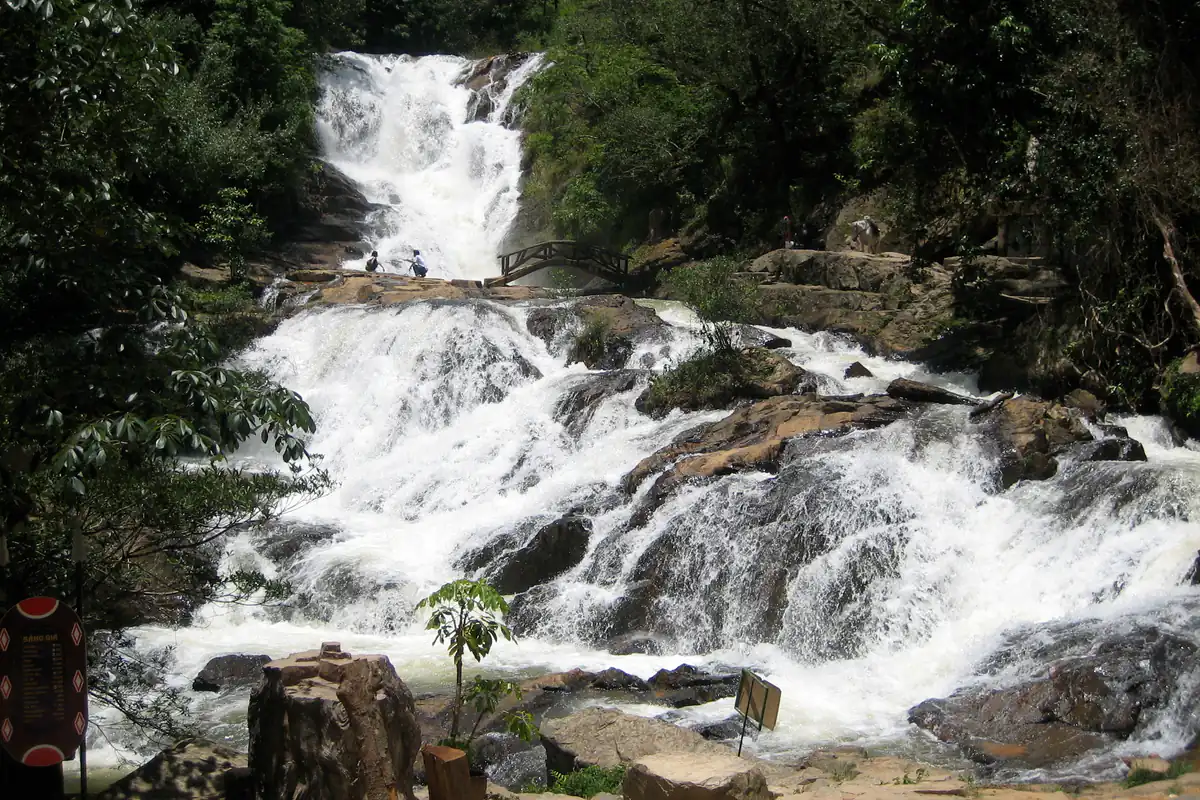
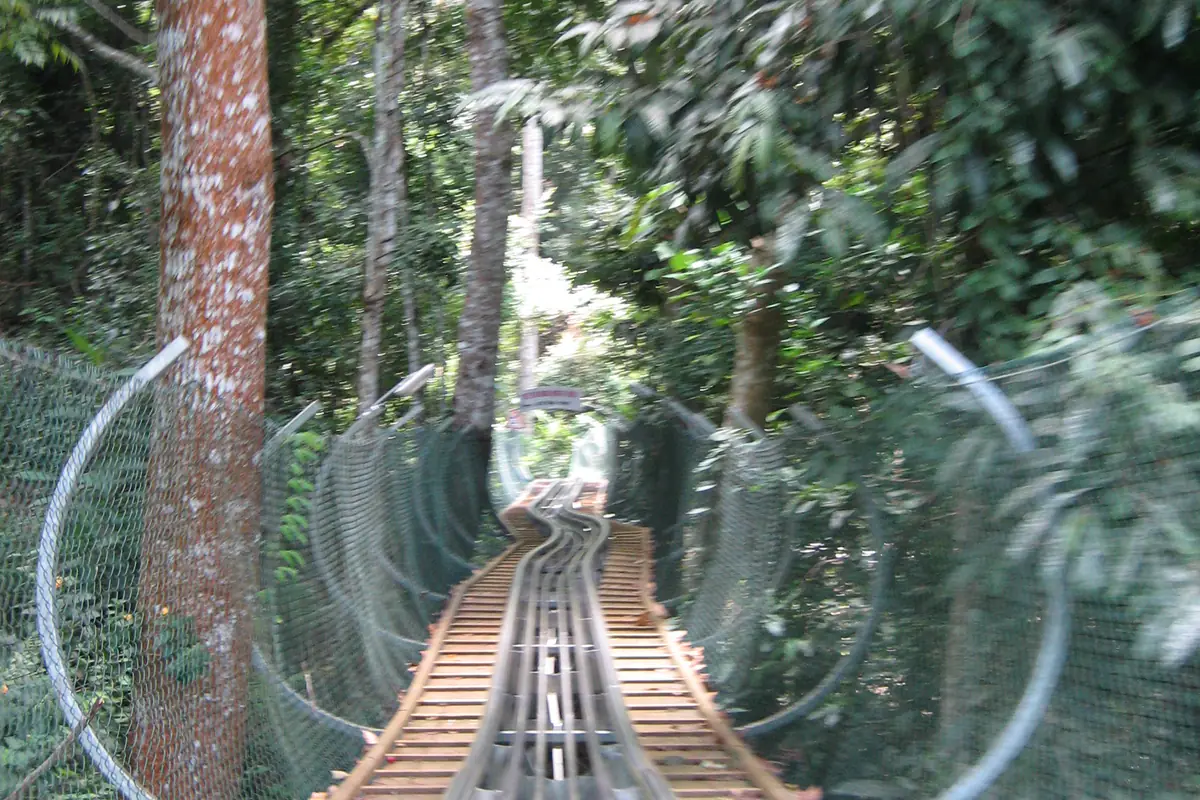
Datanla Waterfall is also a sightseeing attraction with separately sold activities. Admission to the tourist area, an alpine coaster ticket, or a zipline booking does not automatically include canyoning. A guided canyoning trip needs its own equipment, arrangements, and access to the activity route. Do not arrive with a sightseeing ticket expecting to join a group at the next waterfall.
Ask exactly which itinerary you are buying. Some packages add a coaster ride or a lake activity, extending the day beyond the canyon itself. The attraction’s general opening hours are not your tour’s meeting time. If your companion prefers a relaxed waterfall visit, the Datanla sightseeing options may suit them better. You do not both need to buy an adventure package just to spend the rest of the trip together.
Ask about the team that actually runs the trip
First establish the operating company’s name. A hotel, hostel, or booking platform may sell a tour delivered by someone else. You need to know who receives your participation information, confirms permission to use the route, and handles a cancellation. Similar business names and identical promotional photos are not enough to identify the operator.
- Authorization: ask for the relevant business and operating credentials and confirmation that the particular route is authorized.
- Guides: ask about training in rappelling, water rescue, and first aid, and which language the briefing will use.
- Group support: ask how many participants and working guides will attend, including how someone who cannot continue will be assisted.
- Equipment: confirm suitable helmets, harnesses, flotation equipment, ropes, and protection from cold, with fitting and checks by the team.
- Stopping: ask who makes the water-level decision, how the group exits when necessary, and what happens to your payment.
Use these questions to compare operators, then pay attention to the briefing and equipment checks on the day. Neither a high price nor enthusiastic reviews establish that the team and conditions on your date are appropriate. If practical questions repeatedly receive only reassurance, we would look elsewhere. You should understand what you are agreeing to before a deposit makes changing your mind feel difficult.
Insurance needs to name the activity
“Insurance included” is not a complete answer. Request the insurer, coverage limits, exclusions, and assistance procedure. Any policy supplied with a tour is separate from your personal travel insurance. Standard travel cover may exclude canyoning, rappelling, or difficult-access rescue, even when it covers ordinary sightseeing and hospital treatment.
Send your insurer the activity name and location and keep its written reply. Save the assistance number and policy details offline, with an emergency contact accessible to the organizer. International travelers should also understand medical evacuation and communication arrangements. Read any liability waiver before signing it. A waiver does not show that treatment or rescue bills will be paid by an insurance company.
What the outing usually feels like
The day generally starts with a meeting or pickup, a transfer, equipment fitting, and a briefing. Practice on dry ground comes before the main route. Use that time to ask for instructions again if you need them. Nodding along to avoid holding up the group is much less useful than being clear about what your guide wants you to do.
Walking links the water and rope sections. Depending on the package and conditions, there may be dry rappels, waterfall descents, swimming, and slides. The sequence and number of challenges are not identical across operators. Ask whether a particular obstacle can be bypassed and whether doing so affects your ability to complete the route. “Optional” should have a practical explanation.
Food breaks, changing clothes, returning equipment, and the transfer back take time too. Keep the whole day available even when the canyon portion is described as a half-day. We would plan dinner near the hotel and avoid a tightly timed onward bus. A slower group or a weather decision can change the return time without anyone having done something wrong.
Rain and rising water can change the plan
Conditions on the route decide
A dry street outside your hotel does not establish safe water conditions upstream. Postpone when warnings, official restrictions, or the operating team require it. Do not find an informal replacement guide to enter a stopped route.
A brief shower does not necessarily cancel every outing. Equally, a photograph of apparently gentle water cannot tell you whether the route is suitable. Upstream rainfall, changing flow, and exit options matter. Establish the weather cancellation terms before paying: rescheduling, a refund, and a substitute activity are different outcomes. You should not discover the difference at pickup.
The drier months still require a daily assessment. There is no risk-free season. Speak up if you are cold, tired, overwhelmed, or unable to follow the briefing. Completing one section is not an obligation to prove yourself on the next. The useful form of confidence here is being able to communicate, including when you want to stop.
A price reference and a practical packing list
Dalat Canyoning lists its basic package from VND1,590,000 per person and its canyoning plus 2,400 m alpine coaster package at VND1,890,000. Those are distinct products, not a universal market tariff. Compare the canyoning package and add-on options, then request a total for your date, group size, and pickup location.
Compare like with like: route admission, technical equipment, guides, both transfers, food, photos, and the precise insurance provision. Ask about distant-hotel supplements, payment fees, and cancellation conditions. If a properly explained package exceeds your budget, a different activity is a better choice than a mystery discount. Spending less should not leave you unsure who is taking responsibility for the trip.
- Wear quick-drying clothing and swimwear as instructed by the organizer.
- Use shoes the operator accepts, with reliable grip and secure fit when wet.
- Bring a dry outfit, a towel, and a bag for wet clothes afterward.
- Discuss glasses, essential medication, and storage requirements beforehand.
- Leave valuables behind unless secure storage has been arranged.
Ask how photographs are provided so that you can keep your hands available during instructions and movement. A phone pouch is not a reason to manage a camera while concentrating on a rope or water section. For a first visit, we would pay for an understandable, well-supported day and leave the extra challenges for a trip when they genuinely suit us.
FAQ
Is Da Lat canyoning safe for beginners?
Beginner instruction does not remove the risks. Confirm suitability, the actual operator, equipment, rescue arrangements, insurance and conditions on your date.
How much does canyoning cost?
One operator lists its basic package from VND1,590,000. Confirm the complete price and inclusions for your date rather than treating it as a universal rate.