Moc Chau Vietnam in 2 days and 1 night for Hanoi travelers: weekend itinerary, costs, and best seasons
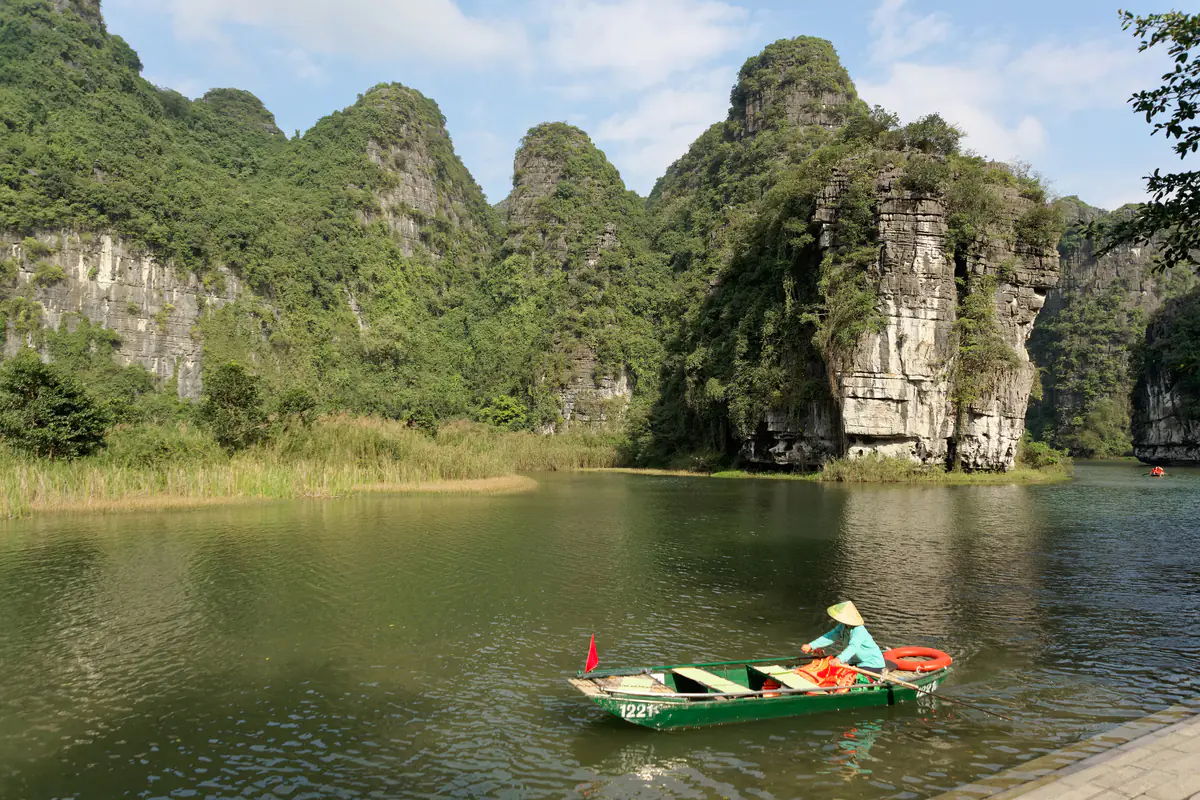
Around 180-200 km from Hanoi, Moc Chau is close enough for a 2-day, 1-night weekend trip. You can spend one day exploring pine forests and waterfalls, then save the next morning for tea hills and plum orchards, provided you visit in the right season.
By Da Lat LoversPublished Updated
A Hai Van Xuan Trang bus leaving My Dinh Bus Station at 6:00 AM can get you to Moc Chau at around 10:15 AM. That still leaves most of the day for Ang Village Pine Forest, Dai Yem Waterfall, or a flower garden in bloom. For a 2-day, 1-night trip to Moc Chau, the sensible approach is to visit attractions in the same area rather than trying to cover every place marked on Google Maps.
Moc Chau is a highland destination in Son La Province, known for its tea plantations, rolling grasslands, plum orchards, and ethnic minority villages. Unlike Sapa, where mountain trekking is a major attraction, Moc Chau works particularly well for a short countryside getaway with scenic drives, gentle walks, and seasonal photography.
From Hanoi, leave early on Saturday, spend one night in Moc Chau, and return on Sunday afternoon. A day trip is possible, but you would spend most of your time traveling.
What is the best time to visit Moc Chau?
There is no single best month for everyone. November and December are good for white mustard flowers, January and February for plum and peach blossoms, and May for ripe plums. Green tea hills and countryside scenery work just as well in several other months.
Flowering seasons depend on rainfall, cold spells, and local farming schedules. Don't book a trip solely because you saw a photo of white plum blossoms taken the previous year.
Moc Chau by month: what can you see?
| Time of year | Main attractions | What to know |
|---|---|---|
| January-February | Plum blossoms, peach blossoms, mountain orchards | Flowering dates vary between years |
| March-April | Ban flowers, tea plantations, warmer weather | Good for walking and photography |
| May | Ripe plums and fruit orchards | Visit orchards that officially welcome visitors |
| June-August | Green tea hills, fuller waterfalls | Rainy season; check mountain road conditions |
| September-October | Green highland scenery, some flower gardens, milder weather | Suitable for a relaxing getaway |
| November | Early mustard flowers, wild sunflowers, late-season persimmons | Check which gardens are actually blooming |
| December | White mustard flowers and winter scenery | Cold and sometimes foggy; plum blossoms are not guaranteed |
What is Moc Chau like in November?
November is one of the nicest months for a weekend trip from Hanoi. Temperatures become cooler, the tea hills remain green, and many mustard flower fields begin their blooming season.
Places to look for white mustard flowers include Pa Phach Village, the area around Ang Village, and some tourist gardens near the Moc Chau Farm area. However, these are not permanent attractions with flowers all year. One field may be in full bloom while the next has only recently been planted or has already been harvested.
In early November, you might also find wild sunflowers or persimmon trees carrying their last fruit of the season. By late November, there is often a better chance of finding white mustard flower fields, depending on that year's weather.
Morning or late afternoon is best for photographing flower fields. Harsh midday sunlight tends to flatten the scenery, while heavy morning fog can sometimes hide the landscape completely.
What can you see in Moc Chau in December?
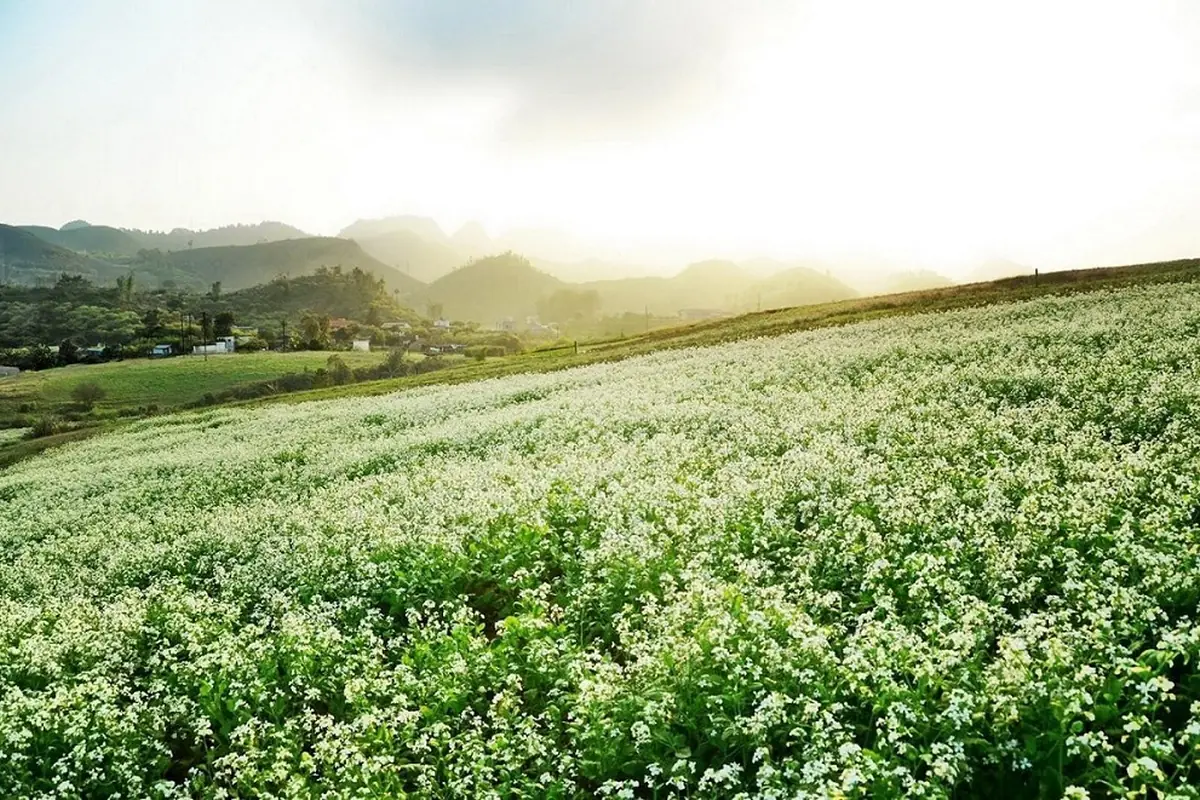
December is still a good time to visit if you enjoy white mustard flowers and winter weather. Fields planted at the right time can turn into broad patches of white against red soil, green hills, and village houses.
It is also a pleasant season for staying in a bungalow and having a hot salmon hotpot or a plate of fried veal in the evening. Early mornings can be cold and foggy, so don't begin sightseeing before sunrise just to take pictures.
The most common misunderstanding concerns plum blossoms. In some years, a few trees begin flowering in late December, but a December trip rarely gets you both vast mustard flower fields and entire valleys of white plum blossoms. January and February usually offer a better chance of seeing the latter.
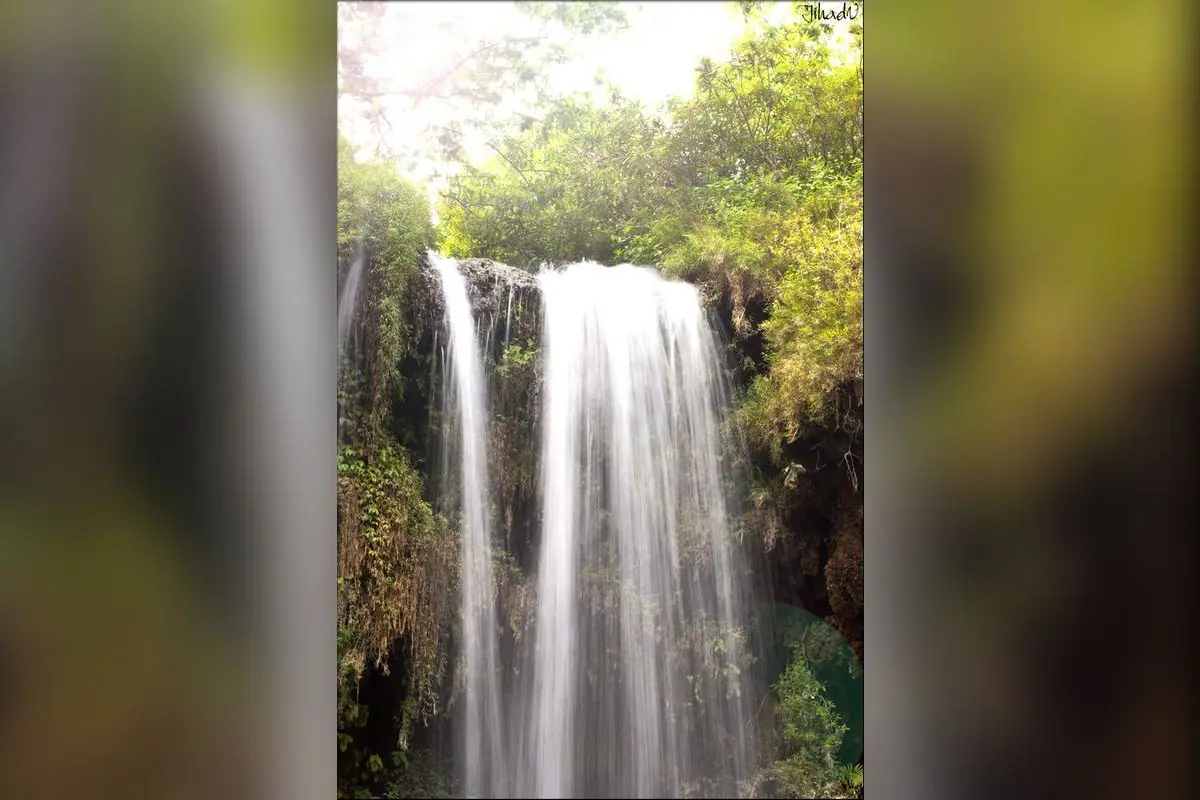
Dai Yem Waterfall also tends to have less water in December than during the rainy season. You can still enjoy the surrounding tourist area, but don't expect the powerful waterfall shown in summer photographs.
January-February: plum and peach blossom season
Na Ka Plum Valley is one of the first places to consider if you want to see white plum blossoms. Other orchards around Tan Lap and nearby plum-growing areas may also welcome visitors during the flowering season.
Plum blossoms are beautiful but short-lived at each orchard. One garden may already have lost its petals while another is only beginning to bloom.
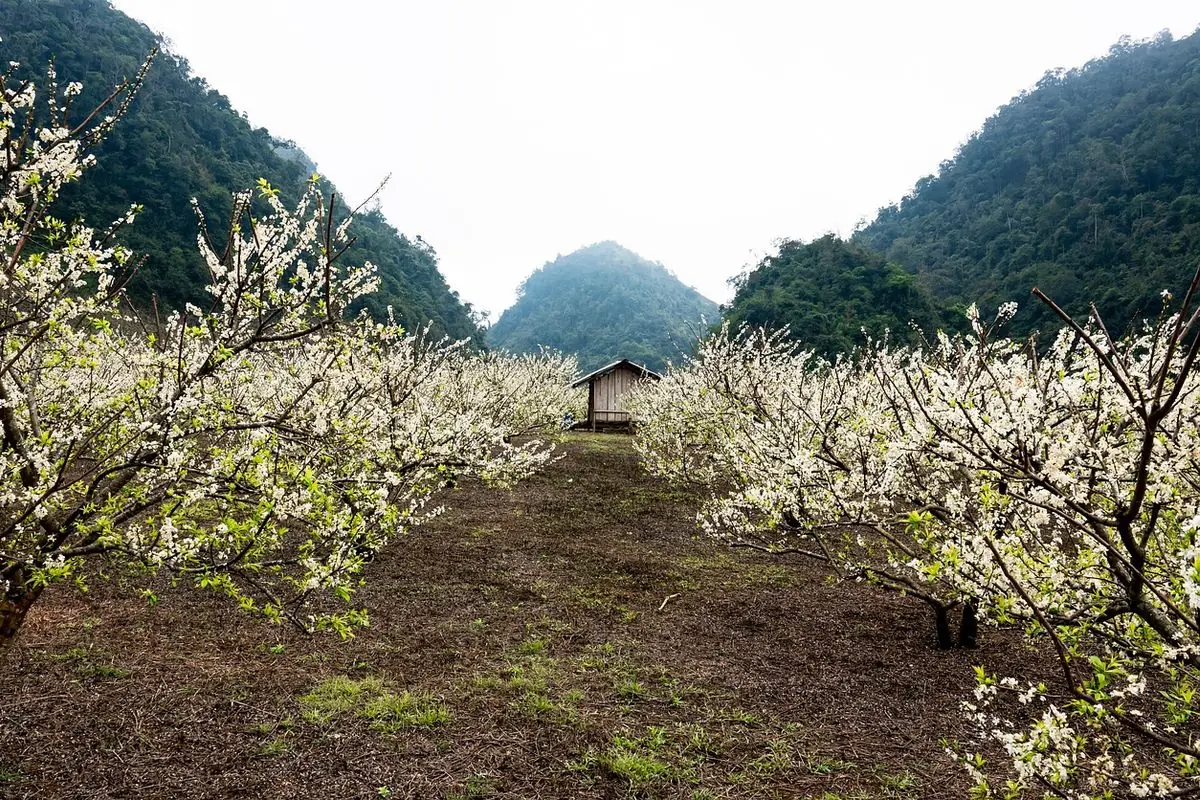
With just two days, choose one orchard that is currently flowering well rather than driving between three valleys searching for blossoms. Checking recent photographs during the week of your trip matters more than choosing a date months in advance.
May: ripe plums and orchard visits
May is an important harvest season for Moc Chau's famous man hau, a local variety of plum.
Na Ka Plum Valley is a popular choice, although individual orchards have different harvest schedules and visitor policies.
Before entering, ask about admission charges, whether fruit picking is permitted, and how much you will pay for plums eaten on site or taken away. An entrance ticket may not include unlimited fruit picking.
In season, the best part is walking beneath the trees, choosing ripe fruit, and learning a little about the orchard. Leave the extra photo stops for another day.
How to travel from Hanoi to Moc Chau
The distance from central Hanoi to Moc Chau is approximately 180-200 km, depending on where you start and where you stay. Driving generally takes around four to five hours, excluding long breaks.
The usual route heads toward the former Hoa Binh area and continues along National Highway 6, passing the Mai Chau region before reaching the Moc Chau Plateau.
Limousine vans and buses: the easiest option for independent travelers
Couples, travelers who prefer not to drive mountain roads, and foreign visitors staying in Hanoi will find a limousine van a convenient choice.
Hai Van Xuan Trang operates limousine and sleeper-bus services between Hanoi and Moc Chau. In 2026, the company's fares run about VND 300,000-350,000 per person, one way, depending on the vehicle and seat.
Some departures leave Hanoi at 6:00 AM, 6:30 AM, 7:00 AM, and 7:30 AM, with a journey time of around four hours and 15 minutes. Confirm schedules and seats for your specific travel date.
Pickup locations in Hanoi include:
- My Dinh Bus Station, 20 Pham Hung Street.
- The operator's office at 35 Nguyen Tuan Street, Thanh Xuan.
- The pickup point at 10 Chau Van Liem Street.
In Moc Chau, drop-off locations include Moc Chau Bus Station, the Moc Chau Farm area, Muong Thanh Hotel, Ang Village, and selected points along the route. Not every departure serves every stop.
A departure around 6:00-7:00 AM is the one to aim for. Arriving after 1:00 PM still works, but drop one attraction from the first day's plan.
Driving your own car: best for groups of three to five
A private car makes it easier to stop for food, carry extra clothing, and reach attractions farther from the center, including tea plantations and plum valleys.
Leaving Hanoi around 5:30-6:00 AM on Saturday gives you time for breaks while still reaching Moc Chau before lunch.
Avoid stopping on blind bends or narrow roadside shoulders simply because there is a good view of the valley below. Find a proper place to park.
Should you ride a motorbike from Hanoi?
A motorbike is suitable for riders experienced with long-distance travel and mountain roads. On a two-day weekend trip, however, the hours spent riding can be tiring, particularly when you still need to return to Hanoi on Sunday afternoon.
You also shouldn't arrive in Moc Chau exhausted and immediately continue toward remote villages.
Riders must hold a valid license appropriate for the motorcycle and recognized in Vietnam. Foreign visitors unfamiliar with local traffic or without a recognized license should choose a bus, a car with a driver, or a local transport service instead.
Where to stay in Moc Chau for one night
Moc Chau is not a town where every attraction sits around a central square. Choosing accommodation in the wrong location can add considerable driving time.
The three main areas worth considering are Ang Village, the Moc Chau Farm area, and central Moc Chau.
Ang Village: best for couples, small families, and quiet stays
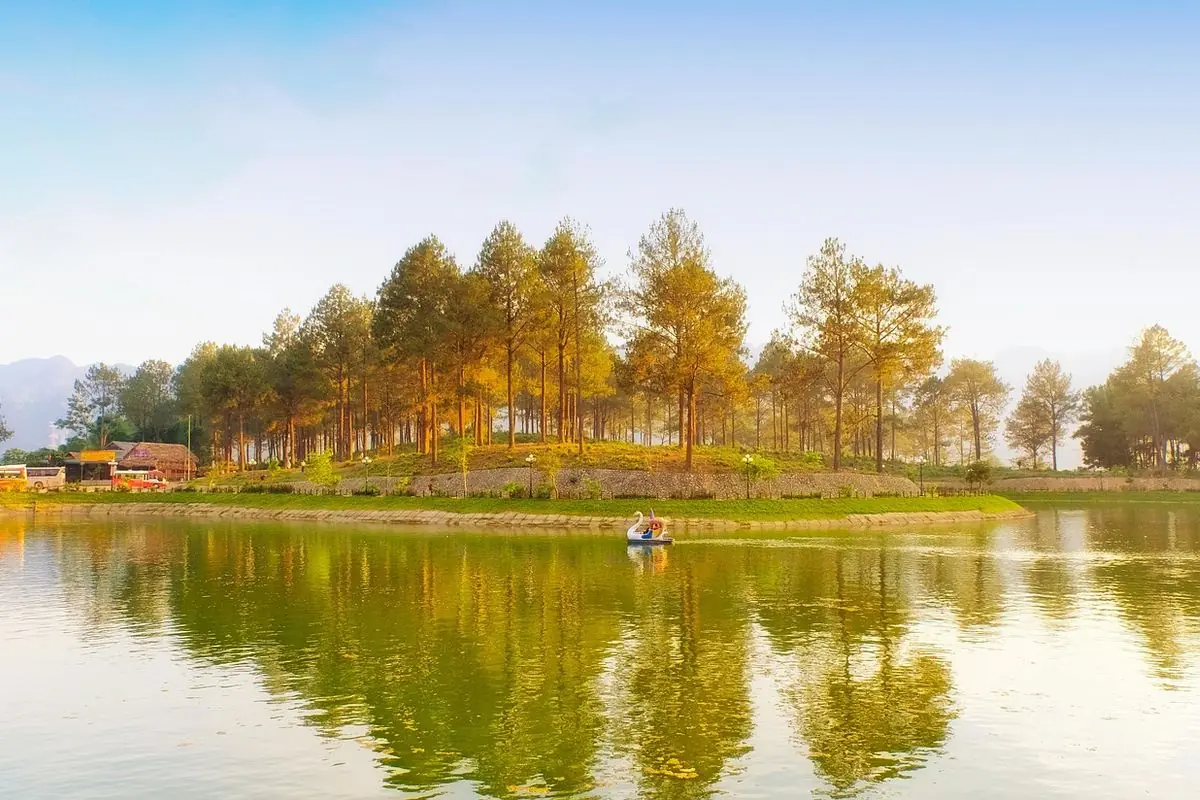
Ang Village has a range of homestays and bungalows. It puts you close to the pine forest, seasonal flower gardens, and Dai Yem Waterfall.
One property to consider is Moc Chau Moc Homestay. In 2026, a one-bed bungalow here costs VND 1,000,000 per room per night on weekends, including breakfast. A two-bed bungalow costs VND 1,200,000 per room per night on weekends.
The property also has shared traditional stilt-house accommodation at VND 150,000 per person per night on weekends for groups of 10-15, so solo travelers won't get this rate.
If you prefer a private room, don't rely only on photos of wooden cabins. Ask whether your room has a private bathroom, reliable hot water, and which floor it is on. During winter, those details matter more than how photogenic the courtyard looks.
Moc Chau Farm area: best for tea plantations
The farm area suits visitors who want more time at tea plantations, fruit orchards, and open countryside.
Moc Chau Arena Village is one accommodation option here, offering bungalows and other room types. Japanese-style stilt-house accommodation here starts at VND 600,000 per night in 2026. The final rate depends on your dates and room category.
Staying here shortens the second morning's drive to the tea hills or Tan Lap area. The trade-off is extra travel time when visiting Ang Village or Dai Yem Waterfall.
Central Moc Chau: best for bus travelers
Without your own vehicle, consider a hotel near your bus drop-off point or along main roads such as Tran Huy Lieu and Hoang Quoc Viet.
Restaurants, shops, and transport services are easier to arrange from these areas, and you avoid having to book a private transfer from a homestay deep inside a village just to reach the main road on Sunday morning.
For foreign travelers organizing everything independently, this is often the more practical choice. Send your hotel the bus drop-off location before arrival and ask whether they can arrange a pickup and sightseeing transport.
Moc Chau 2-day, 1-night self-guided itinerary
This itinerary assumes you leave Hanoi on Saturday morning and return on Sunday afternoon, with transport available between attractions in Moc Chau. The times below are suggested sightseeing slots; actual bus times depend on the departure you book.
Day one focuses on Ang Village and Dai Yem Waterfall. Day two covers the farm area, tea plantations, and a fruit orchard if the season is right.
Loading map...
- Ang Village Pine Forest: First stop on day one, with a lake and walking paths
- Dai Yem Waterfall: In the Muong Sang area, afternoon of day one
- Heart-shaped tea hill: In the farm area, morning of day two
- Bach Long Glass Bridge: Inside the Moc Chau Island complex, Muong Sang area
Day 1: Hanoi - Ang Village - Dai Yem Waterfall - overnight in Moc Chau
- 6:00-10:30 AM
Travel from Hanoi to Moc Chau
Book a 6:00-7:00 AM departure if one is available, and have breakfast before boarding or bring something light to eat and a bottle of water.
Don't schedule your first attraction for the exact minute your bus is supposed to arrive. Mountain roads, pickup stops, and rest breaks can affect the journey.
If you are driving, take a short break along the way, but keep any stop in Mai Chau brief, since you only have one night in Moc Chau.
- 11:00 AM-12:00 PM
Lunch and luggage drop-off
Once you arrive, have lunch before sightseeing. A simple meal of fried veal, local mustard greens, and rice is a good introduction to the area's food.
One restaurant to consider is Xuan Bac 181 Restaurant, at 56 Hoang Quoc Viet Street in the Moc Chau Farm area. It serves regional specialties, including fried veal.
If you prefer salmon, Ca Hoi 64 Restaurant, at Km179 on National Highway 6 near the Moc Chau welcome gate, is another option. Its menu includes raw salmon preparations, grilled fish, hotpot, and set meals. Ask for the current menu and total price before ordering, particularly if there are only two of you.
After lunch, drop off your bags at the accommodation. Many properties allow check-in only in the early afternoon, so confirm luggage storage beforehand.
- 12:30-2:00 PM
Ang Village Pine Forest
Ang Village Pine Forest is a comfortable first stop, with walking paths, a lake, and pine trees. Allow around 60-90 minutes.
A 2026 ticket to the Phoenix Pine Forest tourist area, sold through Moc Chau Moc, costs VND 80,000 per adult, with free entry for children under one meter tall. This is the Phoenix tourist-area ticket; other spots around Ang Village may charge differently.
Walk beside the lake and look for quieter sections for photographs. Midday and early-afternoon sunlight can be harsh, so use this time for an easy walk rather than trying to get all your best pictures immediately.
- 2:15-3:45 PM
Dai Yem Waterfall
From Ang Village, continue toward Dai Yem Waterfall in the Muong Sang area.
A 2026 ticket to the Dai Yem Waterfall tourist area, sold through Moc Chau Moc, costs VND 80,000 per adult. Tickets for the Love Glass Bridge are sold separately at VND 100,000 per adult.
There are walking paths and several viewpoints around the waterfall. Pick a comfortable route, enjoy the scenery, and spend time near the designated viewing areas.
The waterfall generally carries more water from around April to September. In November or December the flow may be much smaller; plan a shorter stop.
Avoid wet rocks and fast-flowing water near the falls. After heavy rain, follow the instructions and access restrictions set by the site management.
- 4:00-5:15 PM
A seasonal flower garden or an early return to your accommodation
This should be the most flexible part of the day.
In November or December, visit a mustard flower garden near Ang Village or Pa Phach only if you have confirmed that it is blooming, open to visitors, and accessible. These gardens are often part of working farmland. Ask permission, use the designated paths, and pay any entrance charge set by the owner.
In May, replace the mustard flowers with a fruit orchard if time allows.
Leave this stop out altogether if your bus was late, it starts raining, or the group is tired. Returning to the homestay at 4:00 PM is a better decision than adding another drive just before dark.
- 6:30-8:00 PM
Dinner and overnight stay
Your evening doesn't need to be packed with activities. You can have dinner at a restaurant or arrange a meal at your homestay.
Set meals at Moc Chau Moc cost about VND 80,000-150,000 per person in 2026, depending on the menu. Confirm the exact dishes and prices when ordering.
In winter, a hot dinner followed by an early night works well. Groups who want to socialize might prefer a meal in a traditional stilt house. Couples looking for a peaceful evening should choose a private room away from communal gathering areas.
Driving a long distance to find a café open late isn't worth it; save your energy for the tea hills and orchards the next morning.
Day 2: heart-shaped tea hill - seasonal plum orchard - Hanoi
- 7:00-8:00 AM
Breakfast and prepare for checkout
If breakfast is included, eat at the property, then pack your luggage before leaving for sightseeing.
Bus travelers should ask whether the hotel can store bags after checkout. Otherwise, arrange to take them along or leave them somewhere suitable.
Leave earlier on clear mornings if you like. On days with thick fog, it may be better to delay sightseeing until visibility improves.
- 8:00-9:30 AM
Heart-shaped tea hill
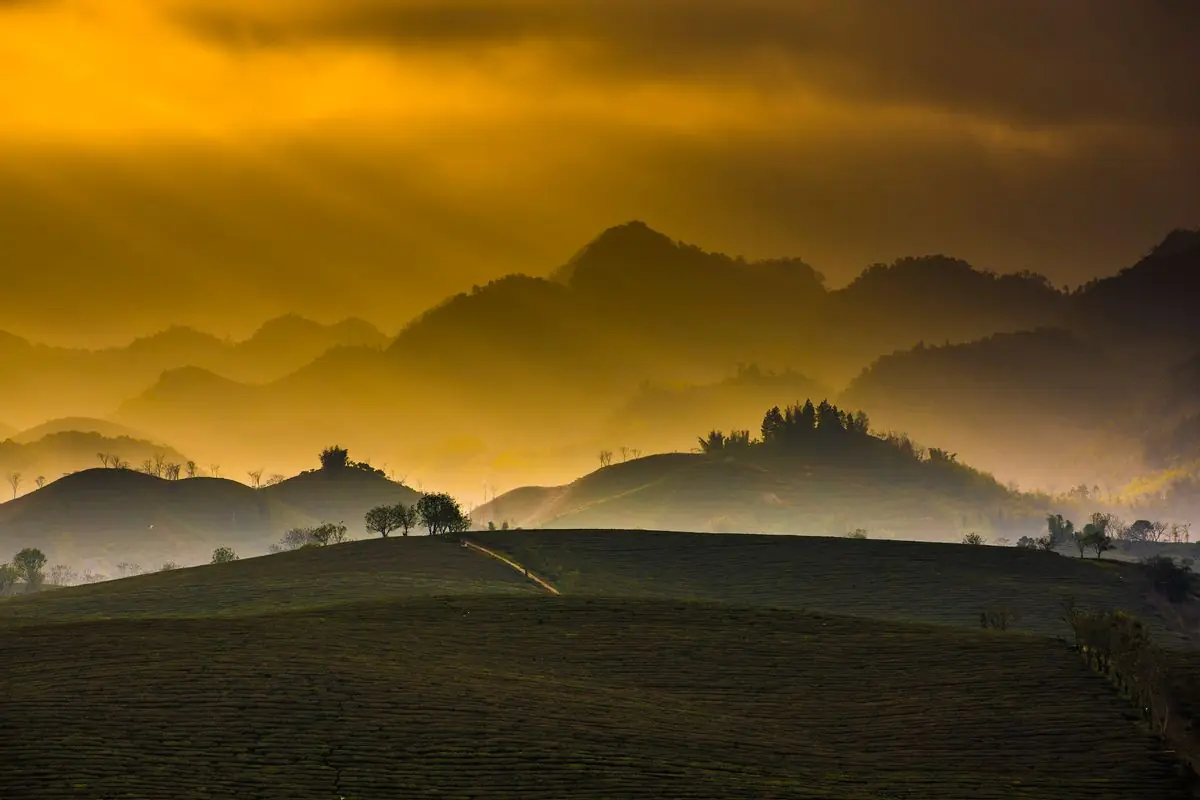
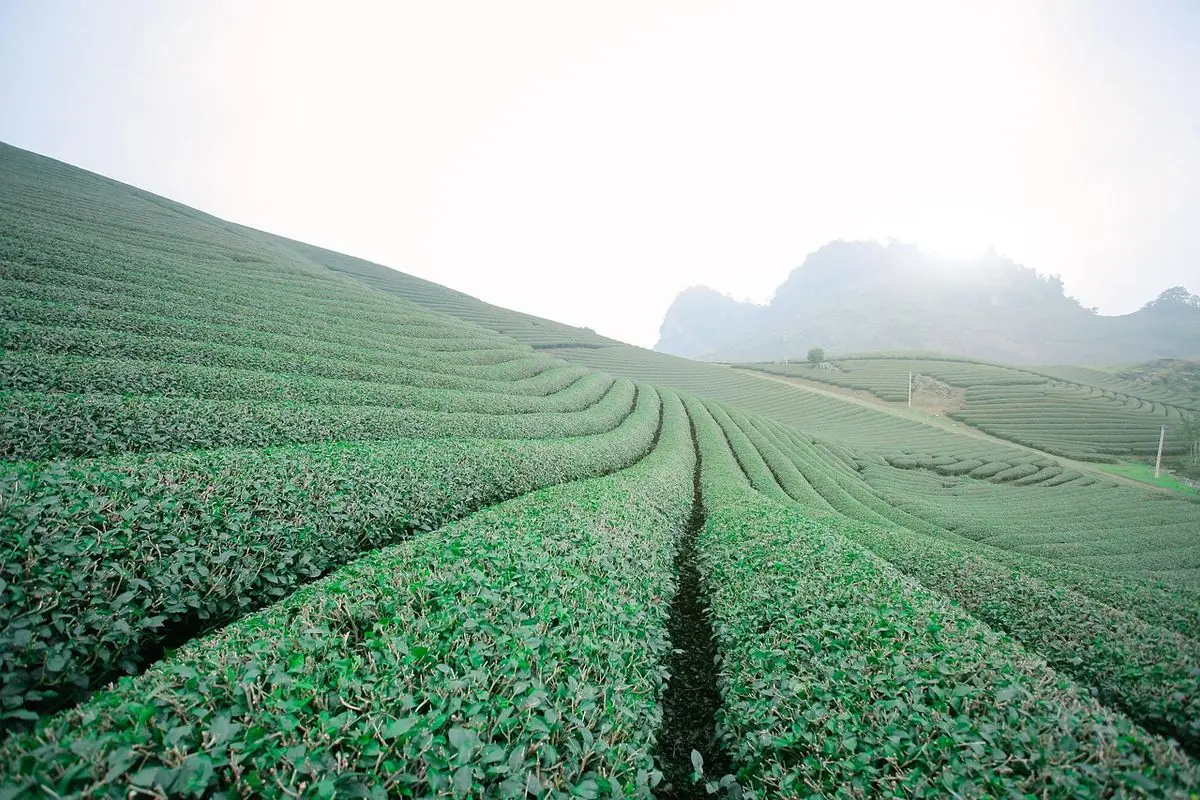
The heart-shaped tea plantation in the Moc Chau Farm area is one of the region's most recognizable landscapes. Rows of tea bushes form curved patterns against a backdrop of rolling green hills.
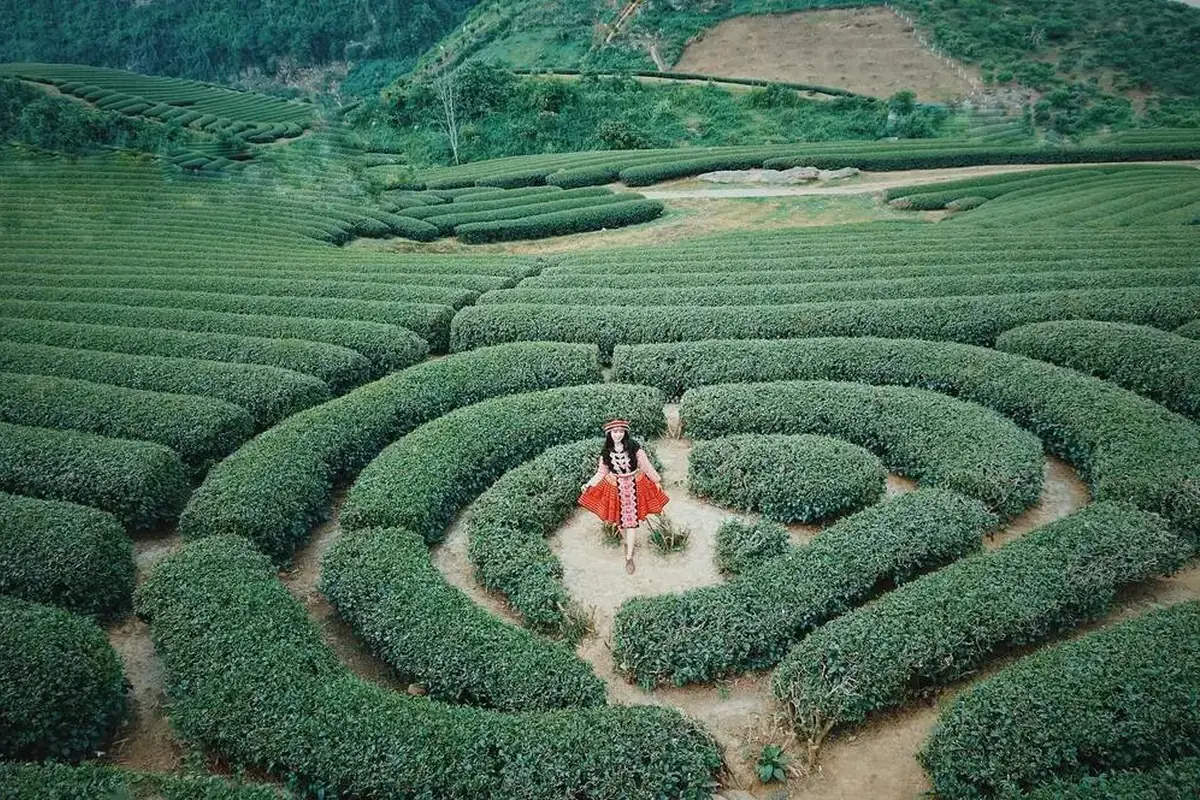
Photo: Traveloka Tea rows curving into a heart, with a visitor in a red skirt standing at the center. You can walk along permitted paths, take photographs, and learn about local tea products.
Some tea gardens are operated as tourist attractions with admission charges or separate services. Others follow the landowner's own rules, and not every plantation is free to enter.
Allow 60-90 minutes, and stay on the paths instead of stepping between tea rows or damaging plants to reach a higher photo spot.
- 9:45-11:15 AM
Na Ka Plum Valley or a seasonal alternative
In January or February, pick an orchard in Na Ka Plum Valley that has confirmed blossoms. In May, when plums are ripe, spend the time picking fruit or buying it from an orchard that welcomes visitors.
November and December are not the plum harvest season. Visit Na Ka at that time only if the current scenery or an open flower garden makes the trip worthwhile; going just to tick the name off your list wastes the morning.
During months without flowers or fruit, replace Na Ka with another tea plantation viewpoint near the farm area, or return for coffee, dairy products, and a relaxed break.
The main rule for day two is to protect enough time for your journey back to Hanoi. Don't turn onto a remote village road when you already have an afternoon bus reservation.
- 11:30 AM-12:45 PM
Lunch and local shopping
Your final lunch is a chance to try anything you missed on day one: fried veal, stream fish, hill chicken, or seasonal vegetables.
A lighter option is to eat somewhere near your accommodation and buy milk products or tea to take home.
Moc Chau is well known for its dairy products and tea. For fresh milk or other products requiring refrigeration, check storage and transport conditions before purchasing.
Not every shop on the main road is a production facility. Before buying food to bring home, check the label, expiration date, producer, and storage instructions.
- 1:00-3:00 PM
Rest, collect luggage, and reach your bus pickup point
Don't fill your final afternoon down to the last minute. Return to your accommodation, collect your belongings, and reach the agreed pickup location.
If you are staying in the farm area, confirm whether your return bus stops there or requires you to travel to Moc Chau Bus Station.
Hai Van Xuan Trang runs a Moc Chau - Hanoi departure at 4:10 PM, arriving at My Dinh Bus Station at approximately 8:30 PM, with a 2026 limousine fare of VND 270,000 per person. Treat it as an example and check that the same departure and price are still available for your Sunday.
A bus leaving Moc Chau around 3:00-4:00 PM usually gets you to Hanoi in the evening on a normal traffic day.
Should you add Bach Long Glass Bridge?
Bach Long Glass Bridge is inside the Moc Chau Island tourist complex in the Muong Sang area. It is an option for travelers who want a major recreational attraction rather than spending the entire trip visiting tea hills, orchards, and flower gardens.
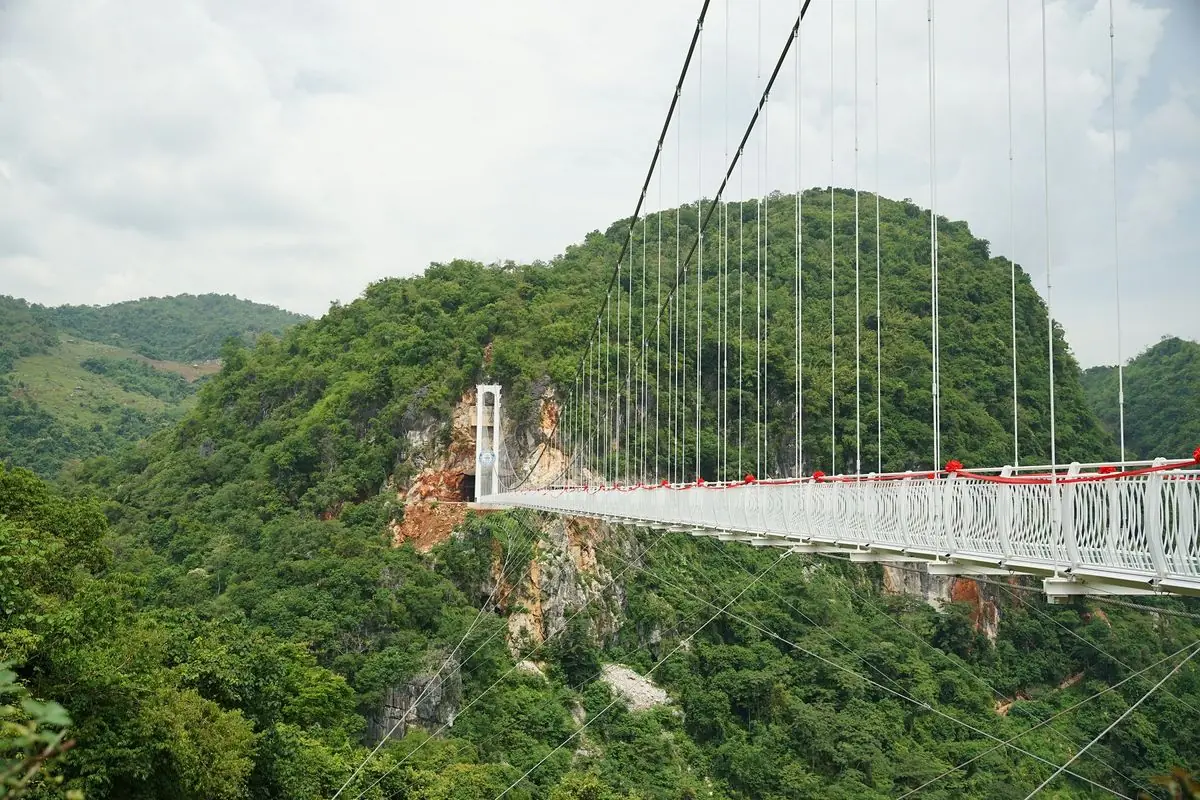
In 2026, Moc Chau Island's adult tickets for Bach Long Glass Bridge cost VND 650,000 on Fridays, Saturdays, Sundays, and public holidays. A separate weekend admission ticket to Moc Chau Island, excluding the glass bridge, costs VND 150,000 per adult.
For a two-day, one-night trip, replace Dai Yem Waterfall or the flower garden on day one with Moc Chau Island rather than adding it to an already full schedule.
The glass bridge suits groups looking for an adventurous activity with a larger budget. If you are uncomfortable with heights, traveling with someone who doesn't want to cross a glass bridge, or mainly visiting for seasonal flowers, skip it.
Check the weather, operating schedule, eligibility restrictions, and children's ticket conditions before purchasing. Families may need different ticket types for people who want to use the bridge and those who only want to visit the complex.
What else is there to do in Moc Chau?
Moc Chau has more places worth exploring on an extra night or a return trip in another season, though most of them are hard to fit into a first weekend itinerary.
Pa Phach Village
Seasonal mustard flower fields
Pa Phach is known for seasonal mustard flower fields and rural highland scenery. It is not a permanent photography attraction where the landscape looks the same throughout the year.
Roads into some parts of the village can be narrow, steep, or muddy after rain. Travelers who are not experienced motorbike riders should ask local people about the route or arrange suitable transport.
Respect residents' privacy. Homes, courtyards, drying areas, and gardens are not open to visitors just because they make attractive photographs.
Bat Cave (Hang Doi)
Limestone cave near central Moc Chau
Bat Cave is a limestone cave attraction near central Moc Chau. It can be a useful alternative if you enjoy caves and rock formations more than flower gardens.
You can substitute it for an orchard that is not in season, but allow time for the approach and steps, especially if you are traveling with young children or older family members.
Hang Tau
Valley of grassy fields and wooden houses
Hang Tau is often described as a secluded valley with grassy fields, wooden houses, and rural mountain scenery.
Access is different from visiting a tourist attraction directly beside National Highway 6. Check road conditions before including it in your plans.
On a two-day trip, it makes sense only if you have suitable transport or local assistance and are willing to remove other attractions from the itinerary.
Pha Luong Peak
For travelers interested in trekking
Pha Luong is more suitable for travelers interested in trekking and willing to prepare a separate hiking itinerary. It should not be added casually to a short sightseeing weekend that already involves several hours of road travel.
Before attempting the hike, verify which routes are currently permitted, the local access requirements, guiding arrangements, and weather conditions.
Dairy farms and tea producers
For travelers interested in agriculture
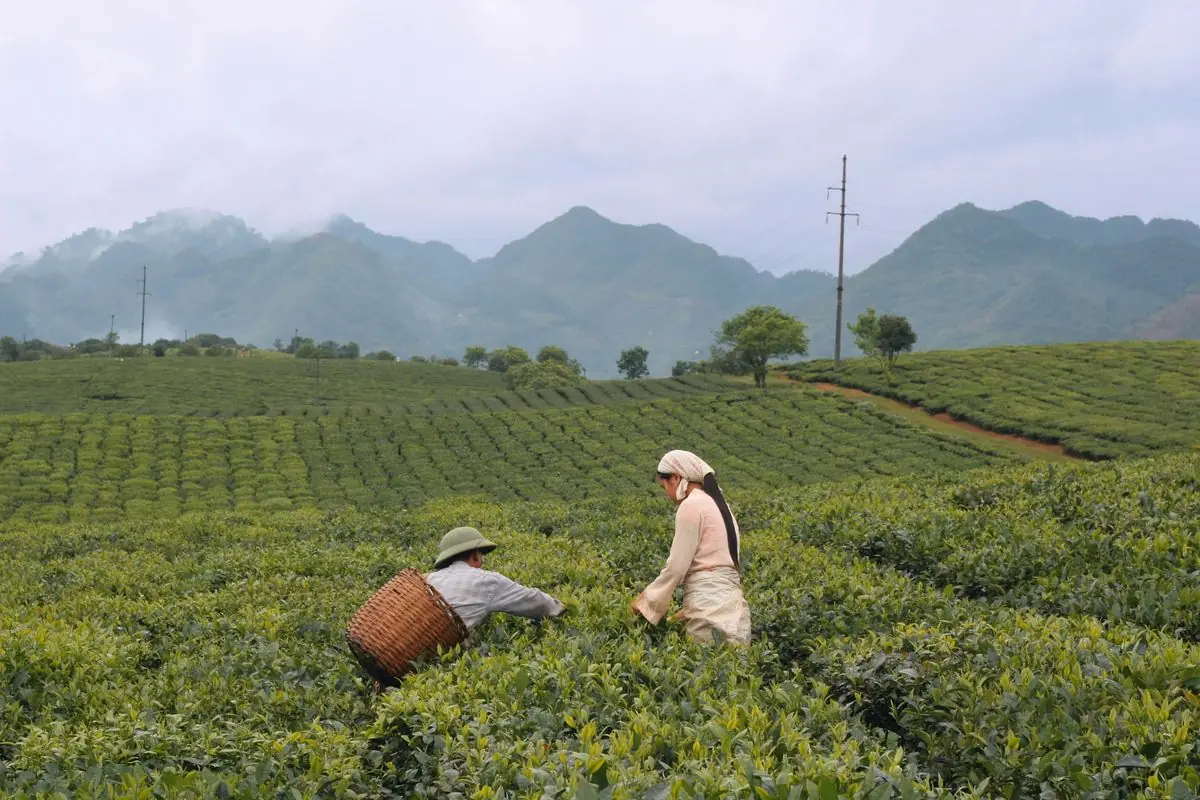
Moc Chau has a long history of dairy farming and tea production. Travelers interested in agriculture can look for farms or producers that explicitly offer visits or organized experiences.
Do not enter livestock areas, production facilities, or working tea fields without permission. A shop selling dairy products or tea does not mean the farm or factory behind it is open to tourists.
How much does a 2-day, 1-night Moc Chau trip cost?
For two people traveling from Hanoi on a weekend, sharing a bungalow and visiting basic attractions, a reasonable budget is around VND 1.8-2.7 million per person, excluding shopping, Bach Long Glass Bridge, and special activities.
This is a planning estimate, not a fixed package-tour price.
Estimated budget for two travelers
| Expense | Cost per person |
|---|---|
| Return bus from Hanoi to Moc Chau | VND 540,000-700,000 |
| One-night bungalow, shared by two | Around VND 500,000 |
| Food over two days | Budget VND 300,000-500,000 |
| Phoenix Ang Village and Dai Yem Waterfall admission | VND 160,000 |
| Local transport in Moc Chau | Budget VND 200,000-500,000 |
| Miscellaneous expenses | Budget VND 100,000-300,000 |
| Estimated total | VND 1,800,000-2,660,000 |
Bus, room, and attraction tickets in the table are 2026 prices from Hai Van Xuan Trang and Moc Chau Moc; taxis, meals, and miscellaneous costs are suggested budgets.
Leave some extra money available if you are traveling during a busy flower-season weekend, want a better room, or need to hire a private car with a driver for several hours.
Adding Bach Long Glass Bridge on a weekend costs another VND 650,000 per adult (Moc Chau Island's 2026 price).
With three or four travelers, sharing a private car may be more economical. Accommodation costs may not fall at the same rate, though, especially if your group needs additional rooms.
Where should you spend more, and where can you save?
The two things most worth paying for are suitable accommodation and safe local transport. A room with hot water, warm bedding, and a location close to what you plan to see is more useful than a photogenic cabin that requires a lengthy drive every time you want to eat.
You can save by skipping premium entertainment tickets, eating at your homestay, or choosing only one paid attraction per half-day.
Don't try to save money by taking transport from an operator with unclear details, renting a motorcycle without the required license, or pressuring a driver to go faster so you can fit in another photo stop.
Moc Chau vs. Mai Chau: what's the difference?
These two destinations are easy to confuse, especially for international travelers looking for a short trip from Hanoi.
Mai Chau is closer to Hanoi and is known for its valley landscapes, rice fields, traditional stilt houses, and Thai ethnic villages. Moc Chau is farther away and has a highland landscape with tea plantations, plum orchards, seasonal flowers, and attractions spread across a larger area.
Following Vietnam's provincial administrative restructuring in 2025, the Mai Chau area is now part of Phu Tho Province, having previously belonged to Hoa Binh Province. Moc Chau remains in Son La Province.
| Category | Moc Chau | Mai Chau |
|---|---|---|
| Distance from central Hanoi | Around 180-200 km | Around 140 km |
| Typical driving time | Around 4-5 hours | Around 3-4.5 hours |
| Main scenery | Tea hills, mustard flowers, plum orchards, waterfalls | Valleys, rice paddies, stilt houses |
| Best experiences | Seasonal sightseeing by car | Walking and cycling through villages |
| Popular accommodation areas | Ang Village, farm area, town center | Lac Village, Pom Coong |
| 2-day, 1-night trip | Practical, but requires careful planning | Easier and more relaxed |
When should you choose Moc Chau?
Choose Moc Chau if you want to photograph mustard flowers in November or December, see plum blossoms early in the year, visit fruit orchards in May, or explore rolling tea plantations.
It is also a good alternative for travelers who have already visited Mai Chau and want a different landscape. Although the destinations lie along the same general route on National Highway 6, staying on the highland plateau feels different from spending a night in a valley surrounded by rice paddies.
When is Mai Chau the better choice?
Choose Mai Chau if you are traveling with older family members or small children, or don't want a long journey from Hanoi.
Around Lac Village and Pom Coong, you can stay in a traditional stilt house or private room, walk or cycle through nearby villages, and eat without constantly arranging transport.
For foreign visitors interested in village life and a slower day in the countryside, Mai Chau is often easier to organize.
Plum blossoms and tea plantations, however, belong to Moc Chau. Don't book Mai Chau expecting the scenery to resemble photographs of Moc Chau's heart-shaped tea hill.
Can you combine Mai Chau and Moc Chau in two days?
It is not recommended for a first visit.
Although both destinations are on the same general route, stopping for sightseeing in Mai Chau before continuing to Moc Chau splits your first day into several short sections. You may arrive at your accommodation late in the afternoon with barely enough time left for dinner.
For both destinations, allow around three days and two nights. One night in Mai Chau and one in Moc Chau is much more reasonable than rushing through both during a single weekend.
What to prepare before your trip
Check the flowers before booking
Checking ahead is the most important step when you are traveling specifically for mustard flowers, plum blossoms, or ripe plums.
You can choose the correct month based on previous years and still arrive during a week when none of the orchards look particularly good. Weather and agricultural cycles matter more than the dates on a tourist calendar.
A few days before departure, ask your accommodation which gardens are currently open, when the latest photos were taken, and what kind of vehicle can reach the entrance. For paid gardens, ask about admission charges and visitor rules.
Bring warm clothes and proper walking shoes
From November through February, Moc Chau can be noticeably cold early in the morning and after sunset. Bring a warm jacket, long trousers, socks, and shoes with reliable grip.
Slippery shoes or footwear chosen only for photographs are not practical on dirt roads, orchard paths, or the steps around waterfalls.
During summer, pack a light raincoat, protection for your phone, and a spare set of clothes. The red soil in some gardens can become very slippery after rain.
Arrange local transport before arrival
Traveling from a hotel in central Moc Chau to a tea plantation or plum valley takes more planning than booking a car in Hanoi.
Ask your accommodation about taxis, cars with drivers, or sightseeing transfers, and agree on the destination list, duration, waiting charges, and total cost before departure.
Foreign visitors should save their accommodation address in Vietnamese, the hotel's phone number, and the return-bus pickup location. In rural areas, a place name shown on a map may not be enough to identify the correct entrance.
Don't overload your itinerary
Moc Chau has many named attractions, but several are far apart. You can lose a substantial part of the morning traveling from the farm area to Muong Sang and then back again.
For two days and one night, aim for no more than four or five main attractions, excluding restaurants, and choose one geographical area for each half-day.
A bus that gets in after 1:00 PM leaves no time for the waterfall or flower garden on day one. If it rains on Sunday, skip Na Ka or the tea plantation and spend more time having breakfast and relaxing at your accommodation. There is no reason to complete every stop when the conditions have changed.
Check road conditions during heavy rain
During the rainy season, mountain roads can be affected by thick fog, falling rocks, localized flooding, or landslides. Before departure, check the weather forecast and any relevant traffic announcements for your route.
Drivers should be prepared to turn around or change plans if a road is restricted. Don't take an unfamiliar shortcut just to save a few minutes.
At waterfalls, streams, and steep slopes, follow the signs and instructions provided on site.
Book tickets and rooms for the correct dates
Bus fares, accommodation rates, and attraction tickets change through the year. During holidays and popular flower-season weekends, verify the final price before paying.
Special activities such as glass bridges, adventure attractions, or guided experiences may have restrictions relating to age, height, health, or weather.
Book through providers with clear contact details, keep your confirmation, and save an emergency support number. On a short trip, sorting out an incorrect ticket or pickup location can cost you an entire morning.
Which Moc Chau weekend itinerary should you choose?
Start with the scenery you most want to see.
Late November or December: Prioritize mustard flowers, Ang Village, tea plantations, and a warm dinner at your homestay. Treat Dai Yem Waterfall as optional because water levels may be low.
January or February: Choose one plum orchard currently in bloom, a tea plantation, and accommodation in Ang Village or the farm area. Keep the itinerary flexible because flowering conditions vary between orchards.
May: Spend more time at Na Ka or another orchard welcoming visitors during the plum harvest. Dai Yem Waterfall can be included if the weather is suitable.
Summer with family: Choose fewer attractions and prioritize places with proper paths, toilets, and resting areas. This is not the trip to travel deep into remote villages or attempt a mountain hike. Avoid waterfalls and streams following heavy rain.
Traveling with international visitors from Hanoi: Book return transport in advance, stay near the bus drop-off point, and ask your accommodation to arrange a sightseeing car. A simple itinerary covering Ang Village, a tea plantation, and one seasonal garden is easier to manage than a tour packed with distant attractions.
If you are planning to leave this weekend, start by checking the Hai Van Xuan Trang Hanoi - Moc Chau departures, then choose a room in Ang Village or the farm area. Once you have confirmed your transport and accommodation, ask about the latest flowering conditions in Pa Phach or Na Ka before deciding on your final sightseeing stop.
FAQ
Is two days and one night enough for Moc Chau?
Yes, provided you leave Hanoi early in the morning and return the following afternoon. Choose around four or five main attractions, grouping them between Ang Village - Muong Sang and the farm area. Avoid trying to include Mai Chau, Pha Luong, and several remote villages in the same short trip.
What is the best month to visit Moc Chau for flowers?
November and December are generally good for white mustard flowers. January and February offer a better chance of plum and peach blossoms, while May is the main ripe-plum season. Exact flowering and harvest dates vary every year, so check individual orchards shortly before traveling.
What is the difference between Moc Chau in November and December?
November is a transitional month when you may find wild sunflowers, late-season persimmons, and the first mustard flowers. December is colder and is often a good time for established white mustard flower fields. Neither month is ideal if you expect Dai Yem Waterfall to be as powerful as it is during the rainy season.
Can I travel around Moc Chau independently without a motorbike?
Yes. Take a limousine van or bus from Hanoi, then arrange taxis or a car with a driver for local sightseeing. Choose accommodation close to your bus drop-off location and arrange transport to the tea plantations, flower gardens, or waterfalls beforehand.
Should I visit Moc Chau or Mai Chau for a 2-day, 1-night trip?
Choose Moc Chau for tea plantations, plum orchards, and seasonal flowers. Choose Mai Chau for a shorter journey, traditional stilt-house stays, village cycling, and less travel between attractions. If you simply want an easy weekend away from Hanoi, Mai Chau usually requires less planning.